

BRICS : History, Members, Economy, Goals, Expansion and Global Influence
BRICS is an international grouping of major emerging economies and developing countries that cooperate on economic, financial, political, diplomatic, social and development issues. The name BRICS originally came from the first letters of Brazil, Russia, India, China and South Africa. Today, however, BRICS is considerably larger than its original five-country structure. The expanded grouping has eleven full members: Brazil, Russia, India, China, South Africa, Egypt, Ethiopia, Iran, the United Arab Emirates, Indonesia and Saudi Arabia.
BRICS is particularly important because it brings together countries with enormous populations, major energy resources, large agricultural sectors, manufacturing capabilities, rapidly growing consumer markets and significant geopolitical influence. Rather than being a traditional military alliance or a supranational organization such as the European Union, BRICS operates primarily as a forum for cooperation and coordination. Its decisions are based on consensus, and its members retain their individual foreign policies, economic systems and national priorities.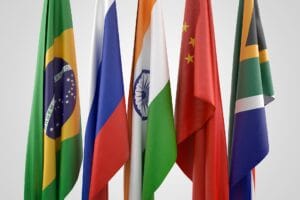
The importance of BRICS has increased considerably in recent years because many developing countries are seeking a greater role in international institutions and global economic decision-making. BRICS frequently discusses reform of international financial institutions, development finance, trade, technology, climate change, health, food security and the representation of the Global South in global governance.
What Does BRICS Stand For?
The acronym BRICS originally stood for Brazil, Russia, India, China and South Africa. Before South Africa joined, the group was known as BRIC, representing Brazil, Russia, India and China. South Africa’s entry changed the name from BRIC to BRICS.
The original acronym itself came from an economic concept rather than from a formal international organization. Economist Jim O’Neill of Goldman Sachs introduced the term “BRIC” in 2001 while discussing the growing economic importance of Brazil, Russia, India and China. Over time, government representatives from these countries began using the concept as a basis for greater cooperation, eventually creating the political grouping known today as BRICS.
South Africa joined the grouping in 2011, giving the organization a stronger African dimension and transforming BRIC into BRICS. The organization subsequently expanded much further, particularly following decisions taken at the 2023 BRICS Summit in Johannesburg.
BRICS History and Origins
The history of BRICS is closely connected with the changing balance of global economic power in the early twenty-first century. Brazil, Russia, India and China were all large countries with substantial populations, natural resources, growing economies or important strategic positions. Although their political systems and economic structures differed significantly, they shared an interest in increasing the influence of emerging economies in global institutions.
The four countries began meeting as BRIC in the mid-2000s. Their cooperation gradually expanded beyond economic discussions into international diplomacy, development, finance and global governance.
The first BRIC leaders’ summit was held in Yekaterinburg, Russia, in 2009. This meeting marked an important transition because the BRIC concept became a regular intergovernmental forum rather than simply an economic classification.
South Africa subsequently joined the group, and the first BRICS summit involving South Africa took place in 2011. This gave the organization representation in Africa and strengthened its geographic reach across four continents.
Why Was BRICS Created?
BRICS was created to provide a platform through which major emerging economies could coordinate their positions and strengthen their collective voice in global affairs. One of the central concerns behind BRICS cooperation has been the structure of international governance, particularly institutions such as the International Monetary Fund and the World Bank.
The BRICS countries have frequently argued that the governance structures of major international institutions should better reflect the economic and demographic realities of the twenty-first century. Their argument is that developing and emerging economies have become substantially more important to the world economy, but their representation in some international institutions has not increased at the same pace.
BRICS therefore promotes greater participation of emerging economies in global decision-making. The grouping has also developed practical institutions, most importantly the New Development Bank, which was created to finance infrastructure and sustainable development projects.
BRICS Members in 2026
As of 2026, BRICS has eleven full member countries. These are Brazil, Russia, India, China, South Africa, Egypt, Ethiopia, Iran, Saudi Arabia, the United Arab Emirates and Indonesia. Official BRICS documentation identifies the eleven countries as full members that participate in decision-making based on consensus.
The expansion significantly changed the geographic and economic character of BRICS. The original grouping consisted primarily of four large emerging economies and later South Africa. The expanded BRICS now includes countries from Latin America, Eurasia, South Asia, East Asia, Africa and the Middle East.
This expansion has made BRICS a much broader platform for cooperation among countries outside the traditional Western-led institutional system.
Brazil and BRICS
Brazil is one of the founding members of BRICS and represents Latin America within the original core of the organization. It is one of the world’s major agricultural producers and possesses substantial natural resources, industrial capabilities and a large domestic consumer market.
Brazil has historically emphasized multilateralism, development, food security, climate issues and reform of global governance. Its participation gives BRICS a major Latin American dimension and helps connect the grouping to discussions involving the wider Global South.
Brazil has also hosted BRICS summits, including the 2014 Fortaleza Summit and the 2019 Brasília Summit. The country assumed the BRICS chairmanship in 2025 and used its presidency to emphasize areas including global governance, climate finance, artificial intelligence and cooperation among developing countries.
Russia and BRICS
Russia is one of the four original BRIC countries and has played an important role in the development of the organization. Russia hosted the first BRIC leaders’ summit in Yekaterinburg in 2009 and has remained one of the group’s most influential members.
Russia’s importance to BRICS is closely connected with energy, natural resources, scientific capabilities, defense-related technology and its geopolitical role in Eurasia.
Russia has also strongly supported greater use of national currencies in international trade and financial cooperation. Discussions about payment systems, cross-border transactions and reducing vulnerabilities associated with dependence on a single international financial system have become increasingly important within BRICS.
India and BRICS
India is one of the founding BRIC members and has become one of the most influential countries in the expanded organization. Its huge population, rapidly growing economy, technology sector, pharmaceutical industry, services economy and strategic position in South Asia make it central to BRICS.
India is also the BRICS chair in 2026 and is hosting the eighteenth BRICS Summit in New Delhi on September 12 and 13, 2026. Recent reporting indicates that India’s 2026 agenda includes discussions around cross-border payments and the potential interoperability of central bank digital currencies.
India’s position within BRICS is particularly interesting because it maintains relationships with countries across different geopolitical groupings. India has strong relationships with Russia and participates in BRICS while simultaneously developing deep strategic and economic relations with the United States, Europe, Japan, Australia and other partners.
This makes India an important potential bridge between different parts of the international system.
China and BRICS
China is the largest economy within BRICS and has enormous influence over the group’s economic weight. Its manufacturing sector, export capacity, infrastructure investment, technology industry and global trade relationships make China a central player in BRICS.
China’s role is one of the reasons BRICS attracts so much international attention. The organization contains several large economies, but China’s economic scale is substantially larger than that of most other members. This creates both opportunities and challenges for the organization.
China strongly supports greater cooperation among developing countries and increased representation for emerging economies in international institutions. At the same time, China’s enormous economic weight means that other BRICS countries must balance cooperation with their own national interests.
India-China relations are an important example. Both countries participate in BRICS and support many common themes involving developing-country representation, but they also have significant strategic and economic differences.
South Africa and BRICS
South Africa became the fifth BRICS member in 2011 and gave the grouping a permanent presence in Africa.
South Africa has emphasized African development, multilateralism, trade, investment and the representation of developing countries in international institutions. Its membership also strengthened BRICS’ ability to present itself as a platform extending beyond the original four emerging economies.
South Africa hosted the 2023 BRICS Summit in Johannesburg, which became a major turning point in the organization’s history because leaders agreed on a major expansion of membership.
Egypt and BRICS
Egypt became part of the expanded BRICS group in 2024. Its geographical position between Africa, the Middle East and the Mediterranean gives it an important strategic role.
Egypt has one of Africa’s largest populations and is a major regional economy. Its location around the Suez Canal also gives it exceptional importance for global trade and transportation.
Egypt’s membership strengthens BRICS’ presence in North Africa and connects the organization more closely with the Middle East and the Mediterranean region.
Ethiopia and BRICS
Ethiopia joined BRICS as part of the major 2024 expansion. As one of Africa’s most populous countries and an important diplomatic center, Ethiopia adds another significant African voice to the organization.
Addis Ababa hosts the headquarters of the African Union, giving Ethiopia particular relevance in discussions involving African development and continental diplomacy.
Ethiopia’s participation demonstrates that BRICS expansion is not simply about adding the world’s largest economies. It is also about broadening geographic representation across the Global South.
Iran and BRICS
Iran joined the expanded BRICS membership in 2024. Its inclusion brought one of the Middle East’s most important energy-producing and strategically significant countries into the grouping.
Iran has major oil and gas resources and occupies a strategically important position between the Middle East, Central Asia and South Asia. Its participation gives BRICS additional influence in energy discussions and regional economic cooperation.
Iran’s presence also highlights the geopolitical diversity within BRICS. The organization contains countries with different relationships with Western powers and different approaches to international security.
United Arab Emirates and BRICS
The United Arab Emirates joined BRICS in the 2024 expansion. The UAE is a major global center for finance, logistics, aviation, energy, investment and international business.
Its membership adds a highly connected Gulf economy to BRICS and provides another important link between Asia, Africa, Europe and the Middle East.
The UAE also has extensive trade and investment relationships with many BRICS members, making it particularly relevant to discussions about financial connectivity, logistics, energy and international investment.
Saudi Arabia and BRICS
Saudi Arabia was included in the expansion of BRICS announced at the 2023 Johannesburg Summit. Its participation gives the organization one of the world’s most important oil-producing economies and a central Middle Eastern power.
Saudi Arabia’s role is particularly relevant to energy markets, investment, infrastructure and trade. The country’s economic transformation strategy has also increased its focus on diversification, technology, tourism, logistics and international investment.
Its involvement therefore gives BRICS access to another major source of capital and energy while strengthening the group’s presence in the Gulf.
Indonesia and BRICS
Indonesia is the newest full member among the eleven BRICS countries. It formally accepted the invitation to join in 2024, becoming a full member in 2025. Official BRICS documents identify Indonesia as the latest full member of the grouping.
Indonesia is Southeast Asia’s largest economy and one of the world’s most populous countries. Its membership substantially strengthens BRICS’ presence in Southeast Asia.
Indonesia’s participation is important for trade, maritime connectivity, commodities, manufacturing, digital economy development and cooperation among developing countries.
What Are BRICS Partner Countries?
BRICS has developed a partner-country system alongside its full membership. The partner-country category was created at the 2024 BRICS Summit in Kazan.
Official BRICS documentation from the Brazilian presidency identified partner countries including Belarus, Bolivia, Cuba, Kazakhstan, Malaysia, Nigeria, Thailand, Uganda and Uzbekistan, while later BRICS developments added Vietnam to the partner group. Recent reporting in 2026 refers to ten partner nations.
The partner-country structure is important because it allows BRICS to expand its international network without making every participating country a full member immediately.
Malaysia and BRICS
Malaysia is particularly important to Southeast Asian readers because it became a BRICS partner country. Its participation creates additional opportunities for cooperation in trade, investment, technology, education, infrastructure and diplomatic engagement.
Malaysia’s location at the center of major Asian shipping routes and its established manufacturing and services sectors make it an interesting participant in the expanding BRICS network.
For Malaysia, BRICS partnership provides another international platform alongside ASEAN, APEC, the Commonwealth and other multilateral organizations.
Thailand and BRICS
Thailand is another Southeast Asian country participating as a BRICS partner. Thailand has a large tourism industry, significant manufacturing capabilities and extensive trade relationships throughout Asia.
Its partner status demonstrates the growing interest among Southeast Asian countries in maintaining relationships with multiple major economic and diplomatic groupings.
BRICS partnership does not mean that Thailand has abandoned ASEAN or other international frameworks. Instead, it gives Thailand another platform for economic and diplomatic cooperation.
Vietnam and BRICS
Vietnam’s participation as a BRICS partner is also significant because Vietnam has become an increasingly important manufacturing and export economy in Asia.
Vietnam has strong commercial relationships with China, the United States, Japan, South Korea, Europe and ASEAN countries. BRICS partnership provides another channel through which Vietnam can participate in discussions involving the Global South, trade and development.
The growing participation of Southeast Asian countries demonstrates that BRICS is becoming a broader international platform rather than a group limited to its original members.
The BRICS Expansion of 2024
The 2024 expansion was one of the most important developments in BRICS history. Egypt, Ethiopia, Iran, Saudi Arabia and the United Arab Emirates joined the existing members, while Indonesia subsequently became a full member.
The expansion significantly increased the geographic reach of the organization and added major energy producers, financial centers, large populations and strategically important economies.
It also created a new challenge: the larger the group becomes, the more difficult it may be to maintain consensus among countries with different national priorities.
Why Countries Want to Join BRICS
Countries may be interested in BRICS membership for several reasons. One is economic diversification. A country can strengthen its relationships with multiple major markets and investors by participating in a wider network.
Another reason is political representation. Many developing countries believe that the existing global governance system does not sufficiently reflect their demographic and economic importance.
BRICS can provide a platform for countries to advocate for changes in international financial institutions and global governance.
A third reason is access to development finance. The New Development Bank offers an alternative source of financing for infrastructure and sustainable development projects.
BRICS and the Global South
The concept of the Global South has become central to BRICS discussions. The term generally refers to developing and emerging economies, particularly in Africa, Asia, Latin America and other regions.
BRICS presents itself as a platform where major countries of the Global South can coordinate positions and increase their influence.
The grouping does not represent every developing country, and its members have very different political and economic systems. Nevertheless, its growing membership has made it one of the most visible forums for discussion about a more multipolar international system.
BRICS and Global Economic Power
One of the biggest reasons BRICS matters is its economic scale. The eleven full members collectively represent a huge share of the world’s population and a substantial share of global economic output.
Their combined economic strength comes from different sources. China contributes manufacturing and trade power. India contributes services, technology, pharmaceuticals and a massive consumer market. Russia, Saudi Arabia, Iran and the UAE contribute major energy resources and investment capabilities. Brazil contributes agriculture and natural resources, while Indonesia adds another major Asian economy and consumer market.
This diversity gives BRICS substantial potential but also makes coordination complicated.
BRICS and International Trade
Trade cooperation is one of the most important practical areas for BRICS. Member countries want to increase trade and investment among themselves and reduce unnecessary barriers.
Greater use of national currencies in bilateral trade has also become an important topic. If countries can conduct more trade directly in their own currencies, they may reduce transaction costs and certain forms of dependence on intermediary currencies.
However, building a fully integrated BRICS trade system is extremely complicated because members have different financial systems, exchange-rate policies, regulations and levels of economic development.
BRICS and De-Dollarisation
The term “de-dollarisation” frequently appears in discussions about BRICS. It generally refers to reducing dependence on the U.S. dollar in international trade and finance.
BRICS members have discussed increasing the use of national currencies for bilateral trade and developing alternative payment arrangements.
However, it is important to distinguish between reducing dollar dependence in selected transactions and replacing the U.S. dollar as the world’s dominant reserve currency. These are not the same objective.
Recent reporting indicates that India is emphasizing practical cross-border payment interoperability rather than pursuing an immediate common BRICS currency.
Does BRICS Have a Common Currency?
BRICS does not currently have a common currency comparable to the euro.
There have been repeated discussions and speculation about a potential BRICS currency, particularly in media coverage surrounding de-dollarisation. However, creating a common currency would require an extraordinary degree of monetary, fiscal and institutional integration.
The BRICS countries have very different economies, inflation rates, financial systems and monetary policies. They also have different geopolitical priorities.
For these reasons, practical cooperation on local-currency settlement and payment systems is currently more realistic than creating a single BRICS currency.
BRICS and Digital Currency
Digital payments and central bank digital currencies are becoming increasingly important in BRICS discussions.
India has been advocating greater interoperability between digital payment and central bank digital currency systems among BRICS countries. Reuters reported in September 2026 that India was pushing a proposal to link central bank digital currencies to facilitate cross-border payments.
Such a system could potentially make international payments faster and more efficient.
However, technical compatibility, financial regulation, cybersecurity, monetary sovereignty and political trust would all need to be addressed before large-scale integration could occur.
BRICS and the New Development Bank
One of the most concrete achievements of BRICS is the creation of the New Development Bank, commonly known as the NDB or BRICS Bank.
The NDB was established by Brazil, Russia, India, China and South Africa to mobilize resources for infrastructure and sustainable development projects in emerging markets and developing countries.
The bank provides BRICS with an institutional mechanism that goes beyond annual diplomatic meetings.
The NDB has financed projects involving transportation, renewable energy, water infrastructure, urban development and other areas associated with sustainable economic growth.
Why the New Development Bank Matters
The New Development Bank is important because infrastructure financing is a major challenge for developing countries.
Roads, railways, ports, electricity networks, water systems, renewable energy facilities and digital infrastructure require enormous amounts of investment.
The NDB aims to help address some of these needs while complementing existing multilateral development institutions. Its official mandate emphasizes infrastructure and sustainable development in emerging markets and developing countries.
New Development Bank Membership
An important distinction is that membership in the New Development Bank is not identical to membership in BRICS.
The NDB’s current membership includes the five founding BRICS countries as well as Bangladesh, the United Arab Emirates, Egypt, Algeria and Uzbekistan. Its official membership page also lists several prospective members.
This demonstrates that the NDB is a separate institution from BRICS even though it was created by BRICS countries.
Understanding this distinction is important when researching the BRICS economy, BRICS Bank and BRICS membership.
BRICS Business Cooperation
BRICS also promotes cooperation among businesses. The BRICS Business Council provides a platform for companies and business organizations from member countries to discuss trade and investment opportunities.
Business cooperation can cover energy, manufacturing, agriculture, finance, technology, logistics, infrastructure and other sectors.
For companies in developing countries, BRICS-related networks can create opportunities to identify new markets and partners.
BRICS and Technology
Technology has become an increasingly important part of the BRICS agenda. Artificial intelligence, digital infrastructure, cybersecurity, telecommunications and innovation are all areas where member countries have significant interests.
China and India are particularly important technology powers within BRICS, while other members possess strengths in areas such as energy technology, agriculture, financial technology and digital services.
The diversity of technological capabilities creates opportunities for cooperation and knowledge exchange.
BRICS and Artificial Intelligence
Artificial intelligence is increasingly discussed within BRICS because AI is likely to transform manufacturing, healthcare, agriculture, finance, education and public services.
The 2025 Brazilian BRICS presidency highlighted artificial intelligence among the topics receiving attention within the group’s broader agenda.
For developing countries, AI cooperation can potentially help with technology transfer, education, digital infrastructure and access to computing resources.
At the same time, differences in regulation, data governance and technology standards make international AI cooperation complicated.
BRICS and Climate Change
Climate change is another important area of BRICS cooperation. Many BRICS members are simultaneously major energy producers, large industrial economies and countries vulnerable to climate change.
This creates a complex policy environment.
Countries need economic development and reliable energy supplies while also facing pressure to reduce emissions and transition toward cleaner technologies.
BRICS discussions therefore frequently focus on climate finance, energy transition, sustainable development and technology cooperation.
BRICS and Renewable Energy
Renewable energy provides an area where BRICS members can potentially cooperate without requiring complete political agreement.
China is a major manufacturer of solar panels, batteries and electric vehicles. India is expanding renewable energy rapidly. Brazil has substantial renewable electricity resources. Gulf members are investing heavily in solar power and other forms of energy diversification.
These different capabilities could support cooperation in clean energy technologies, financing and infrastructure.
BRICS and Energy Security
Energy security is one of the strongest areas of common interest within the expanded BRICS grouping.
Several members are among the world’s most important oil and gas producers, while others are major energy consumers.
This creates opportunities for long-term energy trade, investment and infrastructure cooperation.
However, energy interests can also create disagreements because individual members may compete for markets and investment.
BRICS and Food Security
Food security is another important issue because BRICS contains several major agricultural producers and large food-importing populations.
Brazil is a global agricultural powerhouse, while Russia is a major producer and exporter of grains and other commodities. China and India have enormous agricultural sectors and populations.
Cooperation in agriculture, food technology, logistics and fertilizer supply could become increasingly important.
BRICS and Healthcare Cooperation
Healthcare cooperation has grown in importance since the COVID-19 pandemic.
BRICS countries have discussed cooperation involving vaccines, medical research, public health systems, disease prevention and pharmaceutical production.
The BRICS Partnership for the Elimination of Socially Determined Diseases, for example, focuses on strengthening health systems, research, innovation, technology transfer and financing in areas affecting vulnerable populations.
Healthcare cooperation is particularly relevant for developing countries because strengthening local medical manufacturing and health infrastructure can reduce dependence on external supply chains.
BRICS and Education
Education and people-to-people exchanges are another part of BRICS cooperation.
The grouping has established youth, academic, cultural and educational initiatives designed to increase connections between participating countries.
The BRICS Youth Summit has been held as an official dialogue platform since 2015, demonstrating that BRICS cooperation extends beyond government-level diplomacy.
These programs can create opportunities for students, researchers and young professionals to interact across national borders.
BRICS and Tourism
Tourism is another potential area of cooperation among BRICS countries.
The expanded group includes destinations such as Brazil, India, China, South Africa, Egypt, the UAE, Saudi Arabia, Indonesia, Russia, Ethiopia and Iran.
Improved connectivity and tourism cooperation could encourage travelers to explore destinations across the BRICS network.
For tourism businesses, the growth of BRICS could also create opportunities to target emerging middle-class consumers from member countries.
BRICS and Infrastructure
Infrastructure is central to the BRICS development agenda.
Emerging economies need major investments in transportation, electricity, telecommunications, ports, airports, water systems and urban infrastructure.
The New Development Bank specifically focuses on infrastructure and sustainable development projects, making infrastructure finance one of the most practical components of BRICS cooperation.
BRICS and Global Governance Reform
Reform of global governance is one of the most consistent themes in BRICS diplomacy.
Members have called for greater representation of developing countries in institutions such as the IMF, World Bank and United Nations system.
The precise reforms desired by each country differ, but the broader argument is similar: international institutions should better reflect the distribution of population and economic power in the contemporary world.
BRICS and the United Nations
BRICS members generally support the central role of the United Nations in international affairs, although individual countries may have different views on specific international crises.
The organization frequently discusses reform of international institutions and strengthening multilateralism.
Because BRICS includes countries with permanent or influential roles in international diplomacy, it can have considerable relevance to debates at the United Nations.
Is BRICS an Anti-American Alliance?
BRICS is sometimes described in media commentary as an anti-American or anti-Western alliance. That description is too simplistic.
BRICS does challenge aspects of a global system that many members believe gives disproportionate influence to Western countries. It advocates greater representation for developing economies and has promoted alternatives in areas such as development finance and payment systems.
However, BRICS does not have a collective military command structure or a mutual-defense clause comparable to NATO.
Its members also maintain extensive economic and diplomatic relationships with the United States and Europe.
India is a particularly clear example of this complexity because it is a BRICS member while simultaneously deepening strategic cooperation with the United States and other Western partners.
Why BRICS Is Difficult to Unite
The growing size of BRICS creates both strength and weakness.
The organization includes countries with different political systems, economic models, regional interests and foreign policies.
India and China are strategic competitors in Asia. Iran and Saudi Arabia have historically had serious regional tensions. Egypt and Ethiopia have disagreements involving the Nile and the Grand Ethiopian Renaissance Dam. Russia’s relations with Western countries are dramatically different from India’s or the UAE’s relationships with them.
These differences make it difficult for BRICS to establish unified positions on every geopolitical issue.
BRICS and the Ukraine War
The war in Ukraine has demonstrated the complexity of BRICS diplomacy.
Russia is a BRICS member and one of the organization’s founding countries, while other BRICS members have taken different approaches to the conflict.
India, China, Brazil and South Africa have maintained their own diplomatic positions rather than simply adopting a single BRICS-wide foreign policy.
This demonstrates that BRICS is primarily a cooperation forum rather than a unified geopolitical alliance.
BRICS and Middle Eastern Geopolitics
The inclusion of Iran, Saudi Arabia and the UAE has dramatically increased BRICS’ importance in Middle Eastern affairs.
These countries have different political systems and regional interests, but all possess important economic and energy relationships.
Their simultaneous participation demonstrates BRICS’ preference for maintaining a broad platform where countries with competing interests can still cooperate in selected areas.
BRICS and China-India Relations
China and India represent one of the most important relationships inside BRICS.
Both countries are enormous economies with major populations and ambitious development strategies. Both support greater representation of developing countries in global institutions.
At the same time, they have strategic competition, border disputes and trade concerns.
The ability of BRICS to continue functioning despite these differences is an important test of the organization’s future.
BRICS as a Multipolar Platform
One of the most common descriptions of BRICS is that it contributes to a multipolar world.
A multipolar international system is one in which power is distributed among several major countries and regions rather than concentrated in a single dominant center.
BRICS members generally support greater diversity in international economic and political institutions.
Whether BRICS can actually create a more multipolar global order will depend on its ability to turn political statements into practical cooperation.
BRICS and Businesses
Businesses should pay attention to BRICS because its member countries represent enormous consumer and investment markets.
Companies involved in logistics, manufacturing, agriculture, energy, technology, finance, tourism and infrastructure may find opportunities through stronger economic connections among BRICS countries.
The biggest opportunities are likely to emerge where BRICS cooperation becomes institutionalized rather than remaining at the level of political declarations.
BRICS for Investors
Investors interested in emerging markets frequently examine BRICS economies because they include some of the world’s largest and fastest-changing markets.
However, BRICS should not be treated as a single investment market.
Brazil, Russia, India, China, South Africa, Egypt, Ethiopia, Iran, Saudi Arabia, the UAE and Indonesia have very different economic structures, currencies, regulations, political environments and financial markets.
Investors should therefore analyze each country independently rather than assuming that all BRICS economies will behave in the same way.
BRICS and Emerging Markets
The relationship between BRICS and emerging markets is fundamental to understanding the organization’s original purpose.
The founding countries were identified as important emerging economies with the potential to become increasingly influential in global economic affairs.
Today, BRICS is no longer simply a label for emerging markets. It has become an intergovernmental cooperation framework with regular summits, ministerial meetings, working groups and financial institutions.
That transformation is one of the most significant developments in the history of the BRICS concept.
BRICS and the Changing World Economy
The rise of BRICS reflects a broader change in the global economy.
Economic growth is increasingly distributed across Asia, Latin America, Africa and the Middle East rather than being concentrated exclusively in North America and Western Europe.
China and India are particularly important examples of this transformation.
BRICS represents one institutional expression of this wider economic shift.
BRICS and the Global Economic Order
The global economic order has traditionally been shaped heavily by institutions created after the Second World War.
BRICS countries argue that those institutions should evolve as global economic realities change.
The group’s efforts to establish the New Development Bank, promote greater use of national currencies and advocate financial-institution reform are part of this wider process.
The ultimate result may not be a replacement of existing institutions but a more diversified international system containing several complementary financial and economic centers.
Challenges Facing BRICS
BRICS faces several major challenges. The first is maintaining consensus among an increasingly large membership.
The second is managing competition between major members.
The third is converting ambitious statements into practical agreements.
The fourth is developing payment and financial systems that can function across very different economies.
The fifth is avoiding excessive geopolitical polarization that could make cooperation more difficult.
The organization will need to address these challenges if it wants its growing membership to translate into greater institutional influence.
BRICS and Consensus Decision-Making
BRICS decisions are based on consensus. This approach allows countries with very different political systems and foreign-policy priorities to participate without being forced into majority-rule decisions.
Consensus can be valuable because it encourages compromise.
However, it can also slow decision-making because major initiatives require broad agreement.
As BRICS expands, maintaining consensus may become increasingly challenging.
BRICS Compared With the G7
BRICS is sometimes compared with the G7, but the two groups are fundamentally different.
The G7 consists of advanced industrial economies with historically close political and economic relationships.
BRICS consists primarily of emerging and developing economies with much greater political and economic diversity.
The two groupings therefore represent different approaches to international cooperation.
BRICS emphasizes emerging economies and Global South representation, while the G7 represents a group of advanced industrial democracies.
BRICS Compared With the G20
BRICS is also connected to the G20 because many BRICS members are members of the G20.
The G20 is much broader and includes advanced economies as well as emerging economies.
BRICS can therefore be viewed as one coalition within the broader G20 system.
BRICS members can coordinate among themselves before participating in larger international forums, although they do not necessarily adopt identical positions.
BRICS Compared With the European Union
BRICS is very different from the European Union.
The EU has common institutions, a legal framework, a single market and, for many members, a common currency.
BRICS does not have these features.
BRICS is better understood as an intergovernmental cooperation platform rather than a supranational union.
This distinction is important because predictions that BRICS will quickly become a “European Union of the Global South” overlook the enormous institutional differences between the two organizations.
Is BRICS a Military Alliance?
No. BRICS is not a military alliance.
It does not have a collective-defense commitment comparable to NATO.
Although several BRICS countries are major military powers, the group’s official cooperation focuses on economic, political, social, development and diplomatic issues.
Individual member countries retain their own defense and foreign policies.
Is BRICS a Trade Bloc?
BRICS is not a conventional free-trade bloc.
There is no BRICS-wide free-trade agreement comparable to some regional trade arrangements.
Instead, the group promotes trade and investment cooperation and discusses ways to reduce barriers and improve economic connectivity among members.
This distinction is important when explaining BRICS to readers who may assume that membership automatically creates a common market.
Why BRICS Expansion Matters
The expansion of BRICS matters because it changes both the size and the nature of the organization.
The original BRICS had five members. The current grouping has eleven full members and a broader network of partner countries.
This creates more opportunities for trade, investment and diplomatic cooperation.
At the same time, expansion creates greater complexity.
The future success of BRICS will depend on whether it can use its diversity as an advantage rather than allowing differences to prevent collective action.
The Long-Term Future of BRICS
The long-term future of BRICS is likely to involve gradual institutional development rather than an immediate transformation into a unified political or monetary bloc.
The most realistic areas for progress are development finance, trade facilitation, payment interoperability, local-currency settlement, technology cooperation, energy, food security, healthcare and infrastructure.
If members can make progress in these areas, BRICS could become an increasingly important component of the international economic system.
Conclusion
BRICS has evolved from an acronym describing four emerging economies into a major international cooperation platform involving eleven full members and a growing group of partner countries. Its history reflects the broader rise of emerging markets and the increasing demand for greater representation of developing countries in global governance.
The organization now includes Brazil, Russia, India, China, South Africa, Egypt, Ethiopia, Iran, Saudi Arabia, the United Arab Emirates and Indonesia. Official BRICS documentation confirms the eleven-member structure and the separate partner-country system.
The creation of the New Development Bank is one of BRICS’ most tangible achievements. The bank was established by the five founding BRICS countries to mobilize resources for infrastructure and sustainable development in emerging markets and developing countries.
Official BRICS Portal — official BRICS information, documents and declarations.
BRICS Leaders’ Declarations — useful for linking to official BRICS summit declarations.
New Development Bank — official BRICS-created multilateral development bank.
New Development Bank Members — official NDB membership information.
Author

Related posts
OPEC
- 0
- 5,679 words
OPEC OPEC stands for the Organization of the Petroleum Exporting Countries. It is an intergovernmental organization created by major oil-producing countries to...
Read out all
How Do I Find Reliable Wholesale Suppliers
- 0
- 9,103 words
How Do I Find Reliable Wholesale Suppliers ? Finding reliable wholesale suppliers is one of the most important tasks for anyone starting...
Read out all
What Is Happening in the World?
- 0
- 5,355 words
What Is Happening in the World? The world is currently experiencing a period of overlapping crises and opportunities. Political disputes, military conflicts,...
Read out all
United Kingdom
- 0
- 5,089 words
United Kingdom The United Kingdom, commonly known as the UK, is one of Europe’s most fascinating travel destinations. Officially called the United...
Read out all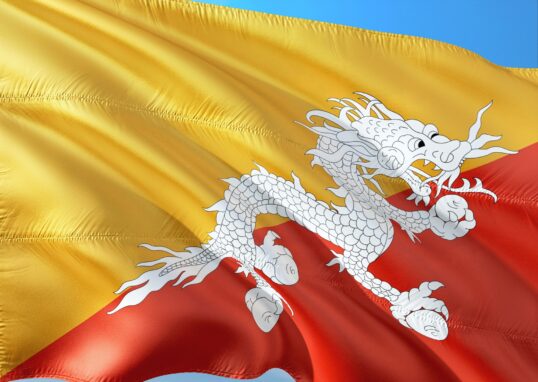
Bhutan
- 0
- 4,154 words
Bhutan Travel Guide Bhutan is one of the most fascinating travel destinations in Asia, offering an extraordinary combination of Himalayan landscapes, Buddhist...
Read out all
What Are the Best Places to Visit in Europe
- 0
- 5,498 words
What Are the Best Places to Visit in Europe ? Europe is one of the most fascinating travel destinations in the world,...
Read out all