
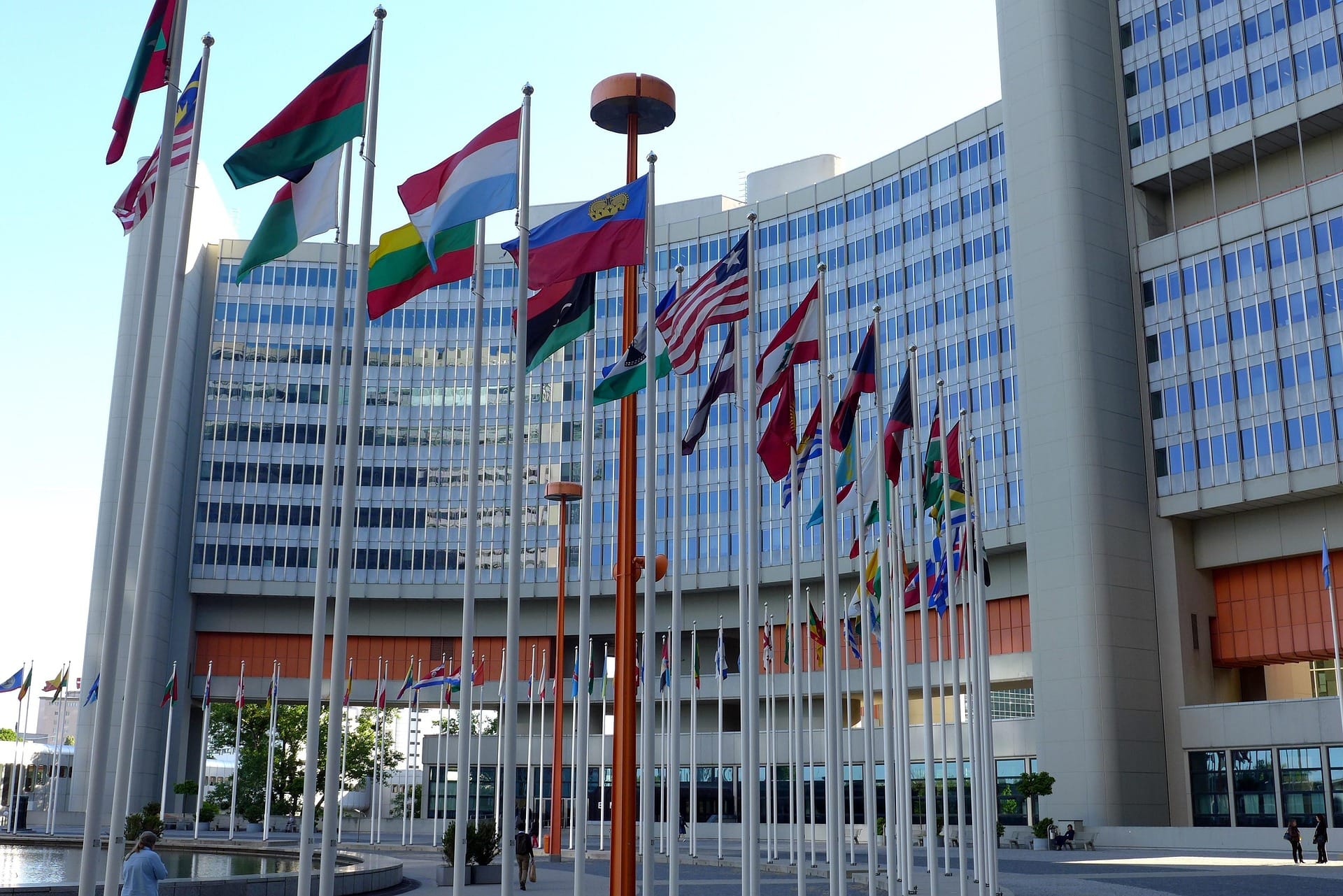
UNGA (United Nations General Assembly )
The United Nations General Assembly, commonly known as the UN General Assembly or UNGA, is one of the most important institutions in the international system. It brings together the member states of the United Nations in a single forum where governments discuss international problems, negotiate agreements, adopt resolutions, approve the United Nations budget, elect members of important UN bodies, and debate issues affecting peace, security, development, human rights, humanitarian affairs, international law, climate change and global cooperation.
The General Assembly is particularly significant because it is the principal United Nations body in which all 193 UN Member States are represented. Each Member State has one vote, regardless of its geographical size, population, economic strength or military capacity. This principle gives the UN General Assembly a unique representative character within the United Nations system.
What Does UNGA Stand For?
UNGA stands for the United Nations General Assembly. The abbreviation is formed from the first letters of “United Nations General Assembly,” and it is widely used by diplomats, journalists, researchers, academics, governments and international organizations.
The United Nations General Assembly is often simply called the General Assembly. In international news coverage, expressions such as “UNGA session,” “UNGA resolution,” “UNGA General Debate,” “UNGA vote” and “UNGA meeting” are commonly used when referring to its activities.
The General Assembly is one of the six principal organs established under the Charter of the United Nations. The other principal organs are the Security Council, Economic and Social Council, Trusteeship Council, International Court of Justice and Secretariat.
When Was the United Nations General Assembly Created?
The United Nations was established in 1945 following the Second World War, with the goal of creating an international organization capable of promoting peace, cooperation and collective action among countries. The General Assembly was established as part of the UN Charter and became a central institution of the new organization.
The creation of the General Assembly reflected the idea that international affairs should not be discussed exclusively by a small group of powerful states. Instead, countries needed a universal forum in which governments could present their views, negotiate and participate in international decision-making.
The first meeting of the General Assembly took place in London in January 1946. The organization later established its permanent headquarters in New York City, where the General Assembly Hall became one of the most recognizable symbols of international diplomacy.
Over the decades, the General Assembly expanded alongside the growth of the United Nations. When the UN was founded, it had 51 original Member States. Today, the United Nations has 193 Member States, all of which are represented in the General Assembly.
Why Is the UN General Assembly Important?
The importance of the UN General Assembly comes largely from its universal membership. Every UN Member State has a seat in the Assembly, giving countries an opportunity to participate in global discussions.
The Assembly provides a diplomatic environment where countries can express concerns even when they disagree strongly with other governments. This makes it an important platform for multilateral diplomacy.
The General Assembly is also important because many major international issues eventually appear on its agenda. These include international peace and security, disarmament, sustainable development, human rights, humanitarian assistance, international law, economic development, poverty reduction, health, education, migration, climate change, food security and technological development.
The Assembly also contributes to international standard-setting. General Assembly resolutions and declarations can influence international policy, diplomacy and the development of international norms. Although many resolutions are recommendations rather than legally binding rules, governments, international organizations, courts, civil society groups and researchers frequently use them as important references.
The 193 Member States of the United Nations General Assembly
All 193 Member States of the United Nations are represented in the General Assembly. Every Member State can send a delegation to participate in meetings, negotiations and votes.
The equal voting principle is one of the defining characteristics of the Assembly. A small island state and a large country each receive one vote in the General Assembly.
This system is different from systems based strictly on population size or economic contribution. The principle reflects the sovereign equality of Member States under the UN Charter.
Countries normally participate through diplomatic delegations led by permanent representatives, ambassadors or senior government officials. During the annual high-level General Debate, however, heads of state and government frequently travel to New York to deliver national statements.
The Principle of One Country, One Vote
One of the most important features of the UN General Assembly is the principle that each Member State has one vote.
This principle distinguishes the Assembly from many other international institutions. Voting power is not directly proportional to population, economic output, territory or military strength.
The system creates a formal structure of sovereign equality. At the same time, the political influence of countries can vary considerably outside the formal voting system because governments have different diplomatic relationships, economic resources, geopolitical influence and negotiating capabilities.
The one-country, one-vote system therefore represents equality in formal voting rights while international diplomacy remains shaped by many other factors.
What Are the Main Functions of the UN General Assembly?
The General Assembly has a broad range of functions. Its responsibilities include discussing international problems, making recommendations, approving the UN budget, electing members of various UN bodies, considering reports from other UN organs and contributing to international legal and policy development.
The Assembly can discuss questions relating to peace and security within the framework established by the UN Charter. It can also consider issues involving economic, social, humanitarian, cultural, educational and health cooperation.
One of its most visible functions is political debate. Governments use the General Assembly to explain their national positions and respond to international developments.
Another major function is negotiation. Countries often spend months negotiating draft resolutions before they reach the Assembly for adoption.
UN General Assembly and International Peace and Security
Peace and security are central themes in the work of the United Nations General Assembly.
The Security Council has primary responsibility for international peace and security within the UN system, but the General Assembly also has an important role in discussing conflicts, disarmament and international security.
The Assembly can debate wars, armed conflicts, nuclear weapons, conventional weapons, terrorism, peacekeeping and other security issues.
The General Assembly can adopt recommendations concerning international peace and security. These recommendations may carry significant political and diplomatic importance even when they do not have the same binding force as certain Security Council decisions.
The Assembly’s role becomes especially visible when international disagreements prevent consensus within other parts of the UN system. The General Assembly can provide a wider forum where countries express their positions and build diplomatic coalitions.
The “Uniting for Peace” Mechanism
One of the most important developments in the history of the General Assembly is the “Uniting for Peace” resolution adopted in 1950.
The mechanism emerged during a period when disagreements within the Security Council created difficulties for collective international action.
Under the framework associated with Uniting for Peace, when the Security Council fails to act because of a lack of unanimity among its permanent members, the General Assembly can consider the situation and make recommendations concerning collective measures.
This mechanism does not transform the General Assembly into a replacement for the Security Council. Instead, it provides an additional avenue for international discussion and political action when the Security Council is unable to act.
How Does UN General Assembly Voting Work?
Voting in the General Assembly depends on the type of question being considered.
Important questions require a two-thirds majority of members present and voting. These include matters such as recommendations concerning international peace and security, the election of certain members of UN bodies, the admission of new Member States and budgetary questions.
Other questions are generally decided by a simple majority of members present and voting.
This distinction is important because not every General Assembly resolution requires the same voting threshold.
In some situations, countries also work toward consensus rather than conducting a formal vote. Consensus does not necessarily mean that every country fully agrees with every aspect of a document. Instead, it generally means that the text can be adopted without a formal objection blocking agreement.
What Is a UN General Assembly Resolution?
A UN General Assembly resolution is a formal text adopted by the Assembly concerning a particular issue.
Resolutions can address a huge range of subjects, including international peace, development, human rights, humanitarian assistance, disarmament, environmental issues, international law and institutional matters.
A resolution normally contains language explaining the issue and then establishes recommendations, requests, principles, commitments or actions.
General Assembly resolutions are not automatically legally binding on Member States in the same way that certain decisions under the UN Charter can be binding. However, resolutions can have significant political and diplomatic influence.
Some resolutions also contribute to the development of international norms and principles.
Why UNGA Resolutions Matter
The importance of a General Assembly resolution cannot always be measured simply by whether it is legally binding.
A resolution adopted by a large majority can demonstrate broad international support for a particular principle or position. Governments may use such votes to understand international diplomatic sentiment.
General Assembly resolutions can also influence subsequent negotiations, international organizations, national policy discussions and future international agreements.
Over time, repeated General Assembly action on an issue can contribute to the development of international expectations and norms.
The Six Main Committees of the General Assembly
Much of the detailed work of the General Assembly takes place through its six Main Committees.
The First Committee deals primarily with disarmament and international security. Its agenda includes nuclear weapons, conventional weapons, arms control and other international security matters.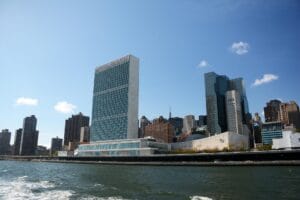
The Second Committee focuses on economic and financial issues. Its work includes development, macroeconomic policy, sustainable development and international economic cooperation.
The Third Committee handles social, humanitarian and cultural issues. Human rights, social development, humanitarian questions and related international issues are central to its agenda.
The Fourth Committee is known as the Special Political and Decolonization Committee. It addresses special political questions, decolonization and several international political issues.
The Fifth Committee deals with administrative and budgetary matters. Its work is essential to the financial functioning of the United Nations.
The Sixth Committee is the Legal Committee. It considers legal questions and contributes to discussions concerning international law.
The First Committee and Global Security
The First Committee is particularly important for global security policy.
Disarmament has been one of the UN’s longstanding concerns since the organization was created. The First Committee provides a forum for countries to debate nuclear weapons, biological and chemical weapons, conventional weapons and other security-related issues.
Discussions can be politically difficult because countries often have different security concerns and strategic priorities.
Nevertheless, the committee provides an institutional mechanism for continuing negotiations and dialogue.
The Second Committee and Global Economic Development
Economic and financial issues are central to the work of the Second Committee.
The committee addresses questions related to sustainable development, international economic cooperation, development financing, poverty reduction and other economic subjects.
The committee’s work is particularly relevant to the Sustainable Development Goals and the wider 2030 Agenda for Sustainable Development.
Because economic challenges cross national borders, international cooperation is necessary in areas such as development finance, trade, technology, energy, food systems and environmental sustainability.
The Third Committee and Human Rights
The Third Committee is closely associated with social, humanitarian and human rights issues.
Its discussions can address discrimination, women’s rights, children’s rights, refugees, social development, humanitarian questions and other human rights-related topics.
The committee does not replace the UN Human Rights Council or other specialized institutions. Instead, it forms part of the broader UN system for discussing international human rights and humanitarian concerns.
The Fourth Committee and Decolonization
The Fourth Committee has an important historical relationship with the UN’s decolonization agenda.
Decolonization was one of the major international political transformations of the twentieth century. The United Nations became a central forum for discussing self-determination and the political status of territories.
The Fourth Committee continues to consider questions involving decolonization and special political matters.
The Fifth Committee and the UN Budget
The Fifth Committee is responsible for administrative and budgetary matters.
The UN cannot carry out its programs without financial resources. The Fifth Committee therefore plays a critical role in discussing expenditures, assessments, administrative questions and financial management.
The General Assembly approves the regular budget of the United Nations and establishes the financial assessments of Member States.
This gives the Assembly an important institutional role because financial decisions affect the organization’s ability to operate.
The Sixth Committee and International Law
The Sixth Committee focuses on legal questions.
International law covers areas such as treaties, diplomatic relations, state responsibility, international criminal justice and other subjects affecting relations between countries.
The Sixth Committee provides a forum for governments to discuss legal principles and contribute to the development and codification of international law.
Its work demonstrates that the General Assembly is not simply a political debating chamber. It also has an important legal and institutional dimension.
What Is the UN General Debate?
The General Debate is the most internationally visible part of the annual General Assembly session.
During the General Debate, heads of state and government, ministers and other senior representatives deliver national statements.
The speeches allow governments to present their views on international affairs and explain their priorities to the international community.
The General Debate normally takes place near the beginning of the annual session. It is traditionally associated with September and attracts enormous international media attention.
The General Debate is not the same as a conventional legislative debate in a national parliament. Speakers do not simply debate a single bill or proposal. Instead, national leaders discuss a wide range of international issues.
Why World Leaders Attend UNGA
The annual General Debate is one of the rare occasions when leaders from almost every part of the world gather in the same city at approximately the same time.
The gathering provides opportunities for bilateral and multilateral meetings alongside formal General Assembly proceedings.
Presidents and prime ministers can meet counterparts from countries with which they have close relationships, complicated relationships or no regular high-level contact.
Diplomatic meetings surrounding the General Debate can therefore be as important as the speeches delivered inside the General Assembly Hall.
UNGA High-Level Week
The period surrounding the General Debate is commonly known as High-Level Week.
During this period, New York becomes an international diplomatic center. The United Nations organizes high-level meetings on major global issues, while governments, international organizations and civil society groups hold additional events.
High-Level Week can include discussions on sustainable development, climate change, health, peace and security, humanitarian affairs, technology and other international priorities.
The exact program changes from year to year.
The 81st Session of the UN General Assembly
The 81st session of the United Nations General Assembly opened on 8 September 2026 and runs through 7 September 2027.
The President of the 81st session is Khalilur Rahman of Bangladesh.
The theme of the 81st session is “Restoring Trust, Managing Transformation: A United Nations That Delivers for All.”
The 2026 high-level period includes the General Debate and a range of high-level meetings addressing major international challenges.
The current session demonstrates how the General Assembly continues to evolve in response to changing global conditions.
The President of the General Assembly
The President of the General Assembly plays an important role in organizing and presiding over the Assembly’s work.
The President chairs plenary meetings, helps guide negotiations and consultations, and represents the Assembly in various diplomatic settings.
The President is elected by the General Assembly for each session.
The presidency rotates among the UN regional groups as part of an established system intended to provide geographical balance.
The position is different from that of the UN Secretary-General. The Secretary-General leads the UN Secretariat and serves as the organization’s chief administrative officer and diplomatic figure, while the President of the General Assembly presides over the work of the Assembly.
How Is the President of the General Assembly Chosen?
The General Assembly elects its President for each annual session.
The presidency traditionally rotates among the five regional groups used within the Assembly: African States, Asia-Pacific States, Eastern European States, Latin American and Caribbean States, and Western European and Other States.
This rotational system is intended to ensure that different geographical regions have opportunities to provide the Assembly’s presiding officer.
The President is responsible for conducting meetings impartially and helping facilitate negotiations among Member States.
The General Committee of the UNGA
The General Committee assists with the organization of the work of the General Assembly.
It deals with procedural and organizational questions, including the allocation of agenda items and the organization of Assembly business.
This administrative function is essential because the General Assembly handles a very large agenda involving hundreds of issues, reports and draft decisions.
Without procedural organization, the Assembly’s work would be extremely difficult to manage.
The UNGA Agenda
The General Assembly’s agenda contains a broad range of international subjects.
Agenda items can remain under consideration for years because some international questions are complex and require continuing negotiations.
Countries can propose agenda items through established procedures.
Once an item is placed on the agenda, it may be assigned to a Main Committee, considered directly in plenary, or handled through another established process.
The agenda therefore acts as a roadmap for the Assembly’s annual work.
UNGA and Climate Change
Climate change has become an increasingly important subject in international diplomacy.
The General Assembly discusses climate-related issues alongside specialized UN institutions and international agreements.
Climate change intersects with development, food security, migration, public health, energy security and disaster risk.
The Assembly provides a universal political forum where countries can discuss these interconnected challenges.
However, the UN General Assembly is only one component of the global climate governance system. Climate negotiations also take place through the UN Framework Convention on Climate Change and its associated processes.
UNGA and Global Health
International health has also become an important area of General Assembly activity.
Global health emergencies have demonstrated that diseases can spread across borders and that international cooperation is often essential.
The Assembly has discussed pandemics, health systems, universal health coverage and pandemic preparedness.
High-level meetings can bring together governments, international organizations and other stakeholders to promote international cooperation.
The General Assembly’s role is primarily political and intergovernmental, while specialized health expertise is provided by organizations such as the World Health Organization.
UNGA and Artificial Intelligence
Artificial intelligence has emerged as a major international policy issue.
The technology affects economies, education, employment, cybersecurity, information systems, scientific research and national security.
The General Assembly has increasingly discussed artificial intelligence governance and international cooperation.
Because AI development crosses national boundaries, countries face questions about how international principles can be developed while allowing technological innovation.
The Assembly provides a universal forum for governments to discuss these issues.
UNGA and Nuclear Disarmament
Nuclear disarmament has been part of the United Nations agenda since the organization’s earliest years.
The General Assembly’s first resolution in 1946 addressed the elimination of atomic weapons and other weapons of mass destruction.
The Assembly continues to debate nuclear disarmament, non-proliferation and international security.
These debates can be politically difficult because nuclear-armed states and non-nuclear states often have different security perspectives.
Nevertheless, nuclear weapons remain one of the most important long-term security subjects discussed by the General Assembly.
UNGA Special Sessions
In addition to regular annual sessions, the General Assembly can convene special sessions.
Special sessions allow Member States to focus on particular international issues that require high-level attention.
Special sessions have historically addressed subjects including disarmament, development, drugs, population, apartheid and other major international concerns.
They demonstrate the Assembly’s flexibility in responding to emerging international challenges.
Emergency Special Sessions of the General Assembly
The General Assembly can also convene emergency special sessions under specific circumstances.
Emergency special sessions are particularly associated with situations involving international peace and security where the Security Council has been unable to act because of disagreement among its permanent members.
The emergency special session mechanism has been used only a limited number of times in UN history, making it an important but exceptional feature of the General Assembly system.
UNGA and Palestine
The question of Palestine has been a longstanding item on the UN agenda.
The General Assembly has adopted numerous resolutions concerning Palestine and the Middle East.
The subject remains one of the most politically sensitive issues considered by the United Nations.
Because the Assembly includes all UN Member States, its debates provide a global forum for countries to present their positions on Palestinian statehood, humanitarian conditions, international law, security and the broader Israeli-Palestinian conflict.
UNGA and International Conflicts
The Assembly frequently discusses international conflicts.
Its debates can involve ceasefires, humanitarian assistance, territorial disputes, sovereignty, refugees, reconstruction and international law.
However, the Assembly does not function as a world government and cannot automatically impose its decisions on states.
Its influence often comes through diplomacy, political legitimacy, international attention, coalition-building and the development of international norms.
The Difference Between UNGA and the UN Security Council
The General Assembly and Security Council are often confused because both discuss international peace and security.
The key difference is membership and authority.
The General Assembly includes all 193 UN Member States. The Security Council has 15 members, including five permanent members and ten elected members.
The Security Council has primary responsibility for international peace and security and can adopt certain legally binding decisions under the UN Charter.
The General Assembly is primarily the universal deliberative and policymaking forum. Its resolutions are generally recommendations rather than binding decisions.
The two bodies therefore have different functions but interact closely.
The Difference Between UNGA and the UN Secretariat
The General Assembly should also be distinguished from the UN Secretariat.
The Secretariat is one of the six principal organs of the United Nations and is headed by the Secretary-General.
The Secretariat carries out administrative and operational work across the UN system.
The General Assembly, by contrast, is the representative intergovernmental body in which Member States debate and decide on matters within its competence.
In simple terms, the Assembly is a forum where governments deliberate and make decisions, while the Secretariat provides much of the administrative and operational machinery needed to implement the organization’s work.
The Difference Between UNGA and the UN Human Rights Council
The General Assembly and Human Rights Council are also different institutions.
The Human Rights Council is a subsidiary body of the General Assembly based in Geneva.
It focuses specifically on human rights.
The General Assembly has a much broader mandate covering peace, development, finance, international law, humanitarian issues, human rights and many other areas.
The Human Rights Council therefore operates within the wider UN system established by the General Assembly and other principal organs.
The General Assembly Hall in New York
The General Assembly Hall is one of the most recognizable diplomatic spaces in the world.
Located at United Nations Headquarters in New York City, it is designed to accommodate representatives of all Member States.
The Hall has become an iconic setting for international diplomacy. Speeches by world leaders, major international debates and significant UN ceremonies have taken place there.
The architecture and seating arrangement reflect the Assembly’s universal character.
Why UNGA Is Held in New York
United Nations Headquarters is located in New York City.
The location became the permanent home of the United Nations after the organization’s creation.
New York’s international transportation links and diplomatic infrastructure have helped make it suitable for hosting large international meetings.
Every September, the city experiences an extraordinary concentration of diplomats and international leaders during the General Assembly’s high-level period.
UNGA and International Diplomacy
Diplomacy is at the heart of the General Assembly.
Countries use the Assembly to negotiate, build coalitions, communicate positions and identify areas of possible cooperation.
Diplomatic negotiations often continue informally outside formal meetings.
Permanent missions to the United Nations play a particularly important role because diplomats work throughout the year rather than only during the annual General Debate.
Permanent Missions to the United Nations
Most Member States maintain permanent missions in New York.
These missions are diplomatic representations dedicated to the United Nations.
Ambassadors and diplomats from these missions participate in meetings, negotiations, consultations and elections.
Their work is often less visible than the speeches of presidents and prime ministers, but it is essential to the functioning of the Assembly.
Much of the technical negotiation behind General Assembly resolutions is conducted by diplomats working through these missions.
UNGA and Small States
The General Assembly is particularly important for small and developing states because it gives them a formal seat and vote in the world’s largest universal intergovernmental organization.
Small island states, for example, frequently use the Assembly to highlight issues such as sea-level rise, climate vulnerability, development finance and disaster risk.
The one-country, one-vote structure allows small states to participate formally in international decision-making even though their populations and economies may be much smaller than those of major powers.
UNGA and Developing Countries
Developing countries make up a large proportion of UN membership.
The General Assembly provides a major forum for discussing development, poverty, trade, financing, technology transfer, health, education and economic inequality.
Regional groups and coalitions allow developing countries to coordinate positions and negotiate collectively.
This has made the Assembly an important arena for debates about the structure of the international economic system.
UNGA Regional Groups
For many procedural and electoral purposes, Member States work through regional groups.
The five principal regional groups are African States, Asia-Pacific States, Eastern European States, Latin American and Caribbean States, and Western European and Other States.
These groups help organize elections, consultations and the rotation of certain positions.
Regional coordination is particularly important because many Assembly decisions involve coalition-building among groups of countries.
Consensus in the General Assembly
Consensus is an important feature of UN diplomacy.
A resolution adopted by consensus may carry a different political message from one adopted after a deeply divided vote.
Consensus can indicate that governments have found language acceptable enough to avoid a formal vote.
However, consensus does not necessarily mean that every country has identical views about the underlying issue.
Diplomatic language often represents a negotiated compromise among countries with different interests.
Why Some UNGA Votes Are Highly Divisive
International issues can involve competing national interests.
Security questions, territorial disputes, sanctions, human rights controversies and geopolitical conflicts can divide Member States.
When governments cannot agree on a common text, the Assembly may hold a formal vote.
The result can provide a snapshot of international diplomatic positions at a particular moment.
Over time, voting patterns can also change as governments alter their policies, alliances and diplomatic priorities.
UNGA and International Public Opinion
The General Assembly does not directly represent individual citizens in the same way that a national parliament does.
Governments represent their states.
Nevertheless, Assembly debates can reflect broad international concerns and can influence public discussion around the world.
General Assembly resolutions and speeches are frequently reported by international media, analyzed by universities and discussed by civil society organizations.
The Assembly therefore functions not only as a diplomatic institution but also as a major global communication platform.
UNGA Documents and Records
The work of the General Assembly generates an enormous amount of official documentation.
These materials include resolutions, decisions, meeting records, reports, draft texts, voting records, speeches and agenda documents.
Researchers can use these documents to study international diplomacy and the evolution of global policy.
The UN Digital Library and official General Assembly resources provide access to many of these records.
How to Watch UN General Assembly Meetings
Many General Assembly meetings are available through UN Web TV.
The service provides live and on-demand coverage of meetings and major UN events.
This makes it possible for researchers, students, journalists and members of the public to follow international diplomacy directly.
Official UN websites also publish meeting schedules, summaries, documents and resolutions.
Why Students Study the UN General Assembly
The General Assembly is an important subject for students of international relations, political science, international law, diplomacy, economics, development studies, history and global affairs.
Studying the Assembly helps students understand how countries cooperate and disagree within an international institution.
It also provides examples of negotiation, coalition-building, international law, diplomacy and multilateral decision-making.
For students interested in careers with international organizations, governments, diplomacy or NGOs, knowledge of the UN system can be particularly valuable.
UNGA and International Relations
The General Assembly is one of the clearest examples of multilateralism in practice.
Multilateralism means cooperation among multiple countries through common institutions or processes.
The Assembly embodies this concept because virtually every recognized UN Member State participates in the same institutional framework.
At a time when international relations are increasingly interconnected, multilateral institutions provide mechanisms for countries to communicate even when bilateral relationships are difficult.
Challenges Facing the General Assembly
The General Assembly faces several structural challenges.
One challenge is the gap between formal equality and differences in political power. Although every country has one vote, governments have dramatically different economic, military and diplomatic resources.
Another challenge is the large number of issues on the Assembly’s agenda.
A further challenge is implementation. Passing a resolution is only one stage of international cooperation. Turning diplomatic commitments into practical action requires national governments, international organizations, financial resources and sustained political support.
The Assembly must also operate in a world characterized by geopolitical competition and disagreement among major powers.
The Question of UN Reform
Reform of the United Nations is a recurring subject in General Assembly discussions.
Countries have proposed changes to improve the organization’s effectiveness, representation, transparency and accountability.
Security Council reform is particularly prominent because the Council’s composition reflects a different historical period.
The General Assembly itself has also undertaken efforts to improve working methods and strengthen the efficiency of its processes.
UN reform remains a complex subject because Member States have different ideas about how international institutions should evolve.
UNGA and the Future of Global Governance
The future of the General Assembly will be shaped by changes in global politics and technology.
Climate change, artificial intelligence, cybersecurity, pandemics, migration, demographic change, economic inequality and geopolitical competition are issues that cannot easily be managed by individual countries alone.
The Assembly provides a universal forum for governments to discuss these challenges.
Its future relevance will depend partly on whether countries can use the institution effectively to negotiate practical cooperation.
Why the General Assembly Still Matters
The General Assembly remains important because no other UN principal organ provides the same universal representation.
Every UN Member State can speak.
Every Member State has a vote.
Every Member State can participate in committees and negotiations.
This does not eliminate political inequality between countries, but it creates an institutional space where governments can formally participate in global diplomacy.
The Assembly’s influence therefore comes not only from its legal powers but also from its political legitimacy, universality and ability to bring countries together.
How the UN General Assembly Affects Ordinary People
Although the General Assembly may appear distant from everyday life, its work can influence issues that directly affect people.
International agreements and policy frameworks discussed within the UN system can influence development programs, human rights policies, humanitarian assistance, health cooperation, climate action and international development.
The Sustainable Development Goals, for example, address issues directly connected to people’s lives, including poverty, education, health, employment, inequality and environmental sustainability.
The Assembly also provides a platform for governments to address humanitarian crises affecting millions of people.
The UN General Assembly as a Global Forum
The General Assembly is sometimes described as the world’s largest diplomatic forum.
This description reflects its universal membership and broad agenda.
It is not a world parliament in the conventional sense because governments, rather than individual citizens, are represented.
It is also not a world government because it lacks general authority to impose laws on every country.
Instead, it is an international intergovernmental institution where sovereign states cooperate, negotiate and express their positions.
How to Research UN General Assembly Information
Anyone researching UNGA topics should begin with official United Nations sources.
The UN General Assembly website provides information about sessions, meetings, functions, resolutions and institutional procedures.
The UN Digital Library is useful for finding official documents, speeches and voting information.
UN Web TV is useful for watching meetings and major events.
Academic journals, books and reputable international affairs publications can then be used to provide additional analysis and historical context.
For serious research, official primary documents should generally be distinguished from media commentary and political interpretation.
Authentic Official Resources for UNGA Research
The official United Nations General Assembly website is the most appropriate starting point for current information about sessions, meetings, resolutions and Assembly activities.
The official UN page describing the functions and powers of the General Assembly provides authoritative information about its responsibilities under the UN Charter.
The United Nations Charter should be consulted when researching the constitutional foundation of the Assembly.
The UN Digital Library is particularly useful for researchers who need official documents, voting records and historical materials.
UN Web TV provides official video coverage of General Assembly meetings and other UN events.
Conclusion
The United Nations General Assembly is one of the central institutions of modern international diplomacy. Established under the UN Charter in 1945, it provides a universal forum where the world’s UN Member States can discuss international challenges and participate in collective decision-making.
Its 193 members have equal formal voting rights, making the Assembly unique among the principal UN bodies. Through plenary meetings and six Main Committees, the Assembly considers issues ranging from international peace and security to economic development, human rights, humanitarian affairs, international law, disarmament and sustainable development.
- United Nations General Assembly — Official Portal
- UN General Assembly — Functions and Powers
- UN General Assembly — About and Procedures
- UN General Assembly — 81st Session (2026–2027)
- UN General Assembly — High-Level Meetings, 81st Session
- UN General Assembly — Meetings and Web Coverage
- UN General Assembly — Rules of Procedure
- United Nations — Main Bodies
- UN General Assembly — Ordinary Sessions
- UN High-Level Week 2026
Author

Related posts
Best Places to Visit in Dinant
- 0
- 4,779 words
Best Places to Visit in Dinant, Belgium Dinant is one of the most beautiful small towns in Belgium and one of the...
Read out all
Best Places to Visit in Mont-Saint-Michel
- 0
- 4,964 words
Best Places to Visit in Mont-Saint-Michel , France Mont-Saint-Michel is one of the most extraordinary destinations in France and one of the...
Read out all
Best Places to Visit in Kathmandu
- 0
- 4,089 words
Best Places to Visit in Kathmandu , Nepal Kathmandu, the capital of Nepal, is one of South Asia’s most fascinating travel destinations....
Read out all
Best Places to Visit in Vilnius
- 0
- 5,246 words
Best Places to Visit in Vilnius , Lithuania Vilnius, the capital of Lithuania, is one of the most fascinating destinations in the...
Read out all
Best Places to Visit in Riga
- 0
- 6,005 words
Best Places to Visit in Riga , Latvia Riga, the capital of Latvia, is one of the most fascinating destinations in the...
Read out all
Best Places to Visit in Cartagena
- 0
- 4,522 words
Best Places to Visit in Cartagena , Colombia Cartagena de Indias is a historic Caribbean city on Colombia’s northern coast and one...
Read out all