
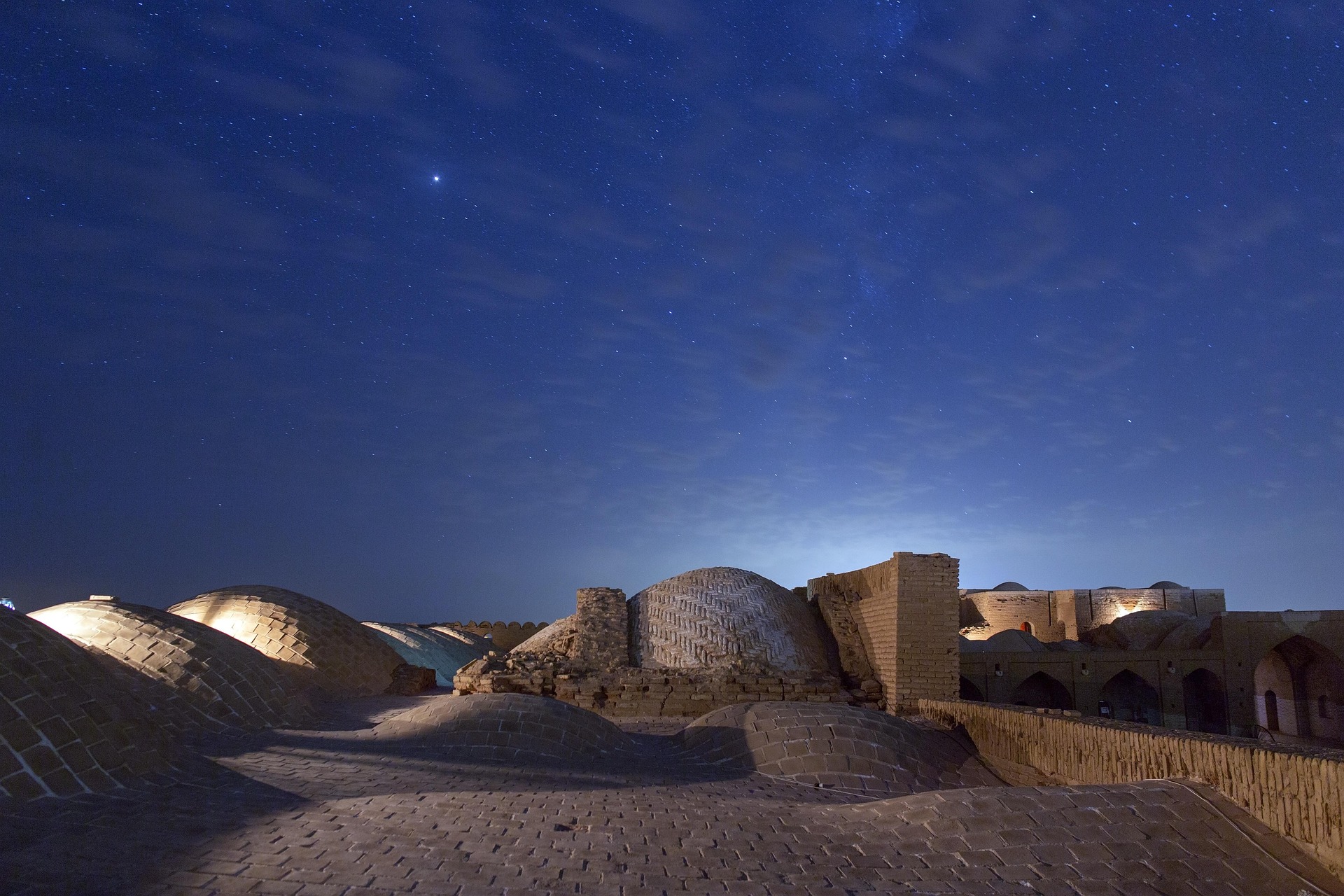
Places to Visit in Bisotun , Iran
Bisotun, also spelled Behistun or Bistoun, is one of the most important archaeological destinations in western Iran. Located in Kermanshah Province, the site is renowned for its monumental rock inscription, ancient reliefs, historic remains, and dramatic limestone mountain landscape. It occupies a historically significant position along an ancient route connecting the Iranian plateau with Mesopotamia. For travelers interested in Persian history, ancient civilizations, archaeology, and cultural tourism, Bisotun offers an opportunity to explore a place where the story of an empire was carved directly into the rock.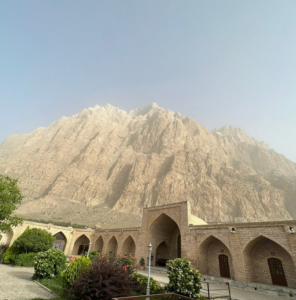
Why Bisotun Is One of the Best Historical Places to Visit in Iran
Bisotun stands out because its attractions bring together ancient writing, royal imagery, archaeology, geography, and the history of communication between civilizations. Its most famous monument was created during the reign of Darius I, one of the major rulers of the Achaemenid Persian Empire. The wider archaeological landscape also contains remains associated with several other historical periods. Visitors can therefore explore more than a single monument: the mountain and surrounding plain preserve evidence of human activity over thousands of years. Bisotun is particularly rewarding for travelers who want to understand the historical context behind Iran’s ancient heritage.
Bisotun UNESCO World Heritage Site: Understanding Its Global Importance
Bisotun was added to the UNESCO World Heritage List in 2006 under cultural criteria recognizing the exchange of artistic and intellectual traditions and the site’s testimony to an important historical period. The protected property covers approximately 187 hectares, with a surrounding buffer zone of about 361 hectares. Its significance comes primarily from the monumental inscription and relief associated with Darius I, although the wider landscape contains additional archaeological remains. UNESCO recognizes Bisotun as a remarkable record of an ancient political event and an important monument in the history of deciphering cuneiform writing.
Mount Bisotun: The Dramatic Natural Setting of an Ancient Monument
Mount Bisotun provides the striking natural backdrop for the archaeological site. Its pale limestone cliffs rise above the surrounding plain and are visible from the historic route that once connected western Iran with the Mesopotamian region. The mountain’s appearance helps explain why it became an important location for monumental inscriptions: a message carved high on a prominent cliff could be associated with royal authority and made visible across the landscape. Visitors can appreciate the relationship between the mountain, the ancient route, and the archaeological remains while exploring authorized areas around the site.
The Behistun Inscription: The Most Famous Attraction in Bisotun
The Behistun Inscription is the principal attraction for visitors exploring Bisotun, Iran. Commissioned by Darius I around 521 BCE, it combines a large sculpted relief with an extensive multilingual cuneiform text. The monument records Darius’s account of his rise to power and his campaigns against individuals who challenged his rule. Its importance extends far beyond Persian history because the inscription became a key source for the study of ancient writing systems. Anyone searching for the best places to visit in Bisotun should make this monumental record the central focus of the trip.
Darius I the Great: The Persian King Behind the Monument
Darius I, commonly known as Darius the Great, ruled the Achaemenid Persian Empire from approximately 522 to 486 BCE. His reign was marked by the consolidation of imperial authority, administrative development, and the expansion of a system of governance that connected territories across a vast region. The Bisotun inscription was part of his effort to explain and legitimize his kingship. Rather than presenting a neutral historical account, the text expresses the king’s official perspective on the rebellions and conflicts that followed his accession. Understanding this political purpose helps visitors interpret the monument more critically.
The Royal Bas-Relief: Explore the Figures Carved Into the Cliff
The monumental bas-relief portrays Darius standing with a bow, a symbol associated with royal power, while a defeated figure lies before him. Other figures appear in a line behind the main scene, visually reinforcing the story of victory and submission. A symbolic figure associated with divine favor appears above the scene. The composition was carefully designed to present the king as victorious and legitimate. Visitors should look closely at the overall arrangement, even if fine details are difficult to distinguish from the ground. The relationship between the images and the inscription is central to understanding the monument’s message.
The Defeated Figure and the Story of Gaumata
The figure beneath Darius’s foot is traditionally identified with Gaumata, a person whom Darius described as an impostor who seized power before Darius regained control. The king’s account presents Gaumata as the central threat to legitimate rule. Historians study the inscription alongside other evidence to understand the events, but the text should be recognized as a royal proclamation rather than an impartial record. For visitors interested in ancient politics, this detail offers an important lesson about how rulers used public monuments to shape the way their victories and authority were remembered.
The Three Languages of the Behistun Inscription
One of the most remarkable features of the Behistun Inscription is that it presents related accounts in three cuneiform languages: Old Persian, Elamite, and Babylonian, often discussed in the context of Akkadian. The multilingual design made the monument particularly valuable to later scholars because parallel versions provided evidence for interpreting unfamiliar scripts. The texts describe the same broad political events from the perspective of Darius’s official record. For travelers researching ancient Persian history, the inscription demonstrates that the empire operated in a multilingual cultural environment and used writing as an instrument of administration and royal communication.
Why the Behistun Inscription Is Compared With the Rosetta Stone
The Behistun Inscription is often compared with the Rosetta Stone because both played a crucial role in the decipherment of ancient writing systems. The Rosetta Stone helped scholars interpret Egyptian hieroglyphs through parallel texts, while the Behistun monument provided important evidence for understanding cuneiform. The comparison does not mean that the two objects are identical in form or historical context. Instead, it highlights their shared importance in making ancient written records accessible to modern scholarship. Visitors who understand this connection can appreciate why Bisotun is significant not only for Iran but also for the wider study of ancient civilizations.
The Decipherment of Cuneiform: Bisotun’s Contribution to Modern Scholarship
The decipherment of cuneiform transformed the study of ancient Mesopotamia and the Persian Empire. Nineteenth-century scholars worked with the multilingual inscriptions at Bisotun to identify signs, compare language versions, and reconstruct the meaning of texts that had been unreadable for centuries. Their work helped open a vast collection of historical records, royal inscriptions, administrative documents, and literary texts. Bisotun therefore represents a turning point in the development of modern archaeology and ancient-language studies. Visitors with an interest in history of science may find this intellectual story as compelling as the carved relief itself.
Henry Rawlinson and the Study of the Behistun Inscription
British officer and scholar Henry Rawlinson was one of the important nineteenth-century figures associated with the study of the Behistun Inscription. Working in difficult conditions, he made copies and observations that contributed to the decipherment of the cuneiform texts. His efforts formed part of a broader scholarly process involving several researchers and the comparison of ancient inscriptions from different sites. The story illustrates how the study of archaeology often depends on painstaking documentation, language analysis, and the work of many people over time. It also reinforces the importance of preserving original monuments for future research.
The Ancient Trade Route: Why Bisotun Occupied Such an Important Position
Bisotun’s location along an ancient route between the Iranian plateau and Mesopotamia was a major factor in its historical importance. The route connected regions with different political systems, languages, commercial networks, and cultural traditions. Travelers, traders, soldiers, administrators, and other groups moved through this wider landscape over many centuries. A monumental inscription placed beside an important route could communicate a royal message to people passing through the region. Today, the same geographical setting helps visitors imagine how the site related to the wider world of ancient western Asia.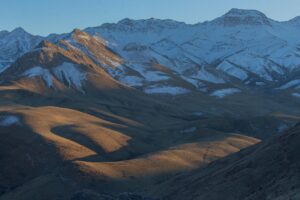
The Archaeological Landscape of Bisotun: More Than One Monument
The UNESCO property contains remains associated with several periods, including prehistoric, Median, Achaemenid, Sassanian, and Ilkhanid history. This long sequence makes Bisotun valuable for understanding how people used the mountain and surrounding landscape across different eras. The monuments are not all equally preserved or equally easy to interpret, but together they create a wider historical picture. Visitors should allow time to look beyond the famous royal inscription and learn about other structures and carved remains where access is permitted. The broader archaeological landscape is one of the strongest reasons to explore Bisotun slowly rather than treating it as a quick roadside stop.
The Statue of Hercules: A Distinctive Hellenistic-Era Monument
The statue of Hercules is another notable attraction associated with the Bisotun archaeological area. It represents the Greek hero in a reclining position and is generally dated to the Hellenistic period, with an inscription associated with the Seleucid era giving a date in the second century BCE. The monument reflects the cultural interactions that followed Alexander the Great’s campaigns and the development of Hellenistic kingdoms in parts of western Asia. Its presence adds another layer to the story of Bisotun, demonstrating that the site remained meaningful after the Achaemenid period. Visitors should follow the site’s access rules when approaching the statue.
Hercules and the Cultural Connections of Ancient Western Asia
The Hercules monument illustrates how artistic and religious ideas could travel across regions and be adapted to local contexts. Hercules was a major figure in Greek mythology, yet representations of the hero appeared far beyond the Greek mainland as Hellenistic influence spread through western Asia. The sculpture at Bisotun provides evidence of this wider cultural environment. For travelers interested in the interaction between Persian, Greek, and other traditions, the statue is a useful companion to the much earlier inscription of Darius I. Together, the monuments show that the area’s history cannot be reduced to one empire or one cultural tradition.
The Parthian Relief: A Glimpse of a Later Persian Dynasty
The archaeological landscape around Bisotun includes a Parthian relief associated with Mithridates II, a powerful ruler of the Parthian Empire. Although the carving is more eroded than some of the site’s better-known monuments, it remains historically valuable. It reflects a later phase of royal representation in the Iranian world and provides evidence that the mountain continued to be used for political and commemorative imagery. Visitors should not expect every detail to be immediately visible; the relief is best appreciated with historical context and careful observation. Its presence broadens the site’s story beyond the Achaemenid era.
Mithridates II and the Parthian Period in Iranian History
Mithridates II ruled during a period when the Parthian Empire strengthened its position across parts of Iran and neighboring regions. The Parthians later became important rivals of Rome and played a central role in the political history of western Asia. A relief associated with Mithridates II at Bisotun demonstrates how the location retained symbolic significance in subsequent periods. The monument also helps visitors compare different styles of royal representation. While the Darius relief presents an Achaemenid ruler and his defeated enemies, the Parthian carving reflects a different political setting and artistic tradition.
Farhad Tarash: The Enormous Rock Face of Bisotun
Farhad Tarash is a large, comparatively smooth rock face on Mount Bisotun that attracts attention because of its scale and unfinished appearance. It has long prompted questions about the purpose behind the extensive preparation of the rock surface. The feature is often discussed in connection with the area’s broader archaeological and legendary traditions, but interpretations should be treated carefully where evidence is uncertain. Its sheer scale makes it an impressive part of the landscape, even for visitors who are not specialists in archaeology. The rock face also provides a striking reminder of the labor required to shape monumental stone surfaces in antiquity.
The Legend of Farhad: Folklore and the Mountain Landscape
Farhad Tarash is associated in popular tradition with the figure of Farhad, a legendary craftsman connected in Persian storytelling with the tragic romance of Khosrow and Shirin. In different versions of the legend, Farhad is remembered for extraordinary devotion and feats of labor. These stories belong to the cultural imagination surrounding the landscape and should not be mistaken for verified archaeological explanations of the rock face. Nevertheless, folklore can help travelers understand how communities attach meaning to dramatic natural features. The combination of physical scale and literary tradition makes Farhad Tarash an interesting stop for visitors who appreciate both history and storytelling.
The Anahita Temple Area: Exploring the Sacred History of Bisotun
The remains traditionally associated with the Temple of Anahita are among the important archaeological features discussed in relation to the wider Bisotun area. Anahita was an Iranian divinity connected with water and other aspects of religious tradition. The surviving remains are not always straightforward to interpret, and descriptions of the site’s original function have been debated. Travelers interested in ancient religion should approach the area as an archaeological landscape rather than expecting a complete, intact temple. Its significance lies in the evidence it may provide about sacred spaces and the long history of human activity around Mount Bisotun.
Anahita in Ancient Iranian Belief and Cultural History
Anahita occupies an important place in the history of Iranian religious traditions, particularly in relation to water, fertility, and purity. The presence of a site associated with her name at Bisotun invites visitors to consider how religious beliefs influenced the use of landscapes and the construction of monuments. Ancient sacred places could serve multiple roles over time, and the interpretation of surviving remains requires careful archaeological study. Visitors should therefore distinguish between what has been established by research and what remains uncertain. This approach makes a visit more informative and avoids presenting every traditional attribution as a settled fact.
The Sassanian Period: Discover Another Chapter of Bisotun’s History
The Sassanian Empire ruled Iran from the third to the seventh century CE and left a substantial legacy of architecture, sculpture, and political inscriptions. Bisotun’s wider archaeological landscape contains evidence associated with the Sassanian period, showing that the location continued to be relevant long after Darius I. The Sassanian rulers developed their own styles of royal representation and used rock reliefs elsewhere in Iran to communicate ideas of kingship, victory, and divine legitimacy. Travelers can gain a fuller understanding of Iranian history by comparing the Achaemenid monuments at Bisotun with Sassanian works at other locations in Kermanshah Province.
The Ilkhanid Period: Medieval History at Bisotun
The archaeological record at Bisotun extends into the medieval period, including remains associated with the Ilkhanids, a Mongol dynasty that ruled much of Iran during the thirteenth and fourteenth centuries. This later layer demonstrates the long-term significance of the area as a place of settlement, movement, and construction. While many visitors focus primarily on ancient Persia, the medieval evidence provides a reminder that the history of Iran continued to evolve through successive political and cultural changes. A visit that considers multiple periods will provide a more complete picture of the site.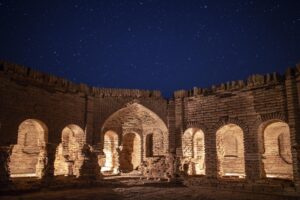
The Safavid Caravanserai: Historic Hospitality Along an Ancient Route
The wider Bisotun landscape includes a historic caravanserai associated with the Safavid period. Caravanserais served travelers and merchants by providing shelter, storage, and space for animals along important routes. They were essential features of long-distance movement before modern transport, helping connect commercial centers and regional communities. A caravanserai near Bisotun illustrates the continued importance of the route long after the time of Darius I. Visitors should check whether the structure is open and what access arrangements are currently available, as restoration work and conservation requirements can affect entry.
Caravanserais and the History of Travel in Iran
Caravanserais were a vital part of Iran’s historic travel infrastructure. Merchants, pilgrims, officials, and other travelers could use them to rest during journeys across difficult terrain. Their architecture often included a central courtyard and rooms or covered spaces arranged around it, although designs varied according to location and period. The caravanserai at Bisotun connects the archaeological site with a broader story of trade and mobility. For travelers interested in cultural routes, it offers a useful way to understand how the region continued to support movement across western Iran long after antiquity.
Prehistoric Bisotun: Human Activity Before the Persian Empire
Bisotun’s archaeological importance begins well before the Achaemenid Empire. UNESCO records evidence of human activity extending back to prehistoric times, showing that the landscape was used long before Darius I ordered his monumental inscription. Mountains, water sources, routes, and sheltered areas could all influence where people settled or traveled. The surviving evidence does not mean every prehistoric phase can be easily observed during a standard tourist visit, but it gives the site a much deeper chronology than its famous relief alone suggests. Bisotun is therefore a destination for understanding the long-term relationship between people and landscape.
The Median Period: Exploring the History Before Darius
The Median period is another important chapter in the history of the wider Bisotun area. The Medes were a significant ancient Iranian people who played a role in the political landscape before and during the rise of the Achaemenids. Although the details of Median history remain complex, archaeological remains associated with this period contribute to the site’s historical depth. Understanding the Median context also helps visitors appreciate the political world in which Darius I came to power. The inscription’s account of Gaumata and the rebellions is closely connected to the king’s presentation of the events surrounding his accession.
Kermanshah Province: Explore the Region Around Bisotun
Bisotun is located in Kermanshah Province, a region of western Iran known for its archaeological heritage, mountain scenery, historic monuments, and distinctive local culture. Travelers who visit only the famous inscription may miss the opportunity to explore the province’s other important attractions. Kermanshah city provides accommodation, transport connections, and access to additional historical sites. The surrounding landscape also includes valleys, rocky hills, and rural communities that offer a broader view of western Iran. A regional itinerary allows visitors to connect Bisotun with other destinations and understand the area’s place in the country’s wider cultural history.
Kermanshah City: A Practical Base for Exploring Bisotun
Kermanshah city is a useful base for travelers visiting Bisotun because it provides more accommodation and services than the immediate archaeological area. Visitors can use the city to arrange transport, meals, local guides, and excursions to nearby historical sites. The city also has its own cultural identity, with regional cuisine, markets, and access to important monuments. Staying in Kermanshah can make it easier to explore Bisotun without rushing, especially for travelers who want to combine the archaeological site with Taq-e Bostan and other attractions. Transport time should be confirmed locally, since conditions and routes can vary.
Taq-e Bostan: A Major Historical Attraction Near Kermanshah
Taq-e Bostan is one of the most important historical attractions to combine with a visit to Bisotun. Located on the northeastern side of Kermanshah city, it is known for its Sassanian rock reliefs and carved stone arches. The monuments depict royal figures and scenes connected with kingship, religious symbolism, and the artistic traditions of the Sassanian Empire. Its setting near natural springs adds to the appeal of the site. Visitors interested in Iranian rock reliefs can compare Taq-e Bostan with the much earlier Achaemenid monument at Bisotun to see how royal imagery changed over time.
The Sassanian Rock Reliefs of Taq-e Bostan
The reliefs at Taq-e Bostan provide an opportunity to study the visual language of Sassanian kingship. Carved figures, ceremonial scenes, and royal imagery demonstrate how rulers used stone monuments to communicate authority and legitimacy. The large and small iwans, or vaulted spaces, contain notable sculptural compositions associated with Sassanian rulers. The artistry differs from the composition at Bisotun, reflecting changes in style, politics, and religious context over several centuries. For travelers interested in ancient Iranian art, visiting both sites offers a particularly rewarding comparison.
The Stone Museum at Taq-e Bostan: Discover Historic Carved Objects
The Stone Museum near Taq-e Bostan provides another cultural attraction for visitors exploring Kermanshah. It contains carved stone objects associated with different historical periods, including pieces connected with Sassanian and Qajar traditions. Such objects help explain the craftsmanship, symbolism, and architectural decoration used in Iranian monuments. Museum access and displays can change, so visitors should verify current opening information before planning a visit. Adding a museum stop to a regional itinerary can help place the outdoor monuments into a wider historical and artistic context.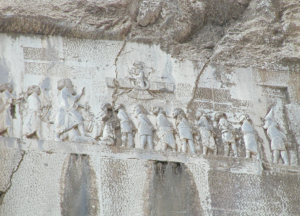
Local Culture and Hospitality in Kermanshah
Kermanshah Province has a rich cultural identity shaped by its location in western Iran, its communities, and its history of regional connections. Visitors may encounter local music, traditional crafts, markets, and food traditions that differ from those of other Iranian regions. Approaching these experiences with curiosity and respect can make a historical journey more meaningful. Travelers should ask permission before photographing people, follow local customs, and use trusted local guidance when appropriate. Cultural tourism works best when visitors recognize that the region is not simply a collection of ancient monuments but also a living place with contemporary communities.
Traditional Food in Kermanshah: Taste the Flavors of Western Iran
Food is an important part of exploring Kermanshah and the wider region around Bisotun. Travelers can look for traditional Iranian dishes, grilled foods, rice dishes, stews, breads, and local specialties served in restaurants or family-run establishments. Kermanshah is also associated with regional culinary traditions that make it worth spending time in the city rather than traveling straight back after a visit to the archaeological site. Menus and availability vary, so visitors should ask local hosts about seasonal dishes and regional specialties. Trying local food provides a practical way to experience the cultural character of western Iran.
Photography at Bisotun: Capture Ancient History and Mountain Scenery
Bisotun offers several photographic subjects, from the monumental limestone cliff to the archaeological remains and the broad plain below. The scale of the mountain can be difficult to convey in a single image, so visitors may want to capture both close details and wider landscape views from authorized viewpoints. Early or late daylight can create attractive textures on the rock face, although access and lighting conditions depend on the season. Photographers should avoid climbing barriers or entering restricted areas to obtain a better angle. Respecting conservation rules is especially important at a fragile World Heritage site.
Best Time to Visit Bisotun, Iran
The most comfortable time to visit Bisotun is generally during spring or autumn, when temperatures in western Iran can be more suitable for outdoor sightseeing than during the hottest part of summer. Spring may bring greener surroundings and pleasant conditions for walking, while autumn can offer clear light and a quieter atmosphere. Summer can be hot in the surrounding lowlands, so visitors should bring water, sun protection, and suitable clothing. Winter conditions may be colder and can affect road travel or walking comfort. Because weather patterns vary from year to year, check a current forecast before the visit.
How to Reach Bisotun From Kermanshah
Bisotun lies northeast of Kermanshah city and is commonly approached by road. Visitors may arrange a private vehicle, taxi, organized excursion, or other local transport depending on availability. Before departure, confirm the exact entrance location, expected journey time, and return arrangements. Travelers relying on public transport should check current routes and schedules with local sources rather than assuming that a direct service will be available. If hiring a driver, agree on the waiting time and return plan in advance, particularly if you intend to explore more than the main monument.
Visiting Bisotun From Tehran or Other Iranian Cities
Travelers coming from Tehran or another major Iranian city should treat Bisotun as part of a wider western Iran itinerary. Depending on the origin and transport chosen, the journey may require a domestic flight, intercity bus, train connection, or a longer road trip. Kermanshah is a useful base for arranging the final leg to the archaeological site. Transport schedules, availability, and travel conditions should be verified close to departure. Travelers should also check official entry requirements and current travel advisories relevant to their nationality before arranging an international trip to Iran.
Practical Travel Advice for Visiting Bisotun
A visit to Bisotun is more enjoyable when travelers prepare for an outdoor archaeological site rather than expecting a fully enclosed museum. Wear comfortable shoes suitable for uneven surfaces, bring water and sun protection, and allow time to walk between accessible features. Carry a phone or camera with sufficient battery, but do not rely entirely on mobile data for directions. Follow signs, barriers, and instructions from site staff. If you want detailed historical explanations, consider arranging a knowledgeable guide or reading the official heritage description before arrival.
Respecting the Conservation of Bisotun
Bisotun is a protected archaeological site, and its preservation depends on careful management and responsible visitor behavior. The limestone cliff, inscriptions, and sculpted surfaces are vulnerable to physical damage and environmental processes. Visitors should never touch, scratch, climb, or attempt to mark the monuments. They should remain within authorized areas and follow any temporary restrictions imposed for conservation or safety. UNESCO has noted the importance of addressing water infiltration behind the relief and managing development pressures around the property. Responsible tourism helps protect the site’s historical value for future generations.
Is Bisotun Suitable for Families?
Bisotun can be an educational destination for families interested in history, archaeology, and ancient civilizations. Children may find the enormous rock relief and the story of Darius I particularly memorable when the visit is explained in age-appropriate language. Families should plan for outdoor conditions, including sun, uneven ground, and the possibility of limited shade in some areas. Young children should be supervised closely around rocky terrain and restricted zones. A visit is often more engaging when combined with a simple explanation of ancient writing, kingship, and how historians reconstruct the past.
Bisotun for History Enthusiasts and Archaeology Lovers
History enthusiasts will find Bisotun especially rewarding because it connects political history, ancient languages, sculpture, and the development of modern archaeology. The main inscription offers a primary source from the reign of Darius I, while the surrounding archaeological landscape provides evidence of later periods. Visitors can compare the royal message with the physical setting and consider how rulers used monuments to communicate with their subjects. Those with a deeper interest may wish to read the UNESCO description before arrival, allowing more time on site for observation and interpretation.
Bisotun for Cultural Travelers and Educational Tours
Bisotun is well suited to cultural travelers who want to learn about Iran’s historical importance within western Asia. The site can support educational visits focused on the Achaemenid Empire, ancient writing, archaeological conservation, and the movement of people and ideas along historic routes. It is also useful for comparing Persian royal monuments with works from Mesopotamia and later Iranian dynasties. Teachers, students, and independent learners can benefit from using reliable heritage resources rather than relying only on simplified tourist descriptions.
Bisotun and the Wider History of Ancient Persia
The Achaemenid Empire was one of the major political powers of the ancient world, and Bisotun provides an unusually direct view of how a ruler described his own rise to power. Unlike a later summary written by historians, the inscription communicates the official message Darius wanted to preserve. It tells visitors something about royal authority, rebellion, legitimacy, and the use of monumental art. At the same time, it encourages critical thinking because royal accounts were designed to persuade. This combination of historical evidence and political messaging makes Bisotun an especially valuable destination.
Why Bisotun Is Different From Persepolis and Pasargadae
Bisotun, Persepolis, and Pasargadae are all important places for understanding the Achaemenid Persian Empire, but they offer different visitor experiences. Persepolis is known for its monumental palace complex and sculpted stairways, while Pasargadae is associated with the early imperial capital and the tomb of Cyrus the Great. Bisotun focuses on a rock inscription and relief that document a specific episode in Darius I’s reign. Travelers interested in ancient Persian history can learn a great deal by visiting more than one of these sites, but each should be understood on its own historical terms.
Why Bisotun Belongs on an Iran Cultural Heritage Itinerary
Bisotun deserves a place on an Iran itinerary because it offers a rare combination of monumental art, ancient writing, political history, and landscape. Its connection to the decipherment of cuneiform gives it importance beyond the history of Iran alone, while its wider archaeological remains reveal a much longer sequence of human activity. When combined with Kermanshah and Taq-e Bostan, it becomes part of a regional journey through several major periods of Iranian history. For travelers who value learning as much as sightseeing, Bisotun can be one of the most meaningful stops in western Iran.
Conclusion
The best places to visit in Bisotun, Iran, include the Behistun Inscription, Darius I’s monumental bas-relief, the Hercules statue, the Parthian relief associated with Mithridates II, Farhad Tarash, archaeological remains connected with different historical periods, and the wider landscape around Mount Bisotun. Nearby attractions such as Taq-e Bostan and its Sassanian rock reliefs can add valuable context to a regional itinerary. Bisotun is more than a famous ancient inscription: it is a place where the history of empire, writing, art, trade, and human settlement comes together. With thoughtful preparation and respect for conservation rules, travelers can discover one of Iran’s most significant cultural heritage destinations.
UNESCO World Heritage Centre: Bisotun — official World Heritage listing provides the site’s historical background, inscription details, heritage significance, and conservation context.
Official Iranian tourism portal: Bisotun — Visit Iran provides an additional destination description and historical overview.
Taq-e Bostan — Visit Iran: Official destination information supports the section about the Sassanian monuments near Kermanshah.
UNESCO’s nomination decision: Decision on the inscription of Bisotun explains the reasons for recognizing the site as World Heritage.
30 COM 8B.41
Author

Related posts

Places to Visit in Pirin National Park
- 0
- 5,730 words
Places to Visit in Pirin National Park , Bulgaria Pirin National Park is one of the most remarkable destinations in Bulgaria for...
Read out all
Best Places to Visit in Dinant
- 0
- 4,895 words
Best Places to Visit in Dinant, Belgium Dinant is one of the most beautiful small towns in Belgium and one of the...
Read out all
Best Places to Visit in Mont-Saint-Michel
- 0
- 4,974 words
Best Places to Visit in Mont-Saint-Michel , France Mont-Saint-Michel is one of the most extraordinary destinations in France and one of the...
Read out all
UNGA
- 0
- 5,649 words
UNGA (United Nations General Assembly ) The United Nations General Assembly, commonly known as the UN General Assembly or UNGA, is one...
Read out all
Best Places to Visit in Kathmandu
- 0
- 4,089 words
Best Places to Visit in Kathmandu , Nepal Kathmandu, the capital of Nepal, is one of South Asia’s most fascinating travel destinations....
Read out all
Best Places to Visit in Vilnius
- 0
- 5,246 words
Best Places to Visit in Vilnius , Lithuania Vilnius, the capital of Lithuania, is one of the most fascinating destinations in the...
Read out all