

What Is AI?
Artificial Intelligence, commonly called AI, is one of the most important technologies shaping the modern world. From smartphones and virtual assistants to medical research and self-driving cars, AI is now integrated into daily life across nearly every industry. Many people use AI every day without fully understanding how it works or why it has become such a powerful technology. AI refers to computer systems designed to perform tasks that normally require human intelligence, such as learning, reasoning, understanding language, recognizing images, solving problems, and making decisions. Unlike traditional software that follows fixed instructions, AI systems can analyze data, recognize patterns, and improve over time through experience.
The rapid rise of AI has transformed communication, business, healthcare, education, entertainment, and transportation. Modern AI tools can generate realistic images, write articles, answer questions, create videos, recommend movies, translate languages, and even assist scientists in research. The growing influence of AI is comparable to the arrival of electricity or the internet because it changes how humans interact with technology and information. Experts believe AI will continue expanding into nearly every sector during the coming decade.
The Meaning of Artificial Intelligence
Artificial Intelligence is the simulation of human intelligence by machines and computer systems. The concept was developed to allow computers to perform activities traditionally associated with human thinking. AI systems attempt to imitate certain aspects of the human brain, such as learning from experiences, understanding language, recognizing objects, and making predictions based on information. While AI can sometimes appear human-like, most current systems are specialized for particular tasks rather than possessing complete human intelligence.
The term AI covers many different technologies and approaches. Some AI systems focus on analyzing large amounts of data, while others specialize in generating new content or automating complex workflows. AI includes technologies such as machine learning, deep learning, natural language processing, computer vision, robotics, and generative AI. These technologies work together to help machines understand and interact with the world more intelligently.
AI differs from traditional programming because traditional software relies on explicit instructions created by programmers. In contrast, AI systems can learn patterns from data instead of following only rigid rules. This ability to learn makes AI more flexible and adaptable in changing environments.
The History and Evolution of AI
The idea of intelligent machines has existed for centuries in science fiction and philosophy, but practical AI research began during the mid-20th century. British mathematician Alan Turing played a major role in the early development of AI concepts. He proposed that machines could potentially simulate intelligent behavior and introduced the famous “Turing Test,” designed to evaluate whether a machine could imitate human conversation convincingly.
The first AI programs appeared during the 1950s and 1960s. Early systems focused on solving mathematical problems and playing games such as chess. However, limited computing power and insufficient data slowed progress for several decades. During the 1980s and 1990s, improvements in computer hardware and algorithms revived AI research. Machine learning became increasingly important as researchers discovered that computers could learn from data rather than relying solely on manually programmed instructions.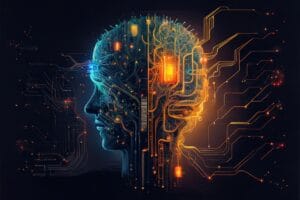
The explosion of digital data and powerful processors during the 21st century accelerated AI development dramatically. Technologies such as cloud computing, advanced graphics processors, and neural networks enabled AI systems to analyze massive datasets quickly and efficiently. This progress led to major breakthroughs in speech recognition, image recognition, language translation, and generative AI systems capable of creating text, music, videos, and images.
How AI Actually Works
AI systems operate by processing enormous amounts of data and identifying patterns within that information. Instead of being manually programmed for every possible situation, AI learns from examples. This process is similar to how humans improve skills through practice and experience.
Most modern AI systems rely on machine learning, a technique where algorithms analyze data to discover relationships and patterns automatically. During training, the AI system receives large datasets containing examples. The system studies these examples and gradually improves its ability to make predictions or decisions. For instance, an AI image recognition system might analyze millions of photographs to learn how to identify cats, dogs, cars, or human faces.
AI systems use mathematical models called neural networks, inspired loosely by the structure of the human brain. Neural networks consist of layers of interconnected nodes that process information. Each layer extracts increasingly complex features from the data. In image recognition, early layers might detect edges and colors, while deeper layers identify objects and shapes. This layered learning approach is known as deep learning.
After training, AI systems can apply learned knowledge to new situations. When a user asks a chatbot a question, uploads a photo, or speaks into a voice assistant, the AI analyzes the input, compares it with patterns learned during training, and generates a response or prediction.
Machine Learning and Deep Learning
Machine learning is one of the most important foundations of AI. It enables computers to learn from data without requiring explicit instructions for every task. Machine learning algorithms improve performance over time as they process more information. This approach powers recommendation systems, fraud detection, predictive analytics, and many modern applications.
There are several types of machine learning. Supervised learning uses labeled datasets where the correct answers are already known. Unsupervised learning identifies hidden patterns within unlabeled data. Reinforcement learning trains systems through rewards and penalties, allowing AI agents to improve by trial and error.
Deep learning is a more advanced form of machine learning that uses large neural networks with many layers. Deep learning has revolutionized speech recognition, image processing, and language understanding because it can handle extremely complex data patterns. Generative AI tools such as chatbots and image generators rely heavily on deep learning techniques.
Natural Language Processing and Human Communication
Natural Language Processing, often abbreviated as NLP, allows AI systems to understand and generate human language. NLP combines linguistics, machine learning, and computational techniques to help computers interpret text and speech.
This technology powers chatbots, voice assistants, translation services, and text analysis tools. AI systems trained with NLP can answer questions, summarize documents, generate articles, and engage in conversations. Large language models are advanced NLP systems trained on vast collections of text from books, articles, websites, and other written materials.
Modern AI language models analyze words and sentences statistically rather than understanding meaning exactly like humans. They predict likely responses based on patterns learned during training. This enables surprisingly fluent communication, although AI systems can still produce mistakes or inaccurate information.
Computer Vision and Image Recognition
Computer vision is an AI field focused on enabling machines to interpret visual information. AI systems trained for computer vision can recognize faces, detect objects, analyze medical images, and monitor environments using cameras.
Computer vision applications are widely used in security systems, healthcare, manufacturing, agriculture, and transportation. Self-driving cars rely heavily on computer vision to identify roads, pedestrians, traffic signs, and other vehicles. Medical AI systems analyze X-rays and scans to assist doctors in diagnosing diseases. Social media platforms use computer vision for facial recognition and content moderation.
These systems are trained using millions of images that teach AI how to recognize patterns and visual features. The more data available, the better the AI becomes at identifying objects accurately.
Generative AI and Content Creation
Generative AI represents one of the most significant recent advances in artificial intelligence. Unlike traditional AI systems focused primarily on analysis or prediction, generative AI can create entirely new content. This includes text, images, music, videos, computer code, and even realistic voices.
Generative AI systems learn patterns from enormous datasets and then generate original outputs that resemble human-created content. Text-based systems can write essays, summarize articles, answer questions, and produce creative stories. Image generation systems can create artwork or realistic photographs from written descriptions.
This technology has transformed industries such as marketing, entertainment, education, software development, and design. Businesses use generative AI for customer support, content creation, and automation. However, concerns also exist regarding misinformation, copyright issues, deepfakes, and ethical risks associated with AI-generated content.
AI in Everyday Life
Many people interact with AI constantly without realizing it. Smartphones use AI for facial recognition, photography enhancement, voice assistants, predictive typing, and navigation. Streaming services recommend movies and music based on user preferences. Online stores suggest products using AI recommendation systems.
Social media platforms rely on AI algorithms to personalize content feeds and advertisements. Banks use AI to detect fraud and suspicious transactions. Email providers use AI spam filters to block unwanted messages. Navigation apps calculate the fastest routes using AI-powered traffic analysis.
Healthcare organizations use AI to analyze patient data and assist in diagnosis. Schools and universities use AI tools for tutoring, grading, and personalized learning experiences. Businesses automate customer service using AI chatbots capable of handling thousands of conversations simultaneously.
AI and the Future of Work
AI is transforming workplaces across the world. Many companies use AI to automate repetitive tasks, analyze data, improve productivity, and assist employees. AI tools can summarize meetings, organize schedules, generate reports, and streamline workflows.
Some experts believe AI will create new job opportunities while others worry about job displacement caused by automation. Roles involving repetitive or predictable tasks are more likely to be automated, while jobs requiring creativity, emotional intelligence, and complex decision-making may remain heavily dependent on humans.
Recent discussions about AI focus increasingly on collaboration between humans and intelligent systems rather than simple replacement. Many professionals use AI as a productivity partner that assists with research, writing, coding, and planning. Future AI systems may become even more proactive and capable of handling complex multi-step tasks autonomously.
Ethical Concerns and Risks of AI
Despite its advantages, AI also creates serious ethical and social challenges. One major concern involves misinformation and inaccurate outputs. AI systems sometimes generate false or misleading information confidently, which can create risks in healthcare, education, journalism, and public communication.
Privacy is another major issue because AI systems often require large amounts of user data for training and personalization. Concerns exist regarding surveillance, facial recognition, and data security. Bias is also a significant problem because AI models can inherit biases present in training data, potentially leading to unfair or discriminatory decisions.
Automation may disrupt labor markets and eliminate certain jobs. Governments and organizations worldwide are debating regulations to ensure responsible AI development and prevent misuse. AI safety, transparency, accountability, and human oversight are becoming increasingly important as AI systems gain more autonomy.
AI in Education and Learning
Education is one of the fields experiencing major transformation due to AI. AI-powered tutoring systems provide personalized lessons adapted to individual student needs. Language learning platforms use AI to evaluate pronunciation and recommend exercises. Educational AI can generate quizzes, summarize lessons, and help students understand difficult concepts more efficiently.
However, educators also express concerns about excessive dependence on AI tools for assignments and research. Some fear that overuse of AI could weaken critical thinking and independent learning skills. Schools and universities are now developing policies to balance AI assistance with genuine educational development.
AI in Healthcare and Medicine
Healthcare is another industry rapidly adopting AI technologies. AI systems analyze medical scans, predict disease risks, assist in diagnosis, and support treatment planning. Hospitals use AI to optimize operations and manage patient records more efficiently.
Researchers are using AI for drug discovery, genetic analysis, and medical research. AI-powered wearable devices monitor heart rate, sleep patterns, and other health indicators in real time. These innovations may improve healthcare accessibility and reduce costs worldwide.
Despite these benefits, healthcare AI requires careful oversight because inaccurate predictions or biased algorithms could affect patient safety. Medical professionals emphasize that AI should support doctors rather than replace human expertise completely.
The Rise of Agentic AI
Recent developments in AI increasingly focus on agentic systems capable of acting more independently. Traditional AI responds mainly to user prompts, while agentic AI can pursue goals, manage workflows, and make decisions over extended periods.
Experts predict that future AI assistants may schedule appointments, coordinate travel plans, manage finances, and automate complex business operations with minimal supervision. This evolution could significantly increase productivity but also raises questions regarding trust, accountability, and security.
The Future of Artificial Intelligence
The future of AI remains one of the most discussed topics in technology. Researchers continue improving AI systems to become more efficient, accurate, and capable. Many experts believe AI will become deeply integrated into everyday life, operating quietly in the background to assist users continuously.
Future developments may include advanced robotics, autonomous transportation, AI-driven scientific discovery, personalized education, and more sophisticated virtual assistants. Businesses are investing billions of dollars into AI infrastructure and research because of its enormous economic potential.
At the same time, governments and organizations worldwide are debating how to regulate AI responsibly. The challenge will involve balancing innovation with ethical safeguards, transparency, privacy protection, and human control. AI has the potential to improve countless aspects of life, but its impact will depend greatly on how society chooses to develop and govern the technology.
Conclusion
Artificial Intelligence is transforming the world at an unprecedented speed. It allows machines to learn, reason, create content, and assist humans in ways previously considered science fiction. AI works primarily by analyzing data, identifying patterns, and improving performance through learning techniques such as machine learning and deep learning.
From healthcare and education to entertainment and transportation, AI already influences billions of people every day. Generative AI, computer vision, natural language processing, and autonomous systems continue expanding the possibilities of what intelligent machines can achieve.
Although AI offers enormous benefits, it also creates challenges related to ethics, privacy, misinformation, security, and employment. Responsible development and proper regulation will play crucial roles in shaping the future of AI. As technology continues evolving, AI is expected to become even more integrated into human society, transforming how people work, communicate, learn, and solve problems for generations to come.
AI Chatbots and Writing Tools
| AI Tool | Main Uses | Official Website |
|---|---|---|
| ChatGPT | Writing, research, coding, brainstorming | ChatGPT |
| Google Gemini | AI chat, research, writing, image generation | Google Gemini |
| Claude | Writing, analysis, coding, document work | Claude |
| Microsoft Copilot | AI assistance, productivity, search | Microsoft Copilot |
| Perplexity AI | AI-powered web research and cited answers | Perplexity |
| DeepSeek | AI chat, reasoning, coding | DeepSeek |
| Grok | AI chat, research, creative tasks | Grok |
Author

Related posts

OPEC
- 0
- 5,679 words
OPEC OPEC stands for the Organization of the Petroleum Exporting Countries. It is an intergovernmental organization created by major oil-producing countries to...
Read out all
How Do I Find Reliable Wholesale Suppliers
- 0
- 9,103 words
How Do I Find Reliable Wholesale Suppliers ? Finding reliable wholesale suppliers is one of the most important tasks for anyone starting...
Read out all
What Is Happening in the World?
- 0
- 5,355 words
What Is Happening in the World? The world is currently experiencing a period of overlapping crises and opportunities. Political disputes, military conflicts,...
Read out all
BRICS
- 0
- 5,794 words
BRICS : History, Members, Economy, Goals, Expansion and Global Influence BRICS is an international grouping of major emerging economies and developing countries...
Read out all
United Kingdom
- 0
- 5,089 words
United Kingdom The United Kingdom, commonly known as the UK, is one of Europe’s most fascinating travel destinations. Officially called the United...
Read out all
Bhutan
- 0
- 4,154 words
Bhutan Travel Guide Bhutan is one of the most fascinating travel destinations in Asia, offering an extraordinary combination of Himalayan landscapes, Buddhist...
Read out all