

Best Things to Do in Wuppertal , Germany
Wuppertal is one of Germany’s most distinctive cities, combining industrial heritage, dramatic valley landscapes, contemporary culture, historic architecture, museums, parks, and one extraordinary transportation landmark: the famous Wuppertal Suspension Railway, or Schwebebahn. Located in North Rhine-Westphalia in the Bergisches Land region, Wuppertal is a destination that often surprises travelers who expect a conventional German city and instead discover a place built around the Wupper River, steep hillsides, historic neighborhoods, creative cultural spaces, and extensive green areas.
If you are searching for the best things to do in Wuppertal, the Schwebebahn is naturally the first attraction to experience. Yet the suspended railway is only the beginning. Wuppertal is also home to the Von der Heydt Museum, the Green Zoo Wuppertal, Nordbahntrasse, Skulpturenpark Waldfrieden, historic industrial sites, the Pina Bausch dance tradition, beautiful parks, Art Nouveau and Gründerzeit architecture, street art, and neighborhoods such as Luisenviertel. The city’s official tourism information emphasizes its combination of urban culture, nature, architecture, industrial history, and leisure opportunities.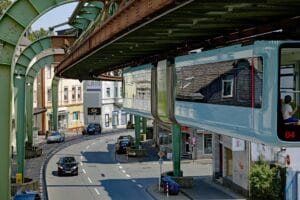
Wuppertal is particularly appealing to travelers who enjoy destinations that are less crowded than Germany’s most famous tourist cities. While cities such as Berlin, Munich, Cologne, and Hamburg attract enormous international attention, Wuppertal provides a more local and unconventional experience. You can ride an iconic historic transportation system in the morning, explore an art museum in the afternoon, walk through a sculpture park, enjoy a German meal in a neighborhood restaurant, and finish the evening in a cultural venue.
The city is also remarkably green. Around half of Wuppertal’s municipal area is described by the city’s economic development organization as agricultural or close to nature, while the city has hundreds of kilometers of hiking routes. This makes Wuppertal particularly interesting for travelers who want to combine city sightseeing and outdoor activities in Germany.
Why Wuppertal Is Worth Visiting
Wuppertal is worth visiting because it offers a combination that is difficult to find elsewhere. The city has the character of a major industrial center but is surrounded by forests, hills, parks, reservoirs, and walking trails. Its industrial past remains visible in its architecture and museums, while contemporary art and performance culture give the city a modern identity.
The city’s most famous attraction, the Schwebebahn, opened in 1901 and remains Wuppertal’s defining symbol. Germany Travel describes Wuppertal as the largest city in the Bergisches Land and highlights the city’s importance as a regional economic, educational, industrial, and cultural center.
Wuppertal also has approximately 4,500 listed architectural monuments, meaning that architecture lovers have plenty to discover beyond the city’s major museums. The combination of nineteenth-century buildings, industrial structures, historic villas, modern architecture, and public art makes walking around Wuppertal surprisingly rewarding.
For travelers interested in culture, Wuppertal is associated internationally with Tanztheater Wuppertal Pina Bausch, one of the world’s best-known contemporary dance companies. The city also has major museums, concert venues, galleries, and cultural institutions.
Ride the Famous Wuppertal Schwebebahn
The Wuppertal Schwebebahn is unquestionably one of the best things to do in Wuppertal. Unlike an ordinary metro or tram, the Schwebebahn travels suspended above the streets and Wupper River.
The railway officially began operation in March 1901 and has become synonymous with Wuppertal. The city’s official tourism website describes it as the city’s world-famous landmark and an essential part of local public transportation.
The route provides a unique way to see Wuppertal. Instead of traveling underground or at street level, passengers glide above the city, looking down onto streets, buildings, bridges, and sections of the Wupper.
The entire experience feels like sightseeing and transportation at the same time. Even if you have no particular interest in trains, railways, or engineering, riding the Schwebebahn gives you an immediate understanding of Wuppertal’s unusual geography.
Learn About the History of the Schwebebahn
The history of the Schwebebahn is one of the most fascinating aspects of Wuppertal’s identity.
The railway was created to provide an innovative transportation solution through the narrow Wupper valley. Today, the system remains an important part of daily life while also functioning as one of Germany’s most unusual tourist attractions.
The official city information notes that the line stretches for approximately 13.3 kilometers and passes 20 stations.
The railway is sometimes described as a “flying bus” by locals because of the way its vehicles move above the city.
Experience the Tuffi Elephant Story
One of Wuppertal’s most entertaining stories is associated with an elephant named Tuffi.
In 1950, Tuffi was transported on the Schwebebahn as a publicity event. During the journey, the young elephant became frightened, broke through the side of the carriage, and fell into the Wupper below.
Remarkably, Tuffi survived the incident with only minor injuries.
The story became part of Wuppertal’s cultural identity and remains one of the city’s most famous anecdotes. The official Schwebebahn information continues to highlight the Tuffi story as one of the railway’s most memorable legends.
Today, travelers can discover references to Tuffi around the city, making the story a fun theme to look for while sightseeing.
Visit the Schwebodrom
One of the newer attractions connected with Wuppertal’s railway heritage is the Schwebodrom, an experience center dedicated to the Schwebebahn.
The attraction provides visitors with additional historical and cultural context about the famous railway. The city lists Schwebodrom among its major tourism highlights and currently describes it as open from Wednesday through Sunday.
For anyone interested in transportation history, engineering, urban development, or Wuppertal itself, the Schwebodrom makes a useful companion to an actual Schwebebahn ride.
Explore Elberfeld City Center
Elberfeld is one of the main urban centers of Wuppertal and a natural starting point for exploring the city.
The area around the central railway station, shopping streets, museums, restaurants, and Schwebebahn stations provides a lively introduction to modern Wuppertal.
The city has invested heavily in improving the area around Döppersberg, creating a more welcoming gateway for visitors arriving by train.
From Elberfeld, many major attractions can be reached on foot or by public transportation.
Explore the Green Zoo Wuppertal
The Green Zoo Wuppertal, known in German as Der Grüne Zoo Wuppertal, is another major attraction.
The zoo is located in a scenic setting and is known for combining animal exhibits with a landscape of hills, trees, and greenery.
Wuppertal’s tourism information describes the zoo as one of Germany’s oldest and most traditional zoological gardens, with more than 3,500 animals representing around 340 species.
Spend a Day at the Green Zoo
A visit to the Green Zoo can easily take several hours because of its size and hilly landscape.
Instead of treating it as a quick stop, consider dedicating most of a morning or afternoon to exploring the grounds.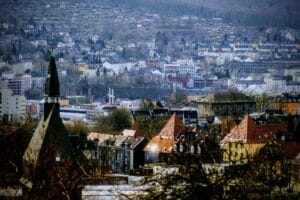
The zoo’s location also makes it possible to combine wildlife viewing with a walk through the surrounding green areas.
Cycle the Nordbahntrasse
Cycling is one of the best ways to experience the Nordbahntrasse.
Because the route follows a former railway alignment, it can provide a relatively comfortable cycling experience compared with some of Wuppertal’s steep urban streets.
Bike riders can combine the route with stops at tunnels, viewpoints, cafés, neighborhoods, and historic sites.
Enjoy Art and Nature Together
One of the greatest strengths of Skulpturenpark Waldfrieden is the relationship between art and landscape.
Sculptures appear along paths, among trees, and within open spaces.
This makes the attraction suitable for travelers who enjoy contemporary art but do not necessarily want to spend hours inside a traditional gallery.
The park is also a peaceful place to slow down after exploring the more urban areas of Wuppertal.
Explore the Luisenviertel
The Luisenviertel is one of Wuppertal’s most attractive neighborhoods for food, cafés, nightlife, independent businesses, and local atmosphere.
The official tourism website describes the Luisenviertel as a kind of old town area of Wuppertal, where shops mix with restaurants, pubs, and neighborhood life.
This is one of the best areas to visit when you want to experience Wuppertal beyond its major attractions.
Spend time walking through the streets, stopping at a café, exploring independent stores, and enjoying a relaxed meal.
Discover Wuppertal’s Gründerzeit Architecture
Wuppertal’s industrial wealth during the nineteenth century left behind an impressive architectural legacy.
The city’s prosperous industrial families constructed large villas, apartment buildings, commercial buildings, and public institutions.
Germany Travel notes that Wuppertal has around 4,500 architectural monuments and particularly emphasizes its nineteenth-century architecture.
Walking through neighborhoods such as Briller Viertel and Zooviertel reveals some of the most impressive examples.
Walk Through the Briller Viertel
The Briller Viertel is particularly famous for historic villas and elegant residential architecture.
The neighborhood developed during Wuppertal’s period of industrial prosperity, when wealthy business owners built substantial homes on the hills above the valley.
The area’s architecture provides a different perspective on Wuppertal’s industrial history.
Instead of seeing factories, visitors see the residential wealth created by the city’s textile and manufacturing industries.
Explore the Zooviertel
The Zooviertel is another neighborhood known for attractive historic buildings and villas.
The area is close to the zoo and provides an excellent combination of architecture, greenery, and residential streets.
It is ideal for travelers who enjoy walking tours that focus on buildings rather than conventional tourist attractions.
Visit the Historic Town Hall
The Historische Stadthalle Wuppertal is one of the city’s most important architectural landmarks.
Located on Johannisberg, the historic town hall is known for its grand architecture and concert tradition.
Germany Travel describes it as one of Europe’s beautiful concert and conference halls.
The venue is particularly important for music lovers.
Attend a Concert at the Historic Town Hall
If your visit coincides with a performance, attending a concert at the Historische Stadthalle can be one of the most memorable cultural experiences in Wuppertal.
The elegant interior and acoustics create an atmosphere very different from a modern concert venue.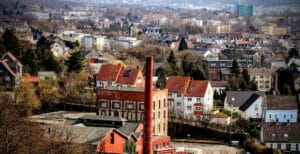
Check the official event calendar before your trip to see whether a performance matches your schedule.
Discover Pina Bausch’s Wuppertal
Wuppertal has an extraordinary connection with contemporary dance through Tanztheater Wuppertal Pina Bausch.
Pina Bausch transformed modern dance and theater and established Wuppertal as an internationally important center for contemporary performance.
The city continues to celebrate this artistic legacy.
For travelers interested in performing arts, checking the current schedule of Tanztheater Wuppertal can add an unforgettable cultural evening to a Wuppertal trip.
Explore the Pina Bausch Legacy
Even when there is no performance during your visit, the influence of Pina Bausch can be felt throughout Wuppertal’s cultural identity.
The city’s tourism authorities identify the Tanztheater Pina Bausch as one of Wuppertal’s internationally renowned cultural attractions.
This makes Wuppertal an especially interesting destination for travelers interested in contemporary dance, theater, and performing arts.
Explore Wuppertal’s Industrial Heritage
Wuppertal’s industrial history is particularly fascinating because the city grew through textile production, manufacturing, trade, and engineering.
The Wupper valley provided waterpower and transportation opportunities, while industrial entrepreneurs transformed the region into an important economic center.
The city’s present-day architecture and transportation infrastructure remain connected to that history.
Visit the Engels House and Learn About Friedrich Engels
Wuppertal is the birthplace of Friedrich Engels, the nineteenth-century philosopher, writer, and political thinker who became famous through his collaboration with Karl Marx.
The city’s tourism information identifies Engels as one of Wuppertal’s internationally known historical figures.
Visitors interested in European intellectual history can explore sites associated with Engels and the industrial environment in which he grew up.
Explore the Engels District
Barmen, where Engels was born, provides an important historical dimension to Wuppertal.
The area combines industrial heritage, historic architecture, cultural institutions, and modern urban life.
Walking through Barmen allows visitors to understand the social and economic environment that shaped nineteenth-century Wuppertal.
Visit the Museum of Timekeeping
Wuppertal has also developed a reputation for specialist museums, including its clock and timekeeping collections.
Germany Travel notes that the city’s clock museum developed into one of the more comprehensive collections concerning the history of time measurement.
For travelers interested in mechanical engineering, clocks, watches, and technology, this provides an unusual museum experience.
Explore Wuppertal Street Art
Wuppertal has an increasingly visible street-art scene.
The city’s economic development organization notes that international street artists have created more than 40 murals across the city.
This effectively creates an open-air art museum that visitors can explore without paying an entrance fee.
Street art is particularly interesting because it connects Wuppertal’s industrial architecture with contemporary creative culture.
Enjoy Wuppertal’s Hiking Trails
Wuppertal is an excellent destination for hiking.
The city’s economic development organization states that approximately 490 kilometers of hiking routes are available.
This is one of the strongest reasons to spend more than a single day in the city if you enjoy outdoor activities.
Explore the Sambatrasse
The Sambatrasse is another former railway route transformed for recreation.
It offers opportunities for walking and cycling while passing through a mixture of woodland, urban areas, and historic railway infrastructure.
For visitors who enjoy exploring former industrial landscapes, the Sambatrasse is an excellent addition to the Nordbahntrasse.
Discover the Bergisches Land Landscape
Wuppertal is part of the wider Bergisches Land region, which is characterized by hills, forests, valleys, reservoirs, villages, and historic industrial settlements.
The region is ideal for travelers who want to combine a city break with rural exploration.
Wuppertal can therefore function as both a destination and a base for exploring the surrounding region.
Explore Wuppertal’s Staircases
Walking through Wuppertal can involve considerably more elevation change than visitors might expect from a German city.
The city’s valley location means that streets rise toward surrounding hills.
This makes walking tours more physically demanding but also creates opportunities for viewpoints and unusual urban perspectives.
Discover Traditional Bergisch Cuisine
Food is an important part of experiencing Wuppertal and the wider Bergisches Land.
Traditional regional cuisine often features hearty ingredients, potatoes, meat, bread, vegetables, and local variations of classic German dishes.
Restaurants and traditional pubs provide opportunities to try regional specialties.
Try Bergische Waffeln
One regional specialty visitors should look for is the Bergische Kaffeetafel, a traditional coffee-table meal associated with the Bergisches Land.
It can include coffee, waffles, bread, spreads, fruit, and other sweet or savory foods.
The experience is more than simply eating dessert; it represents a regional social tradition.
Experience a Bergische Kaffeetafel
A Bergische Kaffeetafel is an excellent experience for travelers interested in regional German food culture.
Instead of choosing a single dish, visitors can enjoy a variety of foods served together with coffee.
This is particularly enjoyable in a traditional café or restaurant outside the busiest city center.
Explore Wuppertal’s Cafés
Wuppertal has a wide selection of cafés, particularly around Elberfeld and Luisenviertel.
Independent cafés are useful places to take a break between sightseeing stops.
A relaxed coffee break also fits naturally with the slower pace of exploring the city’s neighborhoods.
Experience Wuppertal Nightlife
Wuppertal’s nightlife is smaller than that of nearby Cologne or Düsseldorf but offers a distinctly local atmosphere.
The Luisenviertel is one of the best areas for restaurants, bars, pubs, and evening social life.
Visitors can enjoy a relaxed dinner before exploring the neighborhood’s nightlife.
Go Shopping in Wuppertal
The city center provides numerous shopping opportunities, from major retail chains to independent stores.
The official tourism website highlights the combination of classic retailers and creative independent businesses.
Travelers looking for local products should explore smaller stores and design-oriented businesses rather than limiting themselves to shopping centers.
Explore Wuppertal’s Independent Businesses
Independent shops are an important part of the city’s character.
In neighborhoods such as Luisenviertel, visitors can discover boutiques, specialty shops, cafés, restaurants, and creative businesses.
This is one of the easiest ways to experience everyday Wuppertal rather than simply visiting tourist landmarks.
Best Things to Do in Wuppertal for Families
Families have many options in Wuppertal.
The Green Zoo is an obvious choice, while the Schwebebahn provides a fun transportation experience for children.
Oodi-style modern libraries may be popular in other cities, but Wuppertal’s own cultural attractions, parks, museums, and outdoor trails provide plenty of alternatives.
Families can also explore the city’s reservoirs and green spaces.
Best Things to Do in Wuppertal for Couples
Couples can enjoy Wuppertal through a combination of scenic and cultural experiences.
A Schwebebahn ride followed by an afternoon at Von der Heydt Museum, dinner in Luisenviertel, and an evening performance can make an excellent romantic city break.
A walk through Hardt or a visit to Skulpturenpark Waldfrieden offers a quieter alternative.
Best Things to Do in Wuppertal for Solo Travelers
Wuppertal is a good city for independent travelers.
The Schwebebahn makes navigation easy, while museums, parks, cafés, and walking routes allow visitors to create their own itinerary.
Solo travelers interested in history can spend a day following the city’s industrial and Engels heritage.
Art lovers can focus on museums and sculpture parks.
Outdoor enthusiasts can spend much of the day exploring the Nordbahntrasse.
Best Things to Do in Wuppertal for Art Lovers
Art lovers should prioritize Von der Heydt Museum and Skulpturenpark Waldfrieden.
Contemporary dance enthusiasts should also check the Pina Bausch program.
Street art provides a free alternative and turns parts of the city into an open-air gallery.
The combination of traditional museum collections, contemporary sculpture, performance art, and street art gives Wuppertal an unusually broad cultural identity.
Best Things to Do in Wuppertal for History Lovers
History lovers can explore the Schwebebahn, Museum of Early Industrialization, Engels heritage, historic architecture, old railway infrastructure, and traditional neighborhoods.
The city tells its history through physical structures rather than only through museums.
Factories, villas, railway routes, bridges, and public buildings all help explain Wuppertal’s development.
Best Free Things to Do in Wuppertal
Wuppertal offers several activities that can be enjoyed without spending much money.
Walking through historic neighborhoods, exploring public parks, discovering street art, photographing architecture, walking sections of the Nordbahntrasse, and exploring the city’s public spaces are all inexpensive.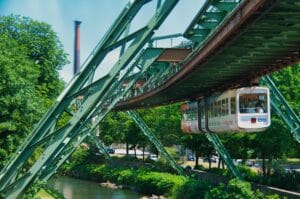
The street-art scene is particularly attractive to budget travelers because the city’s economic development organization describes the murals as an open-air museum without admission.
Best Time to Visit Wuppertal
The best time to visit Wuppertal depends on your interests.
Spring is excellent for parks, hiking, and outdoor sightseeing as the landscape becomes greener.
Summer is ideal for walking, cycling, outdoor cafés, gardens, and exploring the surrounding countryside.
Autumn brings colorful forests and is particularly attractive for hiking and photography.
Winter is better suited to museums, restaurants, architecture, cultural performances, and cozy cafés, although the city’s parks can still be beautiful.
How Many Days Do You Need in Wuppertal?
A two-day Wuppertal itinerary is enough to see the major attractions.
One day can focus on the Schwebebahn, Elberfeld, Von der Heydt Museum, city architecture, and Luisenviertel.
The second day can focus on the Green Zoo, Nordbahntrasse, Skulpturenpark Waldfrieden, Hardt, or another outdoor attraction.
Three days allow travelers to slow down and include more industrial heritage, parks, museums, and surrounding countryside.
One-Day Wuppertal Itinerary
If you only have one day, begin with a ride on the Schwebebahn.
Continue into central Elberfeld and visit the Von der Heydt Museum.
After lunch, explore the historic streets and architecture before heading toward Luisenviertel.
Finish the day with dinner in the neighborhood or attend a cultural performance if one is scheduled.
This gives first-time visitors a strong introduction to Wuppertal’s transportation heritage, culture, architecture, and food.
Getting Around Wuppertal
Public transportation is one of the easiest ways to explore Wuppertal.
The Schwebebahn provides a unique east-west connection through the valley, while buses connect neighborhoods outside the railway route.
Walking is also rewarding in central areas, although visitors should remember that Wuppertal is hilly.
Cycling is especially enjoyable on converted railway paths such as Nordbahntrasse and Sambatrasse.
Is Wuppertal Easy to Explore Without a Car?
Yes, Wuppertal can be explored without a car, particularly if your main interests are the Schwebebahn, museums, central neighborhoods, and major cultural attractions.
The city’s public transportation network provides useful connections, while walking and cycling work well for many recreational routes.
For excursions deep into the surrounding countryside, however, transportation planning becomes more important.
Where to Stay in Wuppertal
For first-time visitors, staying near Elberfeld is convenient because of its central location, shopping, restaurants, railway connections, and access to the Schwebebahn.
Luisenviertel is attractive for travelers who prioritize restaurants, cafés, nightlife, and neighborhood atmosphere.
Barmen can be appealing to history enthusiasts because of its connection with Friedrich Engels and early industrialization.
The area around the zoo is attractive for travelers seeking a quieter and greener environment.
Is Wuppertal Expensive?
Wuppertal can be a more affordable choice than some of Germany’s major tourist cities.
Accommodation, dining, and entertainment costs vary, but travelers can reduce expenses by using public transportation, exploring parks, walking routes, street art, and other free attractions.
Its relatively lower international tourist profile can also make it attractive to travelers looking for value.
Is Wuppertal Safe for Tourists?
Wuppertal is a normal German urban destination where visitors should follow standard travel precautions.
Keep personal belongings secure in busy transportation areas, remain aware of your surroundings, and follow local instructions when hiking or cycling.
Outdoor routes may involve steep sections, tunnels, bridges, or uneven surfaces, so appropriate footwear is advisable.
What to Eat in Wuppertal
Visitors should take the opportunity to experience Bergisch cuisine while in Wuppertal.
Regional food is generally hearty and closely associated with the traditions of the Bergisches Land.
A traditional Bergische Kaffeetafel is particularly interesting because it provides a broader cultural experience rather than simply a single meal.
Local restaurants and traditional pubs are good places to discover regional specialties.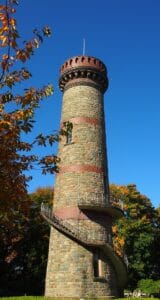
Wuppertal for Photography
Wuppertal is an excellent destination for photographers.
The Schwebebahn provides an instantly recognizable subject, while the Wupper valley creates unusual perspectives.
Historic Gründerzeit buildings, Art Nouveau architecture, industrial sites, bridges, railway tunnels, street art, sculpture parks, and green hills all provide additional photographic opportunities.
The combination of industrial and natural scenery is one of Wuppertal’s strongest visual characteristics.
Best Photography Locations in Wuppertal
The Schwebebahn and Wupper provide classic Wuppertal photographs.
The historic streets of Luisenviertel offer architectural details.
Briller Viertel and Zooviertel are ideal for historic villa photography.
Skulpturenpark Waldfrieden combines art and nature.
Nordbahntrasse provides railway infrastructure and elevated views.
Hardt and Nordpark offer broader city panoramas.
Why Wuppertal Is Different from Other German Cities
Wuppertal does not try to compete directly with Germany’s most famous tourist destinations.
Instead, its appeal lies in its individuality.
The city has a suspended railway rather than a conventional metro, a deep industrial history rather than a medieval old town, a world-famous contemporary dance tradition, an important art museum, an unusually green landscape, and thousands of architectural monuments.
This combination gives Wuppertal a personality that is difficult to reproduce elsewhere.
Wuppertal as a Sustainable Travel Destination
Wuppertal is well suited to travelers interested in sustainable urban tourism.
The Schwebebahn and public transportation reduce the need for cars, while walking and cycling routes make it possible to explore large parts of the city without private transportation.
Converted railway trails such as Nordbahntrasse demonstrate how former industrial infrastructure can be reused for recreation.
The city’s extensive parks, forests, and green spaces further support an environmentally conscious travel experience.
Conclusion
Wuppertal is one of Germany’s most underrated destinations, particularly for travelers who want something beyond traditional European sightseeing.
The city’s greatest attraction is undoubtedly the Wuppertal Schwebebahn. Riding above the Wupper River provides an experience that is both practical and extraordinary. The railway has been part of Wuppertal’s identity since 1901 and remains the city’s most recognizable landmark.
But the best things to do in Wuppertal extend far beyond the suspended railway.
Art lovers can visit the Von der Heydt Museum and Skulpturenpark Waldfrieden. History enthusiasts can explore the Museum of Early Industrialization and sites connected with Friedrich Engels. Families can spend hours at the Green Zoo Wuppertal. Outdoor travelers can explore Nordbahntrasse, Sambatrasse, Hardt, Nordpark, Barmer Anlagen, and Ronsdorfer Talsperre.
Architecture enthusiasts will discover an enormous collection of historic buildings. Wuppertal’s approximately 4,500 architectural monuments reflect the city’s nineteenth-century industrial prosperity and make neighborhood walking particularly rewarding.
For an article intended for publication, these official and authoritative sources are useful for verifying current attraction information:
Official Wuppertal Tourism & Tourist Information
Official Wuppertal – Things to See and Experience
Official Wuppertal Schwebebahn Information
Author

Related posts
Best Places to Visit in Dinant
- 0
- 4,895 words
Best Places to Visit in Dinant, Belgium Dinant is one of the most beautiful small towns in Belgium and one of the...
Read out all
Best Places to Visit in Mont-Saint-Michel
- 0
- 4,974 words
Best Places to Visit in Mont-Saint-Michel , France Mont-Saint-Michel is one of the most extraordinary destinations in France and one of the...
Read out all
UNGA
- 0
- 5,649 words
UNGA (United Nations General Assembly ) The United Nations General Assembly, commonly known as the UN General Assembly or UNGA, is one...
Read out all
Best Places to Visit in Kathmandu
- 0
- 4,089 words
Best Places to Visit in Kathmandu , Nepal Kathmandu, the capital of Nepal, is one of South Asia’s most fascinating travel destinations....
Read out all
Best Places to Visit in Vilnius
- 0
- 5,246 words
Best Places to Visit in Vilnius , Lithuania Vilnius, the capital of Lithuania, is one of the most fascinating destinations in the...
Read out all
Best Places to Visit in Riga
- 0
- 6,005 words
Best Places to Visit in Riga , Latvia Riga, the capital of Latvia, is one of the most fascinating destinations in the...
Read out all