

Best Things to Do in Tbilisi , Georgia
Tbilisi, the capital of Georgia, is one of the most fascinating cities to explore in the Caucasus. Known for its historic Old Town, distinctive architecture, natural sulfur springs, dramatic hills, traditional Georgian cuisine, ancient churches, lively cafés, contemporary art, and vibrant nightlife, Tbilisi offers a travel experience that feels both historic and modern. If you are searching for the best things to do in Tbilisi, Georgia, you will discover a city where centuries of history exist alongside creative neighborhoods, modern architecture, wine bars, restaurants, cultural spaces, and a rapidly developing urban scene.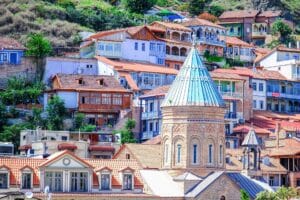
Tbilisi lies along the Mtkvari River in eastern Georgia, surrounded by hills and valleys that have influenced the city’s development throughout history. The city’s location helped establish it as an important crossroads between different regions and cultures. Today, that history is reflected in Tbilisi’s architecture, food, religious traditions, languages, markets, and neighborhoods. Georgia Travel describes Tbilisi as a city where ancient traditions coexist with contemporary urban life and highlights historical attractions, cultural institutions, neighborhoods, nightlife, cuisine, and adventure experiences.
One of the most appealing aspects of visiting Tbilisi is that many of the city’s most memorable experiences are not confined to conventional tourist attractions. You can wander through narrow streets in Old Tbilisi, discover traditional wooden balconies, enter centuries-old churches, relax in a sulfur bath, ride a cable car toward Narikala Fortress, look across the city from a hilltop viewpoint, enjoy Georgian wine, and spend an evening eating khinkali and khachapuri.
Tbilisi is also an excellent destination for travelers who want to combine a city break with wider Georgian adventures. From the capital, visitors can organize trips into the Caucasus Mountains, explore ancient monasteries, visit the wine-producing region of Kakheti, travel to Mtskheta, or continue toward destinations such as Kazbegi, Borjomi, Gori, and Vardzia.
Whether you are planning a weekend in Tbilisi, a three-day Georgia itinerary, a longer Caucasus trip, or your first visit to Georgia, this guide explores the best places to visit in Tbilisi, the top attractions, the most interesting neighborhoods, Georgian food to try, cultural experiences, nightlife, day trips, and practical travel ideas.
Why Visit Tbilisi, Georgia?
Tbilisi is worth visiting because it offers an unusual combination of history, architecture, culture, food, wine, nature, and contemporary urban life. The city has changed dramatically throughout its history, and different periods have left visible marks on its streets and buildings.
The official Georgia Travel destination guide describes Tbilisi as one of the country’s oldest capitals and notes that the city has served as Georgia’s cultural, political, and economic center for approximately fifteen centuries. Its historic Old Tbilisi area contains many of the city’s most recognizable landmarks.
The city is also relatively compact in its central sightseeing areas. This means visitors can combine several attractions in one day without spending all their time traveling between locations.
Another major reason to visit Tbilisi is Georgian hospitality. Meals are often social experiences, Georgian wine has a deep historical connection with the country, and traditional music and dance remain important parts of Georgian culture.
Explore Old Tbilisi
Exploring Old Tbilisi is one of the best things to do in Tbilisi for first-time visitors. The historic district contains winding streets, balconies, churches, courtyards, restaurants, cafés, traditional bathhouses, small shops, and viewpoints.
Old Tbilisi is not simply a collection of preserved monuments. It is a living neighborhood where residents, businesses, restaurants, and cultural institutions operate among historic buildings.
The official Georgia Travel guide describes the historic Old Tbilisi area as a roughly two-square-kilometer section containing many of the city’s most iconic attractions.
Walking through Old Tbilisi is therefore one of the best ways to understand the character of the city.
Admire Tbilisi’s Traditional Wooden Balconies
One of the most recognizable features of Tbilisi’s historic architecture is the colorful wooden balcony.
Many historic homes feature projecting balconies decorated with woodwork, lattice patterns, and ornate details. These structures reflect the city’s architectural evolution and provide some of the most distinctive photographic opportunities in Georgia.
Rather than rushing between attractions, travelers should spend time looking upward and observing the architectural details around Old Tbilisi.
Visit Abanotubani Sulfur Baths
A visit to the sulfur baths in Abanotubani is one of the most famous things to do in Tbilisi.
The district is closely associated with the city’s origin story and remains one of the most atmospheric areas of Old Tbilisi. The traditional domed bathhouses are fed by naturally hot sulfur water.
Georgia Travel explains that the sulfur baths are an important part of Tbilisi’s identity and connects the city’s name and foundation traditions with its warm mineral springs.
A private sulfur bath can be a memorable way to relax after a day of walking through the city.
Experience a Traditional Georgian Sulfur Bath
A traditional sulfur bath is different from visiting a modern spa.
The experience is connected with centuries of local bathing culture and typically involves hot mineral water and, depending on the establishment and service selected, traditional bathing treatments.
Travelers should check the services and procedures of an individual bathhouse before booking because facilities vary.
The experience is particularly enjoyable after exploring the hills and cobbled streets of Old Tbilisi.
Visit Narikala Fortress
Narikala Fortress is one of the most iconic landmarks in Tbilisi.
The fortress occupies a strategic hill overlooking the Old Town and Mtkvari River. Its elevated position makes it one of the best places to appreciate the city’s geography.
Visitors can explore the remaining walls and enjoy panoramic views across Tbilisi.
The fortress is especially impressive when viewed from below because its position emphasizes how dramatically the historic city is built into the surrounding hills.
Take the Cable Car to Narikala
The Tbilisi cable car is one of the easiest and most enjoyable ways to reach the Narikala area.
Starting from the Rike Park area, the cable car rises above the Mtkvari River and provides elevated views of the Old Town.
The journey itself becomes part of the sightseeing experience because visitors can see the Bridge of Peace, historic neighborhoods, riverbanks, and surrounding hills from above.
Combining a cable-car ride with Narikala Fortress and the Mother of Georgia statue creates one of the most efficient sightseeing experiences in Tbilisi.
See the Mother of Georgia Statue
The Kartlis Deda, or Mother of Georgia, is one of Tbilisi’s most recognizable monuments.
The large statue stands on a hill overlooking the city and symbolizes important aspects of Georgian identity and hospitality.
Its elevated location also makes it an excellent viewpoint.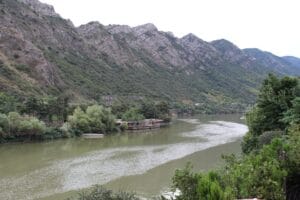
The statue can easily be combined with Narikala Fortress and the cable car, creating a natural route through the city’s historic hillside attractions.
Walk Across the Bridge of Peace
The Bridge of Peace is one of Tbilisi’s best-known modern landmarks.
The pedestrian bridge crosses the Mtkvari River and creates a striking contrast with the historic buildings surrounding it.
Its contemporary glass-and-steel design represents the modern side of Tbilisi while its location connects important historic areas.
Georgia Travel identifies the Bridge of Peace as one of the city’s iconic structures and highlights the contrast between Tbilisi’s old and new architectural identities.
Walking across the bridge during the evening can be particularly atmospheric when the surrounding city begins to illuminate.
Explore the Dry Bridge Market
The Dry Bridge area is famous for its flea market and collection of vintage goods, art, antiques, souvenirs, and unusual objects.
It is an excellent place to explore if you enjoy browsing markets rather than conventional stores.
You may find old Soviet-era objects, paintings, books, decorative items, and handmade crafts.
The market also provides opportunities for street photography and casual interaction with local vendors.
Visit Dezerter Bazaar
Dezerter Bazaar is one of Tbilisi’s traditional food markets.
The market offers a more everyday experience than many tourist attractions.
Visitors can see fresh produce, spices, cheese, dried fruits, sweets, herbs, and other ingredients used in Georgian cooking.
For travelers interested in food, visiting a market before eating at a traditional restaurant can make the culinary experience much more meaningful.
Taste Georgian Khinkali
Khinkali is one of the most famous Georgian dishes.
These dumplings are traditionally filled with meat and broth, although vegetarian and other variations are available.
Eating khinkali properly is part of the experience because the dumplings are designed to be eaten with the hands.
The dish is particularly satisfying after a long day exploring Tbilisi’s hills.
Try Georgian Khachapuri
Khachapuri is Georgia’s famous cheese-filled bread and comes in several regional varieties.
One of the best-known versions is Adjarian khachapuri, traditionally shaped like a boat and topped with cheese, butter, and egg.
Trying different forms of khachapuri is one of the best things to do in Tbilisi for food lovers.
Taste Lobio
Lobio is a traditional Georgian bean dish that can be served in different forms.
It is often prepared with herbs and spices and may be accompanied by bread and pickled vegetables.
Because Georgian cuisine uses many vegetarian ingredients, Tbilisi can also be an appealing destination for travelers who do not eat meat.
Try Georgian Badrijani Nigvzis
Badrijani nigvzis is an appetizer made from eggplant combined with a walnut-based filling.
The dish demonstrates the importance of walnuts, herbs, and spices in Georgian cuisine.
It is commonly found on Georgian restaurant menus and is ideal for sharing.
Experience Georgian Supra Culture
The Georgian supra is a traditional feast associated with hospitality, food, wine, conversation, and ceremonial toasts.
A supra can be a deeply social experience rather than simply a meal.
Visitors who have the opportunity to attend an authentic supra can learn about Georgian traditions through food, storytelling, singing, and the role of the tamada, or toastmaster.
Taste Georgian Wine
Georgia has one of the world’s oldest wine traditions.
Wine is deeply connected to Georgian culture and hospitality.
Tbilisi has numerous wine bars and restaurants where travelers can sample Georgian wines made using both modern and traditional methods.
Travelers interested in wine should try local varieties rather than limiting themselves to international labels.
Learn About Qvevri Wine
Qvevri wine is one of Georgia’s most distinctive wine traditions.
Qvevri are large earthenware vessels traditionally used in Georgian winemaking.
The method is closely connected with Georgia’s wine heritage and has attracted international attention.
Wine bars and specialist tasting rooms in Tbilisi provide opportunities to learn about the tradition without traveling immediately to the countryside.
Explore Tbilisi’s Wine Bars
Tbilisi’s wine-bar culture is an excellent way to experience Georgian wine in a relaxed setting.
Travelers can sample different grape varieties, compare traditional and modern wines, and learn more about the country’s wine regions.
For serious wine enthusiasts, a trip to Kakheti is an excellent addition to a Tbilisi itinerary.
Explore the Sololaki Neighborhood
Sololaki is one of Tbilisi’s most atmospheric historic neighborhoods.
The district contains old mansions, balconies, courtyards, ornate facades, and streets that reveal the city’s nineteenth- and early twentieth-century architectural heritage.
Walking through Sololaki is particularly rewarding for travelers interested in architecture and photography.
Discover Chugureti
Chugureti is a diverse neighborhood that has developed into one of Tbilisi’s more creative urban areas.
The district contains cafés, restaurants, galleries, renovated historic buildings, and contemporary cultural spaces.
It provides a different perspective from the monumental attractions of Old Tbilisi.
Visit Fabrika Tbilisi
Fabrika is one of Tbilisi’s best-known creative spaces.
Located in a former industrial building, it combines hospitality, cafés, restaurants, bars, shops, studios, and cultural activities.
The space represents the contemporary side of Tbilisi and is particularly popular with younger travelers and creative communities.
It is an excellent place to experience modern Georgian urban culture.
Explore Tbilisi’s Street Art
Tbilisi has a growing street-art and mural culture.
Walls, courtyards, industrial buildings, and neighborhood streets can contain colorful murals and creative installations.
Walking through districts such as Chugureti, Fabrika’s surroundings, and parts of Old Tbilisi can reveal artworks that are not found in conventional museums.
Visit the Gabriadze Marionette Theater
The Gabriadze Marionette Theater is one of Tbilisi’s most charming cultural attractions.
Founded by the famous Georgian artist and puppeteer Rezo Gabriadze, the theater is known for its distinctive puppet performances.
The small clock tower outside the theater has also become one of the city’s most photographed structures.
Georgia Travel notes the daily puppet presentation known as the Circle of Life at the tower at scheduled times. Visitors should verify current performance times before planning around it.
Explore the Clock Tower
The Gabriadze Clock Tower is a whimsical architectural landmark.
Its unusual design makes it stand out among Tbilisi’s historic buildings.
The tower is particularly enjoyable because it combines art, performance, architecture, and storytelling.
It is a reminder that Tbilisi’s attractions are not limited to monumental churches and fortresses.
Ride the Tbilisi Funicular
The Tbilisi Funicular is a historic transport system connecting the city with Mtatsminda.
The journey up the hillside provides excellent views over the capital.
At the top, visitors can explore Mtatsminda Park and enjoy panoramic scenery.
The funicular is both a practical transport option and a sightseeing attraction.
Visit Mtatsminda Park
Mtatsminda Park is located high above Tbilisi and provides panoramic views across the capital.
The park includes recreational attractions and is particularly suitable for families.
The elevated location also makes it an appealing place to escape the intensity of central Tbilisi during warmer periods.
Enjoy the Tbilisi Skyline from Mtatsminda
Mtatsminda provides one of the best elevated views of Tbilisi.
From the hill, you can see the Mtkvari River, Old Tbilisi, modern buildings, churches, and surrounding hills.
Sunset can be particularly beautiful when weather conditions provide clear visibility.
Explore Vake Neighborhood
Vake is one of Tbilisi’s greener and more established residential areas.
The district contains cafés, restaurants, shops, and parks.
It is less focused on historic sightseeing than Old Tbilisi but offers a more contemporary local atmosphere.
Explore Vera Neighborhood
Vera is known for its cafés, restaurants, creative businesses, and relaxed atmosphere.
The neighborhood has become popular among travelers who want to experience a more contemporary side of Tbilisi.
It is especially attractive for food lovers and travelers interested in local design and independent businesses.
Explore Tbilisi’s Contemporary Design Scene
Tbilisi has developed a recognizable contemporary design culture.
Independent fashion labels, jewelry designers, furniture studios, galleries, and creative spaces can be found throughout the city.
Visitors interested in fashion and design should explore independent stores rather than limiting their shopping to international brands.
Shop for Georgian Handicrafts
Georgian handicrafts make meaningful souvenirs.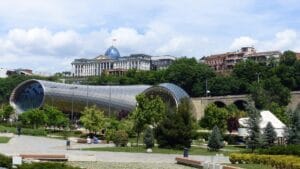
Traditional textiles, ceramics, jewelry, woodwork, enamel, artwork, and handmade decorative objects can be found in markets and independent stores.
Buying directly from local artisans can provide a more personal connection to Georgian culture.
Visit Meidan Bazaar
Meidan Bazaar is located in the historic center and offers souvenirs, food products, wine, handicrafts, and other Georgian goods.
It is particularly convenient for travelers who want to shop while exploring Old Tbilisi.
However, visitors looking for more local prices and less tourist-focused shopping may also want to explore neighborhood markets.
Explore the Chronicles of Georgia
The Chronicles of Georgia is a monumental structure located on a hill overlooking the Tbilisi Reservoir.
The enormous stone columns feature carved scenes and figures connected with Georgian history and religious traditions.
The site is located outside the central tourist area, so travelers should allow additional transportation time.
Its monumental scale and elevated position make it one of the most unusual places to visit near Tbilisi.
Visit the Tbilisi Sea
The Tbilisi Sea is a large reservoir on the outskirts of the city.
The area provides opportunities for recreation, walking, and relaxing away from the dense city center.
It can be especially appealing during the warmer months.
Take a Day Trip to Mtskheta
Mtskheta is one of the most important historical destinations near Tbilisi.
The ancient town has deep religious and cultural significance in Georgia and is home to important historic churches and monuments.
Because of its proximity to Tbilisi, Mtskheta is one of the easiest day trips to add to a Georgia itinerary.
Visit Jvari Monastery
Jvari Monastery stands on a hill overlooking Mtskheta and the surrounding landscape.
The location provides spectacular views of the confluence of the Aragvi and Mtkvari rivers.
Combining Mtskheta and Jvari makes for a rewarding half-day or full-day excursion from Tbilisi.
Take a Day Trip to Kakheti
Kakheti is Georgia’s famous wine-producing region and one of the best day trips from Tbilisi for wine lovers.
Visitors can explore vineyards, wineries, historic towns, monasteries, traditional restaurants, and rural landscapes.
A Kakheti trip provides a deeper understanding of Georgian wine culture than a tasting in the capital alone.
Explore Sighnaghi
Sighnaghi is a picturesque town in Kakheti known for its historic walls, charming streets, views across the Alazani Valley, and romantic atmosphere.
It is frequently included in Kakheti excursions from Tbilisi.
The town is particularly attractive for couples and photographers.
Visit Kazbegi and the Caucasus Mountains
Travelers with more time should consider a trip toward Kazbegi, now commonly associated with Stepantsminda.
The route from Tbilisi into the Caucasus Mountains offers dramatic scenery and historic landmarks.
The famous Gergeti Trinity Church provides one of Georgia’s most recognizable mountain views.
A Kazbegi excursion is better as an overnight trip if you want to experience the mountain landscape without rushing.
Visit Gudauri
Gudauri is one of Georgia’s major mountain resorts and is located along the route toward Kazbegi.
During winter, it is particularly popular for skiing and snow activities.
During warmer seasons, the surrounding mountains attract hikers and outdoor travelers.
Explore Borjomi
Borjomi is famous for its mineral water and forested mountain environment.
The town is located farther from Tbilisi than Mtskheta or Kakheti, but it can be included in a longer Georgian itinerary.
The Borjomi area is particularly attractive for travelers interested in nature and wellness.
Visit Gori
Gori is a historic city in central Georgia and is associated with Joseph Stalin.
The Stalin Museum attracts visitors interested in Soviet history and twentieth-century political history.
A visit can be combined with other central Georgian attractions depending on the itinerary.
Explore Vardzia
Vardzia is a spectacular cave monastery complex carved into a cliff.
It is much farther from Tbilisi than most standard day trips, so travelers should consider an overnight itinerary.
The dramatic architecture and surrounding landscape make it one of Georgia’s most remarkable historical attractions.
Best Time to Visit Tbilisi
Tbilisi can be visited throughout the year, but spring and autumn are particularly comfortable for sightseeing.
Spring brings pleasant temperatures and greenery, while autumn provides comfortable walking conditions and excellent opportunities to explore Georgia’s wine culture.
Summer can be hot in the city, although evenings can be enjoyable and nearby recreational areas provide relief.
Winter is colder but can be rewarding for travelers who want a quieter city experience and the possibility of combining Tbilisi with mountain destinations.
Visit Tbilisi in Spring
Spring is an excellent time for walking through Old Tbilisi, visiting parks, exploring the Botanical Garden, and taking day trips.
The weather is generally more comfortable for outdoor sightseeing than during the hottest summer periods.
Visit Tbilisi in Summer
Summer can bring hot temperatures, especially during the middle of the day.
Travelers should schedule strenuous walking and hill climbs during cooler periods.
Evenings are often ideal for restaurants, wine bars, nightlife, and riverside walks.
Visit Tbilisi in Autumn
Autumn is one of the best seasons for a combined Tbilisi and Georgia wine trip.
The vineyards of Kakheti become particularly attractive, while the city’s restaurants and wine bars provide opportunities to taste seasonal Georgian products.
Visit Tbilisi in Winter
Winter provides a quieter atmosphere in many parts of the city.
Visitors can spend more time in museums, restaurants, cafés, bathhouses, and cultural venues.
Winter also creates opportunities to combine Tbilisi with ski destinations such as Gudauri.
How Many Days Do You Need in Tbilisi?
Two or three days are enough to experience many of Tbilisi’s major attractions.
Georgia Travel’s official tourism guide suggests that a two- to three-day stay can cover Old Tbilisi, Narikala Fortress, Bridge of Peace, museums, sulfur baths, and Georgian cuisine.
Four or five days allow travelers to explore neighborhoods more slowly and add a day trip to Mtskheta, Kakheti, or another nearby destination.
A week is ideal for travelers who want to use Tbilisi as a base for multiple excursions.
Best Three-Day Tbilisi Itinerary
A three-day Tbilisi itinerary can begin in Old Tbilisi.
Spend the first day exploring Abanotubani, Narikala Fortress, the Mother of Georgia statue, the Botanical Garden, Metekhi Church, Sioni Cathedral, and the Bridge of Peace.
On the second day, explore Rustaveli Avenue, the Georgian National Museum, National Gallery, cafés, and cultural institutions. Continue toward Fabrika or another creative neighborhood in the evening.
On the third day, take a trip to Mtskheta and Jvari or spend the day exploring Mtatsminda, Vake, and other parts of Tbilisi.
Best Five-Day Tbilisi Itinerary
With five days, you can slow down and include one or two day trips.
Spend three days exploring Tbilisi itself, one day visiting Mtskheta and nearby historic sites, and another day visiting Kakheti.
This itinerary provides a strong introduction to Georgian history, culture, cuisine, wine, and landscapes.
Tbilisi for Couples
Tbilisi is an excellent destination for couples.
Romantic experiences include walking through Old Tbilisi, taking the cable car at sunset, enjoying a private sulfur bath, drinking Georgian wine, dining in historic courtyards, and watching the city from Mtatsminda.
Sighnaghi in nearby Kakheti is another excellent destination for couples who have time for a day trip.
Tbilisi for Families
Families can enjoy Tbilisi’s parks, cable car, funicular, botanical garden, museums, and Mtatsminda Park.
The city provides enough variety to keep children interested while also offering substantial historical and cultural attractions for adults.
Tbilisi for Solo Travelers
Tbilisi is well suited to independent travelers because many central attractions can be explored on foot.
Joining a food tour, wine tasting, or day trip can also make it easier for solo visitors to experience destinations outside the city.
Tbilisi for Food Lovers
Food is one of the biggest reasons to visit Georgia.
Tbilisi offers khinkali, khachapuri, lobio, badrijani nigvzis, grilled meats, salads with walnuts, local cheeses, bread, desserts, and an enormous variety of Georgian wines.
Travelers should avoid eating only at tourist-oriented restaurants and try neighborhood establishments when possible.
Tbilisi for Wine Lovers
Tbilisi is an excellent starting point for Georgian wine tourism.
The city’s wine bars offer tastings from different regions, while Kakheti provides the opportunity to visit vineyards directly.
Wine lovers should try qvevri wines and ask local specialists about Georgian grape varieties.
Tbilisi for History Lovers
History is everywhere in Tbilisi.
Narikala Fortress, Old Tbilisi, ancient churches, traditional neighborhoods, museums, Soviet-era architecture, and modern monuments all reveal different stages of the city’s development.
A guided walking tour can be particularly useful for travelers who want historical context rather than simply photographing buildings.
Tbilisi for Architecture Lovers
Tbilisi’s architecture is one of its greatest attractions.
Traditional wooden balconies, Persian-influenced structures, churches, nineteenth-century mansions, Soviet buildings, modern glass architecture, and contemporary cultural spaces create an unusually varied urban landscape.
Few city walks provide such a strong contrast between architectural periods.
Is Tbilisi Worth Visiting?
Tbilisi is absolutely worth visiting for travelers interested in culture, history, food, wine, architecture, and distinctive city experiences.
Its greatest strength is variety.
You can visit an ancient fortress in the morning, relax in a sulfur bath in the afternoon, drink Georgian wine in the evening, and finish the night listening to live music.
That combination makes Tbilisi one of the most distinctive city destinations in the Caucasus.
How to Get Around Tbilisi
Central Tbilisi is relatively easy to explore on foot, especially around Old Tbilisi, Rustaveli Avenue, and several neighboring districts.
Public transportation is useful for longer journeys, while taxis and ride-hailing services can be convenient for destinations outside the central areas.
The city’s hills mean that some walking routes can be steep, so comfortable footwear is highly recommended.
Where to Stay in Tbilisi
Old Tbilisi is ideal for travelers who want historic architecture and easy access to major attractions.
Sololaki provides an atmospheric historic setting with beautiful architecture.
Rustaveli is convenient for museums, theaters, restaurants, and central transportation.
Chugureti and Fabrika are attractive for younger travelers and visitors interested in cafés, nightlife, and creative spaces.
Vake and Vera provide a more contemporary local atmosphere with restaurants, cafés, and parks.
What to Pack for Tbilisi
Comfortable walking shoes are essential because many of the city’s best experiences involve cobblestones, stairs, and hills.
A light jacket can be useful because temperatures can change between morning and evening.
Sun protection is important during warmer months.
If you plan to visit the Caucasus Mountains, pack additional layers and suitable outdoor clothing.
Tbilisi Travel Photography
Tbilisi is one of the most photogenic cities in the Caucasus.
Old wooden balconies, Narikala Fortress, the Mtkvari River, Bridge of Peace, Sameba Cathedral, Sololaki mansions, colorful streets, street art, and mountain viewpoints provide excellent photography opportunities.
Sunrise and sunset are particularly attractive times for capturing the city’s architecture and surrounding hills.
Best Free Things to Do in Tbilisi
Many of the most enjoyable Tbilisi experiences are inexpensive or free.
Walking through Old Tbilisi, crossing the Bridge of Peace, exploring neighborhoods, photographing architecture, visiting public parks, and enjoying viewpoints can all be incorporated into a budget itinerary.
This makes Tbilisi appealing to travelers who want a culturally rich destination without spending heavily on attractions.
Best Things to Do in Tbilisi at Night
At night, Tbilisi becomes a different city.
Restaurants fill with diners, wine bars become lively, historic streets are illuminated, and nightlife venues open across different neighborhoods.
An ideal evening might begin with a Georgian dinner, continue with wine tasting, and finish at a music venue or cocktail bar.
Sustainable Travel in Tbilisi
Travelers can support sustainable tourism in Tbilisi by staying at locally owned accommodations, eating at independent restaurants, purchasing directly from artisans, using public transportation, and respecting historic buildings.
When exploring natural areas outside the capital, visitors should avoid littering and follow local conservation guidance.
Supporting local communities helps preserve the cultural character that makes Georgia attractive to international travelers.
Conclusion
Tbilisi is a city that becomes more interesting the longer you explore it. At first, visitors may be attracted by the famous Old Town, Narikala Fortress, sulfur baths, Bridge of Peace, and dramatic hillside views. But beyond these landmarks lies a much richer destination shaped by centuries of history, Georgian hospitality, religious traditions, food, wine, art, architecture, and contemporary creativity.
The best place to begin is Old Tbilisi. Walking through its narrow streets provides an immediate introduction to the city’s personality. Traditional wooden balconies, historic churches, courtyards, restaurants, cafés, and colorful facades create an environment that feels completely different from a conventional European capital.
The sulfur baths of Abanotubani are another essential experience. Tbilisi’s identity is closely connected with its natural hot springs, and the historic bath district remains one of the city’s most distinctive attractions. A private sulfur bath can be a relaxing way to experience a tradition that has remained part of Tbilisi life for centuries.
For authoritative outbound links in your article, the official Georgia Travel website is the strongest primary source. It is operated as Georgia’s national tourism platform and provides destination information for Tbilisi and other regions of the country.
Official Georgia Travel – Things to Do in Tbilisi
Author

Related posts
Best Places to Visit in Dinant
- 0
- 4,779 words
Best Places to Visit in Dinant, Belgium Dinant is one of the most beautiful small towns in Belgium and one of the...
Read out all
Best Places to Visit in Mont-Saint-Michel
- 0
- 4,964 words
Best Places to Visit in Mont-Saint-Michel , France Mont-Saint-Michel is one of the most extraordinary destinations in France and one of the...
Read out all
UNGA
- 0
- 5,649 words
UNGA (United Nations General Assembly ) The United Nations General Assembly, commonly known as the UN General Assembly or UNGA, is one...
Read out all
Best Places to Visit in Kathmandu
- 0
- 4,089 words
Best Places to Visit in Kathmandu , Nepal Kathmandu, the capital of Nepal, is one of South Asia’s most fascinating travel destinations....
Read out all
Best Places to Visit in Vilnius
- 0
- 5,246 words
Best Places to Visit in Vilnius , Lithuania Vilnius, the capital of Lithuania, is one of the most fascinating destinations in the...
Read out all
Best Places to Visit in Riga
- 0
- 6,005 words
Best Places to Visit in Riga , Latvia Riga, the capital of Latvia, is one of the most fascinating destinations in the...
Read out all