

Best Things to Do in Seville , Spain
Seville, Spain, is one of the most atmospheric cities in Europe and one of the best destinations for travelers looking for history, architecture, Spanish culture, flamenco, tapas, beautiful plazas, historic neighborhoods, gardens, and lively local traditions. As the capital of Andalusia, Seville brings together centuries of Roman, Islamic, Jewish, and Christian heritage, creating a city where monumental palaces, Gothic architecture, colorful ceramic tiles, orange-tree-lined streets, traditional courtyards, and modern restaurants exist side by side.
If you are searching for the best things to do in Seville, the city offers far more than a quick visit to its famous cathedral. You can explore the Royal Alcázar of Seville, climb La Giralda, admire the extraordinary Plaza de España, walk through Santa Cruz, discover the ceramic traditions of Triana, watch an authentic flamenco performance, cruise along the Guadalquivir River, visit historic palaces and museums, enjoy Andalusian food, and experience the city’s famous festivals.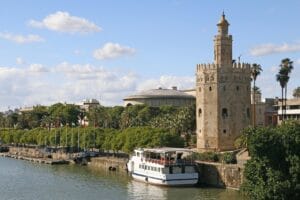
Official tourism information describes Seville as a historic city on the Guadalquivir River whose cultural identity has been shaped by Turdetani, Roman, Visigothic, Arab, and Castilian influences. The Cathedral, Giralda, Royal Alcázar, and Archivo de Indias form a particularly important historic ensemble, while areas such as Santa Cruz, María Luisa Park, and Triana provide some of the city’s most memorable experiences.
This detailed Seville travel guide explores the city’s most important attractions, neighborhoods, food, culture, history, activities, practical travel information, and itinerary ideas.
Why Seville Is One of Spain’s Best Cities to Visit
Seville has a personality that is different from Madrid, Barcelona, Valencia, or Málaga. Its appeal comes from the way history is woven into everyday life. The historic center is filled with narrow streets, old churches, hidden courtyards, tiled façades, plazas, tapas bars, and monumental buildings.
The city is also relatively easy to explore on foot. Many of the most important Seville tourist attractions are concentrated around the historic center, while other neighborhoods can be reached by walking, public transportation, bicycle, or taxi.
Seville is especially famous for its combination of Andalusian culture, Moorish architecture, flamenco, tapas, Spanish festivals, historic palaces, and orange-tree-lined streets. The official tourism website also emphasizes the city’s monuments, museums, neighborhoods, cuisine, culture, shopping, and events as central parts of the Seville experience.
Visit the Royal Alcázar of Seville
The Royal Alcázar of Seville is one of the most extraordinary attractions in Andalusia and an essential stop on almost every Seville itinerary. This enormous palace complex combines Islamic, Mudéjar, Gothic, Renaissance, and later architectural influences.
The official Alcázar website describes it as the oldest royal palace still in use in Europe, with a history extending from the 11th century to the present. Its palaces and gardens contain an extraordinary mixture of architectural styles and historical layers.
Inside, the Palace of King Pedro I is particularly impressive. Its decorated arches, geometric patterns, ceramic tiles, carved stucco, courtyards, and richly ornamented rooms demonstrate the sophistication of Mudéjar architecture.
The gardens are equally important. Rather than treating them as an afterthought, allow enough time to explore their fountains, ponds, pathways, plants, terraces, and shaded areas.
The Alcázar is also famous among television and movie fans because the complex has appeared in productions including Game of Thrones.
For current opening hours and ticket information, consult the official Royal Alcázar website. Its current visitor guidance notes that seasonal opening hours can differ, making it important to check before your visit.
Official Royal Alcázar of Seville website
Explore the Palace of King Pedro I
The Palace of King Pedro I is arguably the architectural highlight of the Alcázar.
Its Patio de las Doncellas, elaborate tilework, ornamental plasterwork, arches, wooden ceilings, and geometric decoration demonstrate the influence of Islamic artistic traditions on Christian royal architecture.
The palace is a perfect example of how Seville’s history cannot be divided into simple categories. Instead, different cultures and periods have left architectural layers that remain visible within the same building.
For travelers interested in Moorish architecture in Spain, this section of the Alcázar is particularly rewarding.
Walk Through the Alcázar Gardens
The gardens of the Royal Alcázar provide a completely different atmosphere from the palace interiors.
You can move from formal courtyards into lush gardens filled with palms, citrus trees, fountains, pools, sculptures, and shaded walkways.
The gardens are especially pleasant when temperatures are moderate. During hot periods, shaded areas can provide welcome relief, although you should still plan for high temperatures during summer.
Photography enthusiasts will find countless opportunities here because the combination of water, architecture, vegetation, tiles, and sunlight creates constantly changing compositions.
Visit Seville Cathedral
The Cathedral of Seville is one of the city’s defining landmarks and one of the most important Gothic buildings in Spain.
The official cathedral describes it as the largest Gothic cathedral in the world, while its architecture incorporates Almohad, Mudéjar, Gothic, Renaissance, and Baroque influences.
The cathedral was built on the site of Seville’s former Great Mosque. Parts of that earlier Islamic complex survived, most famously the Giralda and the Patio de los Naranjos.
Inside the cathedral, enormous Gothic spaces, chapels, religious artworks, stained-glass windows, tombs, sculptures, and the main altarpiece create an extraordinary sense of scale.
The cathedral is also associated with the tomb of Christopher Columbus.
Official Cathedral of Seville website
Climb La Giralda
La Giralda is probably the most recognizable symbol of Seville.
Originally constructed as the minaret of the Almohad mosque, the tower later became the bell tower of Seville Cathedral. Its transformation reflects the broader historical development of the city.
One of the most unusual features is the tower’s ascent. Rather than a conventional narrow staircase, the historic structure contains ramps designed to allow movement upward in a way that historically accommodated horses. The provincial tourism authority describes the Giralda as one of Seville’s defining symbols.
The climb is worthwhile because the upper levels provide views over the historic center.
From above, you can see tiled rooftops, church towers, courtyards, modern buildings, the Guadalquivir River, and the surrounding Andalusian landscape.
Discover the Patio de los Naranjos
The Patio de los Naranjos, or Orange Tree Courtyard, is one of the most atmospheric surviving elements of Seville’s former mosque complex.
The courtyard preserves the memory of the mosque’s original layout and later Christian modifications. The cathedral’s official website describes it as the former sahn of the mosque.
Orange trees and architectural details create a peaceful transition between the cathedral and the city’s busy streets.
It is an excellent place to slow down and appreciate the layers of Seville’s history.
See the Magnificent Plaza de España
The Plaza de España is arguably the most visually spectacular public space in Seville.
Built by architect Aníbal González between 1914 and 1929 for the Ibero-American Exhibition, the complex covers approximately 50,000 square metres.
Its enormous semicircular design, bridges, towers, ceramic decoration, fountains, and canal create an architectural environment unlike almost anywhere else in Spain.
Along the curved building are 48 tiled benches, each representing a Spanish province with ceramic murals depicting historical or cultural themes.
The plaza has also appeared in famous films, including Lawrence of Arabia and Star Wars: Attack of the Clones.
Wander Through the Santa Cruz Neighborhood
The Santa Cruz neighborhood is one of the best places to simply walk without a strict itinerary.
The area developed around the historic Jewish quarter and is characterized by narrow streets, whitewashed buildings, small plazas, fountains, orange trees, flower-filled balconies, and hidden courtyards.
Official Andalusian tourism information describes Santa Cruz as the former Jewish quarter and highlights locations such as Plaza de Doña Elvira, Callejón del Agua, and Plaza de Santa Cruz.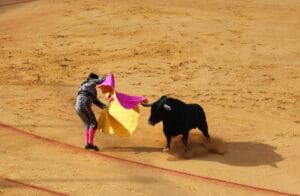
Walking here is less about reaching one specific attraction and more about experiencing the atmosphere of old Seville.
Discover Callejón del Agua
Callejón del Agua is one of the most charming lanes in Santa Cruz.
The narrow passage runs alongside the historic walls of the Alcázar and offers an excellent example of the intimate scale of Seville’s historic architecture.
Its combination of walls, balconies, plants, and narrow pedestrian space makes it particularly photogenic.
Relax in Plaza de Doña Elvira
Plaza de Doña Elvira is a small and picturesque square in Santa Cruz.
Its tiled benches, orange trees, fountains, and traditional architecture create an atmosphere that feels distinctly Andalusian.
It is the kind of place where you should slow down rather than simply take a photograph and leave.
Explore Triana
Cross the Guadalquivir and you enter Triana, one of Seville’s most distinctive neighborhoods.
Triana has long been associated with ceramics, flamenco, sailors, bullfighters, and traditional Seville culture.
Official Andalusian tourism information describes Triana as a neighborhood strongly connected with flamenco singers, bullfighters, and pottery traditions.
Triana feels different from the monumental center. Its streets, ceramic workshops, bars, markets, and riverfront provide a more neighborhood-oriented experience.
Cross the Triana Bridge
The Puente de Isabel II, commonly known as the Triana Bridge, connects the historic center with Triana.
The bridge itself is a recognizable Seville landmark and provides excellent views along the Guadalquivir.
Crossing it around sunset can be especially beautiful as the city’s historic buildings begin to glow in the evening light.
Visit the Triana Market
The Triana Market provides a chance to experience local food culture in a more everyday setting.
Markets are useful places to understand what people eat, how ingredients are presented, and how food remains connected with neighborhood life.
It is also a good starting point for exploring the surrounding streets.
Experience an Authentic Flamenco Show
You cannot create a complete Seville travel guide without discussing flamenco.
Although flamenco developed through multiple cultural influences and is associated strongly with Andalusia, Seville has played a major role in its development and performance tradition.
The city offers everything from intimate performances in small venues to larger theatrical productions.
For a more memorable experience, consider choosing a venue that focuses on live musicians and dancers rather than a heavily commercialized dinner-show format.
Eat Traditional Seville Tapas
Food is one of the best reasons to visit Seville.
The city is famous for tapas, and eating here is often a social experience rather than simply a meal.
Instead of ordering one enormous dish, travelers can visit several establishments and try different flavors.
Traditional options may include jamón, olives, fried fish, croquettes, tortilla española, salmorejo, grilled seafood, stewed meats, and seasonal vegetables.
Try Salmorejo
Salmorejo is one of the most recognizable dishes associated with Andalusia.
This cold tomato-based soup is thicker and creamier than gazpacho and is commonly served with toppings such as hard-boiled egg and ham.
It is especially refreshing during warm weather.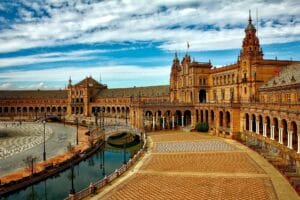
Trying salmorejo in Seville is one of the simplest ways to connect your travel experience with Andalusian food culture.
Try Andalusian Fried Fish
Fried fish is another classic Andalusian food experience.
In Seville, you can find seafood prepared in traditional styles at many restaurants and tapas establishments.
The best approach is to eat according to the local rhythm: choose a busy establishment, order a few small portions, and try several dishes rather than committing to one large meal.
Explore Seville’s Historic Churches
Seville has an enormous number of historic churches, chapels, convents, and religious buildings.
Some are architecturally modest from the outside but contain extraordinary Baroque interiors.
The city’s religious architecture is particularly important during Semana Santa, when processions transform streets throughout the historic center.
The official provincial tourism authority notes that Holy Week is a major event and is recognized as an event of International Tourist Interest.
Take a Guadalquivir River Cruise
A river cruise gives visitors a different view of Seville.
From the water, you can see historic buildings, bridges, riverfront neighborhoods, and modern developments from a completely different perspective.
Cruises are especially attractive during the evening when temperatures fall and the city’s architecture becomes illuminated.
Discover Roman Seville
Seville’s history extends back well before the Islamic and Christian periods.
The Roman settlement of Hispalis became an important commercial center.
Archaeological discoveries throughout the city reveal Roman streets, buildings, mosaics, and infrastructure.
Visitors interested in ancient history can combine the Antiquarium with other archaeological sites and museums.
Discover Seville’s Baroque Art
Seville has an important connection with Spanish Baroque art.
Artists such as Diego Velázquez and Bartolomé Esteban Murillo were connected with the city, while religious sculpture and painting played major roles in Seville’s cultural life.
The provincial tourism authority specifically highlights Velázquez, Murillo, and Sevillian sculptors such as Martínez Montañés and Juan de Mesa.
Art lovers should therefore explore Seville’s museums and churches rather than limiting their cultural sightseeing to the major monuments.
Visit Seville’s Museums
Seville has museums dedicated to fine art, archaeology, popular traditions, ceramics, flamenco, and regional history.
The Museum of Fine Arts of Seville is particularly important for travelers interested in Spanish painting and religious art.
Meanwhile, smaller museums provide a more specialized look at Andalusian culture.
The official Seville tourism website maintains information about museums and current cultural activities.
Explore the Museum of Fine Arts
The Museum of Fine Arts is one of the most important art museums in Seville.
It provides an opportunity to explore Spanish and Andalusian art in a historic setting.
For visitors interested in religious painting, Baroque art, and the development of Seville’s artistic traditions, this museum is a strong choice.
Discover the Neighborhood of Macarena
The Macarena neighborhood offers another perspective on Seville.
It is associated with traditional religious culture, local streets, historic churches, and the famous Basílica de la Macarena.
The area is especially important during Holy Week, when religious traditions become central to the city’s public life.
Visit the Basilica of La Macarena
The Basilica of La Macarena is one of Seville’s best-known religious destinations.
The basilica is strongly connected with the city’s Semana Santa traditions and the famous Virgen de la Esperanza Macarena.
Visitors interested in Seville’s religious culture should consider adding this neighborhood to their itinerary.
Experience Semana Santa in Seville
Semana Santa, or Holy Week, is one of Seville’s most important annual cultural events.
Religious brotherhoods carry elaborate processional floats through the streets, accompanied by music, candles, traditional dress, and enormous crowds.
The event is deeply religious and culturally significant, so visitors should approach it respectfully rather than treating it purely as a spectacle.
For travelers interested in attending, accommodation and transportation should be arranged well in advance.
Experience Feria de Abril
The Feria de Abril, or April Fair, is another iconic Seville event.
The fair combines music, dancing, traditional clothing, food, social gatherings, horses, and decorated casetas.
It offers visitors a vivid introduction to Andalusian festive culture.
The atmosphere is very different from Semana Santa: Holy Week is solemn and religious, while Feria is celebratory and social.
Best Time to Visit Seville
Spring is widely considered one of the best times to visit Seville.
The weather is generally more comfortable than the intense summer heat, orange trees can be in bloom, and major cultural events can bring the city to life.
The official provincial tourism authority specifically describes spring as an excellent season, highlighting orange blossom and the city’s major traditions.
Autumn can also be excellent, particularly if you want pleasant walking conditions with fewer peak-season crowds.
Winter is usually milder than many northern European destinations and can be a good choice for travelers interested in architecture and museums.
Visiting Seville During Summer
Summer in Seville can be extremely hot.
The provincial tourism authority notes that Seville’s summers are sweltering and that the city has experienced exceptionally high temperatures.
If you visit during summer, plan outdoor sightseeing for mornings and evenings whenever possible.
Use the hottest part of the afternoon for museums, indoor attractions, long lunches, relaxation, or a hotel break.
Hydration, sun protection, and appropriate clothing are particularly important.
How Many Days Do You Need in Seville?
A two-day Seville itinerary can cover the Cathedral and Giralda, Royal Alcázar, Santa Cruz, Plaza de España, and an evening flamenco performance.
Three days provides a much better experience because you can add Triana, museums, the Guadalquivir, Setas de Sevilla, and additional historic buildings.
Four days allows you to slow down, explore more neighborhoods, enjoy longer meals, and potentially take a day trip outside the city.
If you are visiting Andalusia for a longer holiday, Seville works particularly well as part of a route connecting cities such as Córdoba, Granada, Cádiz, Málaga, and Ronda.
Best Three-Day Seville Itinerary
With three days, avoid trying to visit everything at once.
Use your first day for the Cathedral, Giralda, Royal Alcázar, Archivo de Indias, and Santa Cruz.
Spend your second day around Plaza de España, María Luisa Park, the Guadalquivir, Torre del Oro, and Triana.
Use your third day for museums, Palacio de las Dueñas, Macarena, Setas de Sevilla, Alameda de Hércules, and a longer food-focused exploration of Seville.
This slower approach allows you to experience the city rather than simply collect photographs of attractions.
Is Seville Good for Families?
Seville can be an excellent family destination.
Children may particularly enjoy Plaza de España, boat rides, parks, open plazas, river cruises, and the city’s colorful architecture.
Families should consider the heat when planning outdoor activities.
A balanced itinerary combining sightseeing with parks, cafés, relaxed meals, and indoor attractions is usually more comfortable than attempting to visit monuments continuously throughout the day.
Is Seville Good for Couples?
Seville is one of Spain’s most romantic destinations.
Couples can walk through Santa Cruz, enjoy tapas together, watch flamenco, explore the Alcázar gardens, take a river cruise, and admire Plaza de España at sunset.
The city’s warm evening atmosphere makes it especially attractive for romantic trips.
Is Seville Good for Solo Travelers?
Seville is also well suited to solo travelers.
The central attractions are relatively close together, cafés and tapas establishments provide natural opportunities to stop throughout the day, and organized cultural experiences make it easy to meet other travelers.
Solo visitors should still use normal travel precautions and remain aware of belongings in crowded tourist areas.
How to Get Around Seville
The historic center is highly walkable.
Walking is often the best way to experience Seville because many of the city’s most interesting details are found between the major attractions.
The provincial tourism authority notes that Seville also has tram, metro, taxi, and bicycle options, including the municipal Sevici bike system.
For longer distances, public transportation or taxis can save time, especially during hot weather.
Should You Rent a Car in Seville?
For exploring central Seville, a rental car is generally unnecessary.
Parking in historic areas can be difficult, and many streets are pedestrianized or restricted.
A car becomes more useful if you are planning an extended Andalusia road trip.
For a city-only vacation, walking and public transportation are usually more convenient.
What to Buy in Seville
Seville is a good destination for shopping for traditional Andalusian products.
Ceramic tiles, painted pottery, flamenco-related items, Spanish food products, olive oil, wine, leather goods, and handmade crafts can make memorable souvenirs.
Triana is particularly important for ceramics.
Food markets and specialist stores are useful for travelers who want to bring home regional ingredients.
Why Seville’s Orange Trees Matter
Orange trees are one of the most recognizable visual features of Seville.
They line streets, plazas, courtyards, and gardens throughout the city.
During blossom season, their fragrance becomes one of the defining sensory experiences of Seville.
The combination of white façades, colorful tiles, green leaves, and orange trees is one of the reasons Seville has such a distinctive visual identity.
Seville as a UNESCO World Heritage Destination
Seville’s Cathedral, Giralda, Royal Alcázar, and Archivo de Indias form an exceptionally important historic ensemble.
Their significance reflects the city’s role in the interaction between Islamic, Christian, European, and Atlantic histories.
This concentration of major monuments makes the central district one of the most rewarding places in Spain for travelers interested in architecture and history.
Seville and the Guadalquivir
The Guadalquivir is not simply a scenic river.
It is central to Seville’s historical identity.
The city’s connection with Atlantic trade and Spain’s overseas expansion made its river an important economic and strategic route.
Walking along the river therefore provides an opportunity to see a geographical feature that shaped Seville’s history.
Seville’s Film and Television Locations
Seville has appeared in numerous films and television productions.
Plaza de España is particularly famous for appearing in Star Wars: Attack of the Clones and other productions.
The Royal Alcázar has also served as a filming location, including for Game of Thrones.
Film fans can create their own walking route through some of these locations.
Day Trips From Seville
Seville’s location makes it a useful base for exploring Andalusia.
Córdoba is famous for the Mezquita-Catedral and historic Jewish quarter.
Cádiz offers Atlantic beaches and a long maritime history.
Ronda provides dramatic mountain landscapes and its famous gorge.
Jerez de la Frontera is associated with sherry production and equestrian traditions.
Granada is home to the Alhambra and provides one of Spain’s most important Islamic heritage experiences.
A longer Andalusia itinerary can combine several of these destinations.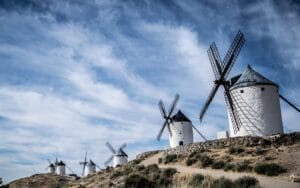
Why Seville Should Be on Your Spain Itinerary
Seville provides an unusually complete Spanish travel experience.
You can begin the morning inside a Gothic cathedral built on an Islamic architectural foundation, walk through a royal palace filled with Mudéjar decoration, eat tapas in a centuries-old neighborhood, cross the Guadalquivir into Triana, watch flamenco in the evening, and finish the night beneath the modern structure of Setas de Sevilla.
Few European cities provide such a dramatic mixture of history, architecture, cuisine, music, and everyday culture within such a walkable environment.
Conclusion
Seville is a city that rewards travelers who slow down.
The obvious highlights are unforgettable: the Royal Alcázar, Seville Cathedral, La Giralda, Plaza de España, and María Luisa Park deserve their reputation. But the city’s real character emerges when you move beyond the headline attractions.
Walk through Santa Cruz and discover small squares and hidden lanes. Cross the Triana Bridge and explore the ceramic traditions of Triana. Watch an intimate flamenco performance. Eat salmorejo and tapas. Walk beside the Guadalquivir. Visit the Torre del Oro. Explore Seville’s churches and museums. Watch sunset from Setas de Sevilla. Experience the atmosphere of Semana Santa or Feria de Abril if your trip coincides with these events.
The official Seville tourism website is also worth checking before your trip because it provides current information about monuments, museums, neighborhoods, food, cultural events, shopping, and activities.
Author

Related posts
Best Places to Visit in Mont-Saint-Michel
- 0
- 4,964 words
Best Places to Visit in Mont-Saint-Michel , France Mont-Saint-Michel is one of the most extraordinary destinations in France and one of the...
Read out all
UNGA
- 0
- 5,649 words
UNGA (United Nations General Assembly ) The United Nations General Assembly, commonly known as the UN General Assembly or UNGA, is one...
Read out all
Best Places to Visit in Kathmandu
- 0
- 4,089 words
Best Places to Visit in Kathmandu , Nepal Kathmandu, the capital of Nepal, is one of South Asia’s most fascinating travel destinations....
Read out all
Best Places to Visit in Vilnius
- 0
- 5,246 words
Best Places to Visit in Vilnius , Lithuania Vilnius, the capital of Lithuania, is one of the most fascinating destinations in the...
Read out all
Best Places to Visit in Riga
- 0
- 6,005 words
Best Places to Visit in Riga , Latvia Riga, the capital of Latvia, is one of the most fascinating destinations in the...
Read out all
Best Places to Visit in Cartagena
- 0
- 4,522 words
Best Places to Visit in Cartagena , Colombia Cartagena de Indias is a historic Caribbean city on Colombia’s northern coast and one...
Read out all