
Best Things to Do in Frankfurt , Germany
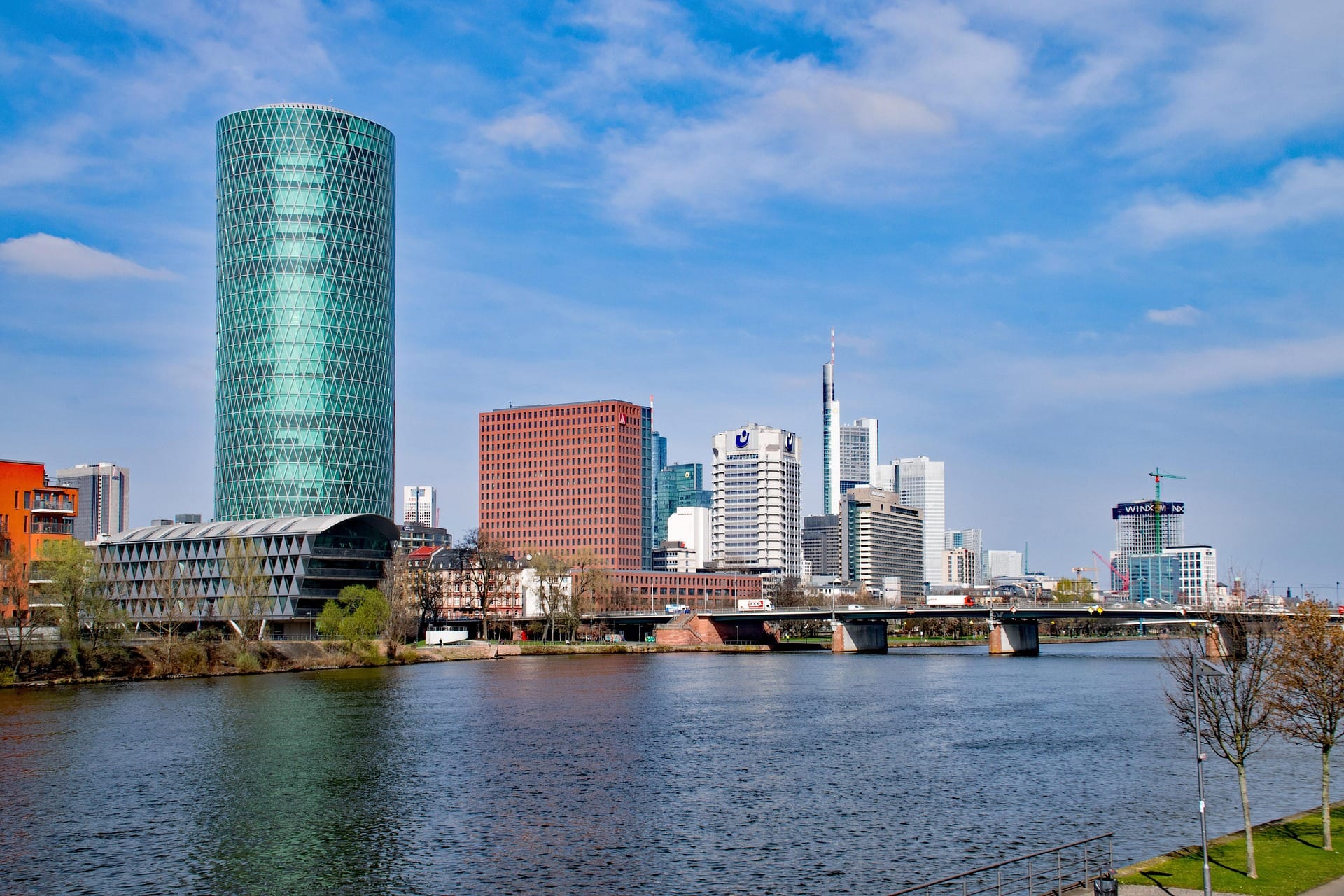
Frankfurt, Germany, is one of Europe’s most fascinating cities for travelers who enjoy the contrast between historic architecture and modern urban life. Known internationally as a major financial center and an important European transportation hub, Frankfurt is much more than skyscrapers and business districts. The city combines a reconstructed medieval Old Town, world-class museums, the River Main, traditional apple-wine taverns, contemporary architecture, historic churches, green spaces, shopping streets, multicultural neighborhoods, and a remarkably compact city center.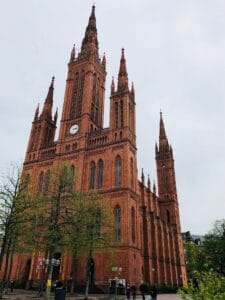
If you are researching the best things to do in Frankfurt, there is an impressive range of experiences to discover. You can begin your day at the historic Römerberg, explore the New Old Town, visit Frankfurt Cathedral, learn about German literature at the Goethe House, admire European masterpieces at the Städel Museum, walk along the Main River, climb the Main Tower for panoramic skyline views, explore Palmengarten, experience Frankfurt’s famous apple wine culture, and spend an evening discovering the city’s restaurants and neighborhoods.
Frankfurt’s official tourism organization describes the city as a place where tradition meets modernity, with historical timber-frame architecture standing close to skyscrapers, museums, gardens, riverbanks, international cuisine, and traditional apple-wine pubs.
This comprehensive Frankfurt travel guide explains the best attractions, historic places, museums, neighborhoods, food, nightlife, viewpoints, cultural experiences, day trips, practical travel advice, and itinerary ideas to help you plan an unforgettable trip.
Why Visit Frankfurt, Germany?
Frankfurt has a reputation for being Germany’s business capital, but this description only tells part of the story. The city is home to the European Central Bank and one of Europe’s most important financial districts, yet only a short walk away you can find medieval streets, historic churches, traditional taverns, museums, markets, and quiet parks.
The city’s defining characteristic is its contrast. Modern skyscrapers rise behind the reconstructed Old Town. Historic bridges cross the River Main beneath a contemporary skyline. Traditional apple wine is served in neighborhoods filled with international restaurants. Art museums occupy the riverbank while major financial institutions dominate the city center.
Germany’s official tourism organization describes Frankfurt as a compact, multilayered city where many major attractions can be reached easily on foot. It highlights the reconstructed Old Town, Römer, Goethe House, Museum Embankment, Palmengarten, and Main River as major attractions.
This makes Frankfurt particularly attractive for travelers who want to experience several sides of Germany within a relatively short city break.
Explore Römerberg, the Heart of Frankfurt’s Old Town
One of the first places to visit in Frankfurt should be Römerberg, the historic square at the center of the Old Town.
Römerberg is surrounded by some of the city’s most recognizable historic buildings, including the famous Römer town hall complex and reconstructed half-timbered houses. The square provides an immediate introduction to Frankfurt’s historical character and is an essential stop for anyone searching for the best places to visit in Frankfurt Germany.
The contrast between Römerberg and the nearby skyscrapers is particularly striking. From certain angles, medieval-style buildings appear with modern towers rising behind them, creating the visual combination that makes Frankfurt distinctive.
Römerberg is also an excellent starting point for exploring the surrounding historic center.
The official Frankfurt tourism website calls a visit to Römerberg an absolute must for experiencing the city’s historical side.
Discover the Famous Römer Town Hall
Frankfurter Römer is one of Frankfurt’s most recognizable landmarks.
The Römer has served as Frankfurt’s town hall for centuries and is closely connected with the city’s political and commercial history. According to Frankfurt tourism information, the building has been Frankfurt’s town hall for around 600 years.
Its distinctive stepped gables and historic façade make it one of the most photographed buildings in the city.
The Römer is also historically important because Frankfurt played a major role in the Holy Roman Empire. German kings were elected here, while imperial coronation ceremonies were held in Frankfurt Cathedral.
For travelers interested in German history, the Römer is therefore much more than an attractive old building.
Walk Through Frankfurt’s New Old Town
The New Old Town, or Neue Altstadt, is one of the most interesting areas to explore in modern Frankfurt.
Much of Frankfurt’s historic center was destroyed during World War II. The city subsequently rebuilt a section of the historic center, creating a district that combines historically reconstructed buildings with contemporary architectural elements.
The reconstructed quarter officially opened in 2018 and includes approximately 35 buildings, with 15 designed as exact reconstructions of historic structures.
New Old Town is particularly attractive for travelers interested in architecture, photography, history, and urban regeneration.
Walk slowly through the narrow streets around Hühnermarkt, Krönungsweg, and the surrounding squares. The area contains cafés, restaurants, shops, historic façades, and small architectural details that are easy to miss if you rush.
Visit Frankfurt Cathedral
Frankfurt Cathedral, officially the Imperial Cathedral of Saint Bartholomew, is one of the city’s most important historic monuments.
Its tall red sandstone tower is a defining part of Frankfurt’s skyline, particularly around the Old Town.
The cathedral has a strong connection to the history of the Holy Roman Empire. German kings were elected in Frankfurt, and later emperors were crowned here.
The building therefore provides an important connection between Frankfurt’s religious, political, and imperial history.
The official Frankfurt tourism website lists the cathedral among the city’s principal historic attractions and notes that its tower reaches approximately 95 metres.
Climb Frankfurt Cathedral Tower
If you are comfortable with stairs, climbing the cathedral tower is one of the best ways to experience Frankfurt from above.
The tower climb provides a very different perspective from the Main Tower because the cathedral is located within the historic center. Instead of looking only at modern skyscrapers, you can see the Old Town, River Main, bridges, rooftops, and financial district from a historic landmark.
Germany Travel recommends the cathedral tower as part of a 48-hour Frankfurt itinerary and notes that visitors climb hundreds of steps to reach the viewing platform.
Check the cathedral’s official visitor information before your visit because opening arrangements and access can change.
Admire St. Paul’s Church
St. Paul’s Church, or Paulskirche, is one of the most important political landmarks in Germany.
The building is particularly significant because the first freely elected all-German parliament met here in 1848.
The Frankfurt tourism organization identifies this event as one of the city’s major historical moments.
For travelers interested in German democracy and modern European political history, St. Paul’s Church offers a different kind of historical experience from the medieval monuments around Römerberg.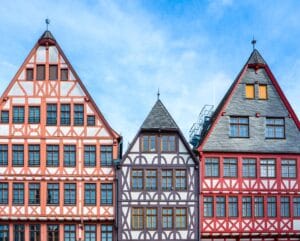
Its significance lies less in ornate architecture and more in what happened inside its walls.
Walk Along the River Main
The River Main is one of the best places to slow down during a Frankfurt trip.
The riverbank offers walking paths, green spaces, benches, bridges, cafés, and views toward the skyline.
The atmosphere changes throughout the day. Morning walks are relatively peaceful, while afternoons and evenings can become more lively.
A sunset walk along the Main is particularly memorable because Frankfurt’s skyscrapers become illuminated while the river reflects the changing colors of the sky.
The official tourism organization recommends experiencing the Frankfurt skyline from the river and specifically highlights cruises as a way to see the city from a different perspective.
Take a River Main Cruise
A Frankfurt River Main cruise is one of the easiest ways to see several parts of the city without walking long distances.
From the water, you can appreciate Frankfurt’s skyline, bridges, riverside architecture, historic districts, and modern financial center.
A daytime cruise can be useful for sightseeing, while an evening cruise provides a more atmospheric experience.
Frankfurt’s tourism authority specifically lists a Main River cruise among its recommended experiences.
Before booking, check the current seasonal timetable because cruise schedules can vary.
See Frankfurt From the Main Tower
For the classic Frankfurt skyline view, visit the Main Tower.
MAIN TOWER rises above Frankfurt’s financial district and contains a public observation platform.
The official Frankfurt tourism website notes that the observation platform is around 200 metres high and provides a 360-degree view of the skyline, city, and surrounding region.
This is one of the best attractions in Frankfurt for first-time visitors because it immediately explains the city’s nickname and identity as Mainhattan.
From the top, you can see the concentration of skyscrapers in the banking district, the River Main, the Old Town, surrounding neighborhoods, and the wider Rhine-Main region.
Visit Main Tower Around Sunset
If weather conditions are good, sunset can be one of the best times to visit the Main Tower.
During daylight, the observation platform gives you a broad geographical perspective.
As the sun sets, Frankfurt’s glass skyscrapers begin reflecting warm light, while the city gradually transforms into an illuminated urban landscape.
For photographers, the transition between daylight and blue hour can provide some of the most dramatic views of Frankfurt.
Because the observation platform can become busy at popular times, check current visitor information and consider planning your arrival accordingly.
Discover Frankfurt’s Museum Embankment
Frankfurt’s Museumsufer, or Museum Embankment, is one of the city’s greatest cultural assets.
Along the River Main are numerous museums covering subjects such as art, architecture, communication, film, culture, and history.
The official tourism website describes the Museum Embankment as a roughly two-kilometre cultural area containing internationally renowned museums.
This concentration makes Frankfurt particularly attractive for museum-focused city breaks.
Rather than trying to visit every institution, choose one or two based on your interests and leave enough time for the riverfront itself.
Visit the Museum of Communication
Museum for Communication Frankfurt is an excellent choice for visitors interested in technology, media, transportation of information, and the history of communication.
The museum explores how humans have communicated through different technologies and systems.
It is especially interesting for families because its subject matter can be easier for younger visitors to connect with than traditional fine-art collections.
Follow Frankfurt’s Goethe Trail
Goethe’s connection with Frankfurt extends beyond his birthplace.
Visitors interested in literature can explore locations associated with his life and the city’s literary history.
The experience becomes more meaningful when combined with reading some of Goethe’s work before or during your trip.
Frankfurt’s cultural identity is strongly connected with its most famous literary son, and his presence remains visible throughout the city.
Relax at Palmengarten
The Palmengarten is one of Frankfurt’s most beautiful green spaces.
Palmengarten Frankfurt is a botanical garden covering approximately 22 hectares.
The official Frankfurt tourism website describes it as one of Germany’s largest botanical gardens and highlights its extensive plant collections.
Inside, visitors can encounter plants from different climate zones, greenhouses, palms, flowers, and landscaped gardens.
Palmengarten is particularly useful when you need a break from museums and urban sightseeing.
Explore Frankfurt’s Green Spaces
Frankfurt may be famous for skyscrapers, but it has a surprisingly strong green character.
Parks, gardens, the riverbank, and the surrounding city forest provide opportunities to escape the busiest streets.
The official tourism organization specifically highlights Frankfurt’s parks, gardens, and riverbanks as urban oases.
This balance between city and nature is one reason Frankfurt can work well for longer stays.
Discover the Frankfurt City Forest
The Frankfurt City Forest provides opportunities for walking, cycling, and enjoying nature without leaving the city.
The area is particularly useful for travelers who want to combine a European city break with outdoor activities.
The Goethe Tower is another viewpoint worth considering for travelers who want a perspective different from the Main Tower.
Frankfurt tourism identifies the Goethe Tower, Cathedral Tower, and Main Tower as some of the city’s key viewpoints.
Experience Frankfurt’s Apple Wine Culture
One of the most authentic experiences in Frankfurt is drinking Apfelwein, or traditional German apple wine.
Frankfurt’s apple-wine culture is particularly associated with neighborhoods such as Sachsenhausen.
The drink is typically served in traditional taverns and is an important part of local identity.
Frankfurt’s official tourism website specifically recommends experiencing the city’s way of life in a traditional apple-wine pub and identifies apple wine as one of the city’s essential food-and-drink specialties.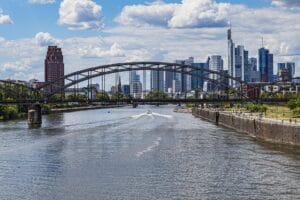
For first-time visitors, ordering a glass of Apfelwein with a traditional Hessian meal can be one of the most memorable cultural experiences in the city.
Explore the Hauptbahnhof Area
Frankfurt Central Station is one of Germany’s major transportation hubs.
The surrounding Bahnhofsviertel has a complex and rapidly changing identity.
It contains international restaurants, cafés, bars, nightlife venues, hotels, and businesses representing many different communities.
For travelers interested in multicultural urban life, the district can offer a different perspective on Frankfurt.
However, as with any busy major-city station district, visitors should remain aware of their surroundings, especially late at night.
Discover Frankfurt’s Multicultural Food Scene
Frankfurt’s international population has created a remarkably diverse food culture.
Beyond traditional German and Hessian cuisine, visitors can find restaurants representing cuisines from Turkey, Italy, Greece, India, Japan, Korea, the Middle East, the Balkans, Southeast Asia, and many other regions.
The official tourism organization describes Frankfurt as a multicultural city with culinary diversity reflecting its population.
This makes Frankfurt particularly appealing to travelers who enjoy food exploration.
Visit Frankfurt Zoo
Frankfurt Zoo is another family-friendly attraction.
The official Frankfurt tourism website includes the zoo among its top attractions and highlights its diverse collection of animals and plants.
It is a useful option for families who want to balance historical sightseeing with an activity that is more engaging for children.
Discover Frankfurt’s Christmas Market
If you visit during winter, Frankfurt’s Christmas market can transform the historic center.
The area around Römerberg becomes filled with stalls, lights, decorations, food, drinks, gifts, and festive entertainment.
The combination of the Christmas market with the historic Old Town creates one of the city’s most atmospheric seasonal experiences.
Winter visitors should check official event information for current dates because festival schedules change from year to year.
Experience Frankfurt’s Major Festivals
Frankfurt has a busy calendar of festivals and cultural events.
The official tourism website lists recurring celebrations including the Main Festival, Apple Wine Festival, Museum Embankment Festival, Rheingau Wine Festival, and Dippemess.
If your travel dates are flexible, checking Frankfurt’s event calendar before booking can help you experience the city during one of these celebrations.
Attend the Museum Embankment Festival
The Museum Embankment Festival is particularly important for culture lovers.
The event takes place along the Main and involves museums, performances, food, entertainment, and cultural activities.
Frankfurt tourism currently lists the 2026 Museum Embankment Festival for August 28–30, 2026.
If you are visiting around these dates, check the official program because the festival can significantly change the atmosphere around the river.
Take the Ebbelwei Express
The Ebbelwei Express combines sightseeing with Frankfurt’s famous apple wine culture.
Frankfurt tourism specifically highlights it as an experience that combines sightseeing with the city’s traditional drink.
This can be particularly enjoyable for travelers who want a relaxed introduction to Frankfurt while learning about the city.
Take a Guided Frankfurt City Tour
A guided walking tour can be one of the easiest ways to understand Frankfurt’s complex history.
A knowledgeable guide can explain the relationship between the medieval city, Holy Roman Empire, Jewish history, World War II, reconstruction, financial development, and modern architecture.
Frankfurt tourism recommends guided city tours among its major visitor experiences.
A historical walking tour is particularly valuable on your first day because it provides context for the attractions you will visit later.
Take a Hop-On Hop-Off Tour
If you have limited time or prefer not to walk long distances, a hop-on hop-off bus can provide a convenient overview of Frankfurt.
Frankfurt tourism lists hop-on hop-off sightseeing buses among its recommended ways to explore the city.
This option can be particularly useful for visitors staying only one day.
Best Time to Visit Frankfurt
Frankfurt can be visited throughout the year, but the best season depends on what you want to do.
Spring offers comfortable conditions for walking, parks, and outdoor sightseeing.
Summer brings long daylight hours, outdoor cafés, river walks, festivals, and lively evenings.
Autumn is excellent for museums, food, cultural attractions, and comfortable sightseeing.
Winter offers Christmas markets, museums, indoor attractions, and festive city-center atmosphere.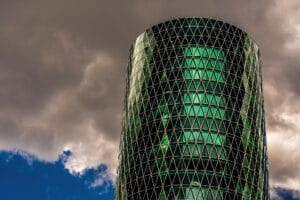
If your main goal is walking around the Old Town and enjoying the river, spring and early autumn are particularly attractive.
Visiting Frankfurt in Summer
Summer is one of the liveliest times in Frankfurt.
The Main riverbank becomes a social gathering place, outdoor restaurants become busier, and parks are ideal for relaxing.
However, popular attractions can become crowded.
Booking museums or special events in advance may be worthwhile during major festival periods.
Visiting Frankfurt in Winter
Winter provides a completely different Frankfurt experience.
The city’s museums become especially appealing when temperatures drop, while Christmas markets create a festive atmosphere around the Old Town.
This is a good season for travelers interested in culture, architecture, shopping, food, and indoor attractions.
How Many Days Do You Need in Frankfurt?
A one-day Frankfurt itinerary can cover Römerberg, New Old Town, Frankfurt Cathedral, St. Paul’s Church, Main River, Eiserner Steg, and the Main Tower.
A two-day Frankfurt itinerary gives you enough time to add the Städel Museum, Museum Embankment, Goethe House, Palmengarten, Sachsenhausen, and a traditional apple-wine experience.
Three days allow you to explore the city at a slower pace and add additional museums, neighborhoods, shopping, and perhaps a day trip.
Germany Travel specifically promotes Frankfurt as a destination where many important attractions can be discovered during a 48-hour visit.
Should You Rent a Car in Frankfurt?
For a city vacation, you generally do not need a rental car.
Frankfurt’s public transportation and walkable center make driving unnecessary for most sightseeing.
A car becomes more useful if you plan to explore the wider Rhine-Main region or make several countryside day trips.
Frankfurt Airport and the City
Frankfurt Airport is one of Europe’s major international aviation hubs.
Its proximity to the city makes Frankfurt particularly convenient for international travelers.
This also makes Frankfurt a practical stopover destination.
If you have a long layover, you may be able to travel into the city and explore the historic center, although you should allow sufficient time to return to the airport and complete security procedures.
Where to Stay in Frankfurt
For first-time visitors, staying near the Old Town and city center provides easy access to major attractions.
The Innenstadt is convenient for shopping, museums, restaurants, and sightseeing.
Sachsenhausen is attractive for travelers interested in traditional taverns and nightlife.
The area around the central station offers extensive hotel options and excellent transportation connections.
For business travelers, the financial district can be convenient, while visitors seeking a quieter atmosphere may prefer residential neighborhoods farther from the center.
What to Buy in Frankfurt
Traditional food products are among the best Frankfurt souvenirs.
You can look for local apple-wine products, German confectionery, Bethmännchen, regional foods, ceramics, crafts, books, and Frankfurt-themed gifts.
Travelers interested in Goethe can also find literature-related souvenirs.
Best Things to Do in Frankfurt at Night
Frankfurt changes dramatically after sunset.
The skyline becomes illuminated, creating excellent photography opportunities from the river and bridges.
Sachsenhausen becomes lively with restaurants, bars, and apple-wine taverns.
The area around the Alte Oper offers an elegant evening atmosphere.
The city center also provides numerous restaurants and cultural venues.
For nightlife, your choice should depend on whether you want traditional taverns, sophisticated bars, live music, clubs, or international restaurants.
Why Frankfurt Is Different From Other German Cities
Berlin is known for contemporary history and alternative culture.
Munich is famous for Bavarian traditions, palaces, and proximity to the Alps.
Hamburg is defined by its harbor and maritime character.
Cologne is famous for its cathedral and Rhine culture.
Frankfurt is different because it combines finance, skyscrapers, medieval history, museums, river culture, literature, traditional Hessian food, and multicultural urban life within a compact area.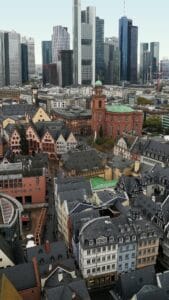
That combination is the real reason to visit.
Conclusion
Frankfurt deserves much more than a reputation as a business and airport city.
For travelers asking “What are the best things to do in Frankfurt?”, the answer begins with the city’s historic center but certainly does not end there.
Start at Römerberg and explore the famous Römer, then wander through the reconstructed New Old Town. Visit Frankfurt Cathedral and learn about the city’s imperial history before continuing to St. Paul’s Church, where an important chapter in German democracy unfolded.
Cross the Eiserner Steg and take in the Frankfurt skyline from the River Main. Visit the Main Tower for one of the city’s best panoramic views. Then explore the Städel Museum and the wider Museum Embankment, which make Frankfurt one of Germany’s strongest cultural destinations.
That mixture is what makes Frankfurt, Germany, such an interesting destination for a European city break.
For current attraction information, events, tours, transportation options, and visitor updates, the best starting point is the official Frankfurt Tourism website.
Author

Related posts
Best Places to Visit in Dinant
- 0
- 4,895 words
Best Places to Visit in Dinant, Belgium Dinant is one of the most beautiful small towns in Belgium and one of the...
Read out all
Best Places to Visit in Mont-Saint-Michel
- 0
- 4,974 words
Best Places to Visit in Mont-Saint-Michel , France Mont-Saint-Michel is one of the most extraordinary destinations in France and one of the...
Read out all
UNGA
- 0
- 5,649 words
UNGA (United Nations General Assembly ) The United Nations General Assembly, commonly known as the UN General Assembly or UNGA, is one...
Read out all
Best Places to Visit in Kathmandu
- 0
- 4,089 words
Best Places to Visit in Kathmandu , Nepal Kathmandu, the capital of Nepal, is one of South Asia’s most fascinating travel destinations....
Read out all
Best Places to Visit in Vilnius
- 0
- 5,246 words
Best Places to Visit in Vilnius , Lithuania Vilnius, the capital of Lithuania, is one of the most fascinating destinations in the...
Read out all
Best Places to Visit in Riga
- 0
- 6,005 words
Best Places to Visit in Riga , Latvia Riga, the capital of Latvia, is one of the most fascinating destinations in the...
Read out all