

Best Things to Do in Montreal , Canada
Montreal is one of the most distinctive cities in Canada, combining French-Canadian heritage, North American energy, historic architecture, creative neighborhoods, exceptional food, major festivals, green spaces, museums, and the scenic St. Lawrence River. For travelers searching for the best things to do in Montreal, Canada, the city offers an unusually broad range of experiences, from walking the cobblestone streets of Old Montreal and climbing Mount Royal to eating poutine, exploring Jean-Talon Market, discovering the Plateau-Mont-Royal, visiting world-class museums, and enjoying Montreal’s famous nightlife.
Montreal is also a city that rewards slow exploration. You can spend a morning discovering historic buildings in Old Montreal, an afternoon cycling along the Lachine Canal, an evening enjoying a restaurant in Little Burgundy, and the following day exploring Mount Royal and Mile End. The city’s neighborhoods each have their own character, which means that a Montreal vacation is about much more than checking off individual tourist attractions.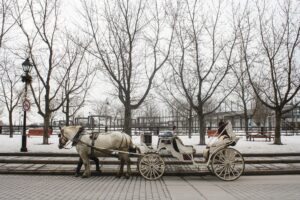
The official tourism organization identifies Mount Royal, Old Montreal, the Old Port, Jean-Talon Market, the Plateau-Mont-Royal, Montreal Museum of Fine Arts, Biodôme, and Montreal’s iconic food culture among the city’s essential experiences for first-time visitors.
This detailed Montreal travel guide explores the city’s major attractions, historic landmarks, neighborhoods, food experiences, museums, parks, outdoor activities, nightlife, shopping, seasonal experiences, day trips, and itinerary ideas.
Why Visit Montreal, Canada?
Montreal is one of the best cities to visit in Canada if you want a destination that feels simultaneously European and North American. French is deeply embedded in everyday life, historic stone buildings line streets in the old city, cafés spill onto sidewalks during warmer months, and neighborhood markets are filled with local produce and specialty foods. At the same time, Montreal has the scale, diversity, transportation infrastructure, cultural institutions, and modern architecture of a major North American metropolis.
The city is located on an island in the St. Lawrence River and is dominated geographically by Mount Royal, the mountain that gave Montreal its name. The relationship between the mountain, river, historic center, and modern downtown is central to understanding the city’s geography.
Montreal is also a year-round destination. Summer brings festivals, outdoor dining, cycling, river activities, and long evenings. Autumn brings colorful foliage and comfortable temperatures. Winter transforms the city into a snow-covered destination with skating, winter festivals, underground shopping, and cozy restaurants. Spring brings a gradual return of outdoor life.
Tourisme Montréal describes the city as a place of historic charm, cultural diversity, culinary creativity, neighborhood exploration, parks, cycling, street art, and many different experiences.
Explore Old Montreal
Old Montreal, or Vieux-Montréal, is the historic heart of the city and one of the first places you should visit. Its cobblestone streets, stone buildings, historic churches, cafés, restaurants, galleries, boutiques, and public squares create an atmosphere that feels very different from modern downtown Montreal.
The district contains architecture dating back centuries and provides a window into Montreal’s development from a small colonial settlement into one of Canada’s major cities. The official tourism organization describes Old Montreal as a district where visitors can experience the city’s long history while also finding contemporary restaurants, design shops, galleries, riverfront paths, and modern attractions.
The best way to experience Old Montreal is not to rush. Walk along Rue Saint-Paul, explore the smaller side streets, stop in Place Jacques-Cartier, visit Notre-Dame Basilica, and then continue toward the Old Port.
Le Vieux Montréal is an excellent geographic starting point for understanding this historic district.
Walk Along Rue Saint-Paul
Rue Saint-Paul is one of Old Montreal’s most atmospheric streets. Historic stone façades, restaurants, cafés, galleries, boutiques, and small shops make it an enjoyable place for an unhurried walk.
During warmer months, outdoor terraces bring the street to life. In winter, the architecture takes on a different character as snow and seasonal decorations create a more intimate atmosphere.
Walking Rue Saint-Paul is especially rewarding early in the morning before the busiest tourist hours. Later in the day, you can return for dinner or drinks and experience the street when the historic buildings are illuminated.
Tourisme Montréal specifically recommends walking through Old Montreal and along Saint-Paul Street as a way to experience the city’s historic character.
Visit Notre-Dame Basilica of Montreal
The Notre-Dame Basilica of Montreal is one of the city’s most recognizable landmarks and one of the most impressive religious buildings in Canada.
Located in the heart of Old Montreal, the basilica is particularly famous for its richly decorated interior. Deep blue tones, intricate woodwork, religious artwork, sculptures, stained glass, and dramatic lighting create an atmosphere that is very different from the restrained appearance of its exterior.
The basilica is also associated with AURA, a multimedia experience that uses light, sound, and architectural projection to reinterpret the interior.
For travelers interested in architecture, history, photography, religious heritage, or immersive cultural experiences, Notre-Dame Basilica should be near the top of any Montreal itinerary.
Tourisme Montréal identifies the basilica as one of the essential attractions of Old Montreal.
Discover Place d’Armes
Place d’Armes is one of the most important squares in Old Montreal.
The square provides excellent views toward Notre-Dame Basilica and surrounding historic architecture. It is also an excellent location to begin a walking tour because several major Old Montreal attractions are nearby.
Spend time examining the façades around the square rather than simply photographing the basilica. The buildings demonstrate several architectural periods and reflect Montreal’s evolution as a commercial and cultural center.
Relax at Place Jacques-Cartier
Place Jacques-Cartier is one of Old Montreal’s liveliest public spaces.
During the warmer months, restaurants and cafés create busy terraces along the square. Street performers and pedestrians contribute to its energetic atmosphere.
The square is particularly enjoyable for people-watching. Rather than treating it only as a sightseeing stop, consider having coffee or lunch nearby and watching the city move around you.
Explore the Old Port of Montreal
The Old Port of Montreal stretches along the St. Lawrence River and is one of the city’s most popular recreational areas.
Historic industrial and port architecture has been transformed into a lively public waterfront featuring walking paths, cycling routes, green spaces, attractions, restaurants, seasonal activities, cruises, and panoramic viewpoints.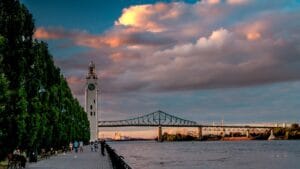
Vieux-Port de Montréal is particularly appealing because you can combine several experiences in a single visit.
Tourisme Montréal describes Old Montreal and the Old Port as one of the city’s most dynamic quarters, combining historic attractions with the riverfront, cruises, the observation wheel, museums, and contemporary entertainment.
Ride the Grande Roue de Montréal
The Grande Roue de Montréal is one of the easiest ways to get a broad view over Old Montreal, the St. Lawrence River, and downtown.
The observation wheel is especially attractive around sunset, when the changing light creates views across the historic district and modern skyline.
At night, the illuminated city creates a completely different atmosphere.
Tourisme Montréal lists the Grande Roue among the signature experiences of the Old Port.
Take a St. Lawrence River Cruise
A Montreal river cruise provides a different perspective on the city.
From the water, you can see the Old Port, downtown skyline, bridges, waterfront parks, islands, and architectural landmarks from a distance.
Daytime cruises are ideal for sightseeing and photography, while evening cruises can be more atmospheric and romantic.
A river cruise is particularly useful if you have already spent several hours walking around the city and want to experience Montreal without additional walking.
Visit the Montreal Observation Wheel Area at Sunset
The Old Port is one of the best locations for a Montreal sunset.
As the sun drops over the city, the St. Lawrence River reflects changing colors while downtown buildings become increasingly illuminated.
The combination of water, skyline, historic architecture, and public spaces makes this one of the best places to photograph Montreal.
Climb Mount Royal
No Montreal travel guide would be complete without Mount Royal.
The mountain is one of the defining geographical and cultural features of the city. Mount Royal Park was inaugurated in 1876 and was designed by Frederick Law Olmsted, the landscape architect associated with New York’s Central Park.
The park provides hiking paths, viewpoints, wooded areas, open lawns, seasonal recreation, and some of the city’s best skyline views.
Tourisme Montréal recommends allowing at least a couple of hours for the Mount Royal experience, particularly if you want to walk to the main lookout.
See the Montreal Skyline From Kondiaronk Belvedere
The Kondiaronk Belvedere is the most famous viewpoint in Mount Royal Park.
From the lookout, you can see downtown Montreal, the St. Lawrence River, skyscrapers, and surrounding urban neighborhoods.
The official tourism organization identifies the lookout as one of the city’s most iconic views.
Visit early in the morning for a quieter experience or around sunset for dramatic light.
The viewpoint is excellent for photography, especially during autumn when the surrounding trees become colorful.
Walk the Olmsted Trail
The Olmsted Trail runs through Mount Royal Park and provides an enjoyable way to explore the landscape.
During warmer weather, the trail attracts walkers, joggers, cyclists, and other outdoor enthusiasts. In winter, Mount Royal becomes a destination for snowshoeing, hiking, and cross-country skiing.
Tourisme Montréal notes that the park contains more than 200 hectares of natural space and biodiversity.
See the Mount Royal Cross
The Mount Royal Cross is another recognizable landmark.
The illuminated cross can be seen from different parts of the city after dark, while the area around it provides an additional walking destination within the park.
The present structure dates from the early twentieth century and has become part of Montreal’s visual identity.
Tourisme Montréal notes that the cross stands approximately 30 metres high and has been an important feature of the mountain for more than a century.
Visit Mount Royal During Its 150th Anniversary Year
If you are visiting Montreal in 2026, Mount Royal has an additional historical significance because Mount Royal Park is celebrating its 150th anniversary.
The park was founded in 1876, and Tourisme Montréal has identified 2026 as a year of anniversary activities and events connected with the park.
Travelers visiting Montreal during 2026 should therefore check the official event calendar for special Mount Royal programming.
Visit Saint Joseph’s Oratory
Saint Joseph’s Oratory of Mount Royal is one of Montreal’s most impressive architectural landmarks.
Its enormous dome is visible from many parts of the city, and the site combines religious history, architecture, gardens, art, and panoramic views.
Tourisme Montréal includes the oratory among the major attractions of the Mount Royal area.
Even travelers who are not religious may appreciate the scale and architecture of the complex.
Explore the Plateau-Mont-Royal
The Plateau-Mont-Royal is one of Montreal’s most recognizable neighborhoods.
It is known for colorful houses, exterior staircases, cafés, restaurants, independent shops, murals, parks, and lively streets.
This is the kind of neighborhood where simply walking around can become one of the best things to do in Montreal.
Instead of following a strict sightseeing route, explore side streets, stop for coffee, look at architectural details, and discover small businesses.
Walk Along Saint-Laurent Boulevard
Saint-Laurent Boulevard cuts through several of Montreal’s culturally diverse neighborhoods.
It is an excellent place to experience restaurants, bars, cafés, boutiques, murals, and nightlife.
The boulevard also demonstrates Montreal’s multicultural identity, with businesses and communities representing many different cultural traditions.
For travelers looking beyond traditional tourist attractions, Saint-Laurent Boulevard provides a more contemporary view of the city.
Discover Mile End
Mile End is one of Montreal’s most creative and culturally interesting neighborhoods.
The area is associated with independent music, cafés, bookstores, restaurants, artists, street art, and Montreal’s famous bagel culture.
It is also one of the best places to understand why Montreal has developed such a strong reputation for creativity and independent culture.
Spend an afternoon walking between Mile End and the Plateau, stopping for coffee and local food along the way.
Try a Montreal Bagel
Eating a Montreal bagel is an essential culinary experience.
Montreal-style bagels are traditionally thinner and sweeter than many New York-style bagels and are associated with wood-fired baking.
Two of the city’s best-known institutions are St-Viateur Bagel and Fairmount Bagel.
Tourisme Montréal includes Montreal bagels among the city’s must-eat specialties for first-time visitors.
Try one fresh and warm rather than treating it only as a souvenir.
Explore Jean-Talon Market
Jean-Talon Market is one of the best destinations in Montreal for food lovers.
Located in the Little Italy and Villeray area, the market is filled with fresh produce, cheeses, meats, baked goods, prepared foods, flowers, regional products, and seasonal specialties.
It provides a direct connection to Quebec’s agricultural producers and Montreal’s food culture.
Tourisme Montréal lists Jean-Talon Market among the city’s essential first-time experiences.
Give yourself enough time to browse rather than simply buying one item and leaving.
Explore Little Italy
Little Italy is one of Montreal’s most enjoyable neighborhoods for food, cafés, architecture, and relaxed walking.
The area is particularly attractive around Jean-Talon Market, where Italian cultural influences blend with Montreal’s broader multicultural identity.
Explore independent restaurants, cafés, bakeries, specialty food shops, and neighborhood streets.
Little Italy is an excellent place for an afternoon food-focused itinerary.
Explore the Montreal Museum of Fine Arts
The Montreal Museum of Fine Arts is one of Canada’s major art institutions.
Its collections cover a broad range of artistic periods and traditions, making it a worthwhile destination for travelers who want to spend several hours indoors.
Tourisme Montréal includes the museum among the city’s essential attractions for first-time visitors.
Art enthusiasts can easily dedicate half a day to the museum, while casual visitors may prefer selecting a few collections and combining the visit with nearby downtown attractions.
Visit Pointe-à-Callière
Pointe-à-Callière, Montréal Archaeology and History Complex is one of the best museums for understanding Montreal’s origins.
Located in Old Montreal, the museum explores the archaeological foundations and historical development of the city.
Tourisme Montréal specifically recommends Pointe-à-Callière as a starting point for exploring Montreal’s historic relationship with the river and city.
It is especially valuable for travelers who want historical context rather than simply looking at old buildings.
Explore the Montreal Science Centre
The Montreal Science Centre is located in the Old Port and is a strong option for families and visitors interested in science and technology.
Its interactive exhibitions make it particularly useful when traveling with children.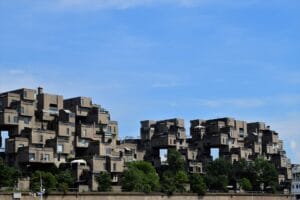
Because it is close to Old Montreal and the waterfront, it can easily be incorporated into a broader Old Port itinerary.
Explore the Montreal Botanical Garden
The Montreal Botanical Garden is another major attraction within the Space for Life district.
Its extensive plant collections and themed gardens provide an opportunity to experience nature within the city.
Spring and summer are particularly rewarding, but the surrounding attractions make the area useful throughout the year.
Explore Parc Jean-Drapeau
Parc Jean-Drapeau is located on Île Sainte-Hélène and Île Notre-Dame and provides extensive outdoor space near downtown.
Parc Jean-Drapeau is a good destination for walking, cycling, waterfront views, events, and architecture.
The park is also home to the Biosphère, a distinctive geodesic structure that has become one of Montreal’s most recognizable modern landmarks.
Visit the Biosphère
The Biosphère, Environment Museum explores environmental issues, sustainability, climate, ecosystems, and human relationships with the natural world.
The Biosphere, Environment Museum is particularly interesting for visitors who want an educational attraction with an architectural landmark attached.
The building itself is worth photographing from outside even if you do not enter.
Cycle Along the Lachine Canal
The Lachine Canal is one of the best places to experience Montreal outdoors.
Walking or cycling along the canal gives you a different view of the city, with industrial heritage, water, bridges, parks, residential neighborhoods, and modern redevelopment.
Renting a bicycle can turn the canal into a half-day adventure.
The route is particularly beautiful in summer and early autumn.
Discover Griffintown
Griffintown has undergone substantial transformation and offers a mixture of historic industrial buildings, modern apartments, restaurants, cafés, and public spaces.
It is an interesting neighborhood for travelers who want to see how Montreal is evolving.
The area also provides convenient access to the Lachine Canal and downtown.
Explore Little Burgundy
Little Burgundy is one of Montreal’s most interesting neighborhoods for food and culture.
The area has strong historical connections with Montreal’s Black community and jazz culture.
Today it is also known for restaurants, cafés, boutiques, and a lively food scene.
It is an excellent neighborhood to combine with the Atwater Market and Lachine Canal.
Explore Underground Montreal
Montreal’s Underground City, or RÉSO, is an extensive network of interconnected shopping centers, businesses, hotels, restaurants, transit stations, and pedestrian passages beneath downtown.
It becomes particularly valuable during winter because visitors can travel between many destinations while remaining indoors.
Tourisme Montréal identifies going underground as one of the city’s essential experiences.
The Underground City is less about one specific attraction and more about experiencing how Montreal adapts to its climate.
Explore Downtown Montreal
Downtown Montreal combines skyscrapers, universities, museums, shopping, restaurants, hotels, churches, and cultural venues.
Walk along Rue Sainte-Catherine, explore McGill University, visit the Montreal Museum of Fine Arts, and then head toward Mount Royal.
Downtown is also an excellent base for visitors who want convenient access to public transportation.
Walk Through McGill University
The McGill University campus adds historic architecture and academic atmosphere to central Montreal.
Walking around the campus can be particularly enjoyable in autumn when the surrounding trees change color.
The university is also located near Mount Royal, making it easy to combine both destinations.
Experience Montreal’s Food Culture
Montreal is one of Canada’s strongest food destinations.
Its culinary identity combines French traditions, Quebec ingredients, Jewish food traditions, immigrant cuisines, modern Canadian cooking, and creative contemporary restaurants.
Tourisme Montréal specifically emphasizes emblematic Montreal cuisine as one of the city’s essential experiences.
For the best experience, don’t limit yourself to expensive restaurants. Markets, bakeries, cafés, food counters, and neighborhood restaurants are equally important to Montreal’s culinary culture.
Try Poutine in Montreal
No discussion of Montreal food would be complete without poutine.
The classic version combines French fries, cheese curds, and gravy.
Although poutine originated in Quebec and is now famous across Canada, eating it in Montreal provides an important connection to Quebec’s culinary culture.
Try a traditional version first before exploring more elaborate variations.
Explore Montreal’s Coffee Culture
Montreal has a strong café culture, particularly in neighborhoods such as Mile End, the Plateau, Little Burgundy, and Old Montreal.
A café stop can easily become part of your sightseeing routine.
Rather than rushing from attraction to attraction, spend time sitting outside, drinking coffee, and watching neighborhood life.
That slower pace is one of the best ways to experience Montreal.
Enjoy Montreal’s Restaurant Scene
Montreal has restaurants ranging from traditional Quebec establishments to innovative contemporary kitchens.
For a special meal, consider exploring renowned restaurants in neighborhoods such as the Plateau, Mile End, Little Burgundy, Old Montreal, and downtown.
One established option in the Plateau is Au Pied de Cochon, while Old Montreal offers several restaurants within walking distance of the historic attractions.
In Old Montreal, Monarque and Restaurant Bonaparte are examples of higher-end dining options.
These are best considered as individual dining choices rather than a definitive ranking, and checking current menus and reservations before visiting is advisable.
Visit Montreal in Autumn
Autumn is arguably one of the best seasons for exploring Montreal.
Temperatures are often comfortable for walking, while Mount Royal and other green spaces become colorful.
This is an excellent season for combining outdoor sightseeing with neighborhood exploration.
Photographers should prioritize Mount Royal, the Old Port, and residential streets during the golden-hour period.
Visit Montreal in Spring
Spring marks the return of outdoor life.
Cafés reopen terraces, parks become greener, and residents return to cycling and walking.
The season can be unpredictable, so visitors should pack layers.
Spring is particularly attractive for travelers who want to avoid peak summer crowds while still experiencing outdoor Montreal.
Best Things to Do in Montreal for Families
Montreal offers numerous family-friendly attractions.
The Biodôme, Insectarium, Botanical Garden, Science Centre, Old Port, Mount Royal, river cruises, and Parc Jean-Drapeau can all work well for families.
The key is to mix educational attractions with outdoor experiences.
For example, a family could spend the morning at the Biodôme, have lunch at a nearby market, and spend the afternoon exploring Parc Maisonneuve.
Best Things to Do in Montreal for Couples
Montreal is an excellent destination for couples.
Walking through Old Montreal at sunset, taking a river cruise, watching the skyline from Mount Royal, sharing dinner in a neighborhood restaurant, or exploring cafés in Mile End can create a romantic itinerary.
Tourisme Montréal specifically highlights Old Montreal, the Old Port, Mount Royal, cafés, architecture, and waterfront experiences as strong choices for couples.
Best Things to Do in Montreal for Solo Travelers
Montreal is also easy to explore independently.
The city has extensive public transportation, numerous museums, cafés, markets, parks, walking routes, and neighborhoods.
Solo travelers can easily spend an entire day exploring Old Montreal on foot before moving toward the Plateau and Mile End.
Food markets and cafés are especially convenient for solo visitors.
Best Free Things to Do in Montreal
Some of Montreal’s best experiences are inexpensive or free.
Walking through Old Montreal, exploring public squares, walking along the Old Port, viewing street art, hiking Mount Royal, exploring neighborhood streets, and enjoying public parks can all be incorporated into a low-cost itinerary.
A city walk from Old Montreal toward Mount Royal can provide a surprisingly comprehensive introduction to the city’s architecture and geography.
Best Things to Do in Montreal at Night
Montreal’s illuminated architecture makes evening exploration particularly rewarding.
Old Montreal is beautiful after dark, especially around Notre-Dame Basilica and Place Jacques-Cartier.
The Old Port offers nighttime skyline views.
Downtown provides restaurants, bars, theaters, and nightlife.
The Plateau and Mile End are better choices if you want neighborhood nightlife rather than a conventional downtown evening.
Montreal Smoked Meat
Montreal smoked meat is another iconic local food.
It is generally served as a deli sandwich with mustard and rye bread.
The dish reflects Montreal’s Jewish culinary heritage and has become one of the city’s best-known food traditions.
Food-focused travelers should make time for a proper smoked-meat sandwich during their stay.
Montreal and Quebec Maple Products
Quebec is strongly associated with maple syrup, and Montreal provides plenty of opportunities to taste maple products.
Look for maple candies, maple pastries, syrup, desserts, and specialty products in markets and food shops.
These also make practical edible souvenirs.
Why Montreal Is Different From Other Canadian Cities
Montreal has a cultural identity that distinguishes it from Toronto, Vancouver, Calgary, Ottawa, and other Canadian destinations.
Its French language, Quebec heritage, historic architecture, food traditions, festivals, neighborhood culture, and European-influenced urban design create a distinctive atmosphere.
Toronto is more strongly associated with its multicultural megacity identity and modern skyline.
Vancouver is defined by mountains, ocean, and Pacific Coast scenery.
Quebec City is famous for its preserved historic character.
Montreal occupies a different position: it combines French-Canadian culture, big-city energy, historic districts, creative neighborhoods, and exceptional food.
Is Montreal Worth Visiting?
Absolutely.
Montreal is particularly rewarding for travelers who enjoy walking, food, architecture, museums, festivals, parks, photography, and neighborhood exploration.
It is not necessary to spend every hour visiting major attractions. Some of the city’s best experiences happen while walking between them.
A coffee in Mile End, a sunset from Mount Royal, a bagel in the morning, a stroll through Old Montreal, and dinner in the Plateau can be just as memorable as visiting a famous museum.
Conclusion
Montreal is one of Canada’s most rewarding destinations for travelers looking for a combination of history, culture, food, architecture, nature, nightlife, shopping, and outdoor experiences.
The best place to begin is Old Montreal, where cobblestone streets, historic stone buildings, Notre-Dame Basilica, Place d’Armes, Place Jacques-Cartier, and the Old Port introduce visitors to the city’s historic identity. Tourisme Montréal describes Old Montreal and the Old Port as a district where centuries-old history exists alongside contemporary restaurants, galleries, shops, riverfront paths, cruises, and modern attractions.
From there, head toward Mount Royal, the geographical feature that gave Montreal its name. The park’s Kondiaronk Belvedere provides one of the city’s most spectacular skyline views, while its wooded trails and open spaces offer a welcome escape from the urban environment.
Whether you are planning a weekend getaway, a family vacation, a romantic trip, a solo adventure, or a longer Canada travel itinerary, Montreal offers enough variety to keep you exploring well beyond the traditional tourist attractions.
For current attractions, events, visitor information, neighborhood recommendations, and seasonal activities, the most reliable starting point is the official Tourisme Montréal website. Official Tourisme Montréal
Author

Related posts
Best Places to Visit in Dinant
- 0
- 4,895 words
Best Places to Visit in Dinant, Belgium Dinant is one of the most beautiful small towns in Belgium and one of the...
Read out all
Best Places to Visit in Mont-Saint-Michel
- 0
- 4,974 words
Best Places to Visit in Mont-Saint-Michel , France Mont-Saint-Michel is one of the most extraordinary destinations in France and one of the...
Read out all
UNGA
- 0
- 5,649 words
UNGA (United Nations General Assembly ) The United Nations General Assembly, commonly known as the UN General Assembly or UNGA, is one...
Read out all
Best Places to Visit in Kathmandu
- 0
- 4,089 words
Best Places to Visit in Kathmandu , Nepal Kathmandu, the capital of Nepal, is one of South Asia’s most fascinating travel destinations....
Read out all
Best Places to Visit in Vilnius
- 0
- 5,246 words
Best Places to Visit in Vilnius , Lithuania Vilnius, the capital of Lithuania, is one of the most fascinating destinations in the...
Read out all
Best Places to Visit in Riga
- 0
- 6,005 words
Best Places to Visit in Riga , Latvia Riga, the capital of Latvia, is one of the most fascinating destinations in the...
Read out all