
Best Things to Do in Lyon, France
Lyon is one of the most fascinating cities to visit in France, offering a remarkable combination of history, architecture, gastronomy, culture, riverside scenery and vibrant modern life. Located in the Auvergne-Rhône-Alpes region at the meeting point of the Rhône and Saône rivers, Lyon has developed over more than two thousand years and remains one of France’s most rewarding destinations for travelers who want to experience something beyond Paris. The city is famous for its historic neighborhoods, Renaissance buildings, secret passageways, Roman archaeological sites, traditional French cuisine, museums, markets and distinctive local character.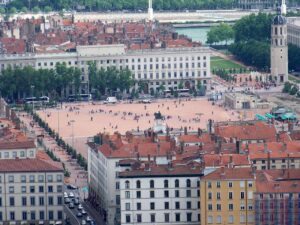
For travelers searching for the best things to do in Lyon, France, the city offers an impressive variety of experiences. You can begin the morning on Fourvière Hill looking across the rooftops of Lyon, explore the ancient Roman theaters, descend into the atmospheric streets of Vieux Lyon, discover hidden traboules, enjoy lunch at a traditional bouchon lyonnais, spend the afternoon walking along the Rhône, visit a world-class museum and finish the evening with dinner overlooking the city.
Lyon is particularly attractive because its historic districts have survived remarkably well. UNESCO recognizes the Historic Site of Lyon as a World Heritage Site, highlighting the city’s Roman remains, medieval streets, Renaissance buildings, classical architecture and nineteenth-century silk-worker districts. The protected historic area demonstrates how Lyon expanded gradually rather than repeatedly demolishing and rebuilding its central districts.
The city also has a strong culinary identity. Lyon is internationally associated with French gastronomy and the legacy of chef Paul Bocuse. The official Lyon tourism organization describes the destination as a major gastronomic center with thousands of restaurants ranging from traditional bouchons to Michelin-starred establishments and innovative contemporary kitchens.
Whether you are planning a weekend in Lyon, a romantic French getaway, a family vacation, a food-focused trip or a longer France itinerary, Lyon provides enough attractions and experiences to keep you occupied for several days.
Why Lyon Is One of the Best Cities to Visit in France
Lyon has an unusual ability to combine the atmosphere of a historic European city with the energy of a modern metropolitan destination. Its location between two rivers and around several hills gives the city a distinctive physical character, while its long history has left behind layers of architecture that can still be experienced on foot.
The city was founded by the Romans in the first century BC as Lugdunum and eventually became an important center of Roman Gaul. Today, visitors can still see Roman theaters and archaeological remains on Fourvière Hill. Later periods added medieval religious buildings, Renaissance merchant houses, elegant classical squares, nineteenth-century silk-worker housing and modern architectural projects.
This historical continuity is one of Lyon’s greatest attractions. UNESCO notes that the city’s urban fabric illustrates more than two millennia of development, from Roman Lugdunum and medieval Fourvière to Renaissance Vieux Lyon, the Presqu’île and the nineteenth-century Croix-Rousse silk district.
Lyon is also easier to explore than many enormous European capitals. Many major attractions are concentrated in walkable areas, and the city’s public transportation makes it possible to reach attractions farther away without relying entirely on taxis or rental cars.
Explore Vieux Lyon
Vieux Lyon is one of the most important places to visit in Lyon and should be at the top of almost every first-time visitor’s itinerary. Located along the western bank of the Saône beneath Fourvière Hill, this historic neighborhood is famous for its narrow cobbled streets, Renaissance architecture, courtyards, churches, cafés and mysterious passageways.
The district is considered one of the largest Renaissance areas in Europe and forms a major part of Lyon’s UNESCO World Heritage landscape. Its architecture reflects the city’s commercial importance during the Renaissance, when merchants and bankers helped transform Lyon into an important European economic center.
Walking through Vieux Lyon is more enjoyable when you take your time rather than simply moving from one landmark to another. Look upward at the façades, step into open courtyards where permitted, examine the stone staircases and notice how narrow streets create unexpected perspectives.
Vieux Lyon is divided traditionally into areas associated with Saint-Paul, Saint-Jean and Saint-Georges. Each section has its own atmosphere, making the neighborhood ideal for slow exploration.
Discover the Famous Lyon Traboules
One of the most unique things to do in Lyon is exploring the city’s famous traboules. These hidden passageways connect streets through courtyards and buildings, creating shortcuts that are unlike ordinary European alleyways.
The word traboule comes from the Latin transambulare and refers to passageways through buildings and courtyards. Lyon’s tourism organization explains that these routes were historically useful for pedestrians and became an important feature of the city’s architectural heritage.
The traboules are especially associated with Vieux Lyon and Croix-Rousse. Some contain beautiful Renaissance galleries, spiral staircases and architectural details that are easy to miss when walking along the main streets.
Visitors should remember that many traboules pass through residential or privately managed buildings. Access can vary, and travelers should respect doors, signs, residents and opening restrictions.
Visit Cathédrale Saint-Jean-Baptiste
The Cathedral of Saint John the Baptist is one of the most important landmarks in Vieux Lyon. Its long construction history reflects the development of Lyon during the medieval period.
The cathedral combines Romanesque and Gothic influences and stands in a beautiful part of the old city close to the Saône. Its façade and interior provide an important contrast to the Renaissance merchant houses surrounding it.
A visit to Saint-Jean Cathedral can easily be combined with a walking tour of Vieux Lyon and the nearby traboules.
Climb Fourvière Hill
Fourvière Hill is one of the best places to visit in Lyon for panoramic views. From the elevated terraces, travelers can see the dense historic center, the Rhône and Saône rivers, surrounding neighborhoods and, when atmospheric conditions are favorable, distant Alpine landscapes.
The Lyon tourism office specifically recommends using the funicular to reach Fourvière and enjoying the panoramic view from the hill.
Although walking up Fourvière can be rewarding, the slope can be demanding. Taking the funicular provides a convenient alternative and also gives visitors an experience associated with Lyon’s local transportation history.
Visit Basilica of Notre-Dame de Fourvière
The Basilica of Notre-Dame de Fourvière is perhaps the most recognizable landmark in Lyon. Rising above the city, its striking architecture and richly decorated interior make it one of the essential attractions for first-time visitors.
The basilica was constructed in the nineteenth century and became one of Lyon’s most important religious and architectural symbols. Inside, visitors can see elaborate mosaics, decorative details and religious artwork.
The official Lyon tourism organization identifies Fourvière Basilica as one of the city’s iconic monuments and includes it in recommended historical tours.
The exterior terrace is particularly impressive because it provides a sweeping view across Lyon.
Enjoy the Fourvière Panorama
The Fourvière viewpoint is one of the best photography locations in Lyon. The elevated position allows you to appreciate how the city developed around the Rhône and Saône.
The view is particularly beautiful around sunrise and sunset when the changing light highlights the rooftops, church towers and river corridors.
On exceptionally clear days, the Alps may be visible in the distance. The official Lyon tourism organization notes that the Mont Blanc summit can sometimes be seen from Fourvière when conditions are favorable.
Explore the Roman Theaters of Lyon
Lyon’s Roman heritage is best experienced around Fourvière, where the ancient theaters of Lugdunum provide a remarkable connection to the city’s origins.
The Roman theaters demonstrate the importance of Lugdunum during the Roman era and remain one of the most significant archaeological attractions in the city.
Walking around the ruins provides a completely different experience from exploring Renaissance Vieux Lyon below the hill. Together, the two districts demonstrate the depth of Lyon’s historical development.
The official three-day Lyon itinerary places the Roman theaters at the beginning of its recommended historical route.
Visit the Lugdunum Museum
The Lugdunum museum, associated with Lyon’s Roman archaeological heritage, is an excellent destination for travelers who want to understand the history behind the ruins.
Instead of seeing the Roman theaters simply as impressive stones, the museum helps place them within the broader story of ancient Lugdunum and Roman Gaul.
A visit is particularly valuable before or after exploring the archaeological site because it provides historical context.
Walk Through the Rosary Gardens
The Jardins du Rosaire, or Rosary Gardens, provide a pleasant route between Fourvière and Vieux Lyon.
Walking down through the gardens allows visitors to transition gradually from the elevated religious district into the narrow Renaissance streets below.
The official Lyon tourism itinerary specifically recommends descending from Fourvière through the Rosary Gardens toward Vieux Lyon.
Explore Place Bellecour
Place Bellecour is one of the most recognizable public spaces in Lyon and one of the best places to understand the geography of the city.
Located on the Presqu’île, the enormous square sits between the Rhône and Saône and serves as a central reference point for exploring the city.
The square is surrounded by shops, restaurants, cafés and streets leading toward other important attractions.
Place Bellecour is also an excellent starting point for walking toward Vieux Lyon, the Presqu’île and the shopping streets of central Lyon.
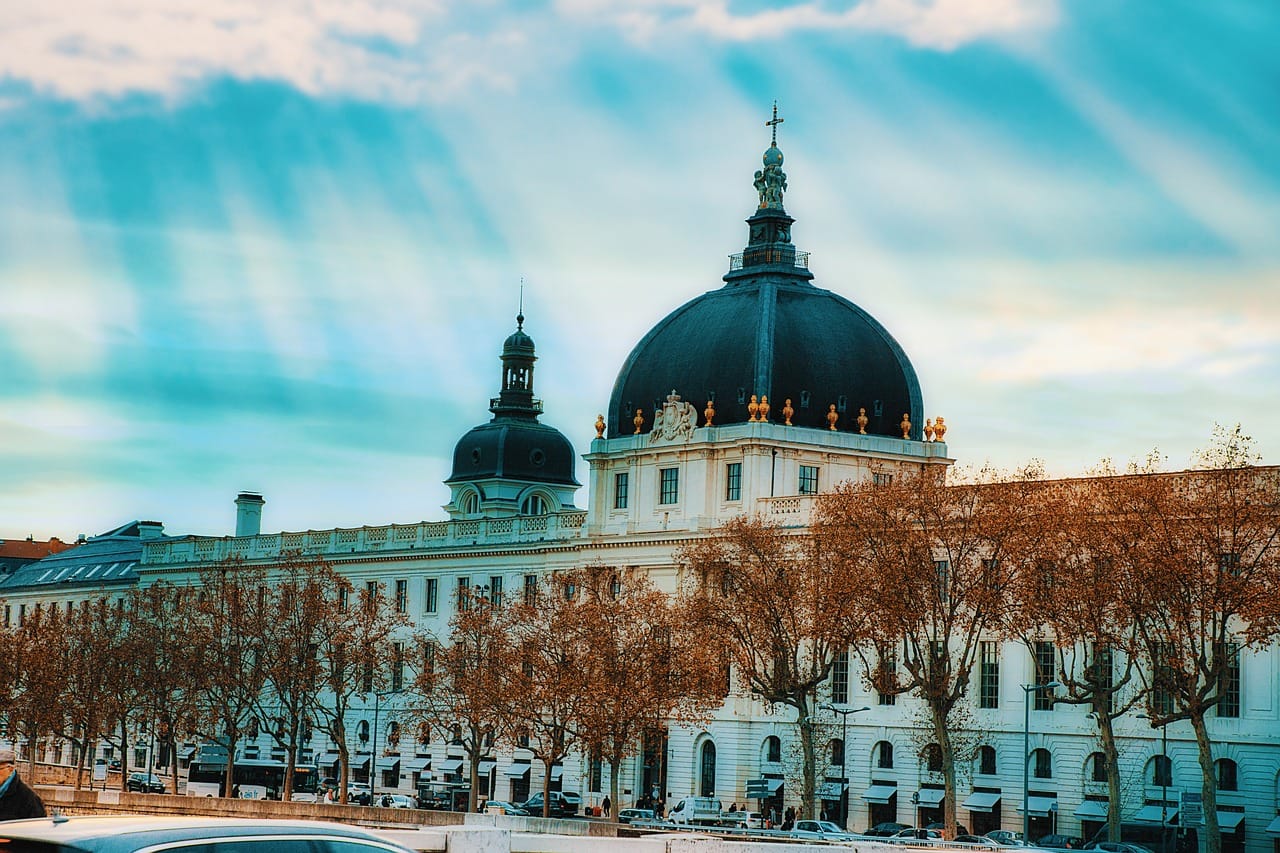
Visit the Grand Hôtel-Dieu
The Grand Hôtel-Dieu is one of Lyon’s most impressive architectural complexes.
Historically associated with healthcare, the restored complex now incorporates restaurants, shops, hospitality spaces and other contemporary uses.
Its architecture demonstrates how Lyon has adapted historic buildings to modern urban life while preserving their visual identity.
Walk Along the Rhône River
Walking beside the Rhône is one of the most relaxing things to do in Lyon.
The riverbanks provide open views, paths for pedestrians and cyclists, bridges, boats and opportunities to watch local life.
The atmosphere can be particularly enjoyable in the evening when residents gather along the river.
Lyon’s tourism authorities actively encourage visitors to discover the city on foot, by bicycle and along its waterways as part of more responsible urban tourism.
Walk Along the Saône River
The Saône offers a quieter atmosphere than some parts of the Rhône waterfront.
Walking along the river provides beautiful views of Vieux Lyon and Fourvière, especially when looking back toward the historic façades from the opposite bank.
A riverside walk can be combined with a visit to Vieux Lyon, making it one of the easiest ways to experience several of Lyon’s major attractions in one outing.
Take a Boat Trip on the Rhône and Saône
A boat trip is another way to experience Lyon from a different perspective.
The city’s position at the meeting point of two rivers makes water-based sightseeing particularly interesting.
From the water, visitors can appreciate historic façades, bridges, modern developments and the changing relationship between Lyon’s historic and contemporary districts.
Explore Croix-Rousse
Croix-Rousse is one of Lyon’s most distinctive neighborhoods.
The hill is historically associated with silk production and the canuts, Lyon’s nineteenth-century silk workers.
The neighborhood has a village-like atmosphere despite being part of a major French city. Its streets, staircases, workshops, cafés, murals and viewpoints make it particularly enjoyable for travelers who want to explore beyond the standard tourist route.
The official tourism organization describes Croix-Rousse as the silk district and explains how the canuts lived in buildings designed to accommodate large looms and silk-working equipment.
Learn About Lyon’s Silk Industry
Silk is an essential part of Lyon’s history.
For centuries, the city developed a major silk industry that influenced its economy, architecture and social structure.
The canuts played a particularly important role during the nineteenth century, and their working lives shaped the distinctive architecture of Croix-Rousse.
Visitors can explore silk workshops, museums and demonstrations to understand how this industry developed.
Visit the Maison des Canuts
The Maison des Canuts provides an opportunity to learn more about the city’s silk heritage.
The attraction focuses on the history of Lyon’s silk workers, weaving traditions and the economic importance of textiles.
For travelers interested in industrial history, fashion or traditional crafts, this is one of the most meaningful cultural attractions in Croix-Rousse.
Discover the Mur des Canuts
The Mur des Canuts is one of Lyon’s most famous murals.
This enormous painted wall depicts everyday life and local figures in a highly realistic style.
It demonstrates the importance of mural art in Lyon and is a memorable attraction for photographers.
See the Fresque des Lyonnais
The Fresque des Lyonnais is another famous mural depicting important personalities connected with the city.
It offers an entertaining introduction to Lyon’s history and famous residents.
The mural is particularly useful for visitors who want to combine street art with local history.
Explore Lyon’s Street Art
Lyon has a strong tradition of large-scale murals and public art.
The city’s murals are not simply decorative; many tell stories about local history, famous residents and neighborhoods.
Street-art lovers can spend an entire afternoon exploring different parts of the city while looking for murals.
This provides an alternative way to understand Lyon beyond museums and historic monuments.
Visit Les Halles de Lyon Paul Bocuse
Food lovers should make time for Les Halles de Lyon Paul Bocuse.
This covered food market is associated with the legacy of legendary French chef Paul Bocuse and represents Lyon’s extraordinary culinary culture.
Inside, visitors can discover cheeses, meats, pastries, chocolates, seafood, prepared foods and other French specialties.
The market is one of the best places to experience the city’s reputation as a gastronomic capital.
Experience Traditional Lyonnaise Cuisine
Lyon is famous for traditional regional food.
A visit should include the opportunity to taste local dishes rather than relying entirely on international restaurants.
Classic Lyonnaise cuisine is often hearty and rooted in local ingredients, reflecting the city’s historic relationship with regional agriculture and culinary traditions.
Eat at a Bouchon Lyonnais
A bouchon lyonnais is one of the essential culinary experiences in Lyon.
These traditional restaurants are associated with local cuisine and a convivial dining atmosphere.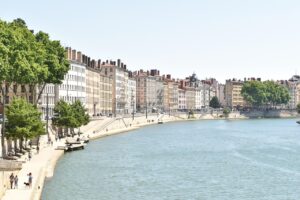
A meal at a good bouchon can introduce travelers to dishes and flavors strongly connected with Lyon’s culinary identity.
Because the popularity of Lyon’s food scene means that restaurants can vary considerably, researching established establishments and recognized bouchon labels can be useful.
Discover Paul Bocuse’s Legacy
Paul Bocuse is one of the most influential figures in modern French gastronomy and is deeply connected with Lyon.
His legacy can be experienced through the city’s restaurants, culinary institutions and the Halles de Lyon Paul Bocuse.
Travelers interested in French gastronomy should consider Lyon an essential destination for understanding the evolution of modern French cuisine.
Try Lyonnaise Pastries and Desserts
Lyon’s food culture extends beyond savory dishes.
Local bakeries and pastry shops offer traditional French pastries alongside regional specialties.
Stopping at independent bakeries while walking through Vieux Lyon or the Presqu’île is one of the simplest ways to add authentic food experiences to your itinerary.
Visit Musée des Confluences
The Musée des Confluences is one of Lyon’s most striking contemporary buildings.
Located where the Rhône and Saône meet, the museum explores science, anthropology, civilizations and the natural world.
Its futuristic architecture creates a dramatic contrast with the Renaissance buildings of Vieux Lyon.
The museum is an excellent choice for travelers who want to see Lyon’s contemporary side.
Explore the Confluence District
The Confluence district represents another chapter in Lyon’s urban development.
Located at the southern tip of the Presqu’île, the area contains contemporary architecture, renovated industrial buildings, public spaces and modern cultural attractions.
Exploring Confluence demonstrates how Lyon continues to expand and reinvent itself.
The official Lyon tourism organization specifically describes the city as moving from ancient Fourvière and Renaissance Vieux Lyon through the Presqu’île to contemporary creations in Confluence.
Walk Around the Lake at Parc de la Tête d’Or
Walking around the lake is one of the simplest and most enjoyable activities in Parc de la Tête d’Or.
The scenery changes throughout the route, with trees, water, bridges and open lawns creating different perspectives.
The park is popular with local residents, so visiting provides an opportunity to experience Lyon as a living city rather than simply as a tourist destination.
Discover the Botanical Gardens
The park contains botanical spaces that add another dimension to the visit.
Plant lovers can explore gardens and seasonal displays while families can enjoy the open spaces.
The combination of botanical areas, lake scenery and recreational facilities makes Parc de la Tête d’Or one of Lyon’s most versatile attractions.
Visit the Zoo at Parc de la Tête d’Or
The park also contains a zoological area where visitors can see various animals.
The official tourism organization describes a savannah area where species including zebras, giraffes, antelopes and lions can be seen.
This makes Parc de la Tête d’Or particularly suitable for families visiting Lyon with children.
Explore Lyon With Children
Lyon is a surprisingly good family destination.
Children can enjoy the Roman theaters, funicular ride, murals, parks, riverboats, museums and the zoo at Parc de la Tête d’Or.
The city also offers attractions such as Mini World Lyon, which presents large-scale miniature environments and temporary themed exhibitions.
The official tourism organization highlights Mini World Lyon as a family-friendly attraction with large temporary exhibitions and miniature recreations.
Visit Mini World Lyon
Mini World Lyon is particularly appealing to families and visitors fascinated by miniature landscapes.
Large-scale miniature environments recreate cities, landscapes and scenes with moving elements and detailed models.
It provides a different type of attraction from Lyon’s historic monuments and can be especially useful on rainy days.
Discover Lyon’s Museums
Lyon has an impressive museum scene covering art, archaeology, history, textiles, cinema, science and culture.
The city’s museums provide opportunities to explore subjects ranging from Roman history to modern gastronomy.
Visitors with limited time should select museums based on their interests rather than attempting to visit everything.
Explore Lyon’s Cinematic Heritage
Lyon has an important relationship with the history of cinema because the Lumière brothers were closely associated with the city.
The Institut Lumière celebrates the legacy of Auguste and Louis Lumière and the development of cinema.
Film enthusiasts should consider this one of the most distinctive cultural attractions in Lyon.
Visit the Institut Lumière
The Institut Lumière is located in the historic Lumière family environment and explores the history of cinema.
It provides an opportunity to understand the technological and artistic developments associated with the earliest days of filmmaking.
For travelers interested in photography, cinema and technological history, the institute offers a particularly rewarding experience.
Explore Lyon’s Food Markets
Beyond Les Halles Paul Bocuse, Lyon has numerous local markets where residents shop for fresh produce, cheeses, meats, bread and regional specialties.
Market visits provide an excellent opportunity to observe everyday French food culture.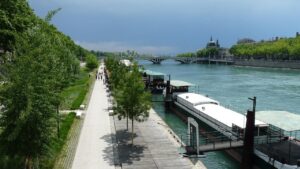
Travelers staying in an apartment can also use local markets to buy ingredients for breakfast or a simple meal.
Experience Lyon’s Café Culture
Lyon is a city where cafés are part of everyday urban life.
After exploring a museum or historic neighborhood, sitting at a café terrace provides an opportunity to slow down and observe the streets.
The Presqu’île and Vieux Lyon are particularly pleasant areas for café stops.
Take a Walking Tour of Lyon
Walking is one of the best ways to explore Lyon.
The city’s historic areas are compact enough to connect several attractions in a single route, while walking also allows travelers to notice architectural details that would be missed from a vehicle.
The official responsible-tourism guidance specifically encourages visitors to explore Lyon on foot or by bicycle.
Take a Guided Lyon History Tour
A guided tour can be particularly useful because Lyon’s history is complicated.
A knowledgeable guide can explain Roman Lugdunum, Renaissance merchant families, the silk industry, the canuts, the Resistance, gastronomy and the city’s architectural development.
The official tourism office offers guided routes covering Fourvière, Vieux Lyon, Croix-Rousse, traboules and other major historical attractions.
Explore Lyon by Bicycle
Cycling is another excellent way to see Lyon.
The riverside paths provide relatively comfortable routes, while bike-friendly infrastructure allows travelers to cover more ground than walking.
Cycling is particularly useful for connecting Parc de la Tête d’Or, the Rhône riverbanks, Presqu’île and Confluence.
Explore Lyon at Night
Lyon becomes particularly atmospheric after sunset.
Historic buildings are illuminated, restaurant terraces become lively and the rivers reflect city lights.
Walking through the Presqu’île, viewing Fourvière from below or strolling along the Rhône can be beautiful evening experiences.
See Lyon Illuminated
Lyon is famous for its relationship with light.
The city hosts the famous Fête des Lumières, attracting visitors with artistic light installations and illuminated landmarks.
If you plan to visit during the festival period, accommodation and transportation should be organized well in advance because demand can be extremely high.
Experience Fête des Lumières
The Fête des Lumières is one of Lyon’s most internationally recognized cultural events.
During the festival, buildings, public squares, streets and landmarks become canvases for artistic light installations.
The event developed from local religious traditions and has evolved into a major international festival of light and visual art.
Visitors should consult official event information for the current dates, installations and access arrangements.
Enjoy Lyon’s Christmas Atmosphere
Lyon can also be attractive during the wider winter season.
Markets, decorated streets, illuminated buildings and seasonal food create a festive atmosphere.
Winter visitors should be prepared for cooler temperatures and shorter daylight hours but may enjoy fewer crowds at many attractions outside major events.
Visit Lyon in Spring
Spring is an excellent season for exploring Lyon on foot.
Temperatures can be comfortable, gardens begin to bloom and riverside walks become especially pleasant.
This is a good season for combining museums, historic neighborhoods and outdoor attractions.
Visit Lyon in Summer
Summer provides long days for sightseeing and outdoor dining.
The riverside becomes particularly lively, and parks such as Parc de la Tête d’Or are excellent places to spend time outdoors.
However, popular periods can bring larger crowds, so early starts are useful for major attractions.
Visit Lyon in Autumn
Autumn gives Lyon a beautiful atmosphere as trees change color and temperatures become more comfortable for long walks.
Food travelers may particularly enjoy visiting during the cooler months when hearty Lyonnaise cuisine feels especially appropriate.
Visit Lyon in Winter
Winter is a good choice for travelers who prefer museums, restaurants and atmospheric city walks.
The colder weather makes a long lunch in a traditional bouchon or an afternoon inside a museum particularly appealing.
The city can also look beautiful after dark when historic architecture is illuminated.
Best Things to Do in Lyon for Couples
Lyon is an excellent destination for couples because it combines romantic scenery with exceptional food.
A couple can explore Vieux Lyon in the morning, ride the funicular to Fourvière, enjoy a panoramic view, have lunch at a bouchon, walk beside the Saône and finish the evening with dinner in the Presqu’île.
A sunset viewpoint at Fourvière can be particularly memorable.
Best Things to Do in Lyon for Families
Families can combine history and entertainment.
The Roman theaters provide an educational outdoor experience, while the funicular makes reaching Fourvière exciting for children.
Parc de la Tête d’Or offers open space, a lake and a zoo, while Mini World Lyon provides an indoor activity suitable for younger travelers.
Best Things to Do in Lyon for Food Lovers
Food lovers should dedicate substantial time to Lyon’s restaurants and markets.
Les Halles de Lyon Paul Bocuse is an excellent starting point, followed by a traditional bouchon lyonnais and visits to bakeries, cheese shops, chocolate shops and food markets.
Lyon’s reputation as a gastronomic capital means that food should not be treated as something to fit around sightseeing. In Lyon, food is part of the sightseeing experience itself.
Best Things to Do in Lyon for History Lovers
History enthusiasts can easily spend several days exploring the city.
Roman ruins on Fourvière explain Lyon’s ancient origins, Vieux Lyon reveals its Renaissance commercial history, Croix-Rousse demonstrates the importance of silk production and the Presqu’île reflects later urban development.
UNESCO’s description of the Historic Site of Lyon emphasizes precisely this chronological layering, from Roman remains through medieval, Renaissance, classical and nineteenth-century architecture.
Best Things to Do in Lyon for Art Lovers
Art lovers should visit the Musée des Beaux-Arts, explore Lyon’s famous murals and investigate contemporary exhibitions.
The city’s public art is especially interesting because it turns ordinary walls into historical and cultural storytelling spaces.
The combination of traditional museums and street art gives Lyon a diverse cultural identity.
Best Things to Do in Lyon for Architecture Lovers
Architecture enthusiasts will find Lyon particularly rewarding.
Vieux Lyon provides Renaissance architecture, Fourvière offers nineteenth-century religious architecture, the Presqu’île contains elegant classical and nineteenth-century buildings, Croix-Rousse contains distinctive canut housing and Confluence introduces contemporary architecture.
This mixture of architectural periods is one of the reasons Lyon’s historic site is recognized internationally.
Best Free Things to Do in Lyon
Travelers on a budget can enjoy many Lyon attractions without paying admission.
Walking through Vieux Lyon, viewing the exterior of the cathedral, exploring public squares, walking beside the Rhône and Saône, visiting murals and exploring Parc de la Tête d’Or can all be incorporated into a low-cost itinerary.
The city’s historic neighborhoods are themselves major attractions.
How to Get Around Lyon
Lyon is one of the French cities where walking can be particularly rewarding.
The historic districts are compact, and walking allows visitors to discover courtyards, staircases, shops and architectural details.
For longer distances, the city’s metro, tram, buses and funiculars provide useful transportation.
The funicular is especially convenient for reaching Fourvière.
Cycling is another good option, particularly along the rivers.
Why Lyon Is Perfect for a Weekend in France
Lyon is especially suitable for a weekend city break because its attractions combine history, food and culture without requiring long journeys between them.
Visitors can experience Roman archaeology, Renaissance streets, French gastronomy, modern architecture and riverside scenery within a relatively short stay.
Its location also makes Lyon convenient for combining with other destinations in France and the wider European travel network.
Lyon as a Base for Exploring the Rhône-Alpes Region
Travelers staying longer can use Lyon as a base for exploring the surrounding Auvergne-Rhône-Alpes region.
The region offers mountains, vineyards, historic towns, lakes and outdoor activities.
However, Lyon itself deserves several days before using it simply as a transport hub.
Why Fourvière Is Essential
Fourvière brings together three of Lyon’s greatest themes: religion, Roman history and panoramic scenery.
The basilica provides architectural grandeur, the Roman theaters reveal the ancient city and the viewpoint explains Lyon’s geographical setting.
Few places in the city provide such a concentrated combination of history and scenery.
Why Lyon Should Be on Your France Travel List
Lyon deserves a place on a France itinerary because it offers a more layered experience than many travelers expect.
It is a city where Roman ruins, Renaissance houses, silk-worker neighborhoods, classical squares, modern museums and contemporary architecture coexist.
The UNESCO designation confirms the exceptional historical importance of its urban landscape.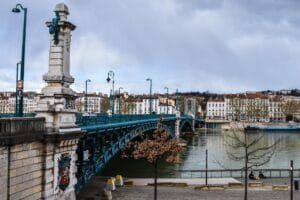
At the same time, Lyon is not frozen in history. Its contemporary districts, restaurants, cultural institutions, street art and sustainable tourism initiatives demonstrate that the city continues to evolve.
Conclusion
Lyon is one of France’s most rewarding destinations for travelers looking for history, gastronomy, architecture, culture and authentic city experiences.
The best things to do in Lyon begin with exploring the extraordinary historic landscape around Fourvière and Vieux Lyon. Standing on Fourvière Hill provides a memorable introduction to the city, while the Roman theaters reveal its ancient origins. The Basilica of Notre-Dame de Fourvière adds an architectural highlight, and the descent toward Vieux Lyon leads visitors into a completely different world of Renaissance streets and hidden traboules.
Official and authentic sources
For your published article, these are the strongest official references to use rather than generic travel blogs:
- Lyon Tourist Office – Discover Lyon — official destination information covering heritage, gastronomy and the city’s major districts.
- UNESCO – Historic Site of Lyon — authoritative information about Lyon’s World Heritage status and historical significance.
- Lyon Tourist Office – 3 Days in Lyon — useful official itinerary reference.
- Lyon Tourist Office – Guided Tours — official information on guided historical and traboule tours.
- Lyon Tourism – Parc de la Tête d’Or — official park information and current opening details.
Author

Related posts
Best Places to Visit in Dinant
- 0
- 4,779 words
Best Places to Visit in Dinant, Belgium Dinant is one of the most beautiful small towns in Belgium and one of the...
Read out all
Best Places to Visit in Mont-Saint-Michel
- 0
- 4,964 words
Best Places to Visit in Mont-Saint-Michel , France Mont-Saint-Michel is one of the most extraordinary destinations in France and one of the...
Read out all
UNGA
- 0
- 5,649 words
UNGA (United Nations General Assembly ) The United Nations General Assembly, commonly known as the UN General Assembly or UNGA, is one...
Read out all
Best Places to Visit in Kathmandu
- 0
- 4,089 words
Best Places to Visit in Kathmandu , Nepal Kathmandu, the capital of Nepal, is one of South Asia’s most fascinating travel destinations....
Read out all
Best Places to Visit in Vilnius
- 0
- 5,246 words
Best Places to Visit in Vilnius , Lithuania Vilnius, the capital of Lithuania, is one of the most fascinating destinations in the...
Read out all
Best Places to Visit in Riga
- 0
- 6,005 words
Best Places to Visit in Riga , Latvia Riga, the capital of Latvia, is one of the most fascinating destinations in the...
Read out all