
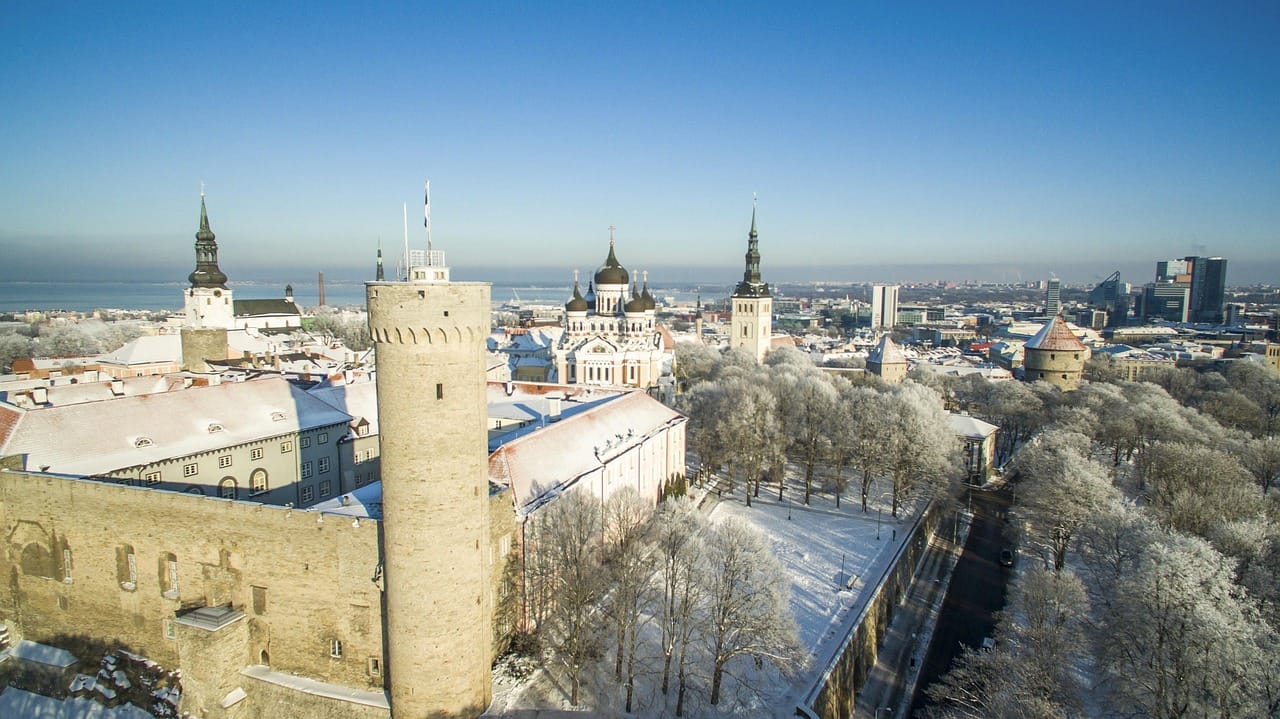
Best Things to Do in Tallinn , Estonia
Tallinn, the capital of Estonia, is one of the most captivating destinations in Northern Europe. Set on the Baltic Sea, the city combines a remarkably preserved medieval center with modern architecture, creative neighborhoods, museums, seaside districts, elegant parks and a distinctive Nordic-Baltic atmosphere. For travelers searching for the best things to do in Tallinn, the city offers an unusually diverse experience within a relatively compact area.
Tallinn is perhaps best known for its UNESCO-listed Old Town, where medieval walls, towers, cobblestone streets, merchant houses, churches and historic squares create one of Europe’s most memorable urban landscapes. UNESCO describes the Historic Centre of Tallinn as an exceptionally complete and well-preserved medieval northern European trading city that developed as an important center of the Hanseatic League between the 13th and 16th centuries.
Yet Tallinn is much more than its medieval center. Beyond the Old Town, visitors can explore the elegant Kadriorg district, the creative neighborhoods of Kalamaja and Telliskivi, the former industrial seafront at Noblessner, the maritime attractions around Seaplane Harbour, the peaceful coastal area of Pirita, the impressive Kumu Art Museum, the Estonian Open Air Museum, modern food destinations and numerous green spaces.
Tallinn is also a particularly convenient European city break destination. Its center is compact and walkable, while public transportation connects the Old Town with neighborhoods and attractions farther away. The city’s official tourism organization describes Tallinn as compact and walkable while highlighting its historic center, creative districts, Kadriorg and seaside areas as key parts of the visitor experience.
Whether you are planning a Tallinn weekend trip, a longer Estonia vacation, a Baltic capitals itinerary or a first visit to Northern Europe, Tallinn provides an excellent mixture of history, culture, architecture, food and nature.
Why Tallinn Is One of Europe’s Best City Break Destinations
Tallinn stands out because relatively small distances can take travelers through dramatically different periods of history. Within one day, you can walk through medieval streets, see Soviet-era architecture, visit a contemporary art museum, eat in a modern restaurant, explore a former industrial district and watch the sunset over the Baltic Sea.
The Old Town remains the centerpiece. Its history stretches back more than 800 years, and its medieval street network, defensive walls and historic buildings remain unusually intact. The official Tallinn tourism website notes that the Old Town is not simply a museum but a living part of the city containing cafés, restaurants, shops, cultural events and residential areas.
This mixture of old and new makes Tallinn particularly appealing to travelers who enjoy destinations with strong historical character but do not want to spend their entire vacation inside museums.
Explore Tallinn Old Town
The first experience for almost every visitor should be walking through Tallinn Old Town. The historic center is the city’s defining attraction and one of the best-preserved medieval urban areas in Northern Europe.
The Old Town developed significantly between the 13th and 16th centuries, when Tallinn, then known as Reval, became an important member of the Hanseatic League. UNESCO highlights the surviving medieval street network, merchant houses, churches, fortifications and relationship between the upper town and lower town as central reasons for the site’s exceptional heritage value.
Walking through the Old Town is more rewarding when you avoid rushing from one attraction to another. The narrow streets themselves are part of the experience. Look at the colored façades, medieval doorways, stone walls, wooden details and hidden courtyards.
Visit Tallinn describes the historic center as a living historical environment rather than simply a collection of monuments, with boutiques, craft shops, cafés and restaurants operating among the historic buildings.
Town Hall Square, or Raekoja plats, is the social and historical heart of Tallinn Old Town.
Surrounded by colorful medieval and early-modern buildings, the square has traditionally served as a commercial and civic center. At its heart stands Tallinn Town Hall, while the surrounding streets lead toward churches, museums, cafés and historic merchant houses.
During summer, the square hosts cultural events and festivals. During winter, it becomes one of Tallinn’s most atmospheric places when the Christmas market and traditional Christmas tree transform the area.
Visit Tallinn identifies Town Hall Square as the heart of the Old Town and highlights the medieval square, Gothic Town Hall and Town Hall Pharmacy among its major attractions.
Visit Tallinn Town Hall
Tallinn Town Hall is one of the city’s most important historic buildings.
The Gothic structure reflects the prosperity Tallinn achieved as a Hanseatic trading center. Its architecture provides a fascinating insight into the civic organization and wealth of medieval Tallinn.
The Town Hall is particularly impressive when viewed from Town Hall Square because its tower and façade create one of the city’s most recognizable historic scenes.
If your visit coincides with the period when the interior is open to visitors, entering the building adds another dimension to the experience.
Visit Raeapteek, the Historic Town Hall Pharmacy
One of the most unusual historic attractions in Tallinn is Raeapteek, located beside Town Hall Square.
The pharmacy is traditionally associated with a history stretching back to 1422 and is widely described by Tallinn tourism authorities as the oldest continuously operating pharmacy in Europe.
The attraction is fascinating because it connects ordinary daily life with medieval history. Rather than being simply a grand monument, it demonstrates how historic buildings can continue serving practical purposes.
Visit Tallinn lists the pharmacy among the defining sights of Town Hall Square.
Explore St. Catherine’s Passage
St. Catherine’s Passage is one of the most atmospheric corners of Tallinn Old Town.
The narrow passage is associated with historic craft traditions and small workshops where visitors can see artisans working with traditional materials.
Its stone walls, medieval atmosphere and intimate scale make it especially attractive for photography.
The passage is also an excellent example of how Tallinn combines historic architecture with contemporary creative activity.
Discover the Masters’ Courtyard
The Masters’ Courtyard provides another opportunity to experience Tallinn’s traditional craft culture.
The quiet courtyard feels very different from the larger tourist streets nearby. Small workshops and creative businesses add to the atmosphere, while cafés provide opportunities to stop for coffee or dessert.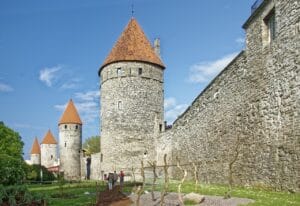
Visit Tallinn highlights the Masters’ Courtyard and Katariina Guild as places where visitors can observe craftsmen and artisans continuing traditional practices.
Walk Up Toompea Hill
Toompea Hill forms the upper section of Tallinn’s historic center and is one of the most important areas for understanding Estonia’s political and religious history.
The elevated limestone hill creates a dramatic contrast with the lower medieval town. UNESCO specifically describes the relationship between the upper town on the hill and the lower town beneath it as a defining characteristic of Tallinn’s historic landscape.
Walking up from the lower Old Town provides a gradual transition from medieval merchant streets to monumental religious and governmental buildings.
Visit Toompea Castle
Toompea Castle is one of the most important political landmarks in Estonia.
The castle complex has developed over many centuries and remains associated with Estonia’s national government. Its location on Toompea Hill demonstrates the historical importance of the upper town as the administrative center of the country.
The building’s history is much older than its present appearance, reflecting the repeated political changes that shaped Tallinn and Estonia.
See the Estonian Parliament
The Estonian Parliament, known as the Riigikogu, operates in the Toompea Castle complex.
For travelers interested in European politics and Estonian independence, this area provides an important connection between Tallinn’s medieval history and the modern Republic of Estonia.
The contrast is striking: a historic castle complex continues to function as the center of national political life.
Visit Alexander Nevsky Cathedral
The Alexander Nevsky Cathedral is one of the most recognizable churches in Tallinn.
Its onion-shaped domes and richly decorated façade create a dramatic architectural contrast with the medieval buildings around Toompea.
The cathedral represents the Russian Orthodox architectural tradition and reflects one of the many cultural influences that have shaped Tallinn over the centuries.
Visitors should check current visitor rules before entering, particularly during religious services.
Visit St. Mary’s Cathedral
St. Mary’s Cathedral, also known as the Dome Church, stands on Toompea Hill and represents another important layer of Tallinn’s religious history.
The cathedral has undergone numerous changes throughout its history, and its present appearance reflects several periods of construction and renovation.
The bell tower also offers an opportunity for visitors to appreciate Tallinn from above when open.
Enjoy Kohtuotsa Viewing Platform
Kohtuotsa is one of the most famous viewpoints in Tallinn.
From the platform, visitors can see the red roofs of the Old Town, church towers, city walls and modern Tallinn rising behind the historic center.
It is an excellent place for photography because the viewpoint illustrates the city’s unusual mixture of medieval and contemporary architecture.
Visit Tallinn specifically recommends Kohtuotsa among the city’s important viewpoints.
Visit Patkuli Viewing Platform
Patkuli is another famous viewpoint on Toompea Hill.
The perspective differs from Kohtuotsa, making it worthwhile to visit both if you enjoy photography.
The elevated position provides views toward the Old Town walls, towers and surrounding districts, helping visitors understand Tallinn’s geography.
Explore Tallinn’s Medieval Fortifications
Tallinn’s city walls are among the most impressive surviving medieval defensive systems in Northern Europe.
Sections of the original fortifications remain remarkably well preserved, including towers and defensive structures.
Visit Tallinn’s current three-day guide notes that approximately 1.9 kilometers of the original city wall and 20 defensive towers remain.
Walking along accessible sections provides a completely different perspective on the Old Town.
Visit Kiek in de Kök
Kiek in de Kök is one of Tallinn’s best-known defensive towers.
The tower is associated with the city’s fortification system and forms part of the wider Kiek in de Kök Fortifications Museum.
The attraction is especially useful for travelers who want to understand how Tallinn defended itself during periods of conflict.
Explore the Fortifications Museum
The Kiek in de Kök complex goes beyond a single tower and introduces visitors to Tallinn’s defensive history.
Underground passages, towers and exhibitions reveal how the city’s fortifications evolved over time.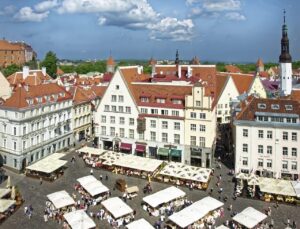
It is an excellent attraction for history enthusiasts and travelers interested in medieval military architecture.
Visit St. Olaf’s Church
St. Olaf’s Church is one of Tallinn’s most recognizable landmarks.
Its tall tower dominates the Old Town skyline and has historically made the church visible from considerable distances.
Visit Tallinn notes that Oleviste Church was arguably the tallest building in the world during parts of the 15th and 16th centuries.
When the observation tower is open, climbing it provides another excellent perspective over Tallinn.
Explore the Church of the Holy Spirit
The Church of the Holy Spirit is another historic religious building in the Old Town.
Its architecture and location provide insight into the religious life of medieval Tallinn.
The church is especially interesting for visitors who want to explore beyond the most famous landmarks.
Visit the Estonian History Museum
The Estonian History Museum provides an introduction to the country’s complicated past.
Estonia’s history includes medieval trade, foreign rule, religious transformation, occupation, Soviet rule, independence and modern European integration.
Understanding this background can make a visit to Tallinn significantly more meaningful.
Visit the Great Guild Hall
The Great Guild Hall is an important historic building associated with Tallinn’s medieval merchant community.
Its size and architecture reflect the importance of trade to the city.
The building is now associated with the Estonian History Museum and provides historical context for Tallinn’s role in the Hanseatic League.
Visit the Niguliste Museum
The Niguliste Museum is housed in a former medieval church and focuses on religious and medieval art.
Its combination of historic architecture and art collections makes it one of Tallinn’s most distinctive museums.
The building also provides an excellent viewpoint when its observation area is accessible.
Visit Tallinn includes Niguliste Museum and its viewing platform among the attractions in the Old Town.
Visit Kadriorg Palace and Park
Kadriorg is one of the most elegant neighborhoods in Tallinn.
At its center stands Kadriorg Palace, a Baroque palace and park ensemble created more than 300 years ago under the orders of Russian Tsar Peter the Great.
The district developed into an upscale area filled with villas, wooden houses, museums, gardens and cafés.
Visit Tallinn describes Kadriorg as a center of high culture containing several museums and recommends exploring the area on foot or by bicycle.
Walk Through Kadriorg Park
Kadriorg Park is one of the best places in Tallinn for a peaceful walk.
The landscaped gardens provide a welcome contrast to the stone streets of the Old Town.
Visitors can stroll through formal gardens, wooded paths and open spaces before continuing to Kadriorg’s museums.
The area is particularly attractive during spring and summer when the gardens are at their most vibrant.
Explore the Japanese Garden
Kadriorg’s Japanese Garden provides a quieter and more contemplative environment.
The garden was designed to complement the wider park landscape and offers a distinctive combination of Japanese-inspired landscaping and Northern European surroundings.
It is an excellent place for travelers interested in gardens, landscape design and photography.
Visit Pirita Beach
Pirita is Tallinn’s seaside district and one of the best places to experience the city’s coastal character.
Pirita Beach provides open views of the Baltic Sea and a relaxed atmosphere during warmer months.
The area is especially popular in summer when locals head toward the coast.
Visit Pirita Convent Ruins
The ruins of Pirita Convent provide a fascinating historical contrast to the beach and modern seaside.
The remains reflect the religious history of the area and provide a dramatic setting for photography.
Explore Pirita Promenade
The Pirita waterfront is ideal for walking or cycling.
The route provides views toward Tallinn’s skyline and the Baltic Sea.
It is an excellent choice for travelers who want outdoor activities without leaving the city.
Experience Tallinn TV Tower
Tallinn TV Tower is one of the city’s most recognizable modern landmarks.
The tower provides panoramic views over Tallinn and the surrounding landscape.
On clear days, the elevated perspective demonstrates just how closely Tallinn’s urban environment is connected to forests, coastline and the Baltic Sea.
Visit Tallinn identifies the TV Tower as one of the city’s major modern landmarks and connects it with Tallinn’s history as an Olympic city.
Explore Modern Tallinn at Rotermann
Rotermann Quarter is an excellent place to experience the modern side of Tallinn.
Historic industrial buildings have been incorporated into a contemporary district containing restaurants, shops, offices and modern architectural projects.
The area is particularly attractive for travelers interested in urban design.
Its location between the Old Town and newer city center makes it easy to include in a walking itinerary.
Best Things to Do in Tallinn in Autumn
Autumn transforms Tallinn’s parks and residential districts with colorful foliage.
Kadriorg and Pirita are particularly enjoyable during this season.
The cooler temperatures are also ideal for long walking tours through the Old Town.
Experience Medieval Tallinn in Winter
Winter gives Tallinn a completely different atmosphere.
The Old Town’s medieval architecture becomes especially atmospheric after dark, while cafés and restaurants provide warm places to escape the cold.
The Christmas season is the highlight of the winter calendar, although travelers should check exact dates and opening arrangements before planning a trip.
Explore Tallinn With Children
Tallinn is a family-friendly destination because many attractions are interactive or visually engaging.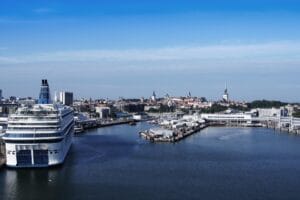
The Seaplane Harbour, PROTO Invention Factory, Tallinn TV Tower, museums and Kadriorg’s Miiamilla Children’s Museum provide options for younger visitors.
The Old Town itself can also be entertaining for children because of towers, walls, narrow streets and medieval stories.
Visit Tallinn maintains a dedicated family travel section covering museums and experience centers for children.
Enjoy a Romantic Tallinn City Break
Tallinn is an excellent destination for couples.
Walking through medieval streets, enjoying coffee in an atmospheric courtyard, watching sunset at Noblessner and taking in the city from Toompea viewpoints can create a romantic itinerary without requiring expensive experiences.
A dinner in the Old Town followed by an evening walk is particularly memorable.
Discover More Than 800 Years of History
History is arguably Tallinn’s strongest attraction.
The city preserves evidence of medieval trade, religious institutions, military architecture, merchant culture, imperial influences, independence and twentieth-century political upheaval.
The UNESCO World Heritage designation reflects the remarkable survival of Tallinn’s medieval urban fabric.
Using Public Transportation
Tallinn’s public transportation system makes it easy to reach neighborhoods such as Kadriorg, Pirita and Kalamaja.
Visit Tallinn provides practical information for visitors using public transportation and includes public transport within the Tallinn Card.
Exploring Tallinn by Bicycle
Cycling can be enjoyable, particularly around Kadriorg, Pirita and the waterfront.
The combination of relatively compact urban districts and seaside routes makes cycling an attractive option during warmer months.
Staying in Tallinn Old Town
Old Town is ideal for first-time visitors who want to wake up surrounded by medieval architecture.
The main advantage is proximity to major attractions, restaurants, cafés and viewpoints.
Staying in Kalamaja
Kalamaja is ideal for travelers who prefer a creative and relaxed atmosphere.
The neighborhood offers wooden architecture, cafés, restaurants and easy access to Telliskivi and Seaplane Harbour.
Staying Near Kadriorg
Kadriorg provides a quieter environment with parks, museums and elegant residential streets.
It is particularly suitable for travelers who enjoy culture and green spaces.
Staying in the Modern City Center
The city center offers convenient transportation, shopping, restaurants and modern hotels.
It can be particularly practical for business travelers and visitors making short trips.
Start Your Old Town Visit Early
Tallinn Old Town can become busy during peak tourist periods.
Starting early allows you to experience the narrow medieval streets in a quieter atmosphere.
This is particularly useful during the summer cruise season, when Visit Tallinn recommends visiting early or later in the afternoon to avoid the busiest periods.
Combine Nearby Attractions
Tallinn is compact enough that planning by neighborhood saves time.
Combine Toompea, Alexander Nevsky Cathedral, St. Mary’s Cathedral and the viewpoints in one visit.
Similarly, combine Kalamaja, Telliskivi, Seaplane Harbour and Noblessner.
Reserve Enough Time for Food
Do not treat restaurants simply as places to eat between attractions.
Tallinn’s culinary culture is an important part of the destination, and modern Estonian cuisine can add considerable depth to the travel experience.
Tallinn, Riga and Vilnius
Tallinn is often included in Baltic capitals itineraries alongside Riga in Latvia and Vilnius in Lithuania.
Although all three cities have historic centers, each has a different architectural and cultural identity.
Tallinn’s medieval Old Town is particularly distinctive because of its surviving defensive walls, towers and medieval urban fabric.
A Baltic capitals trip can therefore provide three different perspectives on Northern and Eastern European history.
Understanding Modern Estonia
One of the most rewarding aspects of visiting Tallinn is discovering how Estonia balances its historical identity with its modern European character.
The country has experienced periods of Danish, German, Swedish and Russian influence as well as Soviet occupation, while modern Estonia has developed a strong independent national identity.
Museums, monuments, architecture, art and cultural institutions provide opportunities to understand this history.
The Tallinn Song Festival Grounds, for example, are associated with Estonia’s cultural and national identity and are among the city’s notable landmarks. Visit Tallinn includes the Song Festival Grounds among its major sights.
Experience Tallinn as a Baltic Sea City
Tallinn is not simply a medieval European capital.
Its relationship with the Baltic Sea is central to its history and modern identity.
The harbor, Noblessner, Pirita, Seaplane Harbour and coastal promenades all demonstrate the importance of the sea.
Spending time beside the water helps create a more complete understanding of Tallinn.
Photograph Tallinn Old Town
The Old Town provides endless photography opportunities.
Town Hall Square is excellent for architectural compositions, while Kohtuotsa and Patkuli offer elevated views.
The city walls and towers create strong medieval compositions, while Kalamaja and Noblessner offer more contemporary imagery.
Photograph Tallinn at Sunset
Noblessner and Pirita are particularly good places for sunset photography.
The combination of water, sky and city architecture creates changing colors and reflections.
For classic Tallinn imagery, however, sunset views from Toompea remain among the most memorable.
Explore the Old Town After Dark
Tallinn Old Town becomes particularly atmospheric at night.
Illuminated buildings, narrow streets and quiet courtyards create an experience very different from daytime sightseeing.
A nighttime walk can be especially enjoyable after dinner.
Enjoy Tallinn’s Evening Food Scene
Restaurants, cocktail bars, cafés and cultural venues provide plenty of options after the major attractions close.
Telliskivi and Noblessner are particularly appealing to travelers seeking contemporary nightlife.
Explore Tallinn Responsibly
Tallinn is well suited to responsible tourism because many attractions can be reached by walking or public transportation.
Travelers can support local businesses by eating at independent restaurants, buying locally produced crafts and respecting residential neighborhoods.
In historic areas, visitors should avoid climbing on walls, entering private courtyards without permission or disturbing residents.
Why Tallinn Old Town Is So Special
The greatest attraction in Tallinn is not a single church, tower or square.
It is the survival of the entire medieval urban environment.
UNESCO emphasizes that the city retains medieval streets, building plots, fortifications, churches and merchant architecture to an exceptional degree.
That is why walking through Tallinn feels different from simply visiting a reconstructed historic district.
Why Tallinn Is More Than Its Old Town
Although the Old Town is the reason many people first visit, spending the entire trip there means missing much of Tallinn’s character.
Kadriorg reveals the city’s elegant artistic side.
Kalamaja and Telliskivi demonstrate its creative energy.
Noblessner shows how industrial heritage can be transformed.
Pirita reveals Tallinn’s coastal identity.
Kumu introduces Estonian art.
Together, these districts create a much more complete picture of the capital.
Best Things to Do in Tallinn for First-Time Visitors
For first-time visitors, the ideal experience combines Tallinn’s major historic attractions with several modern and local experiences.
Start in the Old Town and explore Town Hall Square, the medieval streets, churches, city walls and Toompea viewpoints.
Then move beyond the historic center to Kadriorg, Kumu and Kalamaja.
Finish with Seaplane Harbour and Noblessner to understand Tallinn’s maritime and industrial transformation.
This approach gives you history, culture, art, food, architecture and seaside scenery in one trip.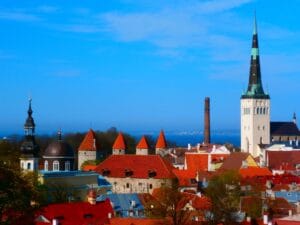
Conclusion
Tallinn is one of Europe’s most rewarding destinations for travelers who appreciate history, architecture, culture, food and walkable cities.
The best things to do in Tallinn begin with the UNESCO-listed Old Town, where medieval streets, merchant houses, churches, defensive towers and historic squares preserve the atmosphere of a major northern European trading city. UNESCO recognizes Tallinn’s historic center as an exceptionally complete and well-preserved medieval trading city, with its development closely connected to the Hanseatic League.
For publication, these are the strongest sources to reference because they are official or authoritative rather than generic travel blogs:
Official tourism: Visit Tallinn – Official Travel Guide
UNESCO: UNESCO – Historic Centre (Old Town) of Tallinn
Old Town: Visit Tallinn – Tallinn Old Town
Three-day itinerary: Visit Tallinn – 72 Hours in Tallinn
Kadriorg: Visit Tallinn – Kadriorg
Tallinn Card: Official Tallinn Card information
Practical city information: Tallinn city visitor information
Author

Related posts
Best Places to Visit in Dinant
- 0
- 4,779 words
Best Places to Visit in Dinant, Belgium Dinant is one of the most beautiful small towns in Belgium and one of the...
Read out all
Best Places to Visit in Mont-Saint-Michel
- 0
- 4,964 words
Best Places to Visit in Mont-Saint-Michel , France Mont-Saint-Michel is one of the most extraordinary destinations in France and one of the...
Read out all
UNGA
- 0
- 5,649 words
UNGA (United Nations General Assembly ) The United Nations General Assembly, commonly known as the UN General Assembly or UNGA, is one...
Read out all
Best Places to Visit in Kathmandu
- 0
- 4,089 words
Best Places to Visit in Kathmandu , Nepal Kathmandu, the capital of Nepal, is one of South Asia’s most fascinating travel destinations....
Read out all
Best Places to Visit in Vilnius
- 0
- 5,246 words
Best Places to Visit in Vilnius , Lithuania Vilnius, the capital of Lithuania, is one of the most fascinating destinations in the...
Read out all
Best Places to Visit in Riga
- 0
- 6,005 words
Best Places to Visit in Riga , Latvia Riga, the capital of Latvia, is one of the most fascinating destinations in the...
Read out all