
Greece
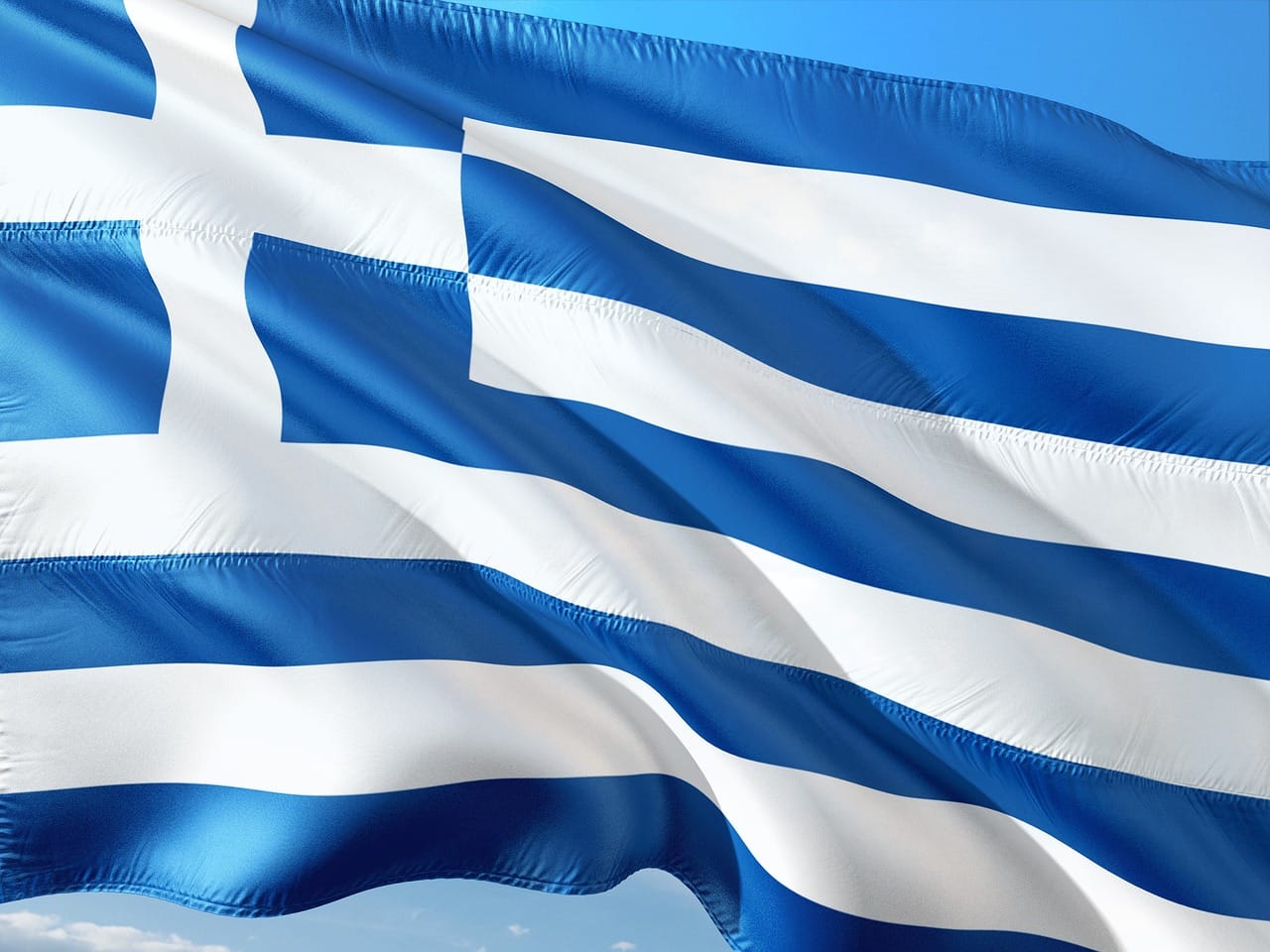
Greece – Beautiful Country in southeastern Europ
Greece is a picturesque country in southeastern Europe, famous for its ancient history, stunning islands, clear blue seas, and mountains. Greece is said to be the “cradle of Western civilization” since so many of the major ideas, arts, and philosophies originated from Greece. This country has a population of approximately 10.5 million people. Its capital is Athens, a historic city with plenty of culture. Greece has a special kind of geography: it has a big mainland, a very long coastline, and more than 6,000 islands, while approximately 227 of those are inhabited. On the east is the Aegean Sea, on the west is the Ionian Sea, and on the south is the Mediterranean Sea. This mix of a big piece of mainland, islands, and seas combines in one popular destination for sun, sea, history, and adventure. It is also famed for the ruins of ancient civilizations, Byzantine churches, medieval castles, and traditional villages. Besides the history, Greece will also offer modern cities, luxury resorts, local cuisine, and warm Greek hospitality. Among the activities, one can enjoy are beaches and mountains, sailing and hiking, cultural festivals, and local food traditions.
History of Greece
Greece has a long and rich history. Its civilization dates back thousands of years. A few of the most famous periods in Greek history include :
The Minoan Civilization (circa 3000–1450 BC)
- Based on the island of Crete, Famous for its palaces like Knossos, Advanced art, pottery, and writing
Mycenaean Civilization, circa 1600–1100 BC
- Known for fortresses and tombs, Homer speaks about Mycenaean kings in epic poetry like the Iliad and Odyssey.
Classical Greece (circa 500–323 BC)
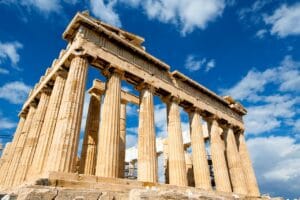
- Athens became the center of philosophy, art, and democracy. Temples like the Parthenon on the Acropolis
- Famous philosophers: Socrates, Plato, Aristotle
Hellenistic Period (323–31 BC)
- Greek culture spread across Asia, Africa, and the Middle East during the period following Alexander the Great.
- Cities, art, and learning thrived. Roman, Byzantine, and Ottoman Periods
- Greece became part of the Roman Empire. Byzantine churches and monasteries were built. Ottoman rule lasted centuries, leaving a legacy of architecture, food, and culture.
Modern Greece
- Greece became independent in 1821. Athens became the capital in 1834. Today, Greece is a democratic country, a member of the European Union.

Geography and Climate
Greece possesses varied landscapes:
- Mountains cover most of the mainland. Coasts and beaches stretch for more than 13,000 km. Islands like Santorini, Mykonos, and Crete attract large numbers of tourists.
Major Regions
- Mainland Greece, Northern Greece: mountains, rivers, and lakes; Central Greece: plains and historical sites; Peloponnese: ancient ruins, castles, and seaside towns
Islands
- Cyclades: Santorini, Mykonos, Naxos; Dodecanese: Rhodes, Kos; Ionian Islands: Corfu, Zakynthos; Crete: largest Greek island with mountains and beaches
Climate
- Greece has a Mediterranean climate: Hot, dry summers, Mild, wet winters. Mountainous areas may receive snowfall during winters. This climate makes Greece perfect for summer tourism, particularly on the islands and beaches.
Major Cities of Greece
Athens
Athens is both the capital and biggest city of Greece. It is the heart of Greek history and modern life.
Tourism Sites: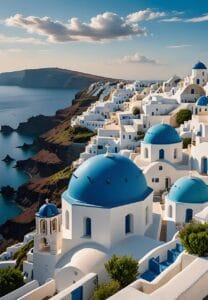
- Acropolis and Parthenon: ancient temples on the hill with panoramic view; Ancient Agora: Marketplace and political center of ancient Athens
- Plaka: historic neighborhood with shops and traditional restaurants; National Archaeological Museum: World-famous collection of Greek artifacts
Thessaloniki
Thessaloniki is Greece’s second-largest city, located in northern Greece. It includes a combination of Byzantine, Ottoman, and modern architecture.
Tourism Sites:
- White Tower: Landmark tower by the sea; Rotunda of Galerius: Ancient Roman building
- Archaeological Museum of Thessaloniki; Local markets: food, spices, and souvenirs
Patras
Patras is a port city in western Greece. It is famous for the Patras Carnival and its historic cathedral.
Tourism Sites:
- Rio-Antirrio Bridge: Modern engineering marvel; Patras Castle: Fortress with Panoramic View; Achaia Clauss Winery: Famous for local wines
Heraklion
Heraklion, the largest city on Crete, is the capital of this island and the getaway to Greek islands. It combines modern life with ancient ruins.
Tourism Sites:
- Knossos Palace: Ancient Minoan palace, Heraklion Archaeological Museum, Venetian Walls and Harbor.
Rhodes
Rhodes is one of the Dodecanese islands, with fame in medieval architecture.
Tourism Sites:
- Medieval Old Town: Fortified streets and castles; Acropolis of Lindos: Ancient Greek ruins; Mandraki Harbor: Beautiful marina with statues

Tourism Sites Across Greece
Greece is among the most popular tourist destinations in Europe because of its ancient history, islands, beaches, mountains, and cultural richness. Every part of Greece has something unique to offer. Tourists can visit historical monuments, beautiful islands, religious sites, natural landscapes, and traditional villages.
Athens – The Heart of Greece
It was in this capital city that democracy and Western civilization were born. Athens is where ancient monuments meet modern life.
Key Sites
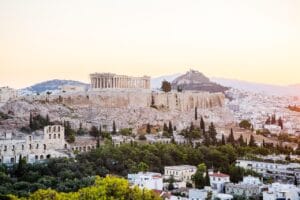
- Acropolis and Parthenon: This ancient citadel stands on a hill of rock. The Parthenon temple is dedicated to Athena, the city’s goddess. Visitors can walk among the ruins and enjoy panoramic views of Athens.
- Ancient Agora: The marketplace and heart of the ancient city, Agora now features temples, statues, and various historic buildings. Among them, the Stoa of Attalos is hosting a museum.
- Plaka District: The historic neighborhood under the Acropolis. Cobblestone streets, traditional tavernas, and small shops make it the perfect area to stroll and shop.
- National Archaeological Museum: This museum hosts the world’s largest collection of ancient Greek artifacts, including sculptures, jewelry, and pottery that date back several thousand years.
Northern Greece – Thessaloniki and Beyond
Thessaloniki is Greece’s second-largest city with much Byzantine architecture and lively streets.
Tourism Sites
- White Tower: A city symbol Overview to the sea.
- Rotunda of Galerius: Ancient Roman monument with mosaics.
- Archaeological Museum of Thessaloniki: Exhibits treasures from northern Greece.
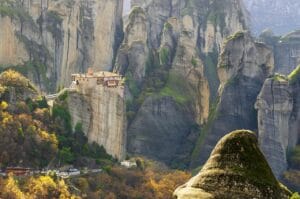
- Mount Olympus: Greece’s highest mountain, said to have housed Greek gods, lies not far away. The national park area offers possibilities for hiking, camping, and sights.Monasteries of Meteora: Magnificent monasteries on sandstone cliffs, with hiking, photo opportunities, and spiritual experiences.

Peloponnese – Ancient Civilization and Coastal Beauty
Key Sites
- Ancient Olympia: birthplace of the Olympic Games. An archaeological site complete with temples, stadiums, and museums.
- Mycenae: Legendary city of Agamemnon. Famous for Lion Gate, royal tombs, and ruins of the ancient citadel.
- Nafplio: Picturesque seaside town with Venetian-style buildings. The main attractions are Palamidi Castle, the Bourtzi Fortress, and narrow streets with cafes.
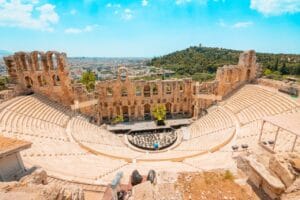
- Epidaurus Theatre: It is famous for its perfect acoustics and ancient architecture. Classical performances are held here.
- Monemvasia: Medieval fortress town on a rocky island, ideal for touring by foot and seeking history.
Cyclades Islands – Santorini, Mykonos, Naxos
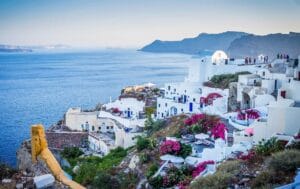
White houses, blue domes, sunsets, and beaches are what make the Cyclades famous.
Santorini
- Oia Village: The iconic village for sunsets, cliffside architecture, and art galleries; Fira: The capital of Santorini, full of shops, restaurants, and views of the caldera.
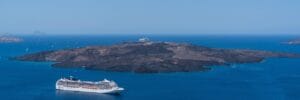
- Volcano and Hot Springs: Take a tour around the volcanic island and swim in the warm springs.
- Red Beach & Kamari Beach: Two breathtaking beaches featuring volcanic sand and perfect for swimming and sunbathing.
Mykonos
- Mykonos Town (Chora): Windmills, narrow streets, boutiques, and nightlife; Paradise Beach & Super Paradise Beach: Famous party beaches; Delos Island: Old archaeological site near Mykonos.
Naxos
- Portara: Marble entrance of an ancient temple facing the sea; Old Town (Chora): Venetian castle and narrow alleys; Beaches: Agios Prokopios and Plaka are ideal for families.

Dodecanese Islands – Rhodes, Kos, Patmos
The Dodecanese islands are close to Turkey and are known for their medieval history and beautiful coasts.
Rhodes
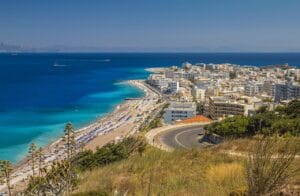
- Medieval Old Town: UNESCO World Heritage site, cobbled streets, and fortified walls; Palace of the Grand Master: Medieval fortress with exhibits; Acropolis of Lindos: Ancient ruins with panoramic sea views.
Kos
- Asclepeion: Ancient medical center; Kos Town: Lively streets, Venetian castle, and promenades along the sea; Beaches: Tigaki and Paradise Beach.
Patmos
- Monastery of Saint John: Historical and spiritual site; Cave of the Apocalypse: Where Saint John wrote the Book of Revelation.
Ionian Islands – Corfu, Zakynthos, Kefalonia
The Ionian Islands are lush and green, culturally distinctive as a result of the Venetian architecture.
Corfu
- Old Fortress: The views over the sea and city; Liston Promenade: cafes and local culture; Beaches: Paleokastritsa and Glyfada.
Zakynthos
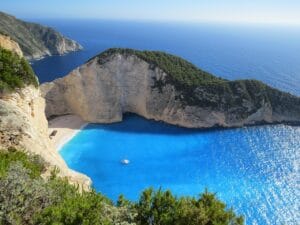
- Navagio Beach (Shipwreck Beach): The famous sandy cove with turquoise waters and a shipwreck; Blue Caves: Boat tours and snorkeling.
- Caretta-Caretta Turtle Watching: The protected species on Laganas Beach.
Kefalonia
- Myrtos Beach: White sand and turquoise waters; Melissani Cave: Underground lake with crystal-clear water.

Crete – History and Natural Beauty
Crete, Greece’s largest island, has a mix of history, mountains, gorges, and beaches.
Key Sites
- Knossos Palace: Minoan civilization and myths of the Minotaur; Samaria Gorge: a 16 km long path through cliffs and forests.
- Elafonissi Beach: The pink sand and shallow waters are ideal for families; Balos Lagoon: turquoise waters and panoramic views.
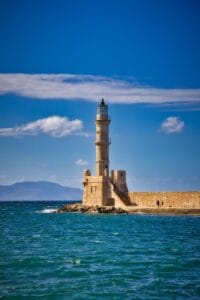
- Chania – Rethymno: Venetian harbors, narrow streets, and local markets.
Northern Greece – Chalkidiki and Halkidiki Peninsula
- Kassandra, Sithonia, and Athos: Sandy beaches, pine forests, and religious monasteries
- Mount Athos: Access forbidden for men, visits to monasteries, spiritual tourism; Afitos Village: Traditional architecture and coastline views
Activities for Tourists
- Beach holidays: Santorini, Mykonos, Crete, Zakynthos; Hiking and trekking: Mount Olympus, Samaria Gorge in Crete, Meteora cliffs
- Sailing and boating: Greek islands, Aegean Sea, Ionian Sea; Cultural tourism: ruins, museums, monasteries
- Food experiences: Greek salads, moussaka, seafood, olive oil tasting; Festivals: Athens Epidaurus Festival, Carnival in Patras, Easter celebrations

Surrounding Places of Greece
Situated on the southeastern tip of Europe, Greece is literally at the crossroads of Europe, Asia, and the Mediterranean. Its mainland borders a number of countries, and its islands lie near neighbors, so it’s perfectly feasible to see different cultures and landscapes all on one trip.
Albania (Northwest of Greece)
Albania shares the northwestern border of Greece and has mountains, rivers, lakes, and beaches.
Key Attractions
- Ksamil Beach: White sand and turquoise waters, ideal for swimming and relaxation.
- Butrint National Park: a UNESCO World Heritage site comprising ancient ruins and a Roman theater.
- Berat: The “city of a thousand windows” is known for its Ottoman architecture and houses on the hillsides.
- Albanian Riviera: picturesque coastal towns, hiking trails, and crystal-clear waters.
Travel Connection
- Easily accessible by car or bus from northwestern Greece, specifically the Epirus region. Offers a mix of Greek and Balkan culture, food, and history.

North Macedonia (North of Greece)
North Macedonia is a landlocked country north of Greece, known for lakes, mountains, and historic towns.
Key Attractions
- Lake Ohrid, clear waters, churches, and ancient towns; a UNESCO World Heritage site.
- Skopje: The capital city with historic bridges, statues, and markets.
- Mavrovo National Park: Mountains, forests, and skiing opportunities in winter; Bitola: Ottoman-era architecture and archeological sites.
Travel Connection
- Thessaloniki, northern Greece – a gateway. Reachable by car or bus, it offers a blend of nature and historical exploration.
Bulgaria (Northeast of Greece)
Bulgaria borders northern Greece and is home to mountains, forests, and medieval towns.
Key Attractions
- Plovdiv: Historic city featuring a Roman theatre, old town, and art galleries; Rila Monastery: UNESCO World Heritage site in the mountains.
- Pirin and Balkan Mountains: hiking, skiing, and wildlife; Black Sea Coast: Can be reached via Bulgaria’s coastline for further journeys.
Travel Connection
- Easy road trips from northern Greece. Offers a combination of mountain adventures along with cultural tourism.
Turkey (East of Greece)
Turkey is situated across the Aegean Sea, and a number of Greek islands are very close to Turkish coasts.
Key Attractions
- Istanbul: Famous for Hagia Sophia, the Blue Mosque, a cruise on the Bosphorus, and its bazaars.
- Ephesus: Ancient Roman city with a remarkably intact amphitheater, close to the sea.
- Izmir: Mediterranean coastal city boasting many markets, historical ruins, and seaside promenades.
- Cappadocia (central Turkey): Unique rock formations, cave hotels, and hot air balloons.
Travel Connection
- Ferries run from Greek islands like Rhodes, Kos, and Chios to Turkey. Flights link Athens to Istanbul and Izmir. It offers a blend of cultures from Greek and Turkish traditions.

Italy (West Across the Ionian Sea)
Italy lies to the west of Greece, across the Ionian Sea, and is quite accessible by ferry or flight.
Key Attractions
- Bari: a southern Italian historic port city that is connected by ferry with Patras and Igoumenitsa.
- Venice – accessible by air transportation; this city is famous for its canals, St. Mark’s Square, and gondolas.
- Naples & Amalfi Coast: Sights of culture, cliffs, and Italian food.
Travel Connection
- Ferries from western Greece to southern Italian ports. There are frequent flights from Athens to major Italian cities.
Greek Islands Near Neighboring Countries
Some Greek islands are very close to Albania and Turkey – allowing for day trips or a very short ferry ride:
- Corfu: Adjoining Albania, lush landscapes, Venetian architecture; Rhodes: Off the coast of Turkey, boasts medieval towns and ruins.
- Chios & Lesbos: Aegean islands near Turkey, traditional villages, and beaches. These islands have cultural experiences uniquely blending Greek with other neighboring cultures.
Surrounding Seas and Coastal Regions
- Aegean Sea: Eastern Greece has many islands; sailing tours can be taken around them with crystal-clear waters.
- Ionian Sea: Western Greece, picturesque coasts, island hopping across to Italy.
- Mediterranean Sea: Southern Greece is ideal for cruises and beach tourism. Sailing and ferry networks make multi-country trips easy for tourists.

Natural and Historical Attractions Across Borders
Travelers exploring Greece’s neighbors can combine:
Mountains and Hiking: Pindus mountains (Greece-Albania), Pirin mountains (Bulgaria)
Beaches: Albanian Riviera, Turkish Aegean Coast, Ionian beaches
Ancient Ruins and Monuments: Ephesus (Turkey), Butrint (Albania), Plovdiv (Bulgaria)
This combination allows tourists to experience diverse cultures, cuisines, and landscapes in one journey.
Islands, Regions, Areas
Greece is composed of a mainland and thousands of islands. Each region has its own beauty, history, and attractions. Understanding the major regions is very helpful to visitors when planning their trip:
Mainland Greece
- Central Greece: Delphi, Thermopylae, and scenic mountains abound; ideal for cultural exploration.
- Peloponnese: Southern peninsula with ancient ruins, castles, and beaches. Key destinations include Olympia, Nafplio, and Mycenae.
- Northern Greece (Macedonia and Thrace): mountains, lakes, and historic cities. Thessaloniki is the cultural hub.
- Epirus: Mountains, gorges, rivers, and small villages. Famous for Zagori villages and Vikos Gorge.
Cyclades Islands
- Famous for white houses, blue domes, and stunning sunsets. Santorini: Caldera views, black-sand beaches, sunsets of Oia.
- Mykonos: Nightlife, luxury resorts, windmills. Naxos and Paros offer family-friendly beaches, hiking trails, and traditional villages.
Dodecanese Islands
- Situated off the coast of Turkey, SE Aegean Sea. Rhodes: Medieval Old Town, ancient acropolis, beaches.
- Kos: Ancient ruins, sandy beaches and cycling tours. Patmos: It is renowned for the Monastery of St. John and spiritual tourism.

Ionian Islands
- Western Greece, lush and green as compared to the Cyclades; Corfu: Venetian architecture, beaches, olive groves.
- Zakynthos: Navagio Beach (Shipwreck Beach), blue caves, sea turtles; Kefalonia: Beaches, mountains, and underground lakes.
Crete
- Largest Greek island, mountainous and with gorges; rich in history. Knossos Palace: Minoan civilization, myths of the Minotaur.
- Samaria Gorge is a breath-taking hike destination. Chania and Heraklion: Venetian architecture, harbors, local markets.
Historical and Cultural Sites
- Acropolis, Athens: Parthenon, Erechtheion, museum; Delphi: Temple of Apollo, theater, museum.
- Olympia: ancient stadium, temples, archaeological museum; Mycenae – Ancient citadel, Lion Gate, tombs.
- Rhodes Medieval Town: Cobblestone streets, palace, city walls.
Natural Attractions
- Samaria Gorge (Crete): 16 km hiking trail, with spectacular cliffs. Meteora: Rock pillars and monasteries.
- Navagio Beach: Zakynthos – famous shipwreck, turquoise-colored waters. Mount Olympus: hiking, mythology tours, nature walks
Conclusion
Greece is a country of diverse beauty: it combines ancient history, stunning islands, turquoise seas, majestic mountains, traditional culture, and delicious food. One can visit the remains of ancient civilization, bask on the beaches, hike gorges, participate in festivals, and get a taste of native food. With thousands of islands, towns with breathtaking sceneries, and cultural treasures, Greece has something to offer to every traveler. Its location allows further travels within neighboring countries like Albania, Turkey, Bulgaria, and Italy. Every travel through Greece connects history, nature, and culture. From Athens to Crete, Santorini to Meteora, the landscapes, people, and food make Greece unforgettable.
Author

Related posts
OPEC
- 0
- 5,679 words
OPEC OPEC stands for the Organization of the Petroleum Exporting Countries. It is an intergovernmental organization created by major oil-producing countries to...
Read out all
How Do I Find Reliable Wholesale Suppliers
- 0
- 9,103 words
How Do I Find Reliable Wholesale Suppliers ? Finding reliable wholesale suppliers is one of the most important tasks for anyone starting...
Read out all
What Is Happening in the World?
- 0
- 5,355 words
What Is Happening in the World? The world is currently experiencing a period of overlapping crises and opportunities. Political disputes, military conflicts,...
Read out all
BRICS
- 0
- 5,794 words
BRICS : History, Members, Economy, Goals, Expansion and Global Influence BRICS is an international grouping of major emerging economies and developing countries...
Read out all
United Kingdom
- 0
- 5,089 words
United Kingdom The United Kingdom, commonly known as the UK, is one of Europe’s most fascinating travel destinations. Officially called the United...
Read out all
Bhutan
- 0
- 4,154 words
Bhutan Travel Guide Bhutan is one of the most fascinating travel destinations in Asia, offering an extraordinary combination of Himalayan landscapes, Buddhist...
Read out all