
Best Places to Visit in Mont-Saint-Michel , France
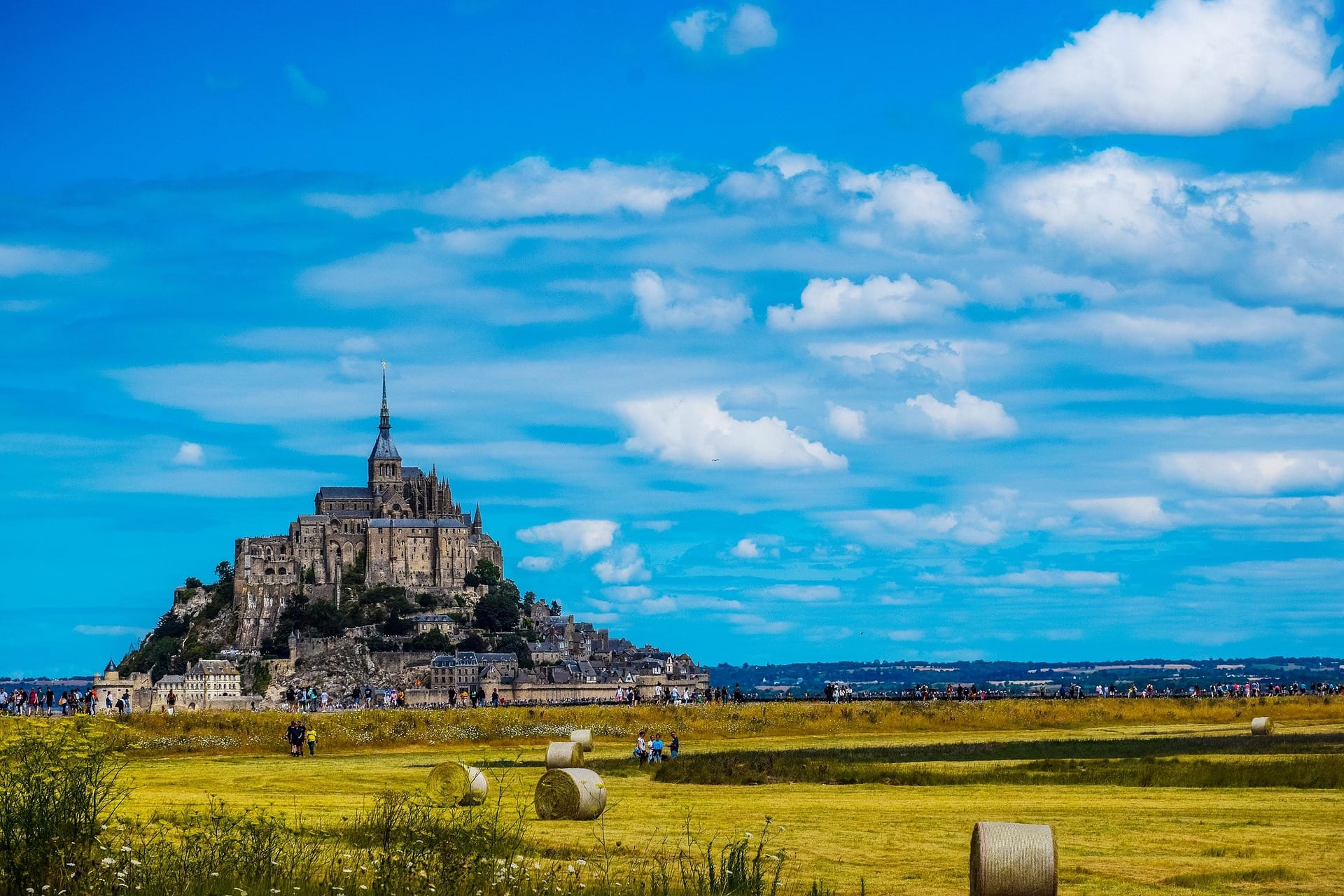
Mont-Saint-Michel is one of the most extraordinary destinations in France and one of the most recognizable medieval landmarks in Europe. Rising dramatically from a vast tidal bay on the Normandy coast, this historic rocky island is crowned by a magnificent medieval abbey and surrounded by ancient defensive walls, narrow cobbled streets, historic houses, small museums, restaurants and viewpoints overlooking the surrounding landscape.
For travelers searching for the best places to visit in Mont-Saint-Michel, the destination offers much more than a quick photograph of the famous silhouette. The island combines medieval architecture, religious history, French heritage, dramatic coastal scenery and one of Europe’s most remarkable tidal environments. The experience changes depending on the time of day, season and state of the tide, making Mont-Saint-Michel a destination that can be explored repeatedly from completely different perspectives.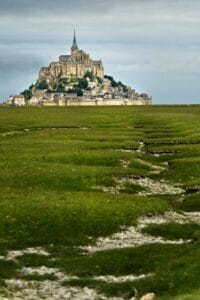
Mont-Saint-Michel and its Bay have been recognized as a UNESCO World Heritage Site. UNESCO describes the site as a rocky islet surrounded by extensive sandbanks affected by powerful tides, with the Gothic Benedictine abbey and medieval village forming a remarkable combination of natural and architectural heritage. The abbey developed between the 11th and 16th centuries and represents an exceptional architectural response to an extremely challenging natural setting.
A visit to Mont-Saint-Michel can therefore combine sightseeing, history, photography, walking, religious heritage, architecture, food and nature. Whether you are visiting France for the first time, planning a Normandy itinerary, taking a day trip from Paris, traveling through Brittany and Normandy or searching for the best places to visit in France, Mont-Saint-Michel deserves a prominent place on your itinerary.
Mont-Saint-Michel Abbey
The most important attraction in Mont-Saint-Michel is undoubtedly the Abbey of Mont-Saint-Michel. Sitting dramatically at the highest point of the rocky island, the abbey dominates the entire landscape and creates the famous vertical silhouette that has made Mont-Saint-Michel internationally famous.
The abbey has a history stretching back more than a thousand years. Over centuries, religious buildings were constructed, expanded and modified on the summit, producing an extraordinary mixture of architectural styles. Visitors can explore churches, cloisters, halls, stairways, terraces and other historic spaces while learning about the religious and political history of the site.
The position of the abbey is one of its most remarkable characteristics. Instead of being built on a broad plain, it rises from a small rocky island surrounded by tidal waters and sandbanks. The architects and builders had to create a large complex on extremely difficult terrain.
UNESCO recognizes the architectural and artistic significance of the abbey and describes it as a technical and artistic achievement that adapted to the challenges created by its natural environment.
For anyone creating a list of the best things to do in Mont-Saint-Michel, visiting the abbey should be the central experience.
The Abbey Church
The Abbey Church is one of the most impressive spaces within Mont-Saint-Michel Abbey. Its architecture reflects the long history of construction and reconstruction that took place on the mount.
The church occupies a high position above the rest of the island and contributes to the dramatic vertical appearance of Mont-Saint-Michel. Inside, visitors can appreciate the scale of the medieval religious architecture and the way the building interacts with the unusual shape of the rocky summit.
The church is particularly interesting for travelers interested in medieval European history, religious architecture and Gothic architecture.
The changing light entering the church also creates different photographic and atmospheric experiences throughout the day. Morning visits can feel very different from afternoon visits when the sunlight reaches different parts of the complex.
The Cloister of Mont-Saint-Michel Abbey
The cloister is one of the most beautiful areas of the abbey. Located high within the complex, it provides an architectural contrast between enclosed medieval spaces and dramatic views toward the surrounding bay.
The cloister contains elegant columns and carefully designed architectural details. Its elevated position allows visitors to appreciate the unusual relationship between the abbey and the landscape.
The cloister is also one of the places where the spiritual character of Mont-Saint-Michel becomes particularly apparent. The combination of stone architecture, open sky, sea views and quiet enclosed spaces creates a unique atmosphere.
Travelers interested in architectural photography should spend time studying the repeated columns, arches, shadows and framing of the landscape.
La Merveille, the Marvel of Mont-Saint-Michel
One of the most celebrated sections of the abbey is known as La Merveille, or “The Marvel.” The name is appropriate because the complex represents an extraordinary achievement of medieval architecture.
The buildings were constructed against the rocky summit and arranged vertically in a way that demonstrates remarkable engineering. The complex includes important medieval rooms and spaces associated with the religious community.
The architecture becomes especially impressive when viewed from below because the enormous stone structures appear to rise almost impossibly from the rock.
La Merveille is an essential part of any Mont-Saint-Michel sightseeing itinerary and helps visitors understand why the site is considered one of Europe’s great medieval monuments.
The Refectory
The refectory is another important interior space within the abbey.
Its design provides insight into the daily life of the religious community that lived on Mont-Saint-Michel. The enormous proportions and repeated architectural elements show how the abbey functioned not merely as a church but as a large religious institution.
Walking through the refectory allows visitors to imagine the community gathering together centuries ago.
The room also demonstrates how medieval architects used windows, stone walls and structural elements to create large interior spaces within an extremely challenging location.
The Knights’ Hall
The Knights’ Hall is another historic space within the abbey complex.
Its name reflects the long and complicated history of Mont-Saint-Michel, which was not only a religious center but also an important fortified location.
The room provides another perspective on the social and institutional history of the mount.
Visitors interested in medieval France can use the different rooms of the abbey to understand how religious, political and defensive functions became intertwined over time.
The Western Terrace
The Western Terrace is one of the best viewpoints at Mont-Saint-Michel.
Located near the upper part of the abbey, it provides expansive views across the surrounding bay and the distant Normandy and Brittany landscapes.
The terrace is particularly impressive because it allows visitors to see the tidal environment from an elevated position. The enormous sandbanks and changing water patterns create a landscape that looks completely different depending on the tide.
On clear days, the terrace is an excellent place to understand the geographical setting of Mont-Saint-Michel.
It is also an excellent location for photography because the elevation provides a wide field of view.
The Ramparts of Mont-Saint-Michel
The historic ramparts are among the best places to visit in Mont-Saint-Michel for travelers who want panoramic scenery without remaining inside the abbey.
The fortified walls surround much of the medieval village and provide a fascinating walking route.
From the ramparts, you can look toward the bay, the mainland, the surrounding countryside and the island’s dramatic architecture.
The elevated walkway also provides different perspectives of the narrow streets below. Medieval houses appear tightly packed together beneath the enormous abbey complex.
Walking the ramparts at different times of day can produce very different experiences. Morning light can create soft views across the bay, while late afternoon and sunset can produce warmer colors across the stone buildings.
The Grand Rue
The Grand Rue is the principal historic street leading through the medieval village toward the abbey.
Walking along this narrow cobbled street is one of the essential things to do in Mont-Saint-Michel.
The street is lined with historic buildings, restaurants, cafés, shops and accommodation. Although it can become busy during peak periods, it remains one of the best places to experience the medieval character of the mount.
The steepness of the street also reminds visitors that Mont-Saint-Michel was built on a rocky island rather than a conventional urban site.
The higher you climb, the more dramatic the views become.
The Medieval Village
The village itself is an attraction rather than simply a route to the abbey.
Mont-Saint-Michel developed around the religious center and was shaped by centuries of pilgrimage and tourism.
Its narrow lanes, stone buildings, defensive structures and steep pathways create a distinctive medieval atmosphere.
Exploring the village slowly rather than rushing directly to the abbey allows travelers to appreciate architectural details that can easily be overlooked.
Look carefully at doorways, windows, stone walls, signs, stairways and small courtyards.
The Parish Church of Saint-Pierre
The Parish Church of Saint-Pierre is a quieter religious landmark on the mount.
Dedicated to Saint Peter, the church is situated along the medieval streets and provides a more intimate religious environment compared with the monumental abbey.
Its presence demonstrates that Mont-Saint-Michel was not simply an abbey complex. It developed as a living community with religious and residential functions.
Visitors interested in the spiritual history of the destination should include the church in their exploration of the village.
The Statue of Saint Michael
At the very top of the abbey stands the famous statue associated with Saint Michael the Archangel.
The statue has become an iconic feature of the Mont-Saint-Michel skyline.
Saint Michael has long been associated with protection and spiritual struggle, and his presence is central to the religious identity of the mount.
The statue is particularly striking when viewed from a distance. From the mainland, the silhouette of the abbey and the statue rising above it create the classic Mont-Saint-Michel image seen in photographs and travel guides.
The Tidal Bay
The Bay of Mont-Saint-Michel is just as important as the island itself.
The bay creates the natural environment that gives Mont-Saint-Michel its extraordinary appearance.
The relationship between land, water and tides changes constantly. At one moment the mount can appear surrounded by water, while at another time extensive sandbanks can stretch around it.
This dramatic transformation is one of the principal reasons Mont-Saint-Michel is different from many other historic European destinations.
Travelers should therefore make time to observe the bay rather than spending the entire visit inside the medieval village.
The Famous Mont-Saint-Michel Tides
The tides are one of the defining natural attractions of Mont-Saint-Michel.
The bay experiences an exceptionally large tidal range, and on major high-tide days the sea can move dramatically across the surrounding landscape.
The changing water transforms the visual relationship between the island and the mainland.
For photographers, nature lovers and first-time visitors, watching the tide approach can be one of the most memorable experiences of a trip.
However, the bay is a demanding natural environment. Walking across tidal areas without an experienced guide can be dangerous because water can return rapidly and the sand can contain unstable areas.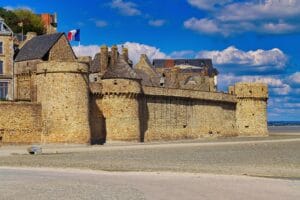
Visitors should always follow official safety advice and avoid independently crossing dangerous tidal zones.
Best Places to Watch the High Tide
The ramparts and elevated viewpoints around the mount provide excellent locations for observing the changing water.
The western terrace near the abbey is particularly useful because it provides an elevated perspective.
The footbridge also provides a memorable approach to the mount and allows visitors to see the bay gradually changing around them.
Several viewpoints on the mainland provide different perspectives, making it worthwhile to explore beyond the island itself.
The Footbridge to Mont-Saint-Michel
The modern footbridge is an important part of the Mont-Saint-Michel experience.
It provides the final approach to the historic mount and creates a gradual transition from mainland landscapes to the medieval island.
Walking across the bridge gives visitors time to appreciate the silhouette of Mont-Saint-Michel from a distance.
The experience becomes particularly beautiful during sunrise, late afternoon and sunset.
Rather than immediately taking the shuttle, travelers who have enough time should consider walking at least part of the approach.
Walking from the Mainland
The walk from the parking area to the mount takes roughly 40 to 50 minutes depending on the route and walking pace.
This approach can be more rewarding than simply taking transportation because the perspective of the mount changes continuously.
At first, Mont-Saint-Michel appears distant. As you walk, the abbey slowly becomes larger and more detailed.
This gradual approach is one of the best ways to appreciate the extraordinary scale and position of the monument.
Le Passeur Free Shuttle
The free shuttle known as Le Passeur connects the mainland parking area with the area near Mont-Saint-Michel.
For travelers with limited time, the shuttle is a convenient way to reach the mount.
It is particularly useful during busy periods when walking may take additional time.
The shuttle also makes the destination more accessible for many visitors.
Travelers should check current operating times before visiting because schedules vary according to season.
The Couesnon River and Dam
The Couesnon River plays an important role in the landscape around Mont-Saint-Michel.
The river and the surrounding engineering works have influenced the restoration of the island’s maritime character.
The Couesnon Dam is another interesting place to stop before walking toward the mount.
It provides views of the surrounding landscape and creates a useful perspective for photographers.
The area around the dam can also be incorporated into a walking itinerary.
The Best Mont-Saint-Michel Viewpoints on the Mainland
Some of the best photographs of Mont-Saint-Michel are taken from the mainland rather than from the island.
The distant perspective allows the entire mount to appear in one composition.
Early morning can provide beautiful atmospheric conditions, particularly when mist or soft light develops over the surrounding landscape.
Late afternoon and sunset are also excellent times for photography.
The exact appearance changes with weather, tide, season and sunlight, so travelers who stay overnight have more opportunities to see the monument under different conditions.
Mont-Saint-Michel at Sunrise
Sunrise is one of the best times to experience the mount.
The early hours are generally quieter than the middle of the day, especially outside peak tourist periods.
The first light can illuminate the stone architecture while the surrounding bay remains relatively calm.
For photographers, sunrise can provide a combination of soft light, reflections and fewer people.
Travelers staying overnight on or near the mount have a major advantage because they can experience the site before large day-trip groups arrive.
Mont-Saint-Michel at Sunset
Sunset transforms Mont-Saint-Michel into a spectacular landscape.
The western-facing views can become especially beautiful as the sun drops over the bay.
The stone buildings can take on warm colors while the sky changes above the medieval silhouette.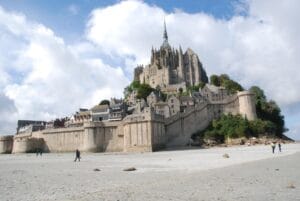
Sunset is also a good time to walk around the ramparts because the atmosphere becomes quieter as many day visitors leave.
For couples and photographers, sunset is one of the most memorable times to explore Mont-Saint-Michel.
Mont-Saint-Michel at Night
After dark, Mont-Saint-Michel develops an entirely different atmosphere.
The illuminated buildings stand out against the night sky, while the narrow streets can become much quieter.
Walking through the village at night can feel almost like stepping into a historical film.
Staying overnight is therefore worth considering for travelers who want to experience the destination beyond the busiest daytime period.
Photography at Mont-Saint-Michel
Mont-Saint-Michel is one of the best photography destinations in France.
The mount offers opportunities for architectural photography, landscape photography, travel photography, street photography and sunrise photography.
The most famous composition shows the entire island rising from the surrounding bay.
Other possibilities include close-up photographs of medieval streets, architectural details, abbey interiors, ramparts, doors, stonework and views across the tidal landscape.
Weather should not necessarily discourage photography. Fog, clouds, rain and changing light can make the monument even more atmospheric.
Best Places for Mont-Saint-Michel Photography
The mainland approach provides some of the most recognizable views.
The footbridge offers strong leading lines toward the mount.
The ramparts provide elevated perspectives.
The western terrace offers expansive views across the bay.
The streets of the medieval village are ideal for architectural and street photography.
The area around the Couesnon River and dam provides additional perspectives.
Photographers should explore rather than relying on a single viewpoint because Mont-Saint-Michel changes dramatically from different angles.
The Mont-Saint-Michel Bay Landscape
The bay is characterized by extensive sandbanks and tidal channels.
Its landscape can appear almost desert-like during low tide and dramatically maritime during high tide.
This unusual combination of coastal and terrestrial scenery makes the area particularly interesting for nature photography.
The landscape should always be approached with caution because the tidal environment can change quickly.
Guided Bay Walks
Walking across parts of the bay can be an unforgettable experience when undertaken safely with an experienced professional guide.
Guided walks can explain the geography, tidal patterns, local wildlife and history of the area.
A professional guide can also help visitors understand which areas are safe and which should be avoided.
For travelers interested in nature and adventure, a guided Mont-Saint-Michel Bay walk can add an entirely different dimension to the trip.
The Medieval Defensive Architecture
Mont-Saint-Michel was not only a religious center but also a fortified settlement.
The defensive walls, towers and elevated position helped protect the mount.
The combination of religious architecture and military defenses is one reason the site is historically fascinating.
Walking along the ramparts allows visitors to see how the island could function as a defensive stronghold.
The Historic Towers
The fortified towers form an important part of the island’s defensive character.
As visitors move around the walls, they can see how the towers were integrated into the natural rock and surrounding buildings.
These structures help explain how medieval communities used geography as part of their defensive strategy.
The architecture is especially dramatic when viewed from below across the bay.
Mont-Saint-Michel Museums
Several small museums and historical attractions are located within the medieval village.
They provide additional context about the history and culture of the mount.
For travelers who have already explored the major architecture, the museums can offer useful background on medieval life, local traditions and the history of Mont-Saint-Michel.
The exact museum offering and opening arrangements can change, so checking official information before visiting is recommended.
La Mère Poulard and Mont-Saint-Michel Cuisine
Mont-Saint-Michel has become famous for its culinary traditions, particularly the omelette associated with La Mère Poulard.
The restaurant’s history is connected to Annette Poulard, who became famous for preparing soufflé-style omelettes for visitors.
The dish has become one of the best-known culinary symbols associated with Mont-Saint-Michel.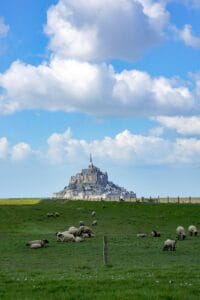
While travelers should explore the local cuisine beyond one famous dish, trying a traditional Mont-Saint-Michel omelette can be an interesting part of the experience.
Breton and Norman Food Around Mont-Saint-Michel
The destination sits in a region where Normandy and Brittany meet, creating a culinary environment influenced by both traditions.
Visitors can find seafood, regional dairy products, crêpes, galettes, cider and other French specialties.
The surrounding region is particularly well known for agricultural products and seafood.
A longer stay provides an opportunity to explore restaurants both on the mount and in nearby towns.
Shopping in Mont-Saint-Michel
The narrow medieval streets contain numerous shops selling souvenirs, food products, regional specialties and travel items.
Popular souvenirs include postcards, miniature versions of the mount, local food products and religious objects.
Because Mont-Saint-Michel is a major tourist destination, prices can be higher within the most central parts of the island.
Travelers interested in regional products may find better opportunities by exploring shops outside the busiest tourist streets.
Mont-Saint-Michel for History Lovers
History is one of the strongest reasons to visit the destination.
The mount combines medieval religious history, architecture, pilgrimage, fortification, local community life and changing political circumstances.
The abbey alone contains centuries of architectural development.
The surrounding village adds another layer by showing how ordinary life developed around the religious center.
Mont-Saint-Michel for Architecture Lovers
Architecture enthusiasts can spend hours studying the site.
Romanesque and Gothic elements, defensive structures, medieval houses, religious buildings and later modifications all appear within a relatively small area.
The vertical arrangement of the abbey is particularly unusual.
The relationship between architecture and geology is another defining characteristic.
The builders had to work with the existing rock rather than constructing on a flat foundation.
Mont-Saint-Michel for Religious Travelers
The mount has been an important pilgrimage destination for centuries.
The dedication to Saint Michael gives the site a distinctive religious identity.
For religious travelers, visiting the abbey, churches and historic religious spaces can provide an opportunity to understand the spiritual importance of the destination.
Even visitors who are not religious can appreciate the historical significance of pilgrimage and the role it played in shaping Mont-Saint-Michel.
Mont-Saint-Michel for Couples
Mont-Saint-Michel is one of the most romantic destinations in northern France.
The medieval streets, dramatic sunsets, historic architecture and surrounding sea create an atmosphere particularly suited to couples.
Walking the ramparts together at sunset or exploring the quieter streets after the day-trip crowds have departed can be especially memorable.
An overnight stay can make the experience more relaxed and intimate.
Mont-Saint-Michel for Families
Families can also enjoy Mont-Saint-Michel, although the steep streets and large number of stairs require preparation.
Children may particularly enjoy the fortress-like walls, towers, narrow streets and dramatic views.
Parents should consider the physical demands of reaching the abbey because the route includes many steps.
The bay and changing tides can also provide an educational opportunity for children interested in geography and nature.
Mont-Saint-Michel for Solo Travelers
Solo travelers can explore Mont-Saint-Michel comfortably.
The compact nature of the island makes it easy to explore independently.
Walking the village, visiting the abbey and photographing the landscape can all be done without requiring a group.
Solo travelers who want to explore the bay should consider joining a professional guided excursion for safety.
Best Time to Visit Mont-Saint-Michel
The best time to visit Mont-Saint-Michel depends on whether your priority is weather, fewer crowds, photography, tides or atmosphere.
Spring provides relatively mild conditions and attractive landscapes.
Summer offers long daylight hours but can be busy.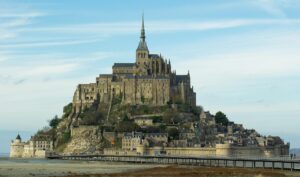
Autumn can provide cooler weather, beautiful light and fewer visitors.
Winter can be particularly atmospheric because the medieval architecture and exposed bay can feel dramatically different under cloudy or windy conditions.
Travelers who want a quieter experience should consider weekdays and periods outside major holidays.
Best Time of Day to Visit Mont-Saint-Michel
Early morning and late afternoon are generally among the most rewarding times to visit.
Early morning offers quieter streets and soft light.
Late afternoon can provide beautiful sunset conditions and fewer visitors after many day-trippers leave.
The middle of the day can be considerably busier, especially during popular travel periods.
For photographers and travelers seeking a more relaxed experience, spending a full day or staying overnight is preferable to arriving for only a few hours.
How Many Days Do You Need in Mont-Saint-Michel?
A half-day can be enough to visit the major attractions, especially if your schedule is limited.
However, one full day provides a much better experience because it allows time for the abbey, medieval village, ramparts, viewpoints and surrounding landscape.
An overnight stay is even more rewarding for travelers who want to experience sunrise, sunset and nighttime Mont-Saint-Michel.
People interested in the bay, photography or nearby Normandy attractions may want to stay longer in the region.
One-Day Mont-Saint-Michel Itinerary
A one-day itinerary can begin early in the morning with the walk or shuttle from the mainland.
After approaching the mount, visitors can spend the morning exploring the medieval streets before continuing upward toward the abbey.
The abbey can take considerable time because of its size and the number of rooms and architectural spaces.
After the abbey, visitors can explore the ramparts and enjoy lunch in the village.
The afternoon can be dedicated to the bay, photography and additional walking.
If the tide schedule is favorable, the end of the day can be reserved for observing the changing water.
Two-Day Mont-Saint-Michel Itinerary
A two-day trip allows visitors to slow down considerably.
The first day can focus on the abbey, village, ramparts and historical architecture.
The second morning can begin with sunrise photography and a quieter walk through the village.
Later, travelers can explore the surrounding mainland, visit a viewpoint or join a guided bay experience.
This itinerary is particularly suitable for photographers and travelers who dislike rushing.
Day Trips to Mont-Saint-Michel from Paris
Mont-Saint-Michel is frequently visited as a day trip from Paris.
The journey requires careful planning because the destination is several hours away from the capital depending on transportation.
Travelers using public transport can combine rail travel with onward bus or shuttle connections.
The closest railway station is Pontorson, from which onward transportation connects travelers with Mont-Saint-Michel.
Because a day trip from Paris involves significant travel time, visitors should depart early and plan their return carefully.
Visiting Mont-Saint-Michel from Rennes
Rennes is another useful starting point for visiting Mont-Saint-Michel.
The city is located in Brittany and has transportation connections toward the mount.
Travelers combining Brittany and Normandy can therefore include Mont-Saint-Michel between destinations such as Rennes and Saint-Malo.
This approach works particularly well for visitors planning a broader northern France itinerary.
Visiting Mont-Saint-Michel from Saint-Malo
Saint-Malo is relatively close to Mont-Saint-Michel and is commonly combined with the destination.
Saint-Malo provides a contrasting coastal experience, with its historic fortified city and maritime character.
Travelers can therefore spend one part of their itinerary exploring the walled city and another exploring the tidal island of Mont-Saint-Michel.
The combination provides an excellent introduction to the historical and coastal landscapes of northern France.
Visiting Mont-Saint-Michel from Normandy
Mont-Saint-Michel can also be incorporated into a broader Normandy itinerary.
Visitors may combine the mount with destinations such as Bayeux, the D-Day beaches, Caen, Avranches and other historical sites.
This makes Mont-Saint-Michel particularly suitable for travelers interested in French history.
Nearby Destination: Avranches
Avranches is an interesting nearby town for travelers exploring the wider Mont-Saint-Michel area.
The town has historical connections with the mount and provides a useful base for exploring the surrounding region.
Visitors can combine a trip to Avranches with Mont-Saint-Michel to experience more of Normandy rather than spending the entire journey at one attraction.
Nearby Destination: Saint-Malo
Saint-Malo is one of the most popular destinations to combine with Mont-Saint-Michel.
The historic walled city has a distinctive maritime identity and dramatic coastal views.
Its proximity to Mont-Saint-Michel makes it a convenient addition to a Brittany-Normandy itinerary.
Nearby Destination: Cancale
Cancale is famous for oysters and its coastal scenery.
Travelers interested in food can combine Cancale with Mont-Saint-Michel to experience another aspect of northern French culture.
The destination is particularly attractive for seafood lovers.
Nearby Destination: Dinan
Dinan is a beautifully preserved historic town in Brittany.
Its medieval streets, architecture and traditional atmosphere make it an excellent complement to Mont-Saint-Michel.
Travelers interested in medieval French architecture can create an itinerary connecting Dinan, Saint-Malo and Mont-Saint-Michel.
Nearby Destination: Bayeux
Bayeux is another important destination for history travelers.
The town is famous for the Bayeux Tapestry and its proximity to the Normandy D-Day beaches.
Combining Bayeux with Mont-Saint-Michel creates a broader historical journey through medieval and twentieth-century European history.
UNESCO World Heritage Status
Mont-Saint-Michel and its Bay were inscribed on the UNESCO World Heritage List in 1979.
The UNESCO designation recognizes the exceptional combination of the natural environment and architectural heritage.
The site is particularly remarkable because the natural landscape and built environment cannot easily be separated.
The island’s architecture was shaped by its rocky foundation and tidal surroundings, while the surrounding bay contributes directly to its visual and cultural identity.
Why Mont-Saint-Michel Is One of France’s Best Places to Visit
Mont-Saint-Michel combines several types of travel experiences in one destination.
It offers a major historical monument, medieval architecture, religious heritage, dramatic coastal scenery, photography opportunities, local food and an unusual natural phenomenon.
Few destinations provide such a strong relationship between architecture and landscape.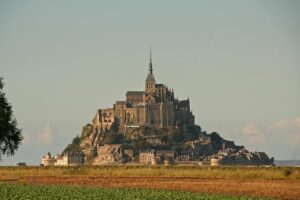
The sight of the abbey rising from the tidal bay is also one of the most recognizable images of France.
Responsible Tourism at Mont-Saint-Michel
Mont-Saint-Michel receives large numbers of visitors, making responsible tourism important.
Travelers can help protect the destination by following official access routes, respecting historic structures, avoiding litter and following safety instructions around the bay.
The tidal environment should be treated with particular respect.
Visitors should not attempt dangerous crossings of the bay without appropriate knowledge and professional guidance.
Traveling outside peak periods can also create a more enjoyable experience while helping distribute visitor pressure.
Practical Access to Mont-Saint-Michel
Visitors arriving by car normally leave their vehicles in designated mainland parking areas rather than driving directly into the historic mount.
From the parking areas, travelers can walk, use the free shuttle or use other approved transport options.
The approach itself is part of the experience because the changing distance provides constantly different views of the monument.
Travelers should always check official parking and shuttle information before arrival because operating arrangements can change by season.
Why Staying Overnight Is Worthwhile
Many visitors see Mont-Saint-Michel as a short day trip, but staying overnight can significantly improve the experience.
The island changes after the major daytime crowds leave.
The narrow streets become quieter, the illuminated architecture becomes more atmospheric and the surrounding bay can appear completely different.
An overnight stay also makes sunrise easier to experience.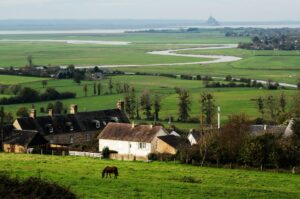
For photographers and travelers who want a slower journey, staying overnight is one of the best ways to appreciate Mont-Saint-Michel.
Conclusion
Mont-Saint-Michel is much more than a famous French landmark.
It is a complete cultural landscape where medieval architecture, religious history, coastal geography, tidal phenomena and modern tourism exist together.
The Abbey of Mont-Saint-Michel should be the centerpiece of any visit, but the experience becomes much richer when travelers explore the ramparts, Grand Rue, medieval village, parish church, western terrace, footbridge, mainland viewpoints and surrounding bay.
The changing tides are another essential part of the experience. They transform the landscape and demonstrate why the relationship between the mount and its environment is so extraordinary.
UNESCO — Mont-Saint-Michel and its Bay
Official Mont-Saint-Michel — National Public Establishment
Official Mont-Saint-Michel Abbey — Practical Information
Official Mont-Saint-Michel Abbey — Visits and Activities
Normandy Tourism — Mont-Saint-Michel
Normandy Tourism — Things to See and Do at Mont-Saint-Michel
Author

Related posts
UNGA
- 0
- 5,649 words
UNGA (United Nations General Assembly ) The United Nations General Assembly, commonly known as the UN General Assembly or UNGA, is one...
Read out all
Best Places to Visit in Kathmandu
- 0
- 4,089 words
Best Places to Visit in Kathmandu , Nepal Kathmandu, the capital of Nepal, is one of South Asia’s most fascinating travel destinations....
Read out all
Best Places to Visit in Vilnius
- 0
- 5,246 words
Best Places to Visit in Vilnius , Lithuania Vilnius, the capital of Lithuania, is one of the most fascinating destinations in the...
Read out all
Best Places to Visit in Riga
- 0
- 6,005 words
Best Places to Visit in Riga , Latvia Riga, the capital of Latvia, is one of the most fascinating destinations in the...
Read out all
Best Places to Visit in Cartagena
- 0
- 4,522 words
Best Places to Visit in Cartagena , Colombia Cartagena de Indias is a historic Caribbean city on Colombia’s northern coast and one...
Read out all
Best Places to Visit in Kaohsiung
- 0
- 5,420 words
Best Places to Visit in Kaohsiung , Taiwan Kaohsiung is one of Taiwan’s most fascinating travel destinations, combining the energy of a...
Read out all