
Best Places to Visit in Vilnius , Lithuania
Vilnius, the capital of Lithuania, is one of the most fascinating destinations in the Baltic region and one of the most rewarding cities to explore in Northern Europe. Known for its historic Old Town, Baroque churches, medieval streets, green parks, artistic neighborhoods, museums, viewpoints and distinctive cultural heritage, Vilnius offers an impressive combination of history and modern European city life. For travelers searching for the best places to visit in Vilnius, Lithuania, the city provides attractions suitable for history lovers, architecture enthusiasts, families, couples, photographers, food travelers and visitors looking for a memorable European city break.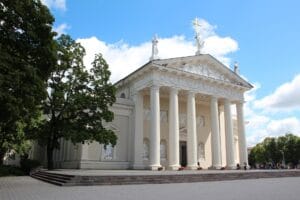
Vilnius has a history stretching back many centuries. The city’s historic center developed around the confluence of the Neris and Vilnia rivers and became the political center of the Grand Duchy of Lithuania. UNESCO recognizes the Vilnius Historic Centre as a World Heritage Site because of its exceptional historic urban structure and its combination of Gothic, Renaissance, Baroque and Classical architecture.
One of the most appealing characteristics of Vilnius is the way its historic architecture exists alongside parks, cafés, contemporary restaurants, museums, creative neighborhoods and modern cultural spaces. Official Lithuanian tourism information describes Vilnius as a city where medieval and early-modern architecture, bohemian neighborhoods, green spaces and Cold War heritage can all be experienced within the same destination.
Vilnius is also a city that rewards walking. Many of the most important Vilnius tourist attractions are concentrated around the Old Town and central districts. A traveler can walk from Cathedral Square to Gediminas Castle, continue through the historic streets toward St. Anne’s Church, explore Vilnius University, visit Užupis, discover the Gates of Dawn and finish the day with Lithuanian food in one of the city’s restaurants.
Vilnius Old Town: The Historic Heart of Lithuania
Vilnius Old Town is the natural starting point for almost every first visit to the Lithuanian capital. It is one of the largest surviving medieval old towns in the Baltic region and forms the central part of the UNESCO-listed Vilnius Historic Centre.
The historic district is characterized by winding streets, historic courtyards, churches, former merchant houses, squares, small cafés and architectural details representing different periods of European history. Unlike cities where one architectural style dominates, Vilnius developed organically over centuries, creating a diverse cityscape.
Walking through the Old Town is one of the best things to do in Vilnius because the experience is not limited to visiting individual monuments. The streets themselves form part of the attraction.
UNESCO notes that the historic center retains its medieval street pattern and a large collection of Gothic, Renaissance, Baroque and Classical buildings. The city’s natural setting around hills and rivers also contributes to its distinctive character.
Visitors should therefore allow time to explore side streets rather than simply moving from one famous attraction to another. Some of the most memorable views of Vilnius can be found in small courtyards, quiet lanes and unexpected viewpoints.
Cathedral Square: The Central Gathering Place of Vilnius
Cathedral Square is one of the most important public spaces in Vilnius and an excellent place to begin sightseeing.
The square is dominated by the Cathedral Basilica of St. Stanislaus and St. Ladislaus and its distinctive bell tower. The surrounding area connects several of the city’s most important historical attractions, including Gediminas Castle and the Palace of the Grand Dukes.
Cathedral Square has played an important role in the history and public life of Vilnius. Today, it is used for cultural events, celebrations and gatherings while also functioning as a major meeting point for visitors.
The open space provides a dramatic contrast to the narrow streets of the Old Town. Standing in the square, visitors can see how the historic religious and political center of Vilnius developed around the castle complex.
Vilnius Cathedral Basilica
The Cathedral Basilica of St. Stanislaus and St. Ladislaus is one of the most important religious buildings in Lithuania and one of the essential places to visit in Vilnius.
The cathedral’s present appearance is strongly associated with Neoclassical architecture, although the site has a much longer history and has undergone numerous reconstructions.
The cathedral is particularly significant because of its connection with Lithuanian history, Catholicism and the Grand Duchy of Lithuania. Several important historical figures are associated with the cathedral and its underground spaces.
Inside, visitors can experience a more restrained architectural atmosphere than the highly decorative Baroque interiors found elsewhere in Vilnius.
The cathedral’s location makes it especially easy to combine with Gediminas Castle Tower, Cathedral Square, the Palace of the Grand Dukes and the surrounding Old Town.
Gediminas Castle Tower: The Symbol of Vilnius
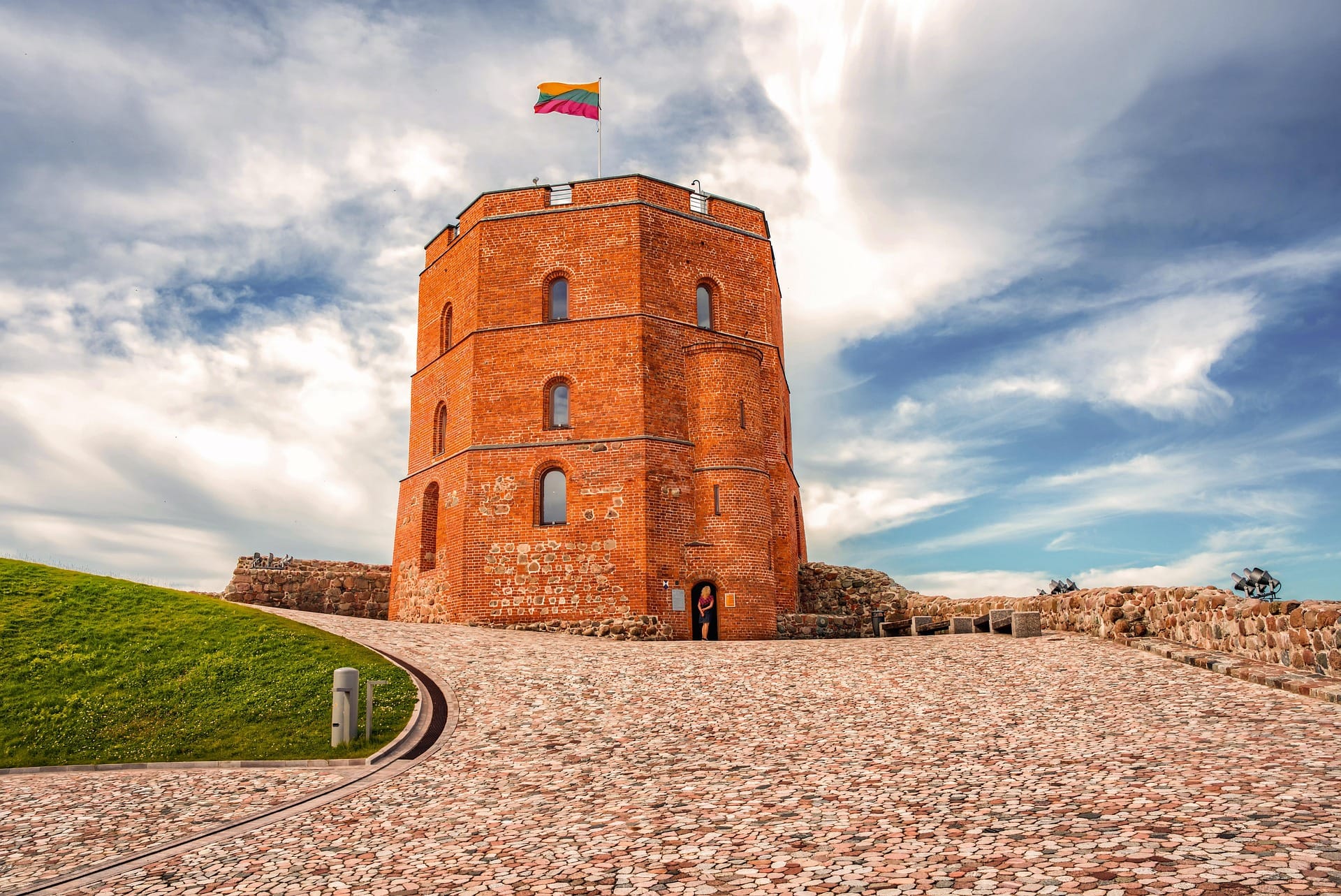
Gediminas Castle Tower is one of the most recognizable landmarks in Lithuania and perhaps the most iconic viewpoint in Vilnius.
Standing on Gediminas Hill, the tower dominates the city’s skyline and provides spectacular views across the historic center. Official Lithuanian tourism information describes Gediminas Castle Tower as a major symbol of Vilnius and highlights its panoramic views over the UNESCO-listed Old Town.
The castle site has extremely deep historical roots. Archaeological evidence indicates that the hill was occupied long before the present tower, while a castle existed in the area from the medieval period.
The tower itself contains an exhibition explaining the history of Vilnius and the castle complex. Visitors can learn about the development of the city, historical conflicts and the importance of the site to Lithuanian statehood.
The panoramic viewpoint is one of the major reasons to visit. From the top, travelers can see red-roofed buildings, church towers, the Neris River and the broader urban landscape.
For photographers, Gediminas Tower is particularly attractive around sunrise and sunset.
Gediminas Hill: A Historic Viewpoint Above Vilnius
Even if visitors do not enter the tower, Gediminas Hill itself is an important place to experience.
The hill provides elevated views of the city and connects the modern capital with its medieval origins.
Walking upward also creates a sense of entering the historical heart of Lithuania. The castle complex once represented political power, while the hill continues to dominate the visual identity of Vilnius.
For travelers searching for the best viewpoints in Vilnius, Gediminas Hill should be near the top of the list.
Palace of the Grand Dukes of Lithuania
The Palace of the Grand Dukes stands beside Cathedral Square and Gediminas Castle, forming part of the historic political center of Vilnius.
The palace was associated with the rulers of the Grand Duchy of Lithuania and played an important role in the political and cultural history of the country.
The present complex has been reconstructed based on archaeological evidence, historical research and surviving documentation.
Inside, visitors can explore exhibitions relating to the history of the Grand Duchy of Lithuania, the palace itself, court culture and archaeological discoveries.
For travelers interested in Lithuanian history, the palace provides important context for understanding why Vilnius became a major political center in Eastern Europe.
St. Anne’s Church: A Gothic Landmark of Vilnius
St. Anne’s Church is one of the most visually striking churches in Vilnius and one of the city’s best-known examples of Gothic architecture.
Its elaborate brick facade has made the church an architectural symbol of the city.
The church forms part of the St. Anne and Bernardine Church complex near the Vilnia River. Its location also places it close to Bernardine Garden and the historic streets leading toward Užupis.
St. Anne’s Church has long attracted visitors interested in architecture and history. Its dramatic exterior is particularly beautiful when viewed from the surrounding streets and gardens.
Official Lithuanian tourism information identifies the Church of St. Anne and the Bernardine Church ensemble as important components of Vilnius’ historic architectural heritage.
Bernardine Church and Monastery Ensemble
The Bernardine Church stands beside St. Anne’s Church and forms one of the most important historic religious complexes in Vilnius.
The ensemble illustrates the city’s medieval religious heritage and its Gothic architectural tradition.
The interior provides a different experience from the exterior, with religious artworks and historic architectural details contributing to the atmosphere.
Visitors interested in religious architecture should spend enough time exploring both churches rather than treating St. Anne’s Church as an isolated attraction.
Bernardine Garden: A Peaceful Green Space
Bernardine Garden is one of the most pleasant green spaces in central Vilnius.
Located along the Vilnia River near St. Anne’s Church, the garden provides an opportunity to rest after exploring the Old Town.
The park includes walking paths, landscaped areas, trees, flowers and views toward the river.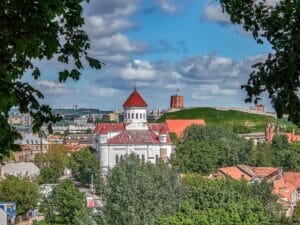
Vilnius is known for its abundance of greenery, and official Lithuanian tourism information emphasizes the city’s parks, tree-lined streets and green spaces as an important part of its identity.
For travelers who want to combine sightseeing with relaxation, Bernardine Garden is an excellent stop.
Vilnius University: One of the City’s Historic Treasures
Vilnius University is one of the most important historic institutions in Lithuania and one of the most fascinating places to visit in the Old Town.
Founded in the 16th century, the university has played a major role in the intellectual and cultural history of Lithuania and the wider region.
The university complex contains historic courtyards, architectural details, churches and academic buildings.
Walking through the university courtyards provides an opportunity to see how educational institutions were integrated into the historic city.
UNESCO specifically identifies the Vilnius University ensemble as an important component of the historic center.
The Church of St. Johns
The Church of St. Johns is part of the historic Vilnius University complex and is another important religious landmark in the Old Town.
The church reflects several architectural periods and has strong historical connections with the university and the development of Vilnius as a center of learning.
Its tower also contributes to the city’s skyline.
Visitors interested in the relationship between religion, education and architecture will find the church particularly interesting.
Literatų Street: A Creative Corner of Old Vilnius
Literatų Street is one of the most atmospheric streets in Vilnius Old Town.
The street became famous for artistic works connected with writers and literature. Decorative plaques and artworks attached to walls create an unusual open-air artistic environment.
It is an excellent place for photography because the street combines historic architecture with small pieces of contemporary creativity.
Literatų Street also demonstrates the intimate scale of Vilnius. Instead of monumental buildings, visitors can discover small cultural details integrated into the historic urban environment.
Official Lithuanian tourism information includes Literatų Street among the city’s top visitor locations.
Pilies Street: The Main Historic Walking Route
Pilies Street is one of the most famous streets in Vilnius Old Town.
The street connects important parts of the historic center and contains historic buildings, restaurants, cafés, souvenir shops and cultural spaces.
Walking along Pilies Street provides an excellent introduction to the atmosphere of Vilnius.
During warmer months, outdoor seating and street activity make the area particularly lively.
However, travelers should also explore the side streets because some of the quieter architectural spaces are found just away from the main pedestrian route.
The Gates of Dawn: A Major Historical and Religious Landmark
The Gates of Dawn, known in Lithuanian as Aušros Vartai, are among the most important historical and religious attractions in Vilnius.
The structure is the only surviving city gate from the former defensive wall of Vilnius. According to official Vilnius tourism information, the medieval city had several gates, but the Gates of Dawn are the only one that survived.
The site is especially famous for the Chapel of the Gates of Dawn and the painting of the Blessed Virgin Mary, Mother of Mercy.
The religious significance of the site extends beyond Lithuania, attracting pilgrims and visitors from different countries.
The Gates of Dawn should therefore be included in itineraries for travelers interested in history, religious heritage, art and architecture.
Chapel of the Gates of Dawn
The chapel above the Gates of Dawn contains the famous image of the Mother of Mercy.
The painting has been associated with Vilnius for centuries and is an important religious object for Catholics and pilgrims.
Even visitors who are not traveling for religious reasons may appreciate the historical and artistic importance of the site.
The official Go Vilnius tourism service provides current visitor information about the chapel, including opening arrangements.
The Republic of Užupis
Užupis is one of the most unusual neighborhoods in Vilnius and one of the city’s most popular attractions.
Located across the Vilnia River from the Old Town, Užupis has developed a distinctive artistic and bohemian identity.
The neighborhood famously declared itself an independent republic in 1997 as an artistic and cultural expression. It has its own symbolic institutions, flag, constitution and unusual traditions.
Užupis should not be understood as an internationally recognized sovereign country. Instead, its “republic” identity is a playful cultural project that contributes to the neighborhood’s unique atmosphere.
The district contains galleries, studios, cafés, sculptures, street art and creative spaces.
Official Lithuanian tourism information describes Užupis as a bohemian enclave with its own tongue-in-cheek constitution.
The Užupis Constitution
One of the most famous attractions in Užupis is the neighborhood’s constitution.
Translated into multiple languages, the constitution contains humorous and philosophical statements about life, freedom, happiness and everyday existence.
It reflects the artistic character of the district rather than functioning as a conventional political constitution.
Reading the different versions of the text is one of the simplest ways to understand the playful spirit of Užupis.
Užupis Angel
The Užupis Angel is one of the neighborhood’s best-known symbols.
Located in the central area of Užupis, the sculpture has become a popular meeting point and photography location.
The surrounding streets provide opportunities to explore independent cafés, galleries and artistic installations.
For travelers searching for unusual places to visit in Vilnius, Užupis provides an experience that is very different from the formal historic monuments of Cathedral Square.
The Glass Quarter
The Glass Quarter is another fascinating part of central Vilnius.
Located around Stiklių, M. Antokolskio, Gaono and Žydų streets, the area has developed into a creative district featuring restaurants, boutiques, cultural spaces and historic architecture.
The name reflects the area’s historic connection with glassmaking and crafts.
Today, the neighborhood combines heritage with modern hospitality.
It is particularly enjoyable for travelers who want to explore smaller streets and discover independent businesses rather than following only the major tourist attractions.
Vilnius Jewish Heritage
Vilnius has a long and complex Jewish history and was historically an important center of Jewish culture and scholarship.
The Jewish heritage of the city can be explored through historic streets, memorial sites, museums and cultural initiatives.
The former Jewish Quarter and the area around Žydų Street provide opportunities to learn about the communities that shaped Vilnius.
The history is also inseparable from the destruction experienced during the Second World War and the Holocaust.
Visitors should approach these sites with respect and allow time to learn about the historical context rather than treating them only as photographic attractions.
The Museum of Occupations and Freedom Fights
The Museum of Occupations and Freedom Fights is one of the most important museums for understanding Lithuania’s 20th-century history.
The museum is housed in the former KGB building and documents Soviet repression, resistance and other aspects of Lithuania’s experience under occupation.
The building itself contributes strongly to the museum experience because visitors can see spaces connected with the historical events presented in the exhibitions.
Official Lithuanian tourism information highlights the museum as an important place for experiencing Vilnius’ Cold War heritage.
Travelers interested in modern European history should strongly consider including the museum in their Vilnius itinerary.
Lukiškės Prison 2.0
Lukiškės Prison has become an unusual cultural destination in Vilnius.
The historic prison complex has been transformed into a creative and cultural space known as Lukiškės Prison 2.0.
The site demonstrates how a former institutional building can be repurposed for contemporary culture.
Visitors may encounter artists, creative businesses, events and cultural activities in a setting that is dramatically different from conventional museums.
Because programming can change, travelers should check the current official schedule before visiting.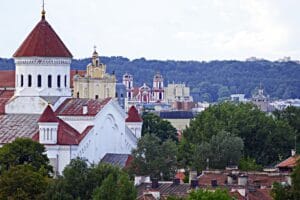
MO Museum: Contemporary Art in Vilnius
MO Museum is one of Vilnius’ leading contemporary cultural attractions.
The museum focuses on modern and contemporary Lithuanian art and provides a contrast to the historic architecture that dominates the Old Town.
Its contemporary building is also architecturally interesting.
For travelers who want to understand present-day Lithuanian culture rather than focusing only on medieval and Baroque heritage, MO Museum is an important stop.
It can also be combined with exploration of nearby neighborhoods and cafés.
Church of St. Peter and St. Paul
The Church of St. Peter and St. Paul is located slightly outside the main Old Town route and is famous for its extraordinary interior decoration.
The church is associated with Lithuanian Baroque and is especially notable for its extensive white stucco sculptures.
The interior creates a very different visual experience from the brick Gothic churches of central Vilnius.
For architecture and art lovers, the church is one of the most worthwhile places to visit in Vilnius.
Official Vilnius tourism information describes the Church of St. Peter and St. Paul as one of the city’s important religious attractions.
Three Crosses Hill
Three Crosses Hill is one of the best viewpoints in Vilnius.
The hill overlooks the Old Town and provides broad views across the city.
The monument of the Three Crosses has become one of the visual symbols of Vilnius and is associated with important religious and historical traditions.
The climb can be worthwhile for travelers who enjoy walking and panoramic views.
The viewpoint is especially attractive around sunset when the historic rooftops and church towers are illuminated by changing light.
Subačius Viewpoint
Subačius Viewpoint provides another excellent perspective over Vilnius.
From this elevated location, travelers can look across the Old Town toward the city’s historic skyline.
It is particularly useful for photographers who want a broader composition of Vilnius rather than a close-up architectural image.
The viewpoint can also be incorporated into a walking route around Užupis and the eastern side of the Old Town.
Vilnius Town Hall
Vilnius Town Hall stands in the historic center and has long been an important civic landmark.
The present building reflects Classical architectural influences and occupies a prominent position in Town Hall Square.
The square surrounding the building is one of the important public spaces in the Old Town and often hosts events.
The Town Hall also helps demonstrate the civic side of Vilnius, complementing the city’s churches and castle-related landmarks.
Presidential Palace
The Presidential Palace is another important building in central Vilnius.
The complex has a long history and has served different functions over the centuries.
Today, it is associated with the Presidency of the Republic of Lithuania.
The palace is located close to Vilnius University and Cathedral Square, making it easy to see from the outside while exploring the historic center.
Visitors should check official information regarding access, tours and public events because this is an active government institution.
St. Casimir’s Church
St. Casimir’s Church is one of the distinctive Baroque churches in Vilnius.
Its dome and architectural form make it an important part of the city’s historic skyline.
The church is dedicated to Saint Casimir, a major figure in Lithuanian religious history and the patron saint of Lithuania.
The building is located near several other important Old Town attractions and can easily be included in a walking tour.
Church Heritage Museum
The Church Heritage Museum offers a deeper look at Lithuania’s religious art and cultural heritage.
The museum contains objects connected with the country’s Catholic tradition and provides historical context for the many churches visible throughout Vilnius.
For travelers who are interested in art, history and religious heritage, the museum can make visits to the city’s churches more meaningful.
Instead of viewing each church simply as an architectural monument, visitors can understand the artworks, traditions and institutions that shaped them.
Vilnius for Architecture Lovers
Vilnius is one of the best destinations in the Baltic region for travelers interested in architecture.
The city combines medieval Gothic structures, Renaissance buildings, Baroque churches, Classical public architecture, historic wooden houses and contemporary designs.
UNESCO emphasizes the exceptional diversity of architectural styles preserved in the Vilnius Historic Centre.
Architecture lovers should therefore spend time looking beyond the most famous landmarks.
Doorways, courtyards, facades, towers and street layouts all reveal different layers of the city’s development.
Vilnius for History Lovers
Vilnius offers an unusually deep historical experience.
The city was a major political center of the Grand Duchy of Lithuania and later experienced dramatic changes under different political powers.
Its history includes the Polish-Lithuanian Commonwealth, the Russian Empire, independence in the early 20th century, the Second World War, Nazi occupation, Soviet rule and the restoration of Lithuanian independence.
These historical layers remain visible in museums, monuments, churches, streets and memorials.
A visit to Vilnius therefore becomes much more meaningful when travelers understand that the city’s beautiful architecture exists alongside a complicated history.
Vilnius for Art Lovers
Art is an important part of modern Vilnius.
MO Museum provides a contemporary perspective, while historic churches and museums preserve centuries of religious and European art.
Užupis adds another dimension through its independent creative community.
The city’s galleries, design studios and cultural spaces provide further opportunities for visitors to experience Lithuanian creativity.
Vilnius for Food Lovers
Lithuanian cuisine is an important part of a trip to Vilnius.
Traditional foods often feature potatoes, rye bread, dairy products, mushrooms, berries and meat.
Cepelinai are among the best-known Lithuanian dishes. These large potato dumplings are traditionally filled and served with a rich sauce.
Other traditional foods and modern interpretations can be found throughout Vilnius.
Markets and contemporary restaurants provide opportunities to experience both traditional Lithuanian cooking and modern Baltic cuisine.
Traditional Lithuanian Food in Vilnius
Travelers should not leave Vilnius without trying several traditional Lithuanian flavors.
Potato-based dishes are particularly important because potatoes have played a major role in Lithuanian food culture.
Rye bread is another staple and can appear alongside soups, meats and other traditional dishes.
Smoked meats, fish, dairy products, mushrooms and seasonal berries also appear in Lithuanian cuisine.
Modern restaurants increasingly reinterpret these ingredients, allowing visitors to experience Lithuanian food through contemporary culinary techniques.
Paupys Market and Modern Vilnius
Paupys is one of the newer urban areas close to the Old Town and provides a strong contrast to medieval Vilnius.
The neighborhood combines contemporary architecture, residential buildings, restaurants, public spaces and riverside surroundings.
Paupys Market offers a modern food and social environment where visitors can try different cuisines and enjoy a contemporary urban atmosphere.
Official Go Vilnius information lists Paupys Market among notable places in the city.
The area is particularly interesting for travelers who want to understand how Vilnius is developing beyond its historic center.
Neris River: The Modern Side of Vilnius
The Neris River flows through Vilnius and provides an important natural feature within the city.
Walking along the river offers views of both historic and modern parts of the capital.
The riverfront is particularly pleasant during warmer months when outdoor activity increases.
Travelers can combine riverside walks with visits to nearby parks, neighborhoods and cultural attractions.
The contrast between the river, historic skyline and modern buildings makes the Neris waterfront a useful location for photography.
Vingis Park
Vingis Park is one of the largest green spaces in Vilnius and an excellent place to experience the city’s outdoor side.
The park provides walking routes, open spaces and opportunities for recreation.
It is particularly useful for travelers who have spent several days visiting museums and historic buildings and want to spend some time in nature.
During summer, the park can become a lively gathering place for outdoor activities and cultural events.
Trakai Island Castle
Trakai Island Castle is one of Lithuania’s most famous historical attractions.
The castle stands on an island in Lake Galvė and creates one of the country’s most recognizable landscapes.
The combination of medieval architecture and water makes Trakai particularly attractive to photographers.
A trip to Trakai also provides an opportunity to learn about the Grand Duchy of Lithuania and the historical role of the region.
Vilnius as Part of a Baltic Capitals Trip
Vilnius is often combined with Riga in Latvia and Tallinn in Estonia as part of a Baltic capitals itinerary.
Each capital has a distinctive architectural and cultural character.
Vilnius is particularly known for its Baroque architecture, historic center, churches, artistic Užupis and green spaces.
Riga is famous for its Art Nouveau architecture and historic center, while Tallinn is widely known for its exceptionally preserved medieval Old Town.
A Baltic capitals trip therefore allows travelers to experience three different expressions of Baltic history and culture.
Shopping in Vilnius
Vilnius provides a mixture of traditional markets, independent boutiques, contemporary shopping areas and design stores.
The Old Town contains many small shops selling Lithuanian crafts, souvenirs and local products.
Visitors interested in authentic gifts can look for Lithuanian food products, traditional crafts, amber items and locally designed products.
The modern neighborhoods also offer independent design businesses that reflect contemporary Lithuanian creativity.
Lithuanian Amber and Traditional Crafts
Amber has a long association with the Baltic region and is one of the most recognizable Lithuanian souvenirs.
Visitors will find amber jewelry and decorative objects in many parts of Vilnius.
However, travelers should pay attention to quality and authenticity when purchasing amber.
Other traditional crafts, textiles, ceramics and locally designed products can also make meaningful souvenirs.
Vilnius Nightlife
Vilnius has a lively nightlife scene, particularly around the Old Town and central neighborhoods.
Historic buildings house modern bars, cafés and restaurants, creating an unusual combination of old architecture and contemporary nightlife.
The city also has music venues, cultural events and seasonal festivals.
Visitors interested in nightlife should explore beyond the main tourist streets to discover the city’s different evening neighborhoods.
Vilnius Christmas and Winter Atmosphere
Vilnius can become especially atmospheric during the winter season.
The historic center provides a beautiful setting for seasonal decorations and Christmas activities.
Cathedral Square and the Old Town are particularly attractive during the festive period.
Travelers visiting in winter should prepare for cold weather and shorter daylight hours, but those conditions can also create a distinctive atmosphere.
Vilnius as a UNESCO Destination
The UNESCO status of Vilnius Historic Centre is one of the strongest reasons for heritage travelers to visit.
The designation recognizes the historic urban structure and architectural diversity of the city.
UNESCO describes Vilnius as a former political center of the Grand Duchy of Lithuania whose cultural and architectural influence extended across Eastern Europe.
The site contains medieval urban planning alongside Gothic, Renaissance, Baroque and Classical buildings.
For travelers interested in World Heritage Sites, Vilnius should therefore be considered an important European destination.
Why Vilnius Is Different from Other European Capitals
Vilnius combines several qualities that are not always found together.
The city has a major medieval Old Town, extensive Baroque architecture, green spaces, artistic neighborhoods, religious heritage, Jewish history, Soviet-era history and a growing contemporary cultural scene.
The city also remains relatively compact for visitors.
Travelers can therefore experience a broad range of historical and cultural attractions without spending most of the day traveling between distant parts of the city.
Authentic Experiences in Vilnius
An authentic Vilnius experience does not require avoiding famous attractions.
Instead, visitors can combine major landmarks with ordinary local experiences.
Walking through neighborhood streets, visiting markets, trying Lithuanian food, sitting in local cafés, exploring small courtyards and using public transportation can provide a stronger connection with contemporary Vilnius.
Užupis is particularly useful for understanding the city’s creative identity, while the Old Town provides the historical foundation.
Practical Travel Planning for Vilnius
Visitors should check official tourism websites before traveling because museum opening hours, ticket prices, exhibitions, cultural events and transportation arrangements can change.
The official Lithuania Travel website provides information about Vilnius and destinations throughout Lithuania, while Go Vilnius provides city-specific visitor information.
These official sources are preferable to relying exclusively on older travel blogs because travel information can become outdated.
Official Tourism Resources for Vilnius
For reliable information when planning a trip to Vilnius, travelers can use the official Lithuania Travel destination information, which provides official information about Vilnius attractions, culture and travel experiences.
The official Go Vilnius tourism website is another valuable source for current attractions, neighborhoods, events and visitor information.
Travelers interested in heritage should also consult the official UNESCO Vilnius Historic Centre page for authoritative information about the World Heritage Site.
Best Places to Visit in Vilnius for First-Time Visitors
For first-time visitors, the most important experience is understanding how the different parts of the city connect.
Start with Cathedral Square and Gediminas Castle because these locations explain the historical foundation of Vilnius.
Continue through the Old Town to Vilnius University, Pilies Street and St. Anne’s Church.
Explore Užupis to experience the creative side of the city.
Visit the Gates of Dawn and one or more museums to understand Lithuania’s religious and modern history.
Finally, use one of the city’s viewpoints to appreciate the overall structure of Vilnius.
Best Places to Visit in Vilnius for History and Architecture
Travelers primarily interested in architecture should dedicate significant time to the historic center.
Gediminas Tower provides the historical starting point, while the cathedral and Palace of the Grand Dukes demonstrate the importance of the castle complex.
St. Anne’s Church introduces Gothic architecture, while numerous Old Town churches demonstrate Vilnius’ Baroque heritage.
Vilnius University adds Renaissance and Baroque elements, while the Town Hall and Presidential Palace provide additional examples of later architectural development.
The result is a city where architectural history can be read directly from the streets.
Best Places to Visit in Vilnius for Nature and Relaxation
Although Vilnius is famous for architecture, it is also a remarkably green capital.
Bernardine Garden, Vingis Park, Gediminas Hill and the river corridors provide opportunities for walking and relaxation.
The city’s natural landscape also contributes to the UNESCO-listed historic environment.
Travelers should therefore avoid spending an entire trip indoors.
A walk through the parks can provide a welcome break after visiting churches and museums.
Best Places to Visit in Vilnius for a Weekend
A weekend trip can provide a surprisingly complete introduction to the city.
The first day can focus on Cathedral Square, Gediminas Tower, Vilnius Old Town, Vilnius University and St. Anne’s Church.
The second day can explore Užupis, the Gates of Dawn, museums and local food neighborhoods.
A final sunset from Three Crosses Hill or another viewpoint can provide a memorable conclusion to the trip.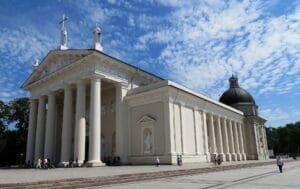
Conclusion
Vilnius is a city that combines history, architecture, nature, culture and contemporary creativity in a way that makes it particularly rewarding to explore.
The best places to visit in Vilnius, Lithuania begin with the UNESCO-listed historic center. Cathedral Square, Vilnius Cathedral, Gediminas Castle Tower and the Palace of the Grand Dukes introduce the political and cultural history of the Lithuanian capital.
The Old Town then reveals a much broader architectural story through Gothic churches, Baroque monuments, Renaissance buildings, Classical architecture, historic courtyards and narrow medieval streets.
Lithuania Travel — Official Vilnius Guide
Go Vilnius — Official Places to Visit
UNESCO — Vilnius Historic Centre
Author

Related posts

Best Places to Visit in Kathmandu
- 0
- 4,089 words
Best Places to Visit in Kathmandu , Nepal Kathmandu, the capital of Nepal, is one of South Asia’s most fascinating travel destinations....
Read out all
Best Places to Visit in Riga
- 0
- 6,005 words
Best Places to Visit in Riga , Latvia Riga, the capital of Latvia, is one of the most fascinating destinations in the...
Read out all
Best Places to Visit in Cartagena
- 0
- 4,522 words
Best Places to Visit in Cartagena , Colombia Cartagena de Indias is a historic Caribbean city on Colombia’s northern coast and one...
Read out all
Best Places to Visit in Kaohsiung
- 0
- 5,420 words
Best Places to Visit in Kaohsiung , Taiwan Kaohsiung is one of Taiwan’s most fascinating travel destinations, combining the energy of a...
Read out all
Best Places to Visit in Macau
- 0
- 5,725 words
Best Places to Visit in Macau , China Macau, also written as Macao, is one of the most distinctive destinations in southern...
Read out all
Best Places to Visit in Kyoto
- 0
- 5,452 words
Best Places to Visit in Kyoto , Japan Kyoto is a city where Japan’s past and present exist side by side. Modern...
Read out all