
Best Places to Visit in Cartagena , Colombia
Cartagena de Indias is a historic Caribbean city on Colombia’s northern coast and one of the country’s most internationally recognized travel destinations. The city is famous for its beautifully preserved colonial architecture, impressive stone walls, Caribbean coastline, colorful streets, tropical climate, lively cultural scene, and connection to Colombia’s Caribbean heritage.
For travelers, Cartagena provides an unusual combination of history and leisure. The Historic Center of Cartagena offers narrow streets, colonial houses, churches, plazas, museums, restaurants, cafés, and historic fortifications, while areas outside the old city provide beaches, modern hotels, shopping centers, nightlife, and access to islands and coastal excursions.
The historic center is part of a UNESCO World Heritage property that includes Cartagena’s port, fortresses, and monuments. UNESCO describes the city as possessing one of the most extensive and complete systems of military fortifications in South America.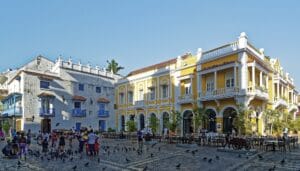
Cartagena is therefore much more than a beach destination. It is a place where visitors can learn about colonial history, African and Caribbean culture, Spanish military architecture, Colombian independence, literature, food, music, art, and contemporary urban life.
Why Cartagena Should Be on Your Colombia Travel Itinerary
Cartagena is particularly appealing because many of its most important attractions are concentrated within and around the historic center. Travelers can spend hours walking between plazas, churches, museums, cafés, restaurants, galleries, and historic buildings without needing long journeys between every attraction.
The official Colombia Travel tourism portal describes the Historic Center as a place where colonial, republican, and modern architecture coexist, while the surrounding walls and colorful balconies create one of the city’s defining visual characteristics.
Outside the historic center, Cartagena provides a completely different experience. Bocagrande offers modern high-rise buildings and a more contemporary urban atmosphere. Getsemaní combines historic streets with restaurants, music, murals, cafés, and nightlife. Causse? The Caribbean coastline offers beaches and boat excursions, while the Rosario Islands provide opportunities for swimming, snorkeling, and marine activities.
Cartagena Walled City: The Heart of the Destination
The Walled City of Cartagena, known locally as the Ciudad Amurallada, is the first place most travelers should explore. The historic center is surrounded by an impressive defensive system constructed over several centuries.
The walls were developed in stages and were completed in the late eighteenth century. Today, they remain among Cartagena’s most recognizable landmarks. Colombia Travel describes the historic center as a UNESCO-recognized heritage destination surrounded by historic fortifications and filled with colonial streets, churches, museums, plazas, and architectural treasures.
Walking through the Walled City is one of the best things to do in Cartagena because the experience is not limited to one monument. The attraction is the entire historic environment.
Visitors can wander through streets lined with brightly painted buildings, wooden balconies covered with flowers, historic churches, boutique hotels, restaurants, galleries, cafés, and small shops. Every turn can reveal another architectural detail or public square.
Walking Along the Walls of Cartagena
Walking along the historic walls is one of the essential experiences in Cartagena. From several sections of the fortifications, visitors can look across the Caribbean, historic rooftops, streets, church towers, and parts of the modern city.
The walls were designed for defense, but today they have become one of Cartagena’s most popular public spaces. Colombia Travel identifies the walls as one of the city’s major attractions and highlights their connection with the city’s long military history.
Sunset is an especially popular time to visit the walls. The western-facing sections can provide beautiful views as the sun lowers over the Caribbean horizon.
Plaza de los Coches: A Historic Entrance to Cartagena
Plaza de los Coches is one of the most recognizable squares in the Walled City. It is located near the Clock Tower and serves as one of the principal gateways into historic Cartagena.
The plaza is surrounded by colorful colonial buildings and arcades, creating a strong introduction to the architecture of the old city. Visitors can stop here before beginning a longer walking tour through the historic center.
The area also provides access to shops, restaurants, cafés, and traditional Colombian sweets. It is a natural starting point for exploring the streets beyond the Clock Tower.
Clock Tower of Cartagena
The Clock Tower, or Torre del Reloj, is one of Cartagena’s most famous landmarks. Its location at the entrance to the Walled City makes it one of the first historic structures many visitors see.
The tower is associated with Cartagena’s historic defenses and has become an iconic symbol of the city. Its distinctive architecture makes it one of the most photographed places in Cartagena.
Colombia Travel includes the Clock Tower among the defining monuments of colonial Cartagena and describes it as an important architectural landmark at the entrance to the historic city.
The surrounding area is lively throughout the day and particularly active in the evening. Travelers can photograph the tower from Plaza de los Coches before continuing toward Plaza de la Aduana and other historic attractions.
Plaza de la Aduana: Cartagena’s Historic Commercial Center
Plaza de la Aduana is another important square in the Walled City. Historically connected with trade and administration, the square reflects Cartagena’s importance as a major Caribbean port.
Today, the area is surrounded by historic architecture and is an excellent place to begin exploring the commercial and cultural history of the city.
Its large open space makes it easy to appreciate the scale of the historic buildings. Visitors can also use the square as a convenient connection between different parts of the Walled City.
Plaza de Bolívar: A Green Oasis in the Historic Center
Plaza de Bolívar is one of the most atmospheric public spaces in Cartagena. Unlike some of the larger open plazas, it contains trees and shaded areas that provide a welcome break from the Caribbean heat.
The plaza is surrounded by major historic landmarks, including the cathedral and the Palace of the Inquisition. Colombia Travel identifies Bolívar Park as one of the key attractions of the Historic Center.
The square is also associated with cultural performances and public life. Visitors can sit beneath the trees, observe local activity, photograph the surrounding architecture, and continue to nearby museums.
Cartagena Cathedral: Basilica of Saint Catherine of Alexandria
The Cathedral Basilica of Saint Catherine of Alexandria is one of the most important religious buildings in Cartagena. Construction began in the sixteenth century, and the building has become an important element of the historic cityscape.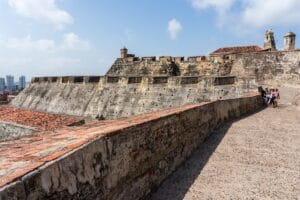
Its architecture reflects Cartagena’s Spanish colonial heritage, while the interior contains religious artwork and decorative details.
The cathedral stands near Plaza de Bolívar and can easily be incorporated into a walking tour of the Historic Center. Colombia Travel identifies it as a major architectural landmark and notes that construction began in 1577.
Travelers visiting churches should remember that these remain religious spaces. Appropriate clothing, quiet behavior, and respect for worshippers are important.
Palace of the Inquisition and Historical Museum
The Palace of the Inquisition is one of Cartagena’s most historically significant buildings. Today, it houses the Historical Museum of Cartagena de Indias.
The building provides an opportunity to learn about the Spanish Inquisition, colonial society, and the historical development of Cartagena. Colombia Travel notes that the museum was founded in 1924 and occupies an eighteenth-century colonial building.
This attraction is particularly valuable for travelers who want more historical context after walking through the streets and fortifications. Rather than viewing Cartagena simply as a beautiful colonial city, visitors can learn about the political, religious, social, and economic forces that shaped it.
Gold Museum Zenú
The Gold Museum is an important cultural attraction in Cartagena for visitors interested in Colombia’s pre-Columbian civilizations.
The museum focuses particularly on Zenú culture and features goldwork and ceramic objects. Colombia Travel describes a collection containing hundreds of gold and ceramic pieces that provide insight into pre-Columbian cultures.
The museum offers an important contrast with Cartagena’s Spanish colonial attractions. While the Walled City often emphasizes the colonial period, the Gold Museum allows visitors to explore cultures that existed in the region long before European colonization.
Church and Convent of San Pedro Claver
The Church and Convent of San Pedro Claver is one of Cartagena’s most important religious and historical landmarks.
The site is associated with Saint Peter Claver, a Jesuit priest known for his work with enslaved Africans arriving in Cartagena during the colonial era. The site therefore connects Cartagena’s religious history with the difficult and deeply important history of slavery in the Americas.
The architecture of the church and convent is also significant, and its location makes it easy to include during a walking tour of the Walled City.
Visitors interested in Cartagena’s history should approach this site not only as an architectural attraction but also as a place connected with the city’s complicated colonial past.
Church of Santo Domingo
The Church of Santo Domingo is one of Cartagena’s historic churches and one of the best-known religious buildings in the Walled City.
Its colorful exterior and historic setting beside Plaza Santo Domingo make it a popular stop for visitors. Colombia Travel identifies it as the oldest church in the city and notes its origins around the sixteenth century.
The surrounding plaza is also an attractive place to sit, enjoy a drink, observe street life, and photograph Cartagena’s colonial architecture.
Plaza Santo Domingo
Plaza Santo Domingo is one of the liveliest public spaces in Cartagena’s Historic Center.
Restaurants, cafés, street performers, galleries, and historic buildings surround the plaza, creating an energetic atmosphere throughout the day and into the evening.
The plaza is also associated with the famous Botero sculpture known as La Gorda Gertrudis. Visitors often stop to photograph the sculpture before exploring the surrounding streets.
This is a good place to experience Cartagena’s combination of history and contemporary tourism.
Getsemaní: Cartagena’s Creative and Cultural Neighborhood
Getsemaní is one of the most interesting neighborhoods in Cartagena. Historically a working-class district outside the main colonial center, it has become known for street art, music, restaurants, cafés, hostels, boutique hotels, cultural spaces, and nightlife.
UNESCO’s description of Cartagena’s heritage property specifically identifies Getsemaní as one of the historic neighborhoods within the protected area.
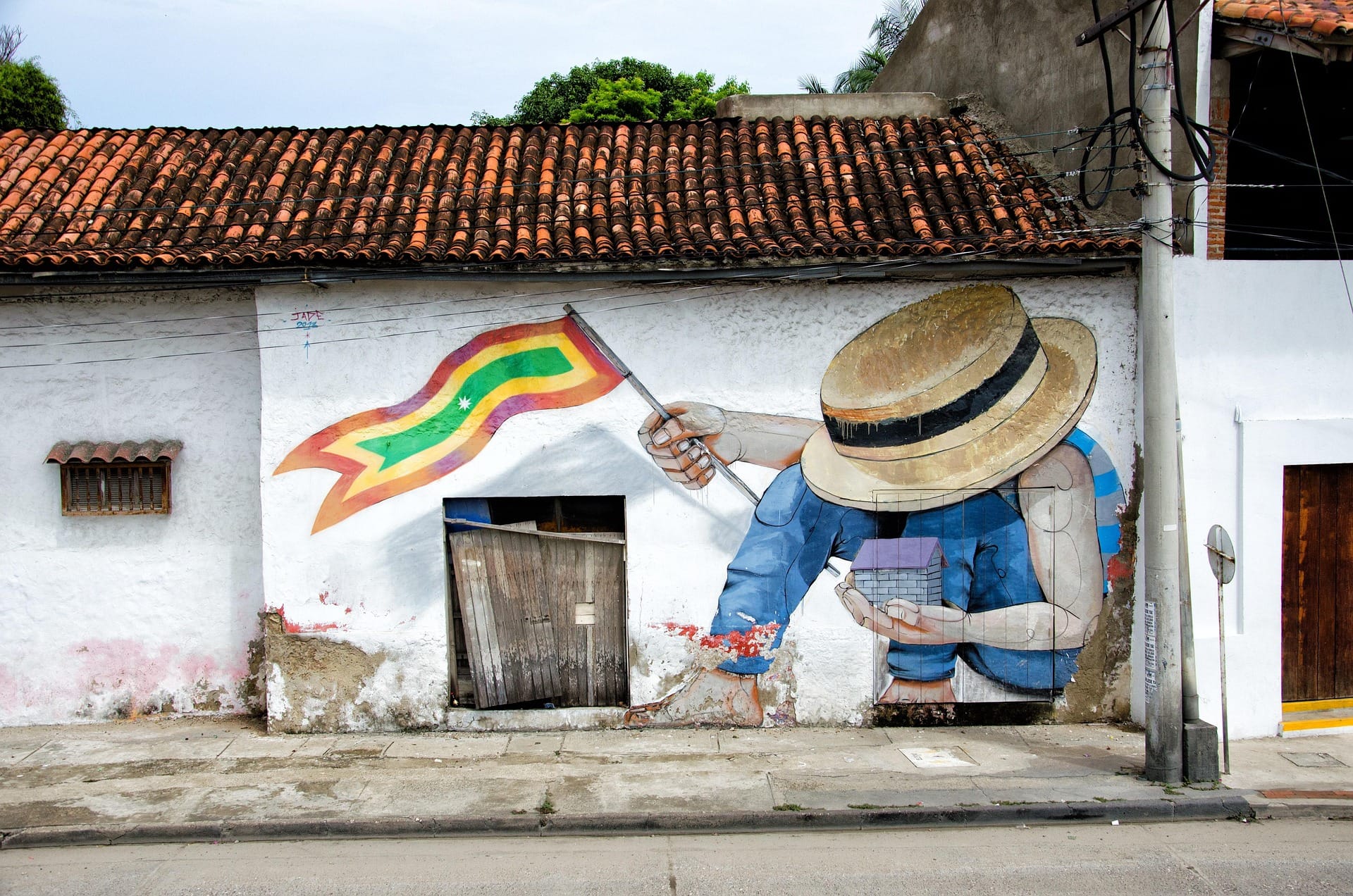
Getsemaní offers a different atmosphere from the more formal streets around the cathedral and major colonial palaces. Colorful murals, flags, plants, balconies, painted doors, and street decorations create a highly photogenic environment.
The neighborhood is particularly enjoyable for travelers who prefer walking without a strict sightseeing schedule. Instead of moving from one major monument to another, visitors can explore side streets, stop for coffee, discover restaurants, and experience Cartagena’s contemporary Caribbean culture.
Plaza de la Trinidad in Getsemaní
Plaza de la Trinidad is one of Getsemaní’s central gathering places. The square is surrounded by restaurants, bars, cafés, and historic buildings and becomes especially lively in the evening.
The plaza is a useful place to experience local social life and Cartagena’s Caribbean atmosphere. Street performers and musicians can add to the energy, although activities vary depending on the day.
Travelers should consider visiting during both daytime and evening because the atmosphere changes considerably after dark.
Getsemaní Street Art and Colorful Murals
One of the reasons Getsemaní has become so popular with photographers is its street art.
Walls and building facades feature colorful murals depicting people, animals, Caribbean themes, historical references, and contemporary artistic expressions. The artwork contributes to the neighborhood’s distinctive identity.
A walking tour through Getsemaní can therefore function as an informal outdoor art experience. Visitors should take time to explore smaller streets rather than staying only around the main plaza.
Las Bóvedas: Historic Vaults and Shopping
Las Bóvedas are historic vaulted structures located within the city walls. Originally connected with Cartagena’s military defenses, they have been transformed into shops and commercial spaces.
The architecture provides a direct connection with the city’s defensive history, while the stores offer souvenirs, crafts, clothing, artwork, and Colombian products.
Travelers looking for gifts can combine Las Bóvedas with a walk along the nearby walls.
Castillo San Felipe de Barajas
The Castillo San Felipe de Barajas is arguably the most impressive fortress in Cartagena and one of the most important attractions in Colombia.
The fortress was constructed on San Lázaro Hill to defend Cartagena from attacks and control access to the city from the mainland. Colombia Travel describes the castle as the “guardian of Cartagena” and highlights its extensive tunnels and views over the bay.
The castle is particularly impressive because of its massive walls, strategic location, tunnels, ramps, and underground passages.
Visitors should allow enough time to explore rather than simply arriving for photographs. Walking through the tunnels provides a fascinating understanding of how military engineering was used to defend the city.
The highest areas also provide panoramic views over Cartagena, including the historic center, harbor, and modern skyline.
The official Cartagena tourism portal notes that the castle is located about fifteen minutes by car from Rafael Núñez International Airport and around ten minutes from the Clock Tower under normal conditions.
Why Castillo San Felipe Is Historically Important
The fortress represents Cartagena’s importance as a strategic Caribbean port. The city’s wealth and location made it a target for competing European powers and maritime attacks.
UNESCO identifies Castillo San Felipe de Barajas as part of Cartagena’s exceptional system of military architecture from the sixteenth through eighteenth centuries.
Exploring the castle therefore provides more than a sightseeing experience. It helps visitors understand why Cartagena became such an important fortified city.
Convento de la Popa
The Convento de la Popa is located on the highest point in Cartagena and provides some of the city’s most impressive panoramic views.
From the hill, visitors can see the historic center, Caribbean coastline, modern high-rise areas, harbor facilities, and surrounding neighborhoods.
The convent itself is historically and religiously important. Its elevated location also demonstrates the strategic geography of Cartagena, where hills and waterways played important roles in defense.
Because the site is elevated, travelers should consider visiting during clear weather when visibility is good.
Bocagrande: Modern Cartagena
Bocagrande is the modern face of Cartagena. The area is characterized by high-rise hotels and apartments, shopping centers, restaurants, cafés, and a long urban beachfront.
The neighborhood provides a sharp contrast with the colonial Walled City. Travelers can move from centuries-old architecture to modern Caribbean urban development within a short distance.
Bocagrande is particularly popular with visitors who prefer modern hotels, convenient shopping, restaurants, and a more contemporary atmosphere.
Bocagrande Beach
Bocagrande Beach offers an accessible coastal experience close to the modern city.
The beach is lined by the urban skyline, creating a distinctive combination of sand, Caribbean water, and high-rise buildings.
Although travelers looking for quieter tropical beaches may prefer the islands or more remote coastal locations, Bocagrande is convenient for visitors staying in the modern part of Cartagena.
It is particularly useful for travelers who want to combine beach time with shopping and city sightseeing without traveling far from their accommodation.
Castillogrande
Castillogrande is another modern coastal district near Bocagrande. It offers waterfront views, residential architecture, restaurants, and access to beaches.
The area tends to feel more residential and less concentrated than central Bocagrande. It can be a pleasant location for walking along the coast and watching the sunset.
Travelers staying in this area can easily reach the historic center by taxi or other local transportation.
Rosario Islands
The Rosario Islands are among the most popular day-trip destinations from Cartagena.
The archipelago is located in the Caribbean Sea and is known for tropical waters, beaches, marine environments, snorkeling, diving, and boat excursions.
A trip to the Rosario Islands provides a major contrast with Cartagena’s historic architecture. Instead of stone walls and colonial buildings, travelers encounter turquoise water, coral environments, islands, and marine activities.
Because conditions can vary, travelers should select reputable tour operators, confirm what is included in the price, and understand transportation arrangements before departing.
A day trip may be sufficient for visitors with limited time, while travelers seeking relaxation may prefer an overnight island stay.
Isla Grande
Isla Grande is one of the larger and more visited islands in the Rosario archipelago.
The island offers beaches, accommodation, restaurants, water activities, and opportunities to experience a slower Caribbean lifestyle.
Travelers who want to escape the city for a night or two may find an island stay more relaxing than returning to Cartagena after a day trip.
The experience is especially suitable for couples and travelers who enjoy beaches and marine activities.
Playa Blanca on Barú
Playa Blanca is one of the best-known beach destinations near Cartagena. Located on Barú, it is famous for white sand and Caribbean waters.
The beach has historically attracted large numbers of visitors, particularly day-trippers. Travelers should therefore consider timing carefully if they prefer a quieter beach experience.
Playa Blanca can be visited as a day trip from Cartagena, although travelers seeking a more relaxed experience may prefer visiting outside the busiest periods or staying overnight in suitable accommodation.
Barú Peninsula
The Barú area offers more than Playa Blanca. The peninsula contains beaches, coastal communities, restaurants, accommodation, and access to marine excursions.
Travelers interested in beaches can combine Barú with other nearby attractions depending on available transportation.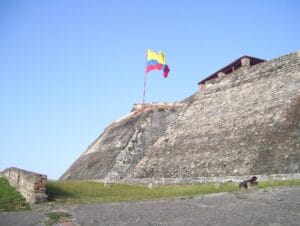
The area is particularly attractive for travelers who want to spend more time beside the Caribbean rather than focusing entirely on Cartagena’s historic center.
San Fernando de Bocachica Fortress
The Bocachica area contains historic fortifications associated with Cartagena’s defensive system.
San Fernando de Bocachica is particularly interesting for travelers who want to explore Cartagena’s military history beyond the famous San Felipe Castle.
Its location near the entrance to the bay demonstrates how Cartagena’s defenses extended beyond the walls of the city itself.
Visitors should plan transportation carefully because reaching these historic sites requires more organization than visiting attractions within the Walled City.
Cartagena’s Caribbean Food Culture
Cartagena is an excellent destination for travelers interested in Colombian Caribbean cuisine.
The city’s food culture combines Indigenous, African, Spanish, Caribbean, and broader Colombian influences. Seafood is naturally important because of the city’s coastal location.
Visitors can encounter dishes featuring fish, shrimp, crab, coconut rice, plantains, cassava, corn, tropical fruit, and Caribbean spices.
Street food is also an important part of the experience. Travelers may find arepas, fried snacks, fruit drinks, grilled foods, sweets, and other Colombian specialties throughout the city.
Traditional Cartagena Sweets
Cartagena is known for traditional Caribbean sweets, particularly those sold around historic areas such as the Portal of Sweets.
Colombia Travel specifically identifies the Portal of Sweets as a place where traditional sweets made from Caribbean fruits and ingredients can be discovered.
Visitors can try coconut-based sweets, fruit preparations, caramelized treats, and other traditional products.
These sweets also make practical souvenirs for travelers who want to bring home a taste of Colombia.
Caribbean Seafood in Cartagena
Seafood is one of the most obvious culinary themes in Cartagena.
Visitors can find fish, shrimp, crab, ceviche, grilled seafood, coconut-based preparations, and other coastal dishes.
Ceviche is especially popular in Cartagena, although preparation varies from restaurant to restaurant. Travelers should choose reputable establishments with good food-handling practices.
The combination of fresh seafood, tropical ingredients, and Caribbean flavors makes dining one of the essential experiences of Cartagena travel.
Cartagena for Couples
Cartagena is particularly popular among couples because of its architecture, warm evenings, sunsets, restaurants, boutique hotels, and Caribbean atmosphere.
Couples can walk along the historic walls at sunset, explore Getsemaní, enjoy dinner in a colonial courtyard, take a boat trip, or spend a day on the islands.
The historic center is particularly romantic after dark when many buildings and plazas are illuminated.
Cartagena for Families
Families can enjoy a combination of history, beaches, museums, boat excursions, and cultural attractions.
Younger children may enjoy beaches and boat trips, while older children can find the tunnels of San Felipe Castle and the colorful streets of Getsemaní especially interesting.
Families should plan outdoor sightseeing around the heat and include regular breaks, especially during the hottest parts of the day.
Cartagena for History Lovers
History enthusiasts can spend several days exploring Cartagena without running out of attractions.
The Walled City, city walls, San Felipe Castle, churches, Palace of the Inquisition, Gold Museum, San Pedro Claver, Convento de la Popa, and Bocachica fortifications all provide different perspectives on Cartagena’s past.
UNESCO’s World Heritage designation reflects the importance of the city’s fortifications and historic urban environment.
Cartagena for Beach Lovers
Beach lovers have several options, ranging from convenient urban beaches in Bocagrande to island excursions and beaches around Barú.
Travelers should decide whether they want convenience or a more tropical escape. Bocagrande is easy to reach from modern hotels, while Rosario and Barú require additional transportation.
For marine activities such as snorkeling or diving, visitors should use reputable operators and ask about equipment, safety procedures, weather conditions, and return transportation.
Cartagena for Photographers
Cartagena is one of Colombia’s most photogenic destinations.
The Walled City offers colorful colonial buildings, balconies, churches, plazas, stone walls, and narrow streets. Getsemaní adds murals, flags, painted houses, and street scenes.
San Felipe provides panoramic city views, while Cijin? Cartagena’s coastline and island destinations offer completely different photographic environments.
The best light is generally found around sunrise and sunset, while midday can create strong shadows and intense highlights.
Best Time to Visit Cartagena
Cartagena has a tropical Caribbean climate, so travelers should expect warm and humid conditions.
The city can be visited throughout the year, but weather patterns can influence beach days, boat excursions, and outdoor sightseeing.
Travelers should check weather conditions before booking island excursions because sea conditions can affect boat schedules and comfort.
The hottest parts of the day are better suited to museums, restaurants, shopping, or hotel breaks, while early morning and late afternoon are ideal for walking.
How Many Days Do You Need in Cartagena?
A three-day Cartagena itinerary can cover many of the city’s major attractions.
A first day can focus on the Walled City and its plazas, churches, museums, and walls. A second day can include San Felipe Castle, Getsemaní, and additional historic attractions. A third day can be dedicated to a beach or island excursion.
Travelers with four or five days can explore more slowly and add Rosario Islands, Barú, Convento de la Popa, Bocagrande, museums, and additional neighborhoods.
Those who want to combine Cartagena with broader Caribbean travel may stay longer and use the city as a base for regional exploration.
Three-Day Cartagena Itinerary
Day One: Explore the Walled City
Start at the Clock Tower and walk through Plaza de los Coches, Plaza de la Aduana, Plaza Bolívar, the cathedral area, the Gold Museum, and the Palace of the Inquisition.
Continue toward San Pedro Claver and Plaza Santo Domingo before exploring smaller streets.
In the late afternoon, walk along the city walls and stay for sunset.
Finish the evening with dinner in the historic center or Getsemaní.
Day Two: San Felipe and Getsemaní
Begin the morning at Castillo San Felipe de Barajas. Explore the tunnels, fortifications, and viewpoints.
Return to the historic center for lunch before spending the afternoon exploring Getsemaní.
Visit Plaza de la Trinidad, photograph the murals, explore local cafés, and enjoy Caribbean food.
Spend the evening in Getsemaní or return to the Walled City for dinner.
Day Three: Caribbean Escape
Use the third day for a boat trip to the Rosario Islands, Isla Grande, or Barú and Playa Blanca.
Spend the day swimming, relaxing, snorkeling, or enjoying the Caribbean environment.
Return to Cartagena in the evening or stay overnight if your itinerary allows.
Five-Day Cartagena Itinerary
First Two Days: Historic Cartagena
Spend the first two days exploring the Walled City, city walls, churches, museums, plazas, Getsemaní, and San Felipe Castle.
Third Day: Rosario Islands
Take a full-day trip to the Rosario Islands for beaches and marine activities.
Fourth Day: Barú and Beach Time
Spend another day enjoying the coast or choose Barú for a more relaxed beach experience.
Fifth Day: Culture and Local Neighborhoods
Use the final day for attractions you missed, such as Convento de la Popa, museums, shopping, local restaurants, or additional exploration of Getsemaní and Bocagrande.
Getting Around Cartagena
Walking is one of the best ways to experience the Walled City and Getsemaní because many streets and attractions are close together.
For longer journeys, taxis and other local transportation options can be useful. Travelers should confirm fares and use reputable transportation services.
Boat transportation is necessary for many island excursions. Travelers should confirm departure points, schedules, return arrangements, and what is included before paying for an excursion.
Staying in the Walled City
Staying inside the Walled City provides immediate access to historic attractions, restaurants, plazas, cafés, and nightlife.
Boutique hotels and restored colonial buildings are particularly popular in this area.
The main advantage is convenience. Travelers can leave their accommodation and immediately begin exploring historic Cartagena.
Staying in Getsemaní
Getsemaní is a good choice for travelers who want a lively cultural atmosphere.
The neighborhood has restaurants, cafés, bars, hostels, boutique hotels, murals, and nightlife.
It is also within walking distance of many Walled City attractions.
Staying in Bocagrande
Bocagrande is more modern and offers many high-rise hotels and apartments, restaurants, shopping centers, and beach access.
It is particularly convenient for travelers who prefer modern accommodation and want easy access to the urban beachfront.
Cartagena Travel Safety Awareness
Cartagena is a major international tourism destination, but visitors should still use normal urban travel precautions.
Travelers should keep valuables secure, avoid displaying expensive electronics unnecessarily, remain aware of their surroundings, and use reputable transportation.
For nightlife and excursions, visitors should stay with trusted companions and make transportation arrangements in advance.
When visiting beaches or islands, travelers should use reputable operators and follow local safety instructions.
Respecting Cartagena’s Culture
Cartagena is a living city rather than simply an outdoor museum.
Visitors should respect residents, religious sites, historic buildings, local businesses, and cultural traditions.
Photography should be approached respectfully, especially when photographing people. If a person is being photographed closely, asking permission is appropriate.
Travelers should also avoid damaging historic walls, buildings, sculptures, and archaeological objects.
Conclusion
Cartagena is a destination where history, architecture, Caribbean culture, beaches, food, music, and modern tourism come together.
The Walled City of Cartagena should be the starting point for almost every first-time visitor because it contains the largest concentration of historic monuments, plazas, churches, museums, colonial buildings, restaurants, and fortifications.
The Cartagena city walls offer a different perspective on the historic center and are especially memorable around sunset. Castillo San Felipe de Barajas provides a deeper understanding of Cartagena’s military history and offers panoramic views of the city.
Colombia Travel — Official Tourism Portal
For information about Cartagena’s World Heritage designation and the historical importance of its fortifications, travelers can consult UNESCO.
UNESCO World Heritage Centre — Cartagena
The official Cartagena tourism portal also provides information about attractions including the Walled City, Clock Tower, San Felipe Castle, beaches, Las Bóvedas, Casa Gabo, and other attractions.
Author

Related posts
Best Places to Visit in Kaohsiung
- 0
- 5,420 words
Best Places to Visit in Kaohsiung , Taiwan Kaohsiung is one of Taiwan’s most fascinating travel destinations, combining the energy of a...
Read out all
Best Places to Visit in Macau
- 0
- 5,725 words
Best Places to Visit in Macau , China Macau, also written as Macao, is one of the most distinctive destinations in southern...
Read out all
Best Places to Visit in Kyoto
- 0
- 5,452 words
Best Places to Visit in Kyoto , Japan Kyoto is a city where Japan’s past and present exist side by side. Modern...
Read out all
Best Places to Visit in Langkawi
- 0
- 7,143 words
Best Places to Visit in Langkawi , Malaysia Langkawi is one of Malaysia’s most attractive island destinations and a popular choice for...
Read out all
Best Places to Visit in South America
- 0
- 6,118 words
Best Places to Visit in South America South America is a continent of extraordinary contrasts. In one region, travelers can explore ancient...
Read out all
Best Places to Visit in San Juan
- 0
- 4,996 words
Best Places to Visit in San Juan , Puerto Rico San Juan, the capital of Puerto Rico, is one of the most...
Read out all