

What Are the Best Things to Do in Athens?

Discovering the Historic Beauty of Athens
Athens is one of the oldest cities in the world and the birthplace of democracy, philosophy, theater, and many foundations of Western civilization. As the capital of Greece, Athens combines ancient history with modern urban culture, attracting millions of visitors every year who come to experience its archaeological treasures, Mediterranean lifestyle, food culture, museums, and vibrant neighborhoods.
Located near the Aegean Sea, Athens offers a unique combination of historical landmarks and contemporary city life. Ancient ruins stand beside modern cafés, rooftop restaurants, shopping streets, and artistic districts, creating a fascinating atmosphere unlike any other destination in Europe.
According to Visit Greece Official Tourism Website, Athens remains one of Europe’s most important cultural and historical travel destinations because of its extraordinary archaeological heritage and Mediterranean lifestyle.
Visiting the Acropolis of Athens
The Acropolis is the most famous landmark in Athens and one of the world’s most significant archaeological sites. Rising above the city on a rocky hill, the Acropolis symbolizes ancient Greek civilization and architectural achievement.
The site contains several historical monuments, including the Parthenon, Erechtheion, Temple of Athena Nike, and Propylaea entrance gate.
The Parthenon remains the centerpiece of the Acropolis and was dedicated to Athena, the goddess of wisdom and protector of Athens. Built during the fifth century BCE, the structure represents one of humanity’s greatest architectural accomplishments.
Walking through the Acropolis allows visitors to experience the foundations of classical Greek culture, philosophy, politics, and art.
Exploring the Acropolis Museum
The Acropolis Museum is one of Athens’ finest cultural institutions and houses artifacts discovered around the Acropolis area.
The modern museum displays sculptures, statues, carvings, pottery, and architectural fragments from ancient Greece in beautifully designed exhibition spaces.
Visitors can learn about Greek mythology, religion, architecture, and everyday life through carefully preserved historical objects.
The museum’s glass floors reveal archaeological excavations beneath the building, adding another fascinating historical dimension to the experience.
Many historians and travelers consider the Acropolis Museum essential for understanding the significance of Athens and ancient Greek civilization.
Walking Through Plaka Neighborhood
Plaka is Athens’ oldest neighborhood and one of the city’s most charming districts. Located beneath the Acropolis, the area contains narrow streets, colorful houses, local tavernas, souvenir shops, cafés, and historical churches.
Walking through Plaka feels like entering a traditional Mediterranean village despite being located in the center of a busy capital city.
Visitors enjoy exploring hidden alleyways, enjoying Greek food, shopping for handmade products, and relaxing in scenic courtyards.
The neighborhood becomes especially beautiful during evening hours when lights illuminate the streets and restaurants fill with music and conversation.
Plaka remains one of the best places in Athens for experiencing local atmosphere and traditional Greek culture.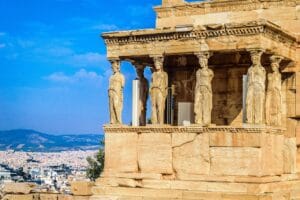
Discovering the Ancient Agora
he Ancient Agora of Athens is one of the most historically important archaeological sites in the world. Located beneath the Acropolis in the heart of Athens, the Agora served as the political, commercial, cultural, and social center of ancient Greek civilization for many centuries. The word “Agora” means gathering place or marketplace, but the site represented much more than a shopping district. It was the center of democracy, philosophy, trade, religion, education, and public discussion in ancient Athens.
Today, visitors walking through the Ancient Agora can experience the foundations of Western civilization while exploring ruins, temples, public buildings, monuments, and historical pathways once used by philosophers, politicians, merchants, and ordinary citizens thousands of years ago.
The Historical Importance of the Ancient Agora
The Ancient Agora became the heart of Athenian public life during the sixth century BCE and continued functioning for hundreds of years. Citizens gathered there to debate politics, conduct business, worship gods, attend festivals, and discuss philosophy.
The Agora played a central role in the development of democracy, which emerged in Athens during ancient times. Political leaders announced laws, public assemblies gathered, and important decisions affecting the city-state were discussed in this area.
The site also became associated with famous philosophers such as Socrates, Plato, and Aristotle. Socrates reportedly spent much of his time walking through the Agora asking questions, debating ideas, and teaching students.
Because of this intellectual and political activity, historians often consider the Ancient Agora one of the birthplaces of democratic government and Western philosophy.
Exploring the Temple of Hephaestus
One of the most remarkable structures inside the Ancient Agora is the Temple of Hephaestus. Dedicated to Hephaestus, the Greek god of metalworking and craftsmanship, the temple remains one of the best-preserved ancient Greek temples in the world.
Built during the fifth century BCE, the temple reflects classical Doric architecture with symmetrical columns, marble construction, and detailed artistic carvings. Unlike many ancient structures damaged by wars, earthquakes, and weather, the Temple of Hephaestus survived in excellent condition because it was later converted into a Christian church during the Byzantine period.
Visitors walking around the temple can admire its nearly complete structure while imagining how ancient Athenians once worshipped and gathered there.
The elevated location of the temple also provides beautiful views of the Agora and surrounding parts of Athens.
The Stoa of Attalos and Ancient Commerce
The Stoa of Attalos was originally a large covered walkway and commercial center where merchants sold goods and citizens gathered for business and social interaction.
The structure was reconstructed during the twentieth century and now houses the Museum of the Ancient Agora. Visitors exploring the museum can view sculptures, pottery, inscriptions, coins, tools, and everyday objects discovered during archaeological excavations.
The Stoa helps modern travelers understand how the Agora functioned as a busy economic center where trade and public interaction shaped daily life.
Walking through the reconstructed building provides insight into the architecture and urban planning of ancient Athens.
According to The Hellenic Ministry of Culture, the Agora remains one of Greece’s most significant archaeological and educational sites.
Political Life in the Agora
The Ancient Agora was deeply connected to the political system of Athens. Citizens gathered in nearby public spaces to discuss laws, elections, military decisions, and civic responsibilities.
Ancient Athens developed one of the earliest forms of democracy, where male citizens participated directly in political decision-making rather than electing representatives.
Public speeches, debates, announcements, and legal discussions frequently took place around the Agora.
Government officials, judges, and politicians regularly moved through the area while interacting with the population.
The Agora therefore became not only a marketplace but also the center of political identity and civic life in Athens.
Philosophy and Intellectual Culture
The Agora is closely associated with ancient Greek philosophy and intellectual history.
Socrates, one of history’s most influential philosophers, spent much of his time walking through the Agora engaging citizens in conversation and asking philosophical questions about morality, truth, justice, and knowledge.
His teaching style encouraged critical thinking and open discussion, influencing future philosophers including Plato and Aristotle.
The intellectual traditions born in Athens continue shaping modern philosophy, science, education, and political thought today.
Visitors exploring the Agora often imagine the conversations and debates that once took place in this extraordinary historical environment.
Religious Monuments and Sacred Areas
Religion played a major role in life within the Ancient Agora. Numerous temples, shrines, altars, and statues honored Greek gods and heroes.
Athenians believed divine protection and religious rituals were essential for prosperity and social stability.
Ceremonies, sacrifices, and festivals regularly occurred in and around the Agora.
The combination of politics, religion, commerce, and philosophy within one public space demonstrates how interconnected ancient Greek society was.
Many archaeological remains throughout the Agora still reveal traces of religious devotion and sacred architecture.
Daily Life in Ancient Athens
The Agora also served as the center of ordinary daily life.
Citizens visited the marketplace to buy food, clothing, pottery, tools, and imported goods from across the Mediterranean world.
Artisans, merchants, teachers, politicians, and travelers interacted constantly within the busy environment.
Street performances, festivals, and public celebrations added energy to the area.
The Agora reflected the diversity and activity of ancient urban civilization, functioning similarly to modern city centers where commerce, culture, and politics intersect.
Walking through the ruins today helps visitors understand the rhythms of everyday life in classical Athens.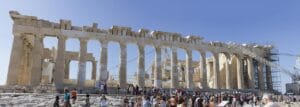
Archaeological Discoveries and Preservation
Extensive archaeological excavations began during the nineteenth and twentieth centuries, uncovering thousands of artifacts and structures buried beneath modern Athens.
Archaeologists discovered roads, drainage systems, homes, public buildings, inscriptions, sculptures, and countless objects revealing details about ancient society.
Preservation efforts continue protecting the site from environmental damage and urban expansion.
The Ancient Agora now serves as both an archaeological research center and a major tourist attraction welcoming visitors from around the world.
Why the Ancient Agora Matters Today
The Ancient Agora remains important because it represents the origins of democracy, philosophy, public debate, and civic participation.
Modern political systems, educational traditions, and intellectual movements continue reflecting ideas first explored in ancient Athens.
The site reminds visitors of humanity’s long history of seeking knowledge, justice, freedom, and social organization.
For students, historians, travelers, and archaeologists, the Agora provides direct connection to one of the most influential civilizations in world history.
The preservation of the site also helps future generations understand the achievements and challenges of ancient societies.
Visiting the Ancient Agora Today
Modern visitors can easily explore the Ancient Agora while traveling through Athens.
Walking paths guide tourists past temples, ruins, monuments, gardens, and museum exhibits explaining the site’s history.
Many travelers combine visits to the Agora with nearby attractions such as the Acropolis, Plaka neighborhood, and Acropolis Museum.
Early morning or late afternoon visits are especially popular because of cooler temperatures and softer lighting for photography.
The surrounding scenery, including views of the Acropolis rising above the ruins, creates unforgettable historical atmosphere.
Experiencing Greek Food and Cuisine
Athens offers one of Europe’s most enjoyable culinary experiences. Greek cuisine combines Mediterranean ingredients such as olive oil, seafood, vegetables, cheese, herbs, grilled meats, and fresh bread.
Popular dishes include souvlaki, moussaka, tzatziki, Greek salad, gyros, seafood, and baklava desserts.
Traditional tavernas throughout Athens provide authentic dining experiences with local music, warm hospitality, and fresh ingredients.
Athens also contains modern restaurants blending traditional Greek flavors with international culinary creativity.
According to Greek National Tourism Organization, Greek cuisine reflects centuries of Mediterranean culture and regional traditions.
Visiting Syntagma Square and Watching the Guard Ceremony
Syntagma Square is the central square of modern Athens and serves as an important political and social gathering place.
The Greek Parliament building stands beside the square, and visitors gather regularly to watch the ceremonial changing of the guard performed by the Evzones soldiers.
The guards wear traditional uniforms inspired by historical Greek military clothing and perform synchronized movements during the ceremony.
The event attracts tourists interested in Greek culture, national traditions, and photography.
Syntagma Square also connects many shopping streets, hotels, restaurants, and transportation systems throughout Athens.
Climbing Lycabettus Hill
Lycabettus Hill provides some of the best panoramic views in Athens.
Visitors can climb the hill by foot or use the funicular railway to reach the summit overlooking the city, the Acropolis, and the Aegean coastline.
The hill becomes especially popular during sunset when Athens glows beneath golden Mediterranean light.
At the top, visitors find a small white chapel, restaurants, and observation areas ideal for photography.
Many travelers describe Lycabettus Hill as one of the most romantic and scenic locations in Athens.
Exploring Monastiraki Market
Monastiraki is one of Athens’ liveliest neighborhoods and famous for shopping, antiques, local crafts, and street culture.
The area combines historical ruins with busy commercial streets filled with shops, cafés, and restaurants.
Visitors explore markets selling jewelry, handmade products, clothing, art, souvenirs, and vintage items.
Street performers and musicians create energetic atmosphere throughout the district.
Monastiraki also provides excellent views of the Acropolis rising above the city.
Visiting the National Archaeological Museum
The National Archaeological Museum is Greece’s largest archaeological museum and contains one of the world’s greatest collections of ancient Greek art and artifacts.
The museum displays sculptures, gold jewelry, pottery, frescoes, weapons, and historical treasures from different periods of Greek civilization.
Visitors interested in mythology, archaeology, and classical history often spend several hours exploring its galleries.
The museum provides extraordinary insight into the artistic and intellectual achievements of ancient Greece.
Historians consider the institution one of Europe’s most important archaeological museums.
Enjoying Athens Nightlife
Athens offers vibrant nightlife combining rooftop bars, music venues, tavernas, beach clubs, and modern entertainment districts.
Areas such as Psiri, Gazi, and Kolonaki attract both locals and tourists looking for evening entertainment.
Rooftop restaurants with Acropolis views remain especially popular because they combine dining, cocktails, and spectacular scenery.
Greek music, dancing, and Mediterranean hospitality create lively social environments throughout the city.
Athens nightlife reflects both traditional culture and modern urban energy.
Visiting the Temple of Olympian Zeus
The Temple of Olympian Zeus was once one of the largest temples in the ancient world.
Although only several massive columns remain today, the site still demonstrates the scale and ambition of ancient Greek architecture.
Construction began centuries before completion and reflected Athens’ importance during classical antiquity.
Visitors can walk among towering marble columns while viewing the Acropolis in the background.
The site remains one of Athens’ most important archaeological landmarks.
Discovering Greek Culture and Philosophy
Athens is globally recognized as the birthplace of philosophy, democracy, literature, and theater.
Thinkers such as Socrates, Plato, and Aristotle shaped intellectual traditions that continue influencing education, politics, ethics, and science worldwide.
Many visitors come to Athens not only for sightseeing but also to experience the historical origins of Western thought and civilization.
The city’s museums, ruins, theaters, and monuments preserve these extraordinary cultural legacies.
Athens continues serving as one of humanity’s most important historical and intellectual centers.
Taking a Day Trip to Cape Sounion
Many travelers visiting Athens also explore Cape Sounion, located along the scenic Athenian Riviera.
The area is famous for the Temple of Poseidon overlooking the Aegean Sea from dramatic cliffs.
Sunset views at Cape Sounion are considered among the most beautiful in Greece.
The drive along the coastline also offers beaches, seaside villages, and Mediterranean scenery.
Ancient mythology, history, and natural beauty combine perfectly at this remarkable destination.
Why Athens Is One of Europe’s Most Important Cities
Athens stands apart from other European capitals because of its extraordinary historical significance and cultural influence.
The city shaped philosophy, democracy, politics, architecture, mathematics, literature, and art in ways that continue impacting modern civilization.
At the same time, Athens remains vibrant and modern with energetic nightlife, delicious cuisine, shopping districts, and Mediterranean hospitality.
Travelers interested in history, archaeology, food, photography, architecture, and culture often rank Athens among the world’s greatest destinations.
Conclusion
Athens offers unforgettable experiences combining ancient civilization with modern Mediterranean life. From the Acropolis and Parthenon to Plaka, Greek cuisine, museums, markets, and panoramic viewpoints, the city provides extraordinary opportunities for exploration and cultural discovery.
Visitors can experience the origins of Western civilization while also enjoying vibrant neighborhoods, traditional food, nightlife, and scenic landscapes.
Whether exploring ancient ruins, learning about philosophy, relaxing in cafés, or admiring sunset views over the Acropolis, Athens delivers timeless beauty, rich history, and unforgettable memories.
Author

Related posts
Best Places to Visit in Mont-Saint-Michel
- 0
- 4,964 words
Best Places to Visit in Mont-Saint-Michel , France Mont-Saint-Michel is one of the most extraordinary destinations in France and one of the...
Read out all
UNGA
- 0
- 5,649 words
UNGA (United Nations General Assembly ) The United Nations General Assembly, commonly known as the UN General Assembly or UNGA, is one...
Read out all
Best Places to Visit in Kathmandu
- 0
- 4,089 words
Best Places to Visit in Kathmandu , Nepal Kathmandu, the capital of Nepal, is one of South Asia’s most fascinating travel destinations....
Read out all
Best Places to Visit in Vilnius
- 0
- 5,246 words
Best Places to Visit in Vilnius , Lithuania Vilnius, the capital of Lithuania, is one of the most fascinating destinations in the...
Read out all
Best Places to Visit in Riga
- 0
- 6,005 words
Best Places to Visit in Riga , Latvia Riga, the capital of Latvia, is one of the most fascinating destinations in the...
Read out all
Best Places to Visit in Cartagena
- 0
- 4,522 words
Best Places to Visit in Cartagena , Colombia Cartagena de Indias is a historic Caribbean city on Colombia’s northern coast and one...
Read out all