
Gondwana Rainforests

Gondwana Rainforests – Most important natural places on Earth
The Australian Gondwana Rainforests represent some of the oldest and most significant natural places on Earth. They span across a large area in eastern Australia, majorly shared between the states of New South Wales and Queensland. Though most people think of them as “rainforests,” they are actually a huge aggregation of national parks, reserves, mountains, deep valleys, waterfalls, and green forests that have survived for millions of years. These rainforests are special in the sense that they represent direct living remnants of the ancient supercontinent called Gondwana, which existed more than 180 million years ago. When people walk inside these forests, they are not just visiting nature; they are stepping into a place that has existed since the age of dinosaurs.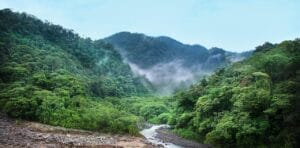
🏞️ Formation of Today’s Gondwana Rainforests
Today, the Gondwana Rainforests stretch over 366,000 hectares and span across 50 different protected areas. They include dramatic landscapes comprising:
- Steep cliffs, Deep river valleys, Tall mountains, lava plateaus, Dense rainforests, Waterfalls and rivers, Volcanic craters.
Volcanoes Played a Major Role
Millions of years ago, large volcanoes erupted along eastern Australia, creating rich, fertile soils and shaping the geological area into rounded plateaus and sharp ranges. For instance, the well-known Tweed Volcano formed the stunning caldera that now comprises parks such as Lamington National Park and Springbrook National Park.
Climate Helped Too
Eastern Australia does indeed receive much rain due to warm winds that come from the ocean. With such a climate, these areas remained predominantly wet; thus, their forests were never truly gone. They might have receded during periods of dry spells but always returned. This enabled ancient plant species to continue living in these forests.
Natural Protection Through Isolation
Many of these forests were thus naturally protected, being in deep valleys and high mountains. Certain areas were so inaccessible that it took humans thousands of years to reach. That kind of isolation helped protect rare species and sensitive ecosystems.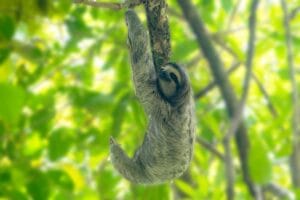
🌿 Types of Rainforests Found Here
Although people often think of the region as being one type of rainforest, in reality there are many types. Each has its own plants, animals, and climate.
Subtropical Rainforest
- Found in lower areas with warm temperatures, Characterized by large fig trees, vines, ferns, and dense undergrowth.
Warm Temperate Rainforest
- Found in cooler mountain regions, Has a simpler structure, with fewer species, but beautiful tall trees.
Cool Temperate Rainforest
- Present at high altitudes, Contains old Antarctic trees, such as the beech family: Nothofagus
Dry Rainforest
- Grows in areas that receive less rainfall. The plants here are more resistant to drought.
Araucarian Rainforest
- Contains ancient pine-like species such as Hoop Pine. Very important for understanding prehistoric life. These types of rainforests show how climate, altitude, and soil all work together to create a complicated and diverse environment.
🏆 World Heritage Significance
UNESCO listed the Gondwana Rainforests because they demonstrate two major things:
Outstanding Record of Evolution
These forests represent the evolution of plant and animal life from prehistoric times to the present. Many species here are “living fossils,” and their presence helps scientists understand climate change, geology, and biological history.
Biological Diversity
This area includes the most extensive part of the world’s surviving Antarctic beech forests and has a very high number of threatened species.
Natural Beauty
Sceneries comprise waterfalls tumbling into the deep valleys, cloud-shrouded mountain peaks, volcanic cliffs, and green forests stretching over wide expanses.
🌦️ Climate and Weather Conditions
The climate changes with the altitude:
- Lowlands: Warm, humid, plenty of rain; Mid-elevation areas: Cooler, misty, green all year; High mountains: Cold winters, regular fog, lush forests. Because of this range, the rainforests support many different ecosystems.
🗺️ National Parks Included in the Gondwana Rainforests
More than 50 protected areas form part of the Gondwana Rainforests. Some key ones include:
Queensland
- Lamington National Park, Springbrook National Park, Tamborine National Park, Main Range National Park, Mount Barney National Park
New South Wales
- Nightcap National Park, Border Ranges National Park, Washpool National Park
Barrington Tops National Park
- Dorrigo National Park, Oxley Wild Rivers National Park. Each of these parks has different features: some of them have waterfalls, others have huge mountains, while others have quiet deep forests.
The Birth of Gondwana
The story starts approximately 600 million years ago when the supercontinent Gondwana began to take shape. This Gondwana included what is today Australia, Antarctica, Africa, South America, the Indian subcontinent, and the Arabian Peninsula. These huge land masses moved slowly together due to the shifting of Earth’s tectonic plates. In due course, they combined into one large continent. During this early period, Australia was located much farther south than it is today. The climate was cooler, and glaciers covered parts of the land. Early plants began to grow as climates warmed. Primitive ferns, mosses, and simple vascular plants took root across the supercontinent. These early plants later evolved into some of the important species found in the Gondwana Rainforests today, such as tree ferns and species of ancient conifers. Over time, Earth’s climate fluctuated many times. There were warm periods that supported dense forests, and there were colder periods that stressed plant life. Yet, unlike many other regions of Gondwana, parts of eastern Australia remained relatively stable. These stable sections would become safe refuges for ancient plants when other parts of the world experienced dramatic climate change.
The Rise of Rainforests
About 300 million years ago, giant forests covered most of Gondwana. The forests were moist and thick, with giant ferns, early conifers, and other ancient plant species. They formed during a very wet climatic phase, and they thrived in the warm, humid atmosphere. However, after Gondwana began to break up, Australia commenced its slow drift northward. Over a period of millions of years, this movement determined the climate of the continent. Large parts of Australia became drier. Grasslands and deserts started to expand. In those dry regions, many of the ancient forests disappeared. Yet some of the rainforests survived in small pockets where moisture remained high due to mountains, volcanic soils, and reliable rainfall.
This isolation acted like a natural time capsule. The plants and animals in these regions evolved at an extremely slow pace, and many of their species retained characteristics from as far back as millions of years. Thus, the forests today retain some of the world’s oldest plant families, which include:
- Araucariaceae (including the hoop pine and bunya pine), Podocarpaceae (ancient southern conifers)
- Proteaceae (which include species related to the waratah), Tree ferns, virtually identical in appearance to their ancient ancestors. They provide a window into Earth’s biological past because the forests survived while others vanished.
Volcanic Activity and Mountain Formation
Another major factor contributing to the evolution of the Gondwana Rainforests has been ancient volcanic activity. Several volcanic events shaped those landscapes where these forests now grow.
Shield Volcanoes
Eastern Australia saw extensive volcanic activity between 23 and 3 million years ago. Some of the large shield volcanoes erupted at:
- Tweed Volcano (which formed Wollumbin/Mount Warning), Focal Peak Volcano
- These huge volcanoes produced enormous lava flows that reshaped the terrain. Over millions of years, erosion carved deep valleys, dramatic cliffs, and fertile basins from the volcanic rock.
Main Range Volcanic Plateau
These huge volcanoes produced enormous lava flows that reshaped the terrain. Over millions of years, erosion cut deep valleys, dramatic cliffs, and fertile basins out of the volcanic rock. Today, these volcanic landscapes provide an ideal habitat for lush rainforests. Soils formed from volcanic rock are very rich in fertility. Rainfall is heavy in these regions because of mountain elevation. Moist air from the Pacific Ocean rapidly cools down once it reaches the mountains, leading to heavy rain. This continuous supply of water helps maintain lush vegetation. Therefore, the Gondwana Rainforests owe their modern richness to ancient volcanic forces.
Climate Stability and Refugia
The notion of refugia is important for understanding many of the aspects of the Gondwana Rainforests. A refugium is a place where species survive during periods of environmental change: when the world got hotter, colder, or drier, most forests died out, but the mountains in eastern Australia created stable, moist areas where ancient species could continue to thrive. In these refugia, major climatic events that rainforest species survived included:
- The Ice Ages, Prolonged drought periods, the drying of most of inland Australia
The plants and animals of the Gondwana Rainforests are thus extremely ancient. Many species have undergone very little change over tens of millions of years. For instance:
- The Antarctic beech tree represents one of the oldest plant lineages on Earth.
- The clever lyrebird is one of Australia’s famous birds, thought to be of very ancient origins.
- The evolutionary origins of the marsupial frog and various rare reptiles date back to early Gondwanan wildlife. With so many ancient species remaining, this region is often called by scientists a living link to prehistoric Earth.
Separation of Australia from Antarctica
About 45 million years ago, Australia completely broke away from Antarctica. From that point on, the continent floated north toward the equator. As Australia drifted into warmer latitudes, new climates formed on the continent. Regions that had sustained expansive, cool temperate forests started to heat up. Northern Australia became tropical and central Australia gradually became desert. However, the rainforests in the eastern highlands did not disappear. The mountain habitats shielded them from overheating and drying out. That is why the Gondwana Rainforests stretch along the mountain ranges of New South Wales and Queensland.
These mountain ranges include:
- The Great Dividing Range, The Border Ranges, The Dorrigo Plateau, Main Range National Park, Lamington Plateau. Each of these ranges has remnants of the ancient Gondwanan flora.
Evolution of Plant and Animal Life
As Australia drifted north, the species within the rainforests continued to evolve. Some changed to adapt to warmer climates. Others began to develop new forms, enabling them to compete for sunlight, water, and nutrients.
Ancient Plants
It contains plants whose ancestors lived during the age of dinosaurs. An example is:
- Cycads: These are slow-growing plants resembling palms but with some very ancient reproductive cycles.
- Araucaria conifers: These trees are related to species once eaten by large dinosaurs in Gondwana.
Early Mammals
Australia’s early mammals were mainly marsupials and monotremes. Their descendants, still living in these forests, include:
- Platypus, Short-beaked echidna, Ringtail possums, Gliders, Rare quolls. These species evolved to live in dense vegetation, steep valleys, and cool mountain streams.
Bird Evolution
Bird diversity increased as the forests matured. The Gondwana Rainforests now support:
- Lyrebirds are famous for their mimicry. Albert’s lyrebird, one of Australia’s rarest birds like Green catbirds, Bowerbirds. The isolation of the forests helped these species develop unique behaviors and calls.
Geological Features Shaped by Time
The landscapes of the Gondwana Rainforests are dramatic because they have been fashioned over millions of years by periods of erosion, volcanic activity, and climatic variations. Visitors can see today:
- Deep volcanic calderas, such as the one found in Tweed Valley, High plateaus with cool climates.
- Steep escarpments dropping abruptly into river valleys. Waterfalls cascading from ancient cliffs.
- Basalt columns created by slowly cooling lava, Caves from erosion and the flow of rivers. These features make the region visually stunning and scientifically important.
World Heritage Significance
Due to its geological history, the Gondwana Rainforests meet a number of UNESCO’s World Heritage criteria. They are of importance because:
- They protect ancient species linked with the Earth’s prehistoric past. They show evidence of long geological processes
- These are the last major remnants of Gondwanan rainforest in the world. They provide key habitats for rare or endangered species. This region has now become one of Australia’s most protected natural areas and helps scientists study such various subjects as climate change, evolution, and biodiversity.
Continuous Geological Transformation
The region remains a dynamic entity today. The volcanic activity has stopped, but erosion continues to wear away cliffs, river systems cut new channels, and vegetation grows and dies in cyclical fashion. The soils are altered by the constant addition of organic matter. Moisture patterns shift slightly as climates change. New species emerge while other species become rare.
Why the Geological Story Matters
Understanding the geological story of the Gondwana Rainforests helps visitors appreciate their importance to the entire world. They’re not just very attractive to look at; they are:
- Evidence of Earth’s deep history, Homes for species that survived global extinctions
- Refugia that protected life during harsh climate periods, Living links to the supercontinent Gondwana, Natural laboratories for studying evolution.
This geological history lends special meaning to every walk, every waterfall, and every lookout point. It’s as if the visitor might feel they’re entering a world much older than human civilization.
Major Tourism Sites
Lamington National Park
Lamington National Park is one of the most famous parks within the Gondwana Rainforests. Located in Queensland’s Gold Coast hinterland, it is known for its dramatic mountain scenery, refreshing rainforest air, rich birdlife, and ancient trees. The park is divided into two main sections: Binna Burra and Green Mountains (O’Reilly’s).
Key Attractions
- Tree Top Walk : This walkway takes visitors through the rainforest canopy high above the forest floor. The walkway features several suspended bridges that gently sway. Visitors see birds gliding between branches, sunlight filtering through the leaves, and cool breezes that move the canopy.
- Moran’s Falls Lookout : A lookout overlooking a tall waterfall that drops into a deep gorge, affording wide clear views, is especially dramatic in the orange and gold glow of sunset; it provides wonderful photography possibilities.
- Coomera Gorge : This gorge is carved by water over thousands of years. Walking tracks around it pass through the dense rainforest with towering trees, vines, moss, and ferns.
Springbrook National Park
Springbrook National Park sits on an ancient volcanic plateau formed by the Tweed Volcano. This is a landscape of dramatic cliffs, pretty forests, and mighty waterfalls.
Key Attractions
- Natural Bridge : One of the iconic sites within Gondwana Rainforests, water falls by way of a hole in the rock ceiling to form a glowing cave. At night, glow-worms light up the cave walls like tiny stars.
- Purling Brook Falls : A tall, powerful waterfall that drops straight into the valley of a rainforest. The circuit track allows visitors to walk behind the waterfall for an invigorating experience.
- Best of All Lookout : True to its name, this lookout offers a wide view over the valleys and peaks of northern New South Wales. On days when the visibility is good, it’s even possible to see the Pacific Ocean.
- Twin Falls Circuit : A walking route allowing travelers to pass behind two waterfalls, cross rock bridges, and enjoy cool mountain air.
Border Ranges National Park
This park lies along the boundary of Queensland and New South Wales. The park comprises some untouched rainforest areas in Australia.
Key Attractions
- Tweed Volcano Caldera : The entire park sits on the rim of this huge ancient volcano that collapsed millions of years ago. The scale of the caldera is immense, and visitors can see steep cliffs and wide valleys formed by ancient eruptions.
- Pinnacle Lookout : This lookout provides unforgettable views over Mount Warning (Wollumbin) and the entire volcanic landscape.
- Rainforest Walks : The Border Ranges are made up of giant Antarctic beech trees, believed to be several thousands of years old. Moss covers the roots and trunks, creating a mystical atmosphere.


Dorrigo National Park
Dorrigo National Park is one of New South Wales’ most visited rainforest parks, and it is situated near the town of Dorrigo on the Waterfall Way scenic route.
Key Attractions
- Skywalk Lookout : The raised platform extends over the forest canopy where continuous green hills, deep valleys, and rolling clouds form the view.
- Crystal Shower Falls : This is actually a curtain-like waterfall which visitors can walk behind. The cave behind it feels cool and peaceful.
- Wonga Walk : A pleasant trail that passes through dense rainforest filled with ancient buttress-rooted trees, birds, and bright-green moss.
- Waterfall Way Scenic Drive : This drive connects travelers to a number of waterfalls that include Dangar Falls, Ebor Falls, and Wollomombi Falls.
Wollumbin (Mount Warning)
Wollumbin is the central remnant of the massive Tweed Volcano. Its peak rises abruptly and dramatically to form one of Australia’s most distinctive mountains.
Key Features
- The mountain is sacred to local Aboriginal groups. It receives the first rays of sunlight in Australia each morning because of its eastern position.
- The surrounding rainforests support rare plants and animals that rely on cool, moist conditions.
- While the access for climbing has changed due to cultural reasons, it remains a deeply important part of the Gondwana Rainforest landscape.
Nightcap National Park
Nightcap National Park is renowned for its lush vegetation, high rainfall, and dramatic mountainous terrain.
Key Attractions
- Protesters Falls : This waterfall is tall, elegant, and wrapped in thick rainforest. The water falls into a cool pool, misting the surrounding air.
- Minyon Falls : This 100-meter waterfall flows over basalt cliffs into a deep valley. Several lookouts and walking tracks offer excellent views.
- Big Scrub Remnants : Nightcap contains some of the last remnants of Australia’s once-massive subtropical rainforest.
Hiking and Forest Walks
Many visitors like to drive along routes that take them through mountain ranges, small villages, and forest valleys.
Popular drives include:
- Waterfall Way, Lamington National Park Road, Springbrook Road Lions Road in Border Ranges The drives offer lookouts, photo spots, picnic areas, and wildlife viewing.

Springbrook

Camping and Eco-Lodges
Travelers can camp in the rainforest or stay in eco-friendly lodges. Accommodations range from luxury cabins to simple campsites. Popular stays:
- O’Reilly’s Rainforest, Retreat Binna, Burra Lodge, Dorrigo Mountain Resort, Springbrook, Rainforest Retreat. These places offer guided walks, night tours, and birdwatching.
Conclution
Together, these sections show the complete range of tourism sites, activities, and surrounding destinations which make the Gondwana Rainforests one of Australia’s most unique travel regions. It is the combination of ancient landscapes, cool mountain forests, dramatic volcanic features, waterfalls, wildlife, cultural experiences, and nearby beach towns that create a complete and unforgettable travel experience for visitors.
Author

sadikhan.ceo@gmail.com
Related posts
Lisbon Travel Guide
- 0
- 2,266 words
Lisbon Travel Guide – A Beautiful Coastal Capital with Culture and Value Lisbon pops up on pretty much every list of Europe’s...
Read out all
Prague Travel Guide
- 0
- 2,455 words
Prague Travel Guide – A Magical European Destination Full of History and Charm If you’re dreaming of a city that looks and...
Read out all
Berlin Travel
- 0
- 2,097 words
Berlin Travel Guide – A City of History, Culture, and Modern Energy Berlin isn’t your typical European capital—it buzzes with history and...
Read out all
Amsterdam Travel Guide
- 0
- 2,602 words
Amsterdam Travel Guide – A City of Canals, Culture, and Timeless Beauty Honestly, Amsterdam is one of those cities that just grabs...
Read out all
Barcelona, Spain
- 0
- 2,340 words
Barcelona, Spain Travel Guide – A Vibrant Mediterranean City Barcelona feels alive, no matter what time of year you show up. The...
Read out all
Male, Maldives
- 0
- 2,442 words
Malé, Maldives Travel Guide – The Capital of Island Paradise Malé might be tiny compared to other capitals, but it’s at the...
Read out all