
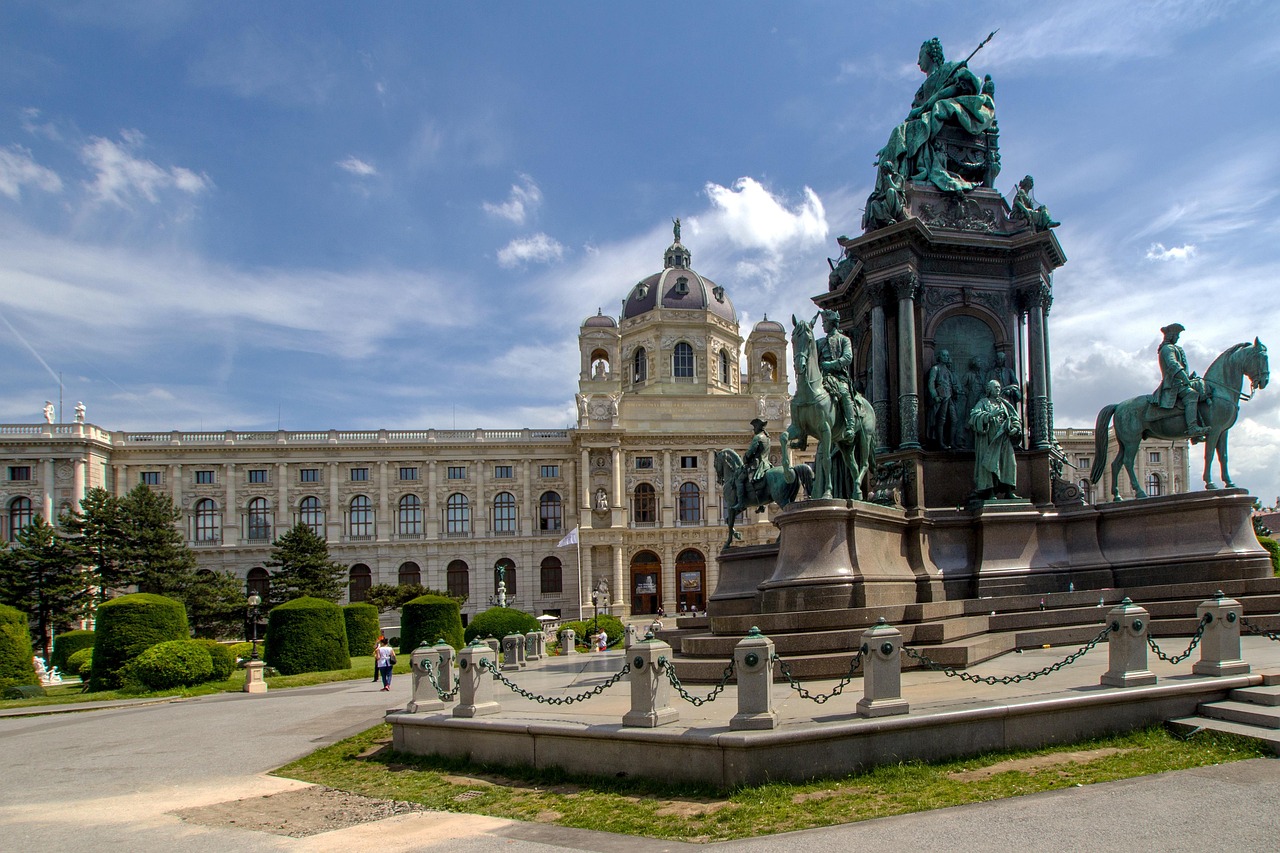
Vienna – The city what famous for its classical music Heritage
Vienna, the capital of Austria, is one of the most elegant and culturally rich cities in the world. It is a place where history lives in every corner, where music fills the air, and where majestic palaces stand proudly next to peaceful parks and wide boulevards. The city is famous for its classical music heritage, as it was home to Mozart, Beethoven, and many other great composers. It is also known for its imperial history, because the powerful Habsburg Empire ruled from Vienna for centuries. Today, the city combines old-world charm with modern comfort, offering travelers a beautiful experience of art, architecture, food, culture, and warm hospitality. As visitors walk through Vienna, they can easily feel the city’s calm rhythm. The streets are clean and wide. The buildings are designed in elegant styles. Beautiful horse carriages move around the old city. Cafés smell of sweet pastries and fresh coffee. Everywhere, people enjoy a relaxed lifestyle. Vienna is also well-known for its high quality of life, making it one of the most comfortable cities to live in.
Geography of Vienna
Vienna is situated in the northeastern part of Austria, lying along the peaceful Danube River-one of the most important rivers in Europe. The Danube has played a major role in Vienna’s growth because it allowed trade, transport, and communication with other European regions. The river gives the city beautiful scenery, especially in areas where green parks and cycling paths run alongside it. The city lies in a basin area called the Vienna Basin. This basin is surrounded by low hills such as the Vienna Woods (Wienerwald), which naturally border it from the west. These wooded hills give fresh air to the city and make Vienna one of the cleanest and greenest capitals in Europe. Colorful flowers burst during spring, whereas autumn colors yellow and orange tint the whole city. Summer days are long, full of sunlight, and perfect for alfresco festivals and city walks. Because of its geography, Vienna feels open and enjoyable. A combination of wide streets, green parks, gentle hills, and the Danube River gives the city a peaceful environment that welcomes visitors from the time they step foot in the city.
History of Vienna
Vienna boasts an extremely long and eventful history, which reaches back over more than 2,000 years. The city came into being during the Roman period, when a so-called military camp already stood at this place, called by the name of Vindobona. Roman soldiers patrolled the area and defended the Empire against northern tribes. Even today, tourists are able to see remnants of Roman walls and old foundations beneath the city. After the Roman Empire fell, Vienna developed into a trading center, particularly during the Middle Ages. It was, however, under the Habsburg family that its history would change forever. The Habsburgs ruled for nearly 600 years, and Vienna became the capital of one of the most influential empires in Europe. During this time, beautiful palaces, churches, theaters, and gardens were built. The city became a center for art, music, science, and learning.
In the 16th and 17th centuries, Vienna had several invasion attempts, one of which included those by the Ottoman Empire, although the city managed to defend itself. These victories made Austria ever stronger and more influential in Europe. The 18th and 19th centuries were the golden eras for Vienna. The imperial court supported artists, musicians, architects, and scientists. The famous composers Mozart, Beethoven, Schubert, and Strauss lived in the city. Many of their world-famous works were performed in Vienna’s grand opera houses and concert halls. At the beginning of the 20th century, Vienna was the center of culture, philosophy, architecture, and psychology. Great thinkers like Sigmund Freud were residents of the city. World War I brought an end to the Habsburg Empire, but Vienna remained an important cultural center. Austria rebuilt itself after World War II. Vienna developed into an important international city that housed organisations like the United Nations and the International Atomic Energy Agency.
Tourism in Vienna
Vienna is among the top tourist destinations in Europe, with its combination of imperial history, artistic heritage, natural beauty, and modern comfort. Tourism in the city focuses on its grand architecture, museums, musical events, royal palaces, and well-known coffeehouses. Walking through Vienna is like passing through a giant open museum. All buildings are detailed, building facades are elegant, streets are clean, and the historical feeling of the center is real. The traveler can visit world-class museums like the Kunsthistorisches Museum, go through baroque palaces like Schönbrunn and Belvedere, and listen to classical concerts by the Vienna Philharmonic Orchestra. The city also has green areas like the Volksgarten and Prater Park, allowing for visitors to relax and spend time outdoors.
Major Tourism Sites in Vienna
Vienna, the beautiful capital of Austria, is a city where history, music, and architecture combine in a very beautiful way. The royal palaces, peaceful parks, famous museums, classical concerts, and charming old streets make this a standout city. Every corner feels like a story, and every building seems to speak of the long past of the city. Upon arrival, travelers will quickly feel the deep culture and warm hospitality of Vienna.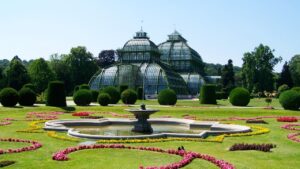
Schönbrunn Palace
One of the most iconic attractions in Vienna and a symbol of Austria’s royal history is the Schönbrunn Palace. Once serving as a summer residence for the Habsburg emperors, this wide complex comprises more than 1,400 rooms. Upon entering, visitors find themselves surrounded by detailed golden adornments, massive mirrors, exquisite chandeliers, and ornate hallways. Outside, gardens stretch to the horizon. Full of fountains, flowerbeds, sculptures, and paths lined with trees, these gardens are not-to-be-missed attractions. Standing on a hill behind the building is the Gloriette, which provides a nice view over Vienna. Adding yet another attraction to this already impressive site, Schönbrunn is also home to the oldest continually operating zoo in the world, the Schönbrunn Zoo.
St. Stephen’s Cathedral
Standing tall in the heart of Vienna is St. Stephen’s Cathedral, which is both the spiritual and architectural landmark of this city. This Gothic cathedral has a tall spire high up in the sky, and its colorful tiled roof forms beautiful patterns that shine in the sun. Inside, one finds a peaceful atmosphere: stone pillars, carvings, and stained glass windows tell religious stories. It is one of the most respectable places in Europe. It is common for travelers to climb the church tower for a wide view over the old town. The catacombs underground from the cathedral are also quite popular due to centuries of history and mystery they hold.
Hofburg Palace
The Hofburg Palace represents the heart of Austria’s imperial power. For over 600 years, it was the home of the Habsburg dynasty and the center of political decisions. Today, it is a huge complex comprising museums, courtyards, royal apartments, and important government buildings. One of the highlights constitutes the Imperial Apartments, which allow visitors to view the private life of Emperor Franz Joseph and Empress Elisabeth. The Sisi Museum narrates the tragic yet fascinating story of the life of Empress Sisi, right from her childhood years up to her assassination. The Silver Collection presents the display of all the royal silverware, dining sets, and gifts used during grand banquets. Outside, the open squares around the palace offer a beautiful setting, filled with horse-drawn carriages and elegant façades. The palace is also near the Spanish Riding School, another important Viennese treasure.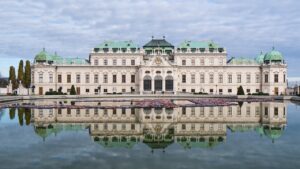
Belvedere Palace
Belvedere Palace is a stunning Baroque masterpiece that was built for Prince Eugene of Savoy. It consists of an Upper Belvedere and a Lower Belvedere, connected by glorious terraced gardens. Nowadays, Belvedere is host to some of the most impressive art collections in Austria, among which is included the world-famous painting “The Kiss” by Gustav Klimt. Visitors enjoy walking through long galleries full of classical, modern, and contemporary art. Similarly, its large windows, decorative sculptures, and grand staircases give the palace’s design a lasting impression on anyone who visits. The gardens are calm space guests can take a walk through, between fountains, flower beds, and trimmed hedges, with views of the city.
Museum Quarter
The Museum Quarter in Vienna is among the most extensive cultural quarters worldwide. It constitutes a modern, pulsating space where art, creativity, and social life have found their vivid manifestations. Among the key institutions, it comprises the Leopold Museum (presenting Austrian modern art) and the Museum of Modern Art-MUMOK (representing international trends of the present time). It also includes performance centers, cafes, outdoor seating areas, and creative spaces where local artists get together. It is a favorite place to spend time because here, one can get everything in one place: art, relaxation, and entertainment. The buildings themselves are a conversation between historic architecture and modern design.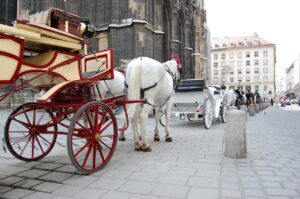
Vienna State Opera
The Vienna State Opera is a world-famous icon of classical music. Many of the greatest composers, such as Mozart, Strauss, and Beethoven, have contributed their work to Vienna’s musical tradition, and this opera house continues that legacy. The opera building is grand and ornate, with an interior full of marble, gold, and delicate paintings.
Prater Park and the Giant Ferris Wheel
Prater Park is a large green area where both locals and tourists enjoy nature, relaxation, and fun rides. The most iconic attraction in the park is the Giant Ferris Wheel, which has been an important symbol of Vienna since 1897. Riding the Ferris wheel offers a calm and scenic view of the city, especially beautiful during sunset.
Vienna City Hall (Rathaus)
The impressive Gothic building of the City Hall stands proudly on the Ringstraße, adorned by its tall tower and big façade with detailed decorations, making it one of the city’s most photographed sites. In front of the building, there is a large square called the Rathausplatz, where seasonal events are held, such as the Christmas Market, food festivals, concerts, and outdoor film screenings. Visitors can also participate in official tours inside to see its elegant halls, council chambers, and historical rooms.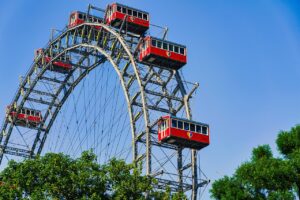
Albertina Museum
The Albertina Museum possesses one of the largest graphic art collections in the world, and among such works are those of great artists such as Picasso, Dürer, Monet, and Matisse. The museum offers something different to its visitors with its constantly changing exhibitions that represent classical, modern, and contemporary expressions of art. Visitors love the State Rooms on the inside, which manifest the enduring luxurious taste of Austrian aristocracy. Since the museum is located rather close to the Vienna State Opera and other historical sites, it fits perfectly into a full day of sightseeing.
Surrounding Places of Vienna
The areas surrounding Vienna offer a remarkably rich blend of natural beauty, royal history, medieval charm, and traditional Austrian culture. As you move just a short distance beyond the city center, the landscape changes gently from grand imperial avenues to rolling vineyards, peaceful riverbanks, and historic towns that feel as though time has slowed down.
Wachau Valley
One of the most beautiful surrounding areas is the Wachau Valley, located along the Danube River. As you leave Vienna and travel upstream, the scenery transforms into a breathtaking panorama where terraced vineyards stretch across the hills, medieval castles rise above the river, and quiet villages offer warm local hospitality.
Vienna Woods (Wienerwald)
Not far from the city, the Vienna Woods, known locally as the Wienerwald, create a refreshing green border around the capital. This large forested area has been loved by locals for centuries because it offers clean air, quiet hiking paths, and small villages that seem untouched by modern life. When visitors wander through the Vienna Woods, they often feel as though they have stepped into a classical painting. Tall trees, gentle hills, old monasteries, and hidden viewpoints make the forest ideal for long walks, peaceful picnics, or simple relaxation. An important place within the Vienna Woods is the Heiligenkreuz Abbey, a Cistercian monastery that dates back to the 12th century.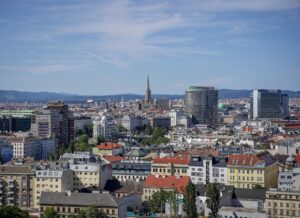
Bratislava, Slovakia
Another popular destination is Bratislava, the capital of Slovakia, located less than an hour from Vienna. The journey from one capital to another is surprisingly short, and many visitors enjoy the contrast between Vienna’s imperial grandeur and Bratislava’s charming small-city atmosphere. The old town of Bratislava is full of medieval lanes, pastel-colored buildings, lively squares, and a hilltop castle that overlooks the Danube.
Klosterneuburg
Another notable surrounding destination is Klosterneuburg, a town just a short distance north of Vienna. It is home to one of Austria’s most important monasteries, the Klosterneuburg Abbey, which stands proudly above the Danube.
Carnuntum
Walking through Carnuntum feels like stepping inside a living museum, where history is brought to life through interactive exhibits, reenactments, and preserved ruins. The surrounding area is dotted with vineyards and gentle countryside, making it an ideal destination for travelers who want both educational and scenic experiences. Because Carnuntum is close to the Slovak border, it also represents the region’s long-standing connection between Central and Eastern Europe.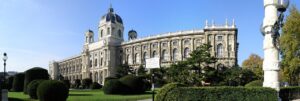
Best Time to Visit Vienna
The best time to visit depends on what travelers prefer to experience.
- Spring – March to May The weather is mild; flowers bloom, and outdoor cafes become lively. It is one of the best seasons for sightseeing.
- Summer (June to August) Warm temperatures and long days create a perfect environment for festivals, concerts, and outdoor activities. However, this is also the busiest season.
- Autumn (September to November) Temperatures cool down, and the city becomes peaceful. The parks turn orange and yellow. It is a great time for photography.
- Winter (December to February) Winter in Vienna feels magical. Christmas markets fill the city with lights, music, and warm food. Snow often covers the streets, giving Vienna a romantic look.
How to Go to Vienna
Vienna It is easy to reach Vienna from most parts of the world.
- By Air: Travelers can fly to Vienna International Airport, which receives flights from Europe, Asia, the Middle East, and North America. The city center is only 20 minutes away by train or taxi.
- By Train: Vienna is connected to major European cities such as Budapest, Prague, Munich, Zurich, and Venice. The central station (Wien Hauptbahnhof) is modern and well-organized.
- By Bus: Lots of long-distance buses travel to Vienna from neighboring countries. By Car: Well-maintained highways provide smooth and comfort travel by road.

Conclusion
Vienna is a city of elegance, history, culture, and beauty. It offers travelers a perfect blend of imperial palaces, world-class museums, peaceful parks, and classical music performances. The city’s café culture, delicious food, and warm atmosphere make every visit enjoyable and memorable. Beyond its historical sites, Vienna’s surrounding areas provide beautiful landscapes, charming small towns, and opportunities for day trips. Whether you love history, architecture, nature, music, food, or art, Vienna always has something special to offer. It is a city where the past lives in harmony with the present, and where every traveler can find unforgettable experiences.
Author

sadikhan.ceo@gmail.com
Related posts
Lisbon Travel Guide
- 0
- 2,266 words
Lisbon Travel Guide – A Beautiful Coastal Capital with Culture and Value Lisbon pops up on pretty much every list of Europe’s...
Read out all
Prague Travel Guide
- 0
- 2,455 words
Prague Travel Guide – A Magical European Destination Full of History and Charm If you’re dreaming of a city that looks and...
Read out all
Berlin Travel
- 0
- 2,097 words
Berlin Travel Guide – A City of History, Culture, and Modern Energy Berlin isn’t your typical European capital—it buzzes with history and...
Read out all
Amsterdam Travel Guide
- 0
- 2,602 words
Amsterdam Travel Guide – A City of Canals, Culture, and Timeless Beauty Honestly, Amsterdam is one of those cities that just grabs...
Read out all
Barcelona, Spain
- 0
- 2,340 words
Barcelona, Spain Travel Guide – A Vibrant Mediterranean City Barcelona feels alive, no matter what time of year you show up. The...
Read out all
Male, Maldives
- 0
- 2,442 words
Malé, Maldives Travel Guide – The Capital of Island Paradise Malé might be tiny compared to other capitals, but it’s at the...
Read out all