
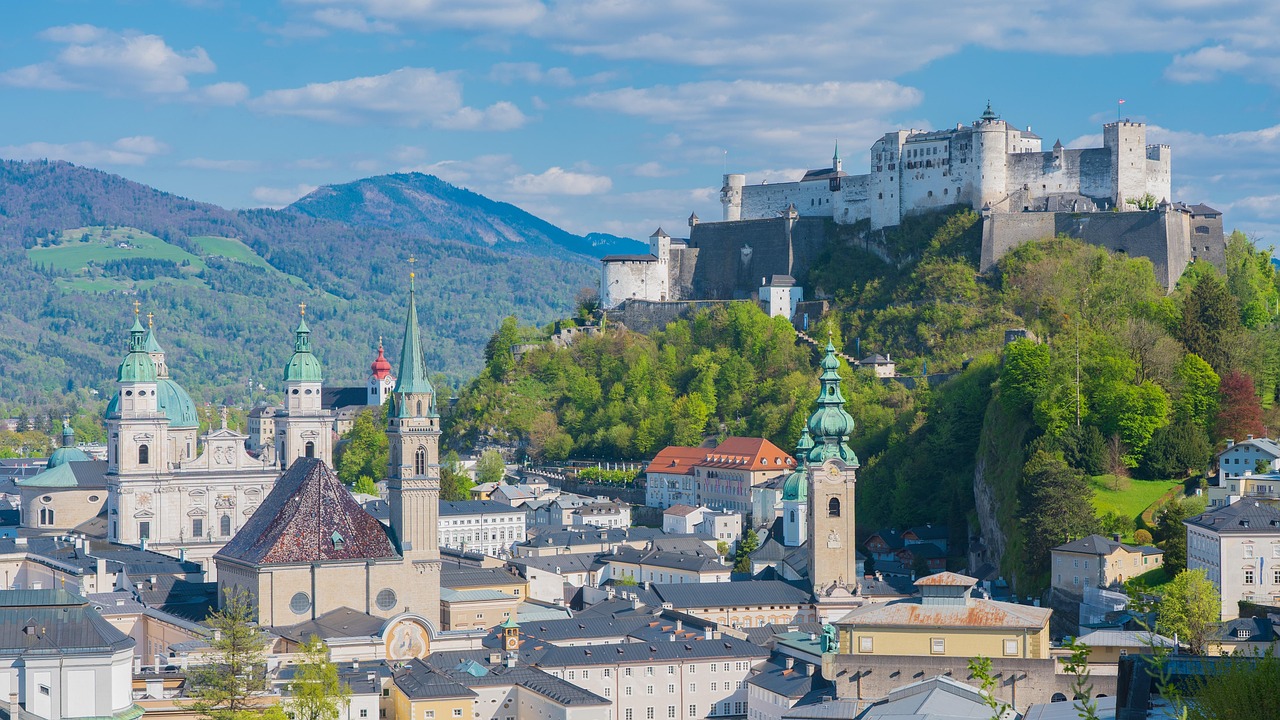
Salzburg: Culturally rich cities in Europe
Salzburg is one of the most charming and culturally rich cities in Europe. Located in Austria, this beautiful city attracts millions of travelers every year because of its unique mix of history, music, architecture, mountains, and peaceful lifestyle. When people think about Salzburg, they often imagine baroque buildings, narrow streets, elegant squares, and the magical sound of classical music. Walking around Salzburg, from the old fortresses down to medieval lanes, everything seems so well preserved. There is an atmosphere where calmness coexists with energy. Every corner in the city can tell you something about the emperors, artists, musicians, and merchants who shaped it for centuries. This intermixing of old and new lent a unique flavor to Salzburg, turning it into a haven of culture combined with nature for all sorts of travelers.
Geography of Salzburg
Salzburg is located in northwestern Austria, very close to the border with Germany. It is also an important geographic link between Central and Eastern Europe. It sits beside the Salzach River, which winds its way gently through the middle and reflects beautifully on the historic structures that outline both of its sides. The river has played an important part in the development of the city, most especially during the era of the salt trade, which gave Salzburg its name, meaning “Salt Fortress.”
It is set amidst the Northern Limestone Alps, hence offering an exceptionally picturesque setting. The mountains are not very far from the city center, meaning it can be pretty easy to combine urban charm and natural wilderness on the go for the traveler. The most famous mountain near Salzburg, Untersberg, rises quite dramatically and can be seen in most of the viewpoints that the city has. During winters, snow caps sit atop these peaks to create scenes of magic. In summer, green hills and forests break up with peaceful hiking trails. Salzburg has a temperate climate. Summers are warm and pleasant, while winters are cold and, at times, snowy. In spring, flowers begin to bloom, whereas autumn colors the city in gold. Salzburg is beautiful in every season due to its geographical surroundings.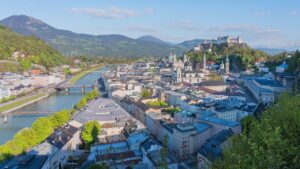
History of Salzburg
Salzburg possesses a long and multilayered history, reaching back many millennia. The earliest settlements date from the Neolithic period, and later the Romans built a town in the area called Juvavum. However, after the fall of the Roman Empire, the settlement slowly declined. It was during the early Middle Ages that the city started to rise again in importance, most notably with the founding of the Benedictine monastery of St. Peter by St. Rupert in the 7th century. This can be considered the true birth of Salzburg as a significant urban center. During the Middle Ages, Salzburg became a powerful church state ruled by prince-archbishops who dominated not only religion but also political and economic life. Because of its strategic position and rich salt mines, the city gained an extremely high degree of wealth. Salt was a very valuable good, and hence, Salzburg developed into one of the most important trading centers in the region.
Tourism in Salzburg
Tourism in Salzburg thrives because the city offers a rare blend of history, culture, music, landscapes, and timeless architecture. As visitors arrive, they immediately feel the charm of an old European town shaped by baroque artistry and natural beauty. The slow pace of life, cobblestone streets, peaceful squares, and elegant buildings create an atmosphere that welcomes travelers from all over the world. Tourism here is not only about monuments; it is also about experiencing music, tasting local food, walking through narrow lanes, and enjoying the dramatic scenery of the Alps. Every part of Salzburg offers unique experiences, and each neighborhood reveals a different story. Because of this, the city has become one of the most visited destinations in Austria.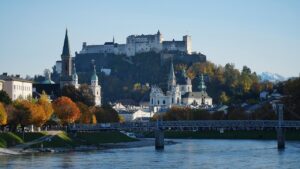
Wolfgang Amadeus Mozart
One of the most defining elements of tourism in Salzburg is the strong connection to Wolfgang Amadeus Mozart, the city’s most famous son. Mozart’s birthplace and his family residence remain two essential attractions. When travelers walk through these sites, they are transported to the world of classical music.
Altstadt
Another major element of tourism in Salzburg is the city’s old town, known as Altstadt, which is listed as a UNESCO World Heritage Site.The old town is filled with narrow alleys, colorful baroque buildings, wide plazas, and ancient churches. Walking through Getreidegasse, the most famous shopping street, feels like stepping back in time. The old town is central to Salzburg’s tourism identity and plays a major role in attracting millions of travelers.
Hohensalzburg Fortress
Tourism in Salzburg also centers around one of the biggest, best-preserved medieval castles in Europe: Hohensalzburg Fortress. The fortress rises perpendicularly over the city, creating a dramatic view from almost every corner. Visitors can reach it by cable car or a scenic walking trail. Inside, it displays royal chambers, museums, and panoramic terrace viewpoints.Many travelers describe the view from the top as one of the most beautiful in Austria. With all of its history and striking presence, Hohensalzburg Fortress remains at the heart of tourism and offers a fine way of exploring just where these medieval beginnings of the city lie.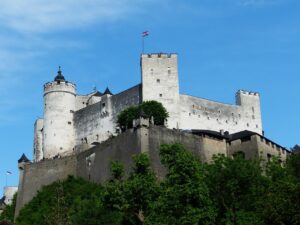
Iconic film
Besides its historic charm, Salzburg is also well-recognized through the iconic film “The Sound of Music.” Movie fans come to visit the town and trace many locations of the film. Places such as Mirabell Gardens, Leopoldskron Palace, and Nonnberg Abbey make up a part of specialized tours that take travelers on a journey to relive the most memorable scenes of the film and discover the landscape. Tourism has elaborated many themed experiences: guided bike rides, musical shows, and interactive exhibits. For this reason, “The Sound of Music” remains an attractive force for families and aged tourists and film buffs of classic movies.
Churches
Other significant features of tourism in Salzburg include its churches and religious architecture, which speak of the city’s cultural and spiritual depth. The Salzburg Cathedral majestically stands in the heart of the old town with its white façade, so subtle, outside, and peaceful inside. Many visitors spend time touring the cathedral’s artwork, its domes, and crypt. Further down, St. Peter’s Abbey and Cemetery form a quiet oasis nestled between rocky cliffs. This is one of the oldest monasteries in the German-speaking world, and history and spirituality find their visiting companions in the library, the inner courtyard, and the catacombs. Because of their beauty and historical value, Salzburg’s religious places form the main component of the city’s tourism product.
Museums
It is also home to various museums that have something to differ them from the usual aspects of Austrian history and life. Salzburg Museum shows artistic and cultural history in an attractive way. Alternatively, the Museum of Modern Art contrasts the historic character of Salzburg by adding modernism to its expression. There exists the Hangar-7 for those who love cars, science, or even natural wonders; it has aircraft, exhibitions, and dine in style in this futuristic building. All these museums make tourism in Salzburg more varied so that every age group will be enjoying something.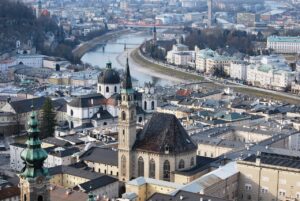
Salzach River
Nature also is a huge aspect of tourism. The city is situated along the Salzach River and nestled within the foothills of the Alps. It provides the visitor with the opportunity to enjoy relaxing river walks, boat rides, and scenic vistas. A short drive away, the Salzkammergut lake district boasts crystal-clear lakes, mountain trails, and quaint villages. Many visitors to Salzburg come not only for history but also for outdoor activities such as hiking, cycling, and exploring mountain viewpoints. Combining natural beauty with richness in culture, Salzburg is one of the most balanced destinations in Europe.
Gastronomy
Gastronomy has also become an appealing aspect of tourism in Salzburg. Among the local dishes that visitors like very much are Wiener Schnitzel, Salzburger Nockerl, apple strudel, and the famous Mozart chocolates. Many restaurants are located in ancient courtyards or within historic buildings, thus enabling tourists to taste traditional Austrian cuisine in a charming milieu. Traditional coffeehouses, being part of the city’s heritage, indeed provide warm premises for travelers to take a rest and enjoy cakes and pastries. Culinary tourism continues to develop, offering visitors the opportunity to experience the taste of the local culture at every meal.
Salzburg Festival
Events and festivals further strengthen Salzburg tourism. The Salzburg Festival is one of the most prestige classical music festivals in the world, and every summer it takes place. Thousands of performers, musicians, and audiences come together to celebrate music, theater, and opera in this city. Winter Festival, Christmas markets, and New Year concerts also attract visitors for the purpose of experiencing Austrian tradition. The energy, creativity, and joy have fully flooded the city during the events; hence, the city is vibrant all year.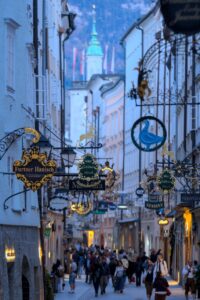
Handmade crafts
Shopping is another part of the tourism experience. Traditional shops selling handicrafts, jewelry, leather goods, and souvenirs are found in the old town, while modern shopping centers are located in other areas and sell all manner of products that international visitors might need. Travelers often take home souvenirs that include music boxes, locally produced chocolates, and traditional garb. The blend of old and new shopping experiences allows tourists to combine cultural mementos with modern fashion.
Transportation
Excellent transportation and accessibility further support Salzburg’s tourism. The city is well connected with trains, buses, and flights. One can reach quite easily from Vienna, Munich, Zurich, or any other European city. The public transport system within Salzburg makes it quite easy to go about moving between major attractions. Walking is not a problem either, as most of the historical areas are compact and very friendly for pedestrians. This convenience guarantees that tourists will be comfortable and relaxed during their stay.
Surrounding Places of Salzburg
The surroundings of Salzburg are teemed with beautiful landscapes, historic towns, peaceful lakes, and famous alpine villages. Each place around has its own charm, and all put together create one of the most attractive travel zones in Europe. Ever since the visitor leaves the centre of Salzburg and starts going out to places outside, he enters a world that seems timeless and even magic. Salzburg is not far from the German border and lies at the gateway to the Austrian Alps, so whichever direction is taken, it opens up something wonderful. Thus, the exploration of these surrounding places becomes an integral feature of any visit to the city.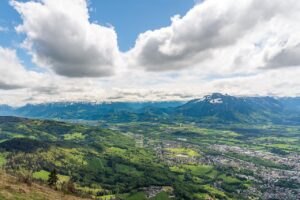
Hallstatt – The Iconic Lake Village
One of the most famous places that surround it is Hallstatt-a lake-side village that totally looks like a dream. Even though it takes about 1 hour 15 minutes by road, the journey itself is beautiful, with green mountains and shining lakes emerging on the way. The minute one catches their first glimpse of Hallstatt, a quiet village, all reserved, it arrests them. These traditional wooden houses seem to lean on each other, with the steep cliffs at the edge. Lake Hallstatt creates gentle waves oar-in, reflecting the village like a mirror image, just perfectly caught within a postcard frame.
Berchtesgaden & Königsee – Germany’s Alpine Paradise
Across the border in Germany, you have the Berchtesgaden region, full of dramatic mountains, deep forests, and crystal-clear lakes. It is just 30 minutes from Salzburg and thus very easy to access. The most popular sight in the region would be Lake Königsee, running long and narrow beneath tall cliffs. The water color that appears like emerald green may be fantastic to ride a boat across the lake peacefully and refreshingly. Visitors often make a stoppage on the pilgrimage church of St. Bartholomä, which proudly stands at the base of big rocky mountains.
Wolfgangsee – A Lake Surrounded by Charming Villages
Another beautiful place nearby Salzburg is Wolfgangsee, one of the most picturesque lakes in the Salzkammergut region. The lake is surrounded by small towns like St. Wolfgang, St. Gilgen, and Strobl, each providing a different atmosphere for travel. St. Gilgen is famous for its connection with Mozart’s family and for its peaceful lakeside setting. St. Wolfgang, on the other hand, feels lively and romantic, especially with its traditional houses and the famous Pilgrimage Church of St. Wolfgang.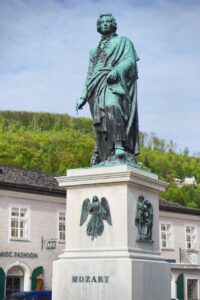
Mondsee – The Lake of Quiet Beauty
The picturesque lake and quiet town of Mondsee are only a short ride from Salzburg. It is less famous than other places all over the world but has a powerful charm because of the gentleness of the landscapes and warmth of hospitality. Among the main attractions of this town is the Mondsee Basilica: a beautiful yellow church which, after the appearance in the wedding scene of The Sound of Music, became popular. This gives an extra layer of interest for movie fans to this place.
Bad Ischl – A Town of Royal History
Bad Ischl – a town of royal history Bad Ischl-just a short journey from Salzburg-is a favorite among culturally-minded and royalty-history fond travelers. This was once the summer residence of Austria’s Emperor Franz Joseph and his wife, Empress Elisabeth, known as Sisi. Their elegant villa still stands today, surrounded by beautiful gardens.
Zell am See – A Lake City with a Mountain Backdrop
Zell am See lies a little farther away, but it remains one of the most rewarding surrounding destinations. This city sits beside a pure alpine lake and under the shadow of the tall Schmittenhöhe mountain. The scenery combines water, forest, and snowy peaks, giving travelers countless photography opportunities. During summer, people swim in the lake, walk along the promenade, or enjoy boat cruises.
Innsbruck – The Capital of the Alps
Although Innsbruck is a bit farther from Salzburg, it remains a popular surrounding destination because of its mix of city culture and alpine scenery. The city is framed by high mountains on all sides, making every street feel dramatic and beautiful. Visitors often explore the Old Town, where medieval buildings and the famous Golden Roof create a very traditional Austrian atmosphere.
The Austrian Alps – Endless Landscapes
Beyond towns and lakes, the regions surrounding Salzburg include vast areas of alpine beauty. Mountain valleys, waterfalls, hiking trails, and peaceful meadows stretch in every direction. Places like the Golling Waterfall, the Lammertal Valley, and the Tennengebirge mountain range give nature lovers exciting opportunities to explore.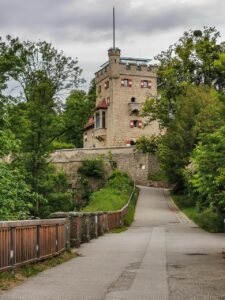
Best Time to Visit Salzburg
The best time to visit Salzburg depends on your interests. Summer (June to August) is warm and full of cultural events, especially the Salzburg Festival. This is the peak season, with many tourists and lively streets. Spring (April to May) brings fresh air and flowers, making sightseeing very pleasant. Autumn (September to October) is peaceful, with mild weather and beautiful colors. Winter (November to February) transforms Salzburg into a magical holiday destination. Christmas markets, snow-covered buildings, and cozy cafés create a unique winter charm. Travelers who enjoy skiing and winter scenery prefer this season.
How to Go to Salzburg
Salzburg is easily accessible. The Salzburg Airport, also known as W. A. Mozart Airport, connects the city with major European destinations. Travelers from other continents usually fly to Vienna, Munich, or Frankfurt and then take a train or regional flight to Salzburg. Trains are very convenient, offering comfortable journeys from major cities like Vienna (2.5 hours) and Munich (1.5 hours). Buses also operate between Salzburg and nearby towns. Inside the city, travelers can explore easily on foot, by bike, or using public transport like buses and trams.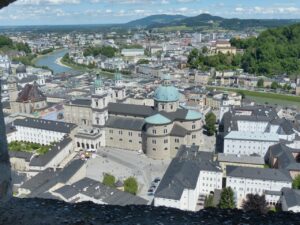
Conclusion
Salzburg is a city that brings together beauty, culture, history, music, and nature in one remarkable destination. Its scenic surroundings, elegant architecture, and peaceful rhythm make it a place that stays in the memory long after leaving. From Mozart’s heritage to baroque buildings, from mountain views to charming cafés, Salzburg offers endless inspiration for travelers. Whether you enjoy art, history, nature, food, or simply beautiful places, Salzburg welcomes you with open arms and unforgettable experiences.
Author

sadikhan.ceo@gmail.com
Related posts
Lisbon Travel Guide
- 0
- 2,266 words
Lisbon Travel Guide – A Beautiful Coastal Capital with Culture and Value Lisbon pops up on pretty much every list of Europe’s...
Read out all
Prague Travel Guide
- 0
- 2,455 words
Prague Travel Guide – A Magical European Destination Full of History and Charm If you’re dreaming of a city that looks and...
Read out all
Berlin Travel
- 0
- 2,097 words
Berlin Travel Guide – A City of History, Culture, and Modern Energy Berlin isn’t your typical European capital—it buzzes with history and...
Read out all
Amsterdam Travel Guide
- 0
- 2,602 words
Amsterdam Travel Guide – A City of Canals, Culture, and Timeless Beauty Honestly, Amsterdam is one of those cities that just grabs...
Read out all
Barcelona, Spain
- 0
- 2,340 words
Barcelona, Spain Travel Guide – A Vibrant Mediterranean City Barcelona feels alive, no matter what time of year you show up. The...
Read out all
Male, Maldives
- 0
- 2,442 words
Malé, Maldives Travel Guide – The Capital of Island Paradise Malé might be tiny compared to other capitals, but it’s at the...
Read out all