
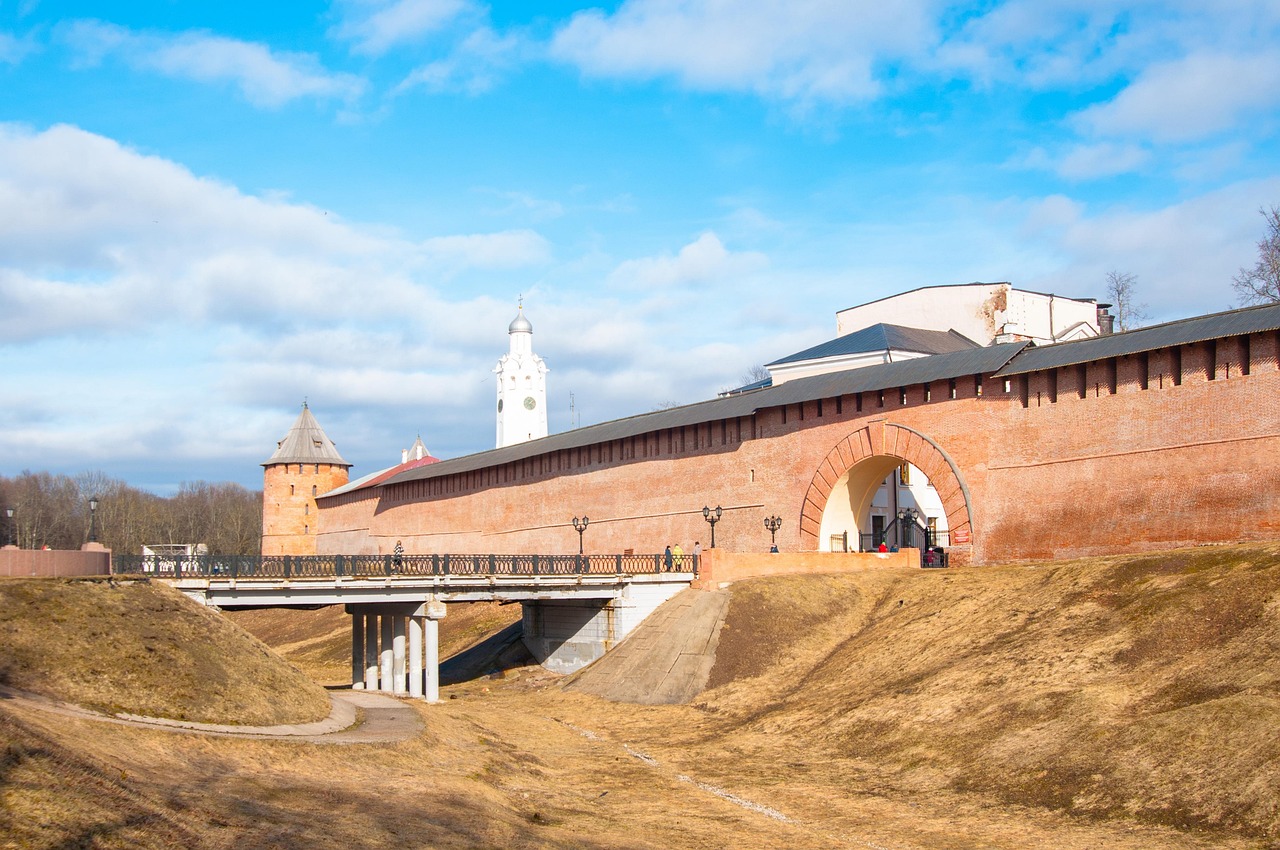
Novgorod, Oldest and most historically important City
Novgorod, officially referred to as Veliky Novgorod, is one of the oldest and most historically relevant cities in Russia. It is situated in the northwest part of the country, between Moscow and Saint Petersburg. From the very beginning, Novgorod has played a substantial role in shaping Russian history, culture, religion, and identity. Compared with most contemporary cities, Novgorod is calm, traditional, and deeply connected with its past. While taking a walk around the city, one will come to an important conclusion pretty soon: Novgorod is not just a place to see monuments but also a city to understand the real roots of Russian civilization. Therefore, Novgorod attracts travelers who enjoy history, culture, architecture, and peaceful surroundings rather than busy nightlife or modern skyscrapers.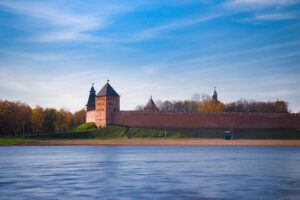
Historical Importance of Novgorod
Novgorod is more than one thousand years old, which makes it one of the oldest cities in Eastern Europe. It was first mentioned in records in the 9th century and soon became a powerful center of trade, politics, and religion. Because of its location along the important trade routes between Scandinavia and Byzantium, Novgorod developed strong connections with Europe and Asia. Unlike most other Russian cities, for several centuries Novgorod was run as a republic. The special political system made citizens take part in decision-making, something quite rare during the Middle Ages. Due to this fact, Novgorod gained a very strong sense of independence, learning, and cultural openness, which can be felt even nowadays.
Novgorod and the Birth of Russian Statehood
Novgorod is conventionally regarded as the cradle of Russian statehood. Its legendary invitation of the Viking leader Rurik to rule over Novgorod served as a prologue to the Russian state’s formation. For this reason, this city is particularly dear to the memory of national history. Moreover, Novgorod did not experience the total destruction so common to most Russian cities during the Mongol invasions. Thus, its churches, manuscripts, and traditions were preserved. Consequently, Novgorod best preserved early Russian architecture, writing, and religious art among all cities.
Cultural Identity of Novgorod
Its cultural life deeply came from religion, literature, and arts. For hundreds of years, Orthodox Christianity has shaped the town, and many churches still function today. In addition, Novgorod was a very significant center of education and literacy in medieval Russia. Thousands of birch bark letters by ordinary persons, found by archaeologists, bear testimony to the fact that reading and writing skills were common. Due to such a strong intellectual tradition, Novgorod developed a refined culture that values learning, storytelling, and historical memory.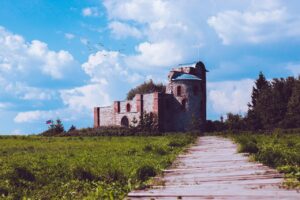
Tourism Sites in Novgorod
Novgorod Kremlin (Detinets)
The Novgorod Kremlin, or Detinets, is the heart and soul of the city, being the most important historical site in Novgorod. Besides that, the Kremlin area seems to be calm and dignified, and it is a perfect place to learn about the beginning of Russian statehood. Due to its importance, the Novgorod Kremlin is included in the list of UNESCO World Heritage Sites and attracts travelers from all over the world.
Saint Sophia Cathedral
The Saint Sophia Cathedral is the first stone church in Russia and one of the most sacred places in Novgorod, along with the Kremlin. Built in the 11th century, the cathedral stands inside the Kremlin and is a symbol of faith, strength, and national identity. Because of its white stone walls and silver color of the domes, it looks so simple and powerful. When one steps inside, ancient frescoes, soft candlelight, and deep peace meet his eyes. The interior is quiet and spiritual; one can reflect and admire religious art created centuries ago. Moreover, the cathedral survived wars, fires, and political changes, making it a real eyewitness to Russian history. St. Sophia Cathedral is not only a place of religious pilgrimage but also a certain cultural treasure that testifies to how deeply faith influenced early Russian society.
Millennium of Russia Monument
Next to Saint Sophia Cathedral is the Millennium of Russia Monument, commemorating one thousand years of Russian history. This huge bronze monument was unveiled in 1862 and is adorned with more than one hundred figures of princes, saints, writers, and military chiefs. As one circumnavigates this monument, detailed sculptures depicting Russia’s past in a very ocular and artistic manner come into view. The monument consists of different levels, each representing a different period in history. Furthermore, the monument symbolizes union and national pride. Tourists always stop here, taking photos and getting acquainted with the important personalities that took part in the building of Russia. This site helps visitors contextualize the broader historical role Novgorod played in the development of the country.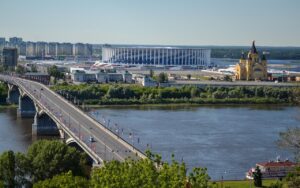
Yaroslav’s Court and Ancient Market
Yaroslav’s Court is on the other side of the Volkhov River and used to be a trading and public life center in medieval Novgorod. Once, merchants from Europe and Asia came together here to exchange goods such as fur, honey, and wax. Nowadays, it is an open historical area with several churches, old-foundations, wide space, and so on. A walk along Yaroslav’s Court allows having a glimpse into what an ancient market must have looked like, with voices and activity everywhere. Nearby, the river beautifies this place, with sunset allowing a glance at this beauty. Besides, in this place, one can feel just how Novgorod was important for Russia and linked it with the rest of the world. Due to its historic value, Yaroslav’s Court is also included in the UNESCO World Heritage Listing.
Open-Air Museum of Wooden Architecture – Vitoslavlitsy
Almost out of the city center, within walking distance from the central part of the city, stands one of the most charming sights in Novgorod-the Vitoslavlitsy Open-Air Museum. This museum presents traditional wooden houses, churches, and farm buildings brought from different parts of the region. The museums allow visitors a glimpse into what rural life was like centuries ago. Wooden structures with carved details show the handiness of Russian villagers. Moreover, seasonal festivals and cultural events are often held here, bringing the village atmosphere to life. It is a particular delight for families and lovers of nature because one finds history combined with open green spaces at this site. Vitoslavlitsy is helpful for visitors wanting to learn about life outside everyday city walls.
Yuriev Monastery
Yuriev Monastery is the most ancient of all Russian monasteries. It stands not far away from Lake Ilmen, south from Novgorod. Founded in the 11th century, the monastery is famous for its quiet atmosphere inside and its beautiful white buildings. Saint George Cathedral, which stands inside the monastery, impresses with its height and the antiquity of its interior. The sense of serenity and spiritual balance fills the spirit of every visitor while walking through these monastery grounds. Nearby, the lake further adds to the beauty, reflecting in its water the buildings and the sky. Yuriev Monastery is just the place for those who would like to get away from city noise and enjoy history, nature, and quiet reflection.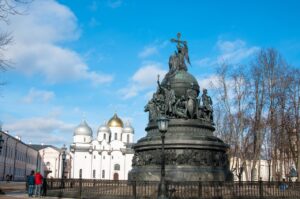
Rurikovo Gorodische
Rurikovo Gorodische is an ancient settlement situated near Novgorod and is considered to be the birthplace of Russian statehood. According to history, Prince Rurik, in the 9th century A.D., ruled from this area. Today, one can still see ruins, earth mounds, and archaeological remains that indicate how early rulers lived. Only fragments of the structure remain standing, but the site has enormous historical meaning. One can stand here and almost imagine Russia in its infancy and the early building of the country’s political structure. Due to the reason of symbolic significance, Rurikovo Gorodische attracts the attention of millions of history lovers and scholars worldwide.
Novgorod State Museum-Reserve
The Novgorod State Museum-Reserve is dispersed in many historic buildings and includes a really big collection of exhibits. A visitor can see ancient icons, manuscripts, coins, clothes, and items of everyday usage inside the museum. These exhibits explain how people lived, worked, and believed over many centuries. This museum shows its great importance for Novgorod’s cultural heritage protection. Its displays are very well organized and easy to understand, and that is why it is suitable for visitors of any age group. This museum is very good for deeper knowledge after visiting outdoor historical sites.
Lake Ilmen
Lake Ilmen is a natural wonder connected with the history of Novgorod. Centuries ago, it served as a place of trade routes, food, and protection for the city. Nowadays, it offers scenic views, fresh air, and possibilities to rest. Many visitors come here for a walk along the lake shores, bird watching, or going on boat trips. During the summer, when the sky is blue, it looks very nice in the reflections of the lake, and during winter, the lake turns into a white frozen place. Lake Ilmen adds some nature beauty to the historical experience of Novgorod and reminds one of the close relationship between nature and human settlement.
Surrounding Places Near Novgorod
Veliky Novgorod is important not only for itself but also because its neighborhood has a lot of beautiful and meaningful places. These make any visit broader and help travelers learn more about the wider cultural, natural, and historical landscape of northwestern Russia.
Lake Ilmen
The lake is one of the most important natural sights around Novgorod, situated just south of the town. This wide and shallow lake has played a big role in the history of this place for many centuries. In the past, it was an important component in ancient trade routes connecting Novgorod to other parts of Europe and Russia. Nowadays, the lake is still closely connected to the local way of life. People often visit this place for its relaxing atmosphere at any time of the day, especially in the morning or evening when the water reflects the sky with soft colors. During summer, people enjoy walking along the shore, fishing, and bird-watching. In winter, the lake freezes, and a quiet and dramatic landscape appears. Lake Ilmen gives tourists an opportunity to understand just how nature supported the growth of Novgorod as an early Russian city.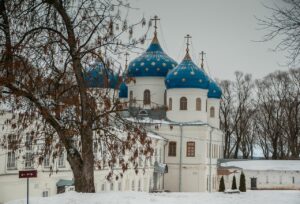
Yuriev Monastery
Situated a short distance from Veliky Novgorod near the banks of the Volkhov River, Yuriev Monastery has a claim to being one of the oldest and most significant monasteries in Russia. Founded in the 11th century, this monastery is closely associated with the beginnings of Russian Christianity. White stone walls with tall church domes rise serenely above the fields as visitors draw closer to the site. The peaceful environment lends itself perfectly to reflection and walking quietly. Enclosed within the grounds, guests can see old churches, frescoes, and learn about the life of monks that has been continued here for many centuries. In addition to serving as a religious destination, Yuriev Monastery also happens to be a cultural treasure showcasing the spiritual origins of the Novgorod region.
Rurikovo Gorodishche
The settlement of Rurikovo Gorodishche is only a short distance from Novgorod, and it was here that the original center of power is thought to have been established prior to the city’s development. Tradition holds that this was the place where Prince Rurik-one of the founders of the Russian state-ruled back in the 9th century. Grass-covered hillocks, bits of archaeological remains, and expanses of wide-open views of the Volkhov River are what greet travelers’ eyes today. It is deeply historic even though much of the recognizable original structures are gone. The neighborhood allows tourists to walk in the footsteps of the beginning of the Russian state and understand how Novgorod started out as a political and cultural center. The quieted landscape makes the experience both informative and peaceful.
Staraya Russa
Staraya Russa is an ancient town which is situated to the southeast of Veliky Novgorod and is famous both for its mineral springs and various literary connections. It is especially famous as a place where the outstanding Russian writer Fyodor Dostoevsky lived and worked. Nowadays, one can visit his house museum to learn about how the town influenced his works. Besides its literary significance, Staraya Russa has nice old churches, quiet streets, and spa traditions based on natural mineral waters. Life here is slower and less stressful than in big cities, and this makes it a very good place to visit for those who like history and culture and just walking around.
Valdai Hills and Valdai National Park
It lies to the southeast of Novgorod and consists of smooth hills combined with deep forests and crystalline lakes. This is often referred to as one of the most beautiful natural regions in all of European Russia. Valdai National Park guards large areas of virgin nature and offers great opportunities for hiking, going on boating trips, and performing wild-life observation. The air feels fresh and clean there, and the landscapes are different in every season. In the fall, the forests shine with warm colors, while in winter, the landscape turns into a snow-white fairyland. The town of Valdai is renowned for its bell-making tradition and peaceful lake views. This region provides ideal conditions for travelers who seek some nature experience and would like to get away from busy metropolis life.
Khutyn Monastery
Another important religious center is the Khutyn Monastery, which stands north of Veliky Novgorod. Founded in the 12th century, it is associated with Saint Varlaam of Khutyn, the most respected spiritual figure within the region. The monastery is beautifully set upon a hill that overlooks the Volkhov River and opens up a breathtaking view of the nearby countryside. The white stone and blue-domed churches contrast powerfully against the green fields and sky. Many visitors describe the feeling as tranquil and hospitable. It is a place where history, faith, and nature come together in quiet and meaningful ways.
Volkhov River Villages
The river of Volkhov is right in the heart of Novgorod and connects many villages along the coast. These villages open a door to rural Russian life: simple wooden houses, small churches, which are given a cross-like look by onion heads, vegetable gardens, and little quiet roads. Visits to these villages can allow the traveler to get acquainted with how people live close to nature and observe traditions passed down generations. The river itself adds beauty and movement to the view, especially in spring when the water level rises. Boat trips down the Volkhov River are also popular; they give quite another view on the history and natural environment of the region.
Borovichi
Borovichi is a town lying east of Novgorod and has its industrial history combined with natural surroundings. It developed around rivers, forests, and mineral resources, supporting its growth over time. Nowadays, Borovichi is a place to be visited by guests interested in regional history, old architecture, and nearby natural areas. The countryside around Borovichi includes forests and rivers that are good for hiking and outdoor exploration. Borovichi combines small-town life with proximity to nature-which makes it an interesting stop during tours around the wider Novgorod region.
Tikhvin (Extended Regional Visit)
While a bit further away, Tikhvin often falls into the compass of extended tours from Novgorod. The town is famous for the Tikhvin Monastery and the Tikhvin Icon of the Mother of God, one of the most important religious icons in Russia. The large and impressive complex of the monastery comprises strong walls, beautiful churches, and rich spiritual atmosphere.
Conclusion
Novgorod is not a destination but a journey to the very heart of Russian history and culture. The ancient churches, mighty Kremlin, quiet rivers, and museums with deep meaning all await travelers for a profoundly thoughtful travel experience. The places that surround Veliky Novgorod give a great deal of depth to any journey through this historic region. From ancient monasteries and early settlement sites to peaceful lakes, forests, and traditional towns, each destination tells part of the story of Russia’s cultural and spiritual development. These nearby places allow travelers to slow down, reflect, and connect with both history and nature. All together, they turn any visit to Novgorod into a whole, profoundly meaningful journey that reaches far beyond the boundaries of the city. While other tourist cities are full of noise, Novgorod allows visitors to decelerate and reflect.
Author

sadikhan.ceo@gmail.com
Related posts
Lisbon Travel Guide
- 0
- 2,266 words
Lisbon Travel Guide – A Beautiful Coastal Capital with Culture and Value Lisbon pops up on pretty much every list of Europe’s...
Read out all
Prague Travel Guide
- 0
- 2,455 words
Prague Travel Guide – A Magical European Destination Full of History and Charm If you’re dreaming of a city that looks and...
Read out all
Berlin Travel
- 0
- 2,097 words
Berlin Travel Guide – A City of History, Culture, and Modern Energy Berlin isn’t your typical European capital—it buzzes with history and...
Read out all
Amsterdam Travel Guide
- 0
- 2,602 words
Amsterdam Travel Guide – A City of Canals, Culture, and Timeless Beauty Honestly, Amsterdam is one of those cities that just grabs...
Read out all
Barcelona, Spain
- 0
- 2,340 words
Barcelona, Spain Travel Guide – A Vibrant Mediterranean City Barcelona feels alive, no matter what time of year you show up. The...
Read out all
Male, Maldives
- 0
- 2,442 words
Malé, Maldives Travel Guide – The Capital of Island Paradise Malé might be tiny compared to other capitals, but it’s at the...
Read out all