
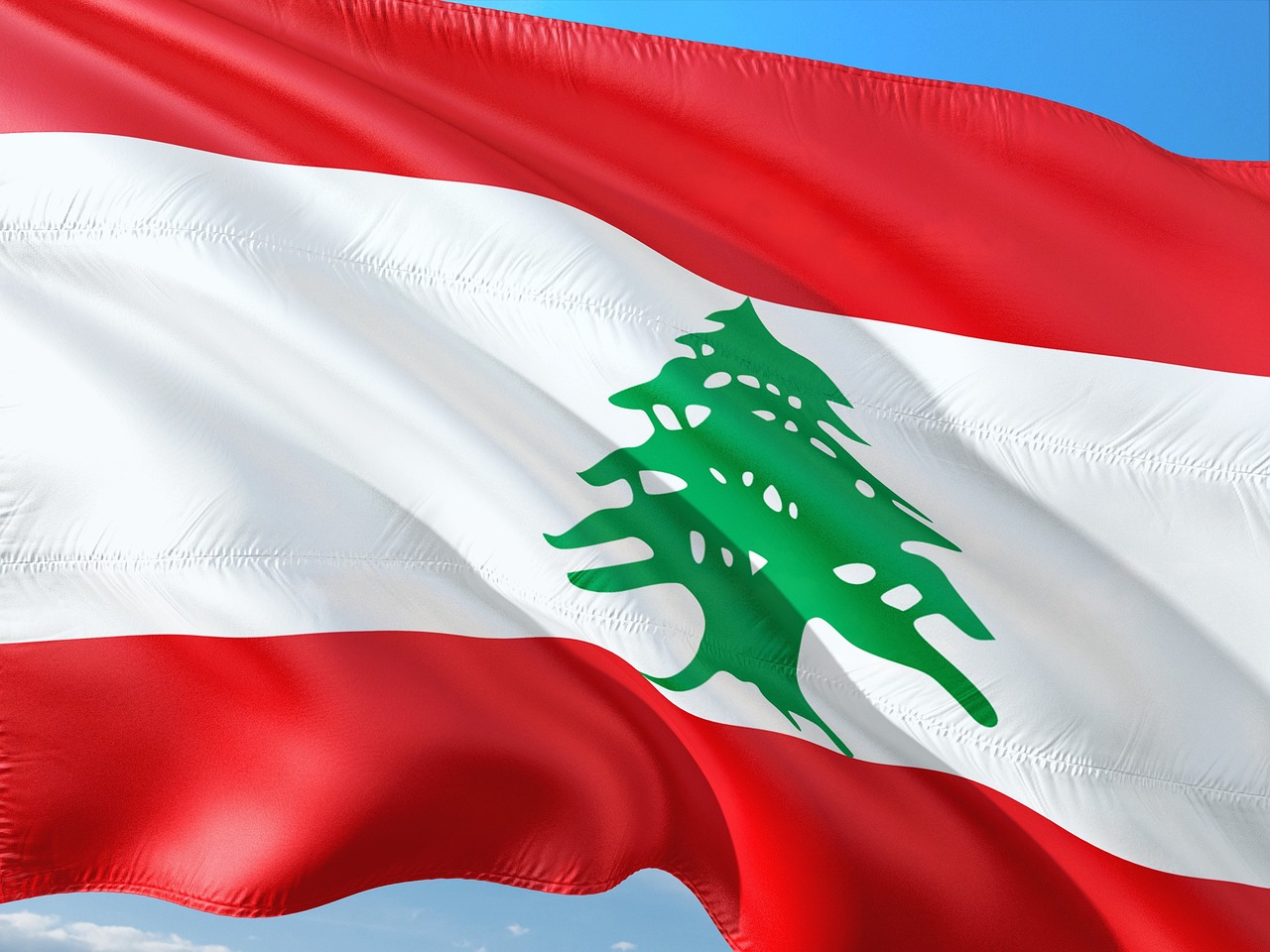
Lebanon: A Complete and Detailed 5000-Word Style Article
Lebanon, while small in size, is a country on the eastern coast of the Mediterranean Sea that holds a richness that feels far larger than its size. It is a place where ancient history, beautiful nature, warm hospitality, and vibrant modern life blend into a magic. Upon arrival in Lebanon, visitors feel instantly that diverse landscapes coexist right next to one another: steep mountains covered in snow during winter, deep valleys peacefully green, old villages with stone houses, and noisy cities where restaurants, cafes, and shops often stay open until very late at night. Because of these interesting contrasts, Lebanon has become a special destination for travelers who enjoy culture, adventure, and relaxation combined.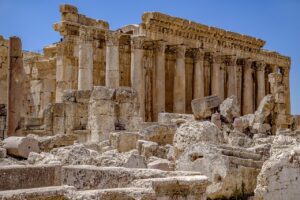
Furthermore, Lebanon has very ancient history-thousands of years. Many great civilizations passed through this land, including the Phoenicians, Romans, Ottomans, and French. Each culture left something behind in monuments, traditions, recipes, and beliefs that still shape everyday life in this country. This rich past gives Lebanon the feeling of a living museum where old stories continue to survive through old streets, ancient temples, and archaeological sites. Other nice features include the people of Lebanon. Lebanese are known to be very warm, lively, and friendly towards visitors. They love to share their culture, food, music, and hospitality whenever travelers come by. Whether you are walking through a market, sitting in a mountainside café, or exploring a fishing town by the sea, someone will likely smile at you and ask where you are from. Such friendliness displayed in the locals enhances any trip to Lebanon a little more. Further sections will elaborate on specific aspects of Lebanon: its geography, rich and long history, main tourist attractions, places in the vicinity, the best time to visit, and how to get there with ease. By the end, you will have a clear picture of this distinctive Mediterranean country.
Geography of Lebanon
Although Lebanon is small in area, its geography is very varied. The country is bounded by the Mediterranean Sea in the west, by Syria in the north and east, and by Israel in the south. Because of its favorable position, Lebanon has always been important as a link between Africa, Asia, and Europe. The most salient geographical feature is the Lebanon Mountain Range, running along the coastline. These mountains rise abruptly from the sea and run inland to high peaks, which are snow-covered in winter. The highest peak, Qurnat as Sawda’, overshoots 3,000 meters with a breathtakingly beautiful view of both the mountains and the coastline. These mountains are also home to the famous Cedars of Lebanon, some ancient trees appearing in religious texts and national symbols. Between the Lebanon Mountains and another inland range called the Anti-Lebanon Mountains lies the rich Beqaa Valley. This elongated valley is among the most vital agricultural areas in the country. A few of the items grown there are grapes, wheat, vegetables, fruits, and wine from vineyards; a portion of the better wine in the Middle East.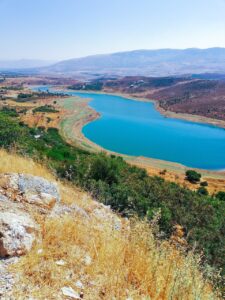
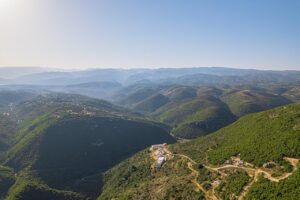
The valley also comprises Baalbek, one of the most crucial archaeological sites. Along the Mediterranean Sea, Lebanon offers a wonderful coastline of more than 200 kilometers. The coastal region has major cities like Beirut, Tripoli, Sidon, and Tyre. It features sandy beaches, rocky shores, and numerous small coves. The sea plays a huge role in the lifestyle of most Lebanese, providing opportunities for fishing, swimming, water sports, and taking relaxation by the coast. The land is also intersected by rivers, most of which flow from the mountains to the sea. These rivers cut their way through deep valleys and canyons, giving the landscape a dramatic touch. Some of the most beautiful and historic valleys, such as the Qadisha Valley, have been declared UNESCO World Heritage Sites. In all, Lebanon is a land of diversified geography, comprising mountains, valleys, rivers, sea, and forests in their integrity. All this diversified landscape offers multiple traveling experiences within one country.
History of Lebanon
Lebanon has a very ancient, intricate history dating back several thousand years. The earliest known and identifiable civilizations in this region include the Phoenicians, who established themselves as a great seafaring people with skill levels concerning trade, shipbuilding, and navigation. They established some key coastal cities such as Byblos, Sidon, and Tyre among others, which later became major centers of commerce and culture throughout the Mediterranean. The Phoenicians are also believed to have created one of the earliest alphabets, later influencing Greek and Latin writing systems. Successively, Lebanon was part of major empires such as the Assyrians, Babylonians, Persians, and finally the Romans. These latter built roads, temples, amphitheaters, and public buildings that still exist to this day, partly visible in this ancient city of Baalbek with some of the largest Roman temples in the world.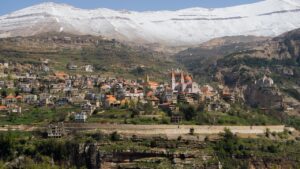
Early Christian communities settled in Lebanon at the rise of Christianity, building monasteries deep inside the mountain valleys. With the spread of Islam through the region, Lebanon then became part of various Islamic empires: the Umayyads, Abbasids, and Ottomans. The Ottoman period lasted for centuries into Lebanese architecture, cuisine, markets, and traditions. In the 20th century, Lebanon came under the French mandate after World War I. This very much influenced the current language in use, architectural aspects, education, and legal systems that the country applies today. Lebanon attained independence in 1943 and very rapidly developed to be one of the important cultural and economic centers in the Middle East. Beirut, the capital, earned the nickname “Paris of the Middle East.” Although Lebanon went through such usual spells of conflict, especially the civil war from 1975 to 1990, the country has been rebuilding, growing, and rejoicing in its cultural heritage.
Tourism Sites in Lebanon
Lebanon is a country where ancient history blends well with Mediterranean charm, and its tourism sites reflect a long tapestry of civilizations, cultures, and natural wonders. Every city, mountain, and coastline is a tell-tale of an evolution shaped by Phoenicians, Romans, Ottomans, Arabs, and French alike, as visitors touring through the country will readily realize. A tour of Lebanon is thus a soft ride across archaeological marvels, sacred monuments, picturesque valleys, bubbly city districts, and quiet mountain villages-all enlightening and strikingly picturesque.
Baalbek
One of the most iconic attractions in Lebanon is Baalbek, often referred to as the “City of the Sun.” As visitors walk through its monumental Roman temples, they are immediately struck by the grand columns that rise dramatically into the sky. The Temple of Bacchus and the Temple of Jupiter are among the largest and best-preserved Roman structures in the world.
Byblos
Byblos, on the coast, is another major highlight in Lebanon that proclaims itself one of the oldest continuously inhabited cities on Earth. Byblos teems with thousands of years of history, and visitors could travel through time, simply while walking its streets. Its Crusader castle stands proudly overlooking the Mediterranean Sea, with an archaeological site where layers of Phoenician, Roman, and Byzantine remains are in evidence.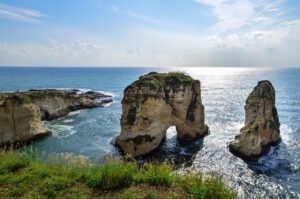
Jeita Grotto
Situated northeast of Beirut, Jeita Grotto is one of Lebanon’s most dazzling natural wonders. The gigantic cave system features a mysterious maze of stalactites, stalagmites, crystal formations, and huge chambers formed after millions of years of natural craftsmanship. The lower grotto is reached by a small boat gliding across a peaceful underground lake to create a dreamlike experience. This is a mixture of wonder, adventure, and serenity that makes Jeita Grotto one of the most popular tourist attractions in Lebanon.
Harissa
Just a few kilometers away from Jeita, the tranquil mountain village of Harissa offers spiritual and scenic adventuring at its finest. On top, one finds the famous statue of Our Lady of Lebanon, overlooking the Bay of Jounieh. Visitors commonly take a cable car-one known as the téléphérique-that makes its ascent from the coast up to this lofty perch and affords stunning panoramic views of the Mediterranean Sea, mountains, and modern cityscapes. The peaceful nature on the summit invites quiet reflection and slow, mindful exploration. The adjacent church and the terrace area are ideal places for contemplating the view and fresh mountain air.
Beirut
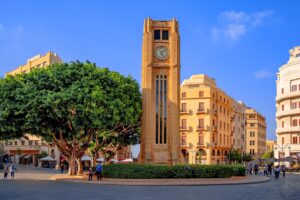
For visitors seeking a mix of culture and cosmopolitan life, Beirut, the capital city, is an essential stop. Beirut combines modern architecture with historical quarters, creating a lively yet charming atmosphere. Neighborhoods such as Gemmayzeh, Mar Mikhael, and Hamra are known for their vibrant nightlife, boutique cafés, and artistic spirit.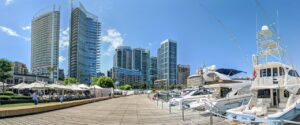
Beiteddine Palace
The Beiteddine Palace, in the verdant Chouf Mountains, is a chateau-like example of Lebanese 19th-century architecture. It has expansive courtyards, ornate stonework, carved wooden ceilings, fountains, and rooms with decorated cellars where emirs used to be accommodated. Visitors often pace up and down its corridors, drinking in the silence that surrounds them, built into history amidst nature. The surrounding landscape creates a refreshing escape from busy city life, offering views of terraced mountains and traditional villages.
Cedars of God
Also not too far from the Chouf, the magical Cedars of God are an ancient forest that represents the soul of Lebanon. Many of the trees, highly connected with strength, endurance, and sacred traditions, are very old. The walk through this forest is like taking a stroll through a living, natural museum. Gentle winds work their way through the branches, producing an unobtrusive cadence that invites reflection and repose. The Cedars of God are especially stunning during winter when the snow covers the mountains, turning them into a cinematic scenery.
Tyre
Along the Lebanese coastline, the vibrant city of Tyre offers both ancient treasures and stunning beaches. Visitors can walk around its extensive Roman ruins, which include a well-preserved hippodrome, necropolis, and colonnaded streets. Because Tyre stands right beside the Mediterranean Sea, much archaeological remains seem to appear right beside the shoreline, thus establishing the impression of a history seamlessly merged with nature. Travellers in search of relaxation and a quiet retreat from urban noise are attracted to the sandy beaches of this city.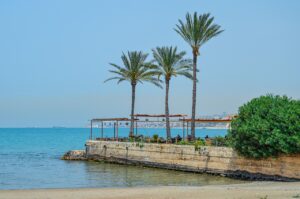
Sidon
Another Lebanese tourism gem is Sidon, a city full of historic, culturally deep meaning. The Sea Castle, built by Crusaders in the 13th century, dramatically stands above the water, creating a picturesque view. In Sidon, the old souks present a lively maze of traditional shops selling crafts, spices, and handmade sweets. The scent of soap from the city’s historic soap museum adds a distinctive sensory experience to the sensation. While walking around, travelers feel themselves being thrown into the world that has taken its shape via many centuries of trade, religion, and maritime heritage.
Bsharri
Bsharri in the Qadisha Valley allows for spiritual, natural, and cultural exploration. For centuries, this valley has been a refuge of Christian communities, where monasteries have been carved in the steep flanks of mountain cliffs. The landscape is dramatic: deep gorges, rivers in flow, and terraced fields. The proximity of the museum dedicated to Gibran Khalil Gibran, Lebanon’s famous poet and philosopher, imbues the region with an extra layer of artistic meaning.
Anjar
Equally attractive are Lebanon’s many archaeological sites, including the Umayyad-built city of Anjar. The rectangular layout, adorned with colonnades, is unique because of what remains of early Islamic urban planning, such as its palaces. The surrounding Bekaa Valley with its agricultural fields and mountain scenery completes the experience. Exploration of Lebanon’s treasures of tourism thus becomes a journey to remember through civilizations, landscapes, and timeless stories in every nook and corner of the country.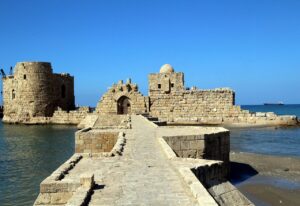
Best Time to Visit Lebanon
The best time to go to Lebanon depends on what you want to do, but generally speaking, spring and fall are really nice.
- Spring (March to May) : This is one of the best times to visit because it has mild weather and flowers bloom right across the mountains and valleys. It’s great for hiking, sightseeing, and outdoor activities.
- Autumn (September to November) : Another perfect season is autumn: comfortable temperatures and colorful landscapes with the autumn leaves. It is ideal for wine tours, city trips, and seeing historical sites.
- Summer (June to August) : During summer, it is warm, and Lebanon’s beaches become very lively. In fact, many festivals and events take place. However, some areas inland are hot.
- Winter: from December to February : Winter makes them full of snow, perfect for skiing as in Faraya and the Cedars, while the coastal cities are cool and pleasant.

How to Go to Lebanon
- By Air : The main international gateway to Lebanon is the Beirut–Rafic Hariri International Airport. It connects the country to most major cities in Europe, the Middle East, Asia, and Africa. From this airport, one can reach the center of Beirut within 15-20 minutes, either by taxi or airport shuttle.
- By Land : It is bound by Lebanon to the west. Travelers can enter Lebanon by road from Damascus or other cities in Syria; most border regulations will depend on the time.
- By Sea : Ferries sometimes connect Lebanon with Cyprus, but availability differs. Transportation Within Lebanon Taxis, ride-share apps, rental cars, and local buses make it generally easy to travel within the country. Many tourists hire private drivers for longer trips to Baalbek, the Cedars, or the Beqaa Valley.

Conclusion
Surprising, beautiful, and diverse, that is Lebanon. Although small in geographic size, Lebanon offers visitors a complete travel experience with history, culture, nature, cuisine, and warm hospitality. From ancient Phoenician cities and Roman temples to deep mountain valleys and Mediterranean beaches, Lebanon has it all. The cities are dynamic and modern, the villages are quiet and charming, and the historical sites carry the memory of the great civilizations that swept across the region. This is a land where past and present blend in beauty. Every corner tells a story, every street has its own charm, and every moment seems to be full of significance. With its wonderful geography, fascinating history, hospitable people, and unforgettable landscapes, Lebanon remains one of the most special destinations in the Middle East.
Author

sadikhan.ceo@gmail.com
Related posts
Slovakia
- 0
- 2,323 words
Slovakia : Discover the Hidden Gem of Central Europe Tucked right in the heart of Central Europe, Slovakia is one of those...
Read out all
Singapore
- 0
- 2,246 words
Singapore : A Global City and Travel Hub Singapore’s one of those places where modern life and nature seem to fit together...
Read out all
Seychelles
- 0
- 2,644 words
Seychelles : A Dream Destination in the Indian Ocean You hear about places as “dream destinations” all the time, but Seychelles totally...
Read out all
Serbia
- 0
- 2,789 words
Serbia Travel Guide: Regions of the Balkan Nation Serbia sits right at the heart of the Balkans, and honestly, it’s one of...
Read out all
Senegal
- 0
- 2,277 words
Senegal Travel Guide: Discover the Culture, History, Tourism, and Surrounding Regions of West Africa Welcome to Senegal—a place that really captures the...
Read out all
Saudi Arabia
- 0
- 2,914 words
Saudi Arabia: A Powerful Nation in the Middle East and Global Importance of the Kingdom Saudi Arabia stands out as one of...
Read out all