
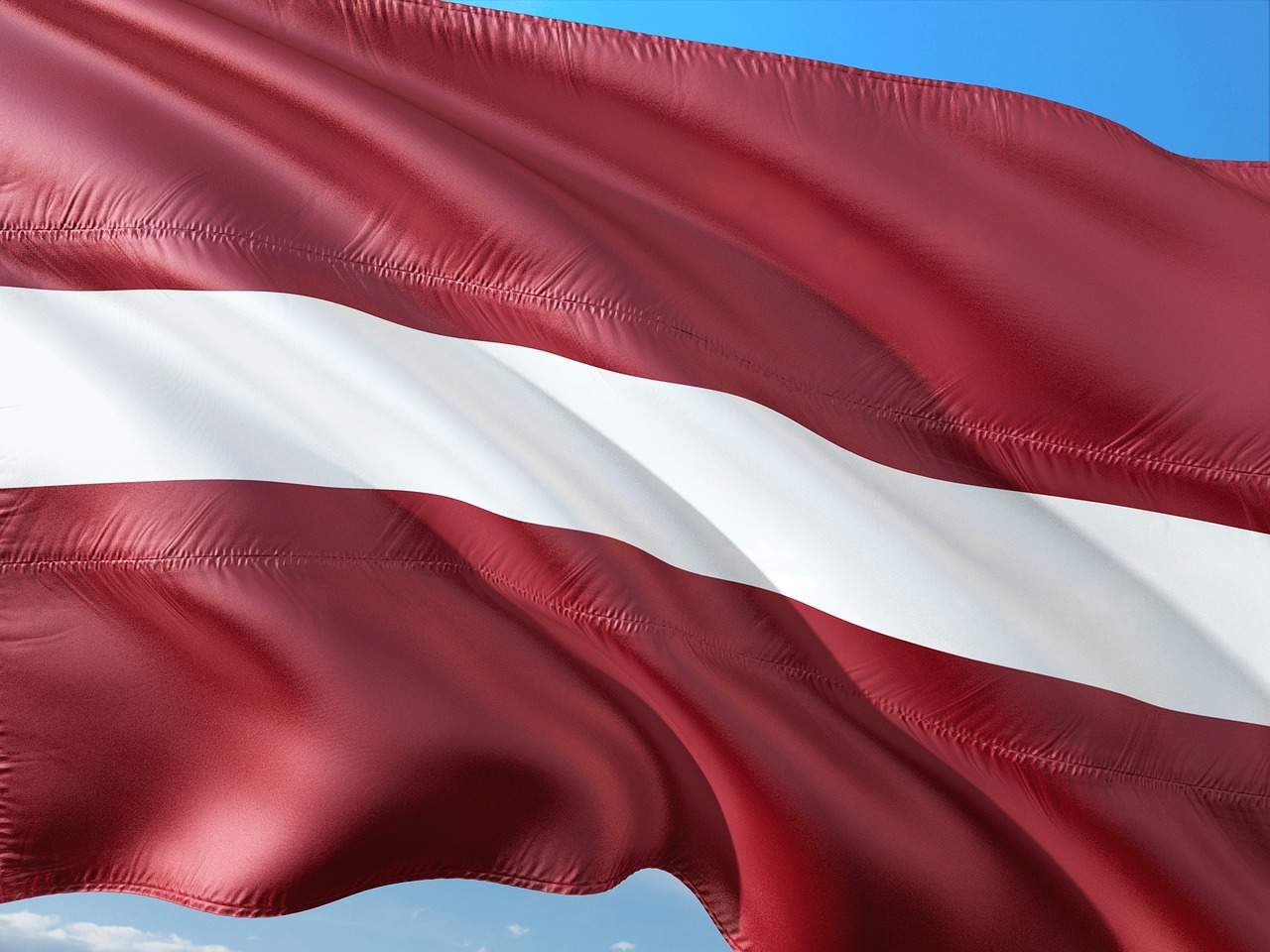
Latvia – Beautiful country located in Northern Europe
Latvia is a peaceful and beautiful country that is situated in Northern Europe; it has pure nature, ancient cities, and calm coastal life. It is one of the three Baltic states, together with Lithuania and Estonia. When travelers visit Latvia, they often feel that the country carries a gentle balance between old and new. Medieval buildings stand proudly beside modern architecture, while quiet forests stretch only a short drive away from lively city squares. Because of this balance, Latvia provides travelers with a very comfortable atmosphere: easy to explore, safe in travel, full of charm. The culture of Latvia has been influenced by many sources: German, Swedish, Polish, Russian, and Scandinavian. Nevertheless, it has preserved a strong identity through its language, folk traditions, music, and the famous song festival that gathers several thousand performers. Every year, more travelers discover Latvia as an affordable and meaningful destination, and they are surprised by how many unique places it offers.
Geography of Latvia
Latvia is situated on the eastern bank of the Baltic Sea, giving the country both long coastlines and sandy beaches. The latter are never crowded, even in summer, which means that such places are ideal for quiet walks, sunsets, and undisturbed swimming. The land itself is mostly flat with gentle hills and huge forests, occupying a large part of the territory. More than half of Latvia is natural forest, placing it among the greenest countries in Europe. The rivers crossing Latvia are numerous, but one of the most famous is the Daugava River, which shaped the history and connected Latvia with its neighbours through centuries. Besides, there are many lakes, especially in the eastern part of the country called Latgale. That is the reason why it has been very often called “Land of Blue Lakes” because the waters seem to be so still and bright.
History of Latvia
Latvia’s history is long and full of cultural exchange. First, the region housed ancient Baltic tribes, farming and trading. Powerful groups in successive order, such as German crusaders, Swedish kings, Polish nobles, and the Russian Empire, ruled over parts of Latvia through time. Each of them left visible marks-churches, castles, fortresses, and trading towns. In the Middle Ages, Riga developed into a significant trading city as part of the Hanseatic League. Merchants from all over Europe visited Riga’s port, bringing wealth and architecture that still stands today. Later, Latvia experienced new laws, new culture, and new ideas throughout the Swedish and Russian periods.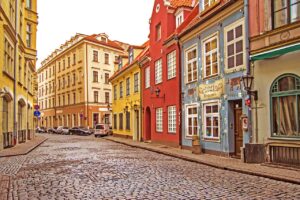
Tourism Sites in Latvia
Latvia is a country of discreet beauty, rich culture, and carefully preserved history. Its tourist destinations are scattered throughout the peaceful countryside, dense forests, charming towns, and long coast along the Baltic Sea. The medieval castles, old churches, charming beaches, vibrant cities, and untouched national parks welcome travelers in the country. Each of these tourist destinations has its story, and together they paint a full picture of Latvia’s national identity. You will receive a full and detailed explanation in the next paragraphs about the most important and interesting tourist destinations in Latvia.
Riga Old Town (Vecrīga)
Riga Old Town is the heart and soul of Latvia. When people walk into this historic area, they come into a world of narrow cobblestone streets, colorful medieval houses, and open squares full of life. The buildings here speak to Latvia’s long architectural journey, from Gothic churches to Baroque façades and all the way to flowing Art Nouveau designs. Visitors can take a casual stroll in the area and enjoy small cafes, craft shops, and traditional restaurants. The atmosphere in Old Town is serene, yet lively, particularly around the iconic landmarks. Among the largest medieval churches in the Baltic region is the Riga Cathedral, which boasts a tall spire and a great organ. The likewise very close St. Peter’s Church is opportunities to get a stunning panoramic view of the whole city from the height of its tower. Then there is the House of the Blackheads-a building beautifully decorated to represent the wealthy merchant past of Riga perfectly. Visitors who take a stroll around this Old Town immediately feel how deeply Riga has been connected with European culture and trade.
Riga Art Nouveau District
Just outside the walls of this Old Town, however, visitors will find a world-class treasure: Riga’s Art Nouveau District. Riga boasts more than 800 Art Nouveau buildings, making it one of the biggest collections in the world. The district centers on Alberta Street, where one can see homes with floral motifs, latticework carvings, and incredible statues. Walking here feels like going through an open-air museum. Every house is a story about creativity and extravagance beginning in the early part of the 20th century. It is always time to take pictures: curving shapes, large windows, and detailed balconies.
Jurmala Beach
Only a short distance from Riga lies Jurmala, the most famous beach destination in Latvia. It stretches for more than 30 km along the Baltic Sea, offering soft golden sand, gentle waves, and fresh sea air. The town surrounding the beach is filled with wooden houses, old villas, and relaxing spa resorts. The tourists like Jurmala because it combines natural beauty with modern comfort.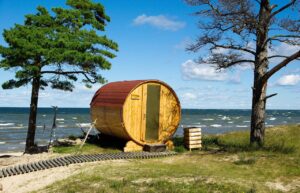
Gauja National Park
Gauja National Park is the oldest and biggest national park in Latvia. It is famous for its deep forests, sandstone cliffs, wide rivers, and quiet hiking trails. Many tourists claim that the park is just like a setting from a fairytale, with colorful valleys, high trees, and fresh natural surroundings. This park encompasses many interesting historical sites: ancient castles, old estates, and archaeological areas. There is one town within the park, Sigulda, which is sometimes called the “Switzerland of Latvia” because it has scenic hills with viewpoints. Visitors can go cycling, canoeing on the Gauja River, or explore nature in natural caves; Gutmanis Cave is the biggest in the Baltic region.
Turaida Castle
Turaida Castle is one of Latvia’s most iconic features standing proudly above the Gauja River Valley. The early 13th-century, red-brick fortress was surrounded by forests and large open fields. Nowadays, the castle has been treated with care so visitors can climb its towers, explore museum rooms, and learn about medieval life. The view from the main tower is one of a kind. he Turaida Museum Reserve, which surrounds the castle, also features traditional houses, sculptures, and peaceful walking paths. Many spend hours around the grounds, taking in the natural beauty around this historic site.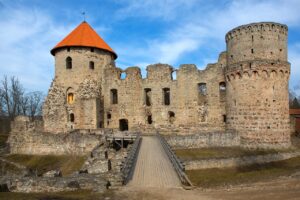
Cēsis Castle
Another important medieval structure, the Cēsis Castle, stands to tell part of Latvia’s long and complex history. Constructed by the Livonian Order, once a robust stronghold, it is an essential point of regional authority. Even today, with a partly ruined castle, these high stone walls and round towers create a breathtakingly dramatic and even atmospheric scene. Visitors can walk through the grounds of the castle with candle lanterns, go up into the remaining towers, and visit exhibitions about medieval weapons and culture.
Rundāle Palace
Rundāle Palace is often called “Latvian Versailles” due to its grand architecture combined with its beautiful palace gardens. Designed by the famous Italian architect Bartolomeo Rastrelli, who designed many palaces in St. Petersburg, Rundāle is a masterpiece of Baroque and Rococo style. In the interior of the palace, visitors can enjoy a number of rooms richly decorated with gold-the Golden Hall, the White Hall, or the private chambers of the Duke.
Kuldīga and the Venta Rapid
Kuldīga is one of the most picturesque towns in Latvia, famous for its old wooden houses, narrow streets, and a relaxed atmosphere along the river. The most extraordinary landmark is the Venta Rapid, which is considered to be the widest waterfall in Europe. Though not tall, this waterfall is very wide and beautifully spread along the Venta River. Next to the waterfall, there is also a very long red-brick bridge, which is one of the longest bridges of this type in Europe and creates the charming 19th-century character of the town. In spring and autumn, tourists can observe fish jumping over the waterfall-the so-called “flying fish”-a unique natural phenomenon. Kuldīga feels like a slow, timeless place where visitors can relax and experience a traditional Latvian lifestyle.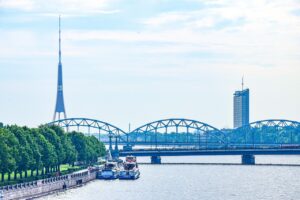
Liepāja
Liepāja is a port city with an ever-present feeling of music, culture, and dramatic architecture. Its beach is famous for its white sand of fine grain and soft dunes, therefore very popular during the summer. It includes the Liepāja Great Amber Concert Hall, a modern building luminous with an amber-colored façade. Yet another place of interest is Karosta, an ex-military area including old forts, dramatic coastline, and famous Karosta Prison. Here, one is able to take part in guided tours of the area and delve into its history or simply walk along and explore abandoned fortifications right next to the sea. This mix of natural and historical mystique really sets Liepāja apart in Latvia.
Cape Kolka
Cape Kolka is one of the most distinctive natural points in Latvia. At this point, the Baltic Sea joins with the Gulf of Riga, and one can witness dramatic intersections of waves and wind, with the constant shifting of sands. This part belongs to the protected nature reserve and is famous for its unspoiled environment and abundant wildlife.
Surrounding Places of Latvia in Detail
Latvia is surrounded by interesting neighbours, each offering something different. Since Latvia is very well connected by road, sea, and air, it is pretty easy for travelers to take a look at nearby countries.
Estonia – Northern Neighbor
Estonia is situated north of Latvia. Both countries have the same origin of languages and a lot in common in respect to cultural traditions. Tourists often go from Riga to Tallinn, the capital of Estonia, featuring its fairy-tale-like Old Town, medieval city walls, and pointed towers. It takes only a few hours to get there by bus or by car, which makes Estonia a natural extension of a Baltic tour.
Lithuania – Southern Neighbor
It sits southward of Latvia, possibly another representative of the Baltic family. Its capital, Vilnius, carries upscale churches, wide squares, and artistic neighbourhoods. Yet another favourite destination is the Curonian Spit, a thin peninsula of sand dune, which feels like a peaceful dream. Most travelers put Latvia and Lithuania together in one trip for ease of transport and the relation between cultures.
Sweden – Across the Baltic Sea
Riga is connected with Stockholm by ferry. An overnight journey on it is both comfortable and panorama-laden. Travelers like the fact that they can sail across the Baltic Sea and wake up at the rise of Scandinavia. Stockholm itself offers museums, islands, royal palaces, and modern architecture.
Russia (Border Region)
Latvia borders Russia, although tourism therein is dependent on international regulations. Traditionally, a lot of cultural exchange did take part through this region, including influencing food, architecture, and language in eastern Latvia.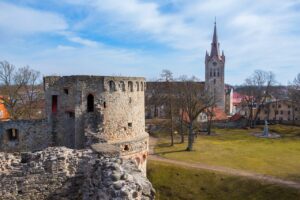
Best Time to Visit Latvia
Everything in Latvia is beautiful during all seasons, but the best period to visit depends on the kind of experience a traveler would want to have. However, most visitors come in late spring, summer, and early autumn, when the country feels warm, full of life, and with festivals. The best overall time is between May and September. During these months, the weather is nice, daylight is long, and outdoors are easily accessible. In May, flowers begin to bloom in parks and forests, with the countryside looking fresh and colorful. At the end of June and July, it is hotter, and places like Jūrmala become perfect for swimming and sunbathing, while streets in Riga, Liepāja, and Cēsis fill with cafes, music events, and cultural celebrations. Even museums open longer, as there are more tourists.
How to Go to Latvia
It is easy to reach Latvia as it has good connectivity by air, road, ferry, and even rail from neighboring regions. The main entry point to Latvia for most international visitors is Riga International Airport, or RIX, which is the largest and busiest airport in the Baltic region.
- By Air Riga International Airport has flights from basic European cities: London, Paris, Frankfurt, Amsterdam, Istanbul, Warsaw, Helsinki, and Copenhagen. Many national carriers and low-budget airlines fly to Riga daily. For travelers coming from North America, the Middle East, or Asia, flights connecting through European hubs offer easy connections. Once in Riga, local buses and taxis take travelers to the city center in under 30 minutes.
- By Road People arriving from Estonia or Lithuania, neighbors in the Baltics, often bus in or drive across the border. Roads are smooth, highways well-marked, and long-distance bus companies offer comfortable seating, Wi-Fi, and luggage service. Popular routes include Tallinn–Riga or Vilnius–Riga, taking four to five hours.
- By Train The number of train connections from Western Europe is minimal, but some travelers from Lithuania or Estonia can take trains between major cities. The Baltic states are working on expanding the Rail Baltica project that will eventually connect Latvia with Poland and Central Europe.

- By Ferry People also travel by sea. Ferries from Stockholm link directly to Riga, providing a very pleasant night journey across the Baltic Sea. Some cruise ships touch the port during summer. Travel Within Latvia Once in the country, however, traveling around is quite easy. Buses are among the most common transport means between cities and towns, which tourists use in going to Sigulda, Cēsis, Jūrmala, Liepāja, or Daugavpils.
Trains are convenient for shorter journeys, like the picturesque route from Riga to Jūrmala. With a car rental, there is more freedom for travel, especially when it concerns national parks or villages of special interest that are far from larger population centers. Roads are safe, signs are clear, and distances between places are short, making traveling comfortable.
Conclusion
Latvia-a country full of beauty, history, and a warm heart based on its culture. Though it may appear small on the map, Latvia is an unexpected, surprising mosaic: from the quiet, wind-whipped beaches of the Baltic Sea to its dense forests and dramatic river valleys, charming medieval towns, UNESCO-listed historic centers, and wooden architecture with roots in centuries of cultural heritage. Cities like Riga, Cēsis, Liepāja, and Daugavpils- each city has its tales to tell. And then there is the countryside, which gives a quiet rhythm that many visitors fall in love with. Tourism is pleasant in Latvia because it is a calm, friendly place that is easy to travel around. In summer, there are museums, castles, churches, parks, markets, and alive festivals to be seen; one can relax on a sandy beach in Jūrmala or take a hike through Gauja National Park. One may walk through medieval old towns or take boat rides along quiet lakes. Nature and culture make for a gentle and well-balanced combination in Latvia, one that stays with the visitors long after they have gone. Meanwhile, the surroundings make this experience even fuller. The Baltic region is so closely knit that from here, one could easily continue further into Estonia or Lithuania, even by ferry across to Sweden. This makes Latvia not just a beautiful destination but also an excellent starting point for a larger Northern European adventure.
Author

sadikhan.ceo@gmail.com
Related posts
Slovakia
- 0
- 2,323 words
Slovakia : Discover the Hidden Gem of Central Europe Tucked right in the heart of Central Europe, Slovakia is one of those...
Read out all
Singapore
- 0
- 2,246 words
Singapore : A Global City and Travel Hub Singapore’s one of those places where modern life and nature seem to fit together...
Read out all
Seychelles
- 0
- 2,644 words
Seychelles : A Dream Destination in the Indian Ocean You hear about places as “dream destinations” all the time, but Seychelles totally...
Read out all
Serbia
- 0
- 2,789 words
Serbia Travel Guide: Regions of the Balkan Nation Serbia sits right at the heart of the Balkans, and honestly, it’s one of...
Read out all
Senegal
- 0
- 2,277 words
Senegal Travel Guide: Discover the Culture, History, Tourism, and Surrounding Regions of West Africa Welcome to Senegal—a place that really captures the...
Read out all
Saudi Arabia
- 0
- 2,914 words
Saudi Arabia: A Powerful Nation in the Middle East and Global Importance of the Kingdom Saudi Arabia stands out as one of...
Read out all