

Hungary – Towns preserve ancient stories
Hungary is a beautiful country situated in Central Europe, and it boasts deep history, charming cities, hot springs, classical music, and warm hospitality. When people first think of Hungary, they often imagine the grand city of Budapest, the calm countryside filled with green fields, peaceful Lake Balaton, or colourfully traditional folkways of Hungarian villages. But Hungary is much more than these images. It is a place where old culture meets modern life, where proud ancient castles stand next to busy streets, and where the natural environment blends harmoniously with human creativity. Because of all these wonderful qualities, Hungary has become a favourite destination for travellers, researchers, and students, and for people who love European culture. 
Understanding history is the key to deeply understanding Hungary. The history of Hungary is long and complicated, it has shaped the identity of the country. Through the centuries, many different cultures, leaders, and groups have lived on this land, and from each, some signs can still be seen today. The early history of Hungary starts with the coming of the Magyar tribes to the Carpathian Basin around the 9th century. These formed the beginnings of the nation of Hungary. Later, under the leadership of King Stephen I, the country of Hungary became a Christian kingdom and developed strong political and cultural systems. This period was of extreme importance because it laid down the framework of what Hungary would become in the future. Events continued in the country, such as war, peace, economic booms, and social reforms. For instance, there was a division of Hungary into three parts: under Ottoman rule, under the Habsburg Empire, and independent Hungary, between the 16th and 17th centuries.
History
In the 19th century, another major transformation took place when Hungary became part of the Austro-Hungarian Empire, one of the most powerful and influential systems in Europe at that time. This brought its challenges and opportunities to Hungary. Many cities grew rapidly, railway networks were developed, and industries expanded. Budapest in particular became an important cultural and economic center, attracting artists, writers, musicians, and academics from all over Europe.
The 20th century was important, too. Hungary went through World War I and II, and Soviet control left its imprint on the political and social life for decades to come. However, in 1989, Hungary regained its title as a democratic country and opened up to the world. Since then, rapid development has taken place within the country, and today, it is a lively destination for tourism, education, business, and cultural interactions.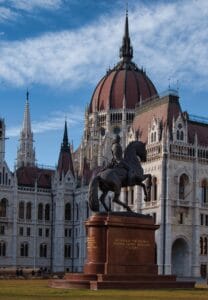
Culture Of Hungary
Hungarian culture is rich, colorful, and quite easy to observe while walking through cities, villages, or even countryside roads. Perhaps the most distinctive feature of Hungarian culture is its language. The Hungarian language, which is called “Magyar,” does not bear any similarity to most other European languages. The Magyar language belongs to the Finno-Ugric family of languages, making it very different from the neighboring languages, such as German, Slovak, or Romanian. For this reason, many travelers consider the language to be interesting and memorable. Although it is difficult to study, it is an important attribute of Hungary.
At the heart of Hungarian culture is traditional music and dancing. Folk dances, which originate from Transdanubia, the Great Plain, and North Hungarian Mountains, are based on the strong links that exist between the individuals and their natural surroundings. They normally wear colorful costumes: with men putting on boots and embroidered shirts, while women wear long skirts decorated with beautiful patterns. The music is lively and often played with violins, zithers, and other string instruments.
Traditions Of Hungary
Food is another indispensable part of life in Hungary. Hungarian food is warm and comforting with plenty of flavor. Perhaps the most recognized dish is goulash, a hearty soup made from beef, paprika, potatoes, and vegetables. Paprika seems to play an important role in many Hungarian foods, adding a rich red hue and a touch of spicy taste. Therefore, travelers visiting Hungary enjoy tasting the different kinds of local food due to the fact that the flavors are simple, strong, and unforgettable.
Hungary is also famous for its thermal baths. Due to its abundant natural hot springs, over a period of hundreds of years, the country has grown a very strong bathing culture. This includes famous thermal baths such as those in Budapest, Hévíz, and Eger, where visitors can relax in warm mineral water. Thermal bathing originated in the Roman era and then further expanded during the Turkish times. Presently, thermal baths are an integral part of relaxation, especially for health treatments. Since there are really good spa facilities available in Hungary, many travelers go to Hungary for wellness tourism.
The Geography
Hungary is situated in the middle of the Carpathian Basin, and its landscape is richly varied and beautiful. It contains all kinds of flat plains, rolling hills, peaceful lakes, and gently flowing rivers. Each region has its peculiar features which make it attractive for tourism and exploration. Probably the most famous natural area is that of the Great Hungarian Plain, also known as the Alföld. It is a big flat region in the southeastern part of the country. The alföld is especially noted for its golden fields of wheat, its villages typically featuring traditional farmhouses adorned with porcelain stoves, and wild horses running free in nature reserves. One of the most famous UNESCO World Heritage Sites, Hortobágy National Park on the plain itself, protects unique landscapes, rare bird species, and traditional Hungarian shepherd culture.
Another key land feature is Lake Balaton, the largest lake in Central Europe. Often referred to as the “Hungarian Sea,” Lake Balaton is a favorite holiday destination for people of all ages. The water is warm in the lake, the waves are gentle, and the atmosphere is relaxed. Along the shores are charming towns like Siófok, Balatonfüred, and Tihany. There are beaches, vineyards, walking trails, and viewpoints in these towns. Due to the beauty of the place, Lake Balaton draws in visitors from locals and international tourists annually.
Natural Beauty Of Hungary
The landscape is entirely different in Northern Hungary, filled with forested mountains, deep valleys, and historic castles. Among them, the Bükk Mountains and the Mátra Mountains are especially favored by hikers and nature lovers. Kékes Mountain, Hungary’s highest point, is situated in the Mátra area. Travellers can explore hiking trails, enjoy fresh mountain air, and visit small towns that maintain old traditions.
Another important river that flows through Hungary is the Danube River. In fact, the Danube divides Budapest into two parts: Buda and Pest. The river is wide, calm, and beautiful, particularly at sunset. Evening river cruises are very popular because they offer a nice look at the famous landmarks of the city from the water. North of Budapest, the Danube Bend is a picturesque curve in the river that is lined by forests, hills, and even some medieval towns. This is one of the most beautiful natural regions of the country.
Why Travellers Love Hungary
Travellers come for a number of reasons: to see historical cities, to relax in thermal baths, or simply to enjoy nature, food, music, festivals, and traditions. Its central location also provides further opportunities for easy travel to neighbouring countries such as Austria, Slovakia, Romania, Croatia, and Serbia. For this reason, Hungary is often part of larger European travel routes.
People also love Hungary because it is an affordable country. Food, accommodations, transport, and entertainment are generally cheaper compared to Western Europe, which is why it is considered a destination suitable for students, families, backpackers, and other long-term travelers.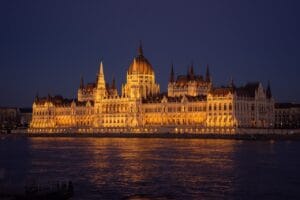
Major Cities And Regions Of Hungary
Hungary is a country where every region represents something different: a face of history, culture, or nature. When we explore the nation beyond its famous capital, we realize that each city and each landscape possesses its own identity. These unique characters help visitors grasp the real heartbeat of Hungary. Continuing the journey now, the best place to start is Budapest, the capital and the brightest treasure among the jewels of the country.
Budapest
It stands proudly on both sides of the Danube River: Buda rises on the hills, and Pest spreads on the flat plain. Buda shows ancient charm, stone paths, and historic sites; Pest offers a modern world filled with life, cafés, theatres, hotels, and shopping streets. The two combined create a city where the old world meets the new world in an elegant and natural manner. Visitors walking near the river see the Hungarian Parliament, a stunning building glowing under sunlight; the Chain Bridge, connecting both sides; and Buda Castle, which watches over the area majestically. The city is also rich with culture, thanks to the Hungarian State Opera House, the National Museum, and the Museum of Fine Arts.
Debrecen
Going east, the city of Debrecen introduces another rhythm of Hungarian life. Debrecen is considered the country’s intellectual centre due to its strong academic heritage combined with cultural history. The Great Reformed Church stands tall in the middle of the city and symbolizes freedom, faith, and national pride. Another favorite of the tourists is the Déri Museum, where beautiful exhibits combine art, history, and culture. Large parks and main squares give the city a laid-back atmosphere, perfect for travelers who like quiet urban stops.
Szeged
Farther south, Szeged is a jovial city, very inviting to travelers, bathed in sunshine and with colorfully tinted buildings. Reputedly the “City of Sunshine,” Szeged boasts warm weather for much of the year. The most famous Votive Church is simply a showpiece, sporting two high towers in the middle of this town. Szeged is also famous for its paprika, a spice of great importance to Hungarian culinary traditions. Restaurants here serve dishes filled with rich flavors that capture the best of Hungarian cuisine. Walkways along the Tisza River and boisterous university districts make Szeged seem young and energetic.
Pécs
Pécs, situated in the southwestern part of the country, contributes to the disposition of cultures shaped by Roman, Turkish, and European influences. The city has a Mediterranean atmosphere with its warm colours, narrow streets, and charming cafés. This may be expressed by the Early Christian Necropolis, a UNESCO World Heritage Site, showing evidence of ancient burial chambers with detailed artwork. Close by is the magnificent Pécs Cathedral, a Romanesque building with towers high into the sky. Király Street becomes vibrant with music, art, and conversation; Pécs is a favorite among travelers who enjoy creativeness and history combined.
Sopron
To the west, Sopron invites visitors to step into a world of medieval charm. Located near the Austrian frontier, Sopron has a character all its own, molded from both Hungarian and Austrian influences. In the center is its proud Firewatch Tower, surrounded by well-preserved medieval buildings, narrow lanes, and quiet courtyards. The old town seems timeless, while not far away, beautiful vineyards and peaceful walking paths entice the visitor who enjoys nature and tradition.
Another region of interest is North Hungary, where the presence of Eger forms the historic highlight. The main attraction here is the mighty castle in Eger, which served as a crucial bulwark against the Ottoman raid that invaded Hungary. Visitors love making casual strolls around the fortress, finding underground tunnels, and offering great views of the city from an elevated position. Eger also offers thermal baths and wine culture, topped off with the red wine Egri Bikavér or “Bull’s Blood”. Wine lovers will surely enjoy this in the Valley of the Beautiful Women, lined by wine cellars one after another.
Tourism Sites Of Hungary
Hungary is full of tourism sites that narrate stories of kings, artists, warriors, musicians, and ordinary families. Among all, Buda Castle District is one of the most extraordinary ones. It stands on top of a hill in Budapest with a beautiful combination of museums, old buildings, and panoramic views. When travelers walk on these narrow streets, they feel that they have been part of centuries of history. Fisherman’s Bastion is one of the most favourite spots, with white towers and arches similar to a fairytale castle. In the vicinity, Matthias Church adds beauty with its colorful tiled roof and detailed interior design.
Parliament Building
One of the other places that draws visitors’ imaginations is the Hungarian Parliament Building. The great building standing tall along the Danube River is actually a mirror of pride and achievement for the nation. Its pointed towers, decorative arches, and massive size give quite a sight to one’s eyes. It houses grand halls, precious objects from its historical background, and the Holy Crown of Hungary. Many visitors also love night river cruises when the Parliament shines across the waters.
St. Stephen’s Basilica
St. Stephen’s Basilica adds another layer of beauty to the capital, dedicated to Hungary’s very first king and serving both as a religious site and a cultural symbol. Inside, it’s filled with works of art, tranquil chapels, and warm lighting. Many people climb its top for one of the best panoramic views of Budapest. Andrássy Avenue leads from the city centre toward Heroes’ Square on a broad boulevard lined by elegant buildings and historic monuments. Heroes’ Square itself is also lined with statues of key leaders who have shaped history in this nation, making it a powerful place to reflect.
Hortobágy National Park
Quite different from the capital is the Hortobágy National Park. This large plain, preserved as a UNESCO site, is a reminder of traditional rural life. Wild horses, grey cattle, shepherd dogs, and birds wander freely across the landscape.
Lake Hévíz
Farther west is the natural wonder of Lake Hévíz. It is the largest thermal lake in the world, and its warm waters attract people for healing throughout the year. Every day, mineral-rich water comes up from underground springs, and this lake is one of the most well-known sites for wellness tourism. Because of this, many come to stay afloat in the warm water for hours and enjoy the gentle flow of lily pads or soft ripples.
Tokaj wine region
The wine region of Tokaj is another interesting tourist destination, primarily for all those who enjoy wine and culture. Gently sloping hills of Tokaj produce the legendary Tokaji Aszú wine, sometimes referred to as “the wine of kings.” Wine cellars hidden beneath the hills create a mysterious and romantic atmosphere. Tastings, vineyard tours, and warm hospitality make Tokaj a lovely destination for travellers who enjoy local traditions.
Surrounding Places Of Hungary
Hungary has a lot of beautiful neighbours, and its central position makes any travel smooth, easy, and convenient. For this reason, many tourists link their Hungarian trip with visits to the neighbouring countries. One of the closest destinations is Austria, with Vienna becoming an attractive extension to a trip to Hungary. Vienna stands out for its imperial palaces, classical music, stately streets, and rich artistic culture.
Slovakia
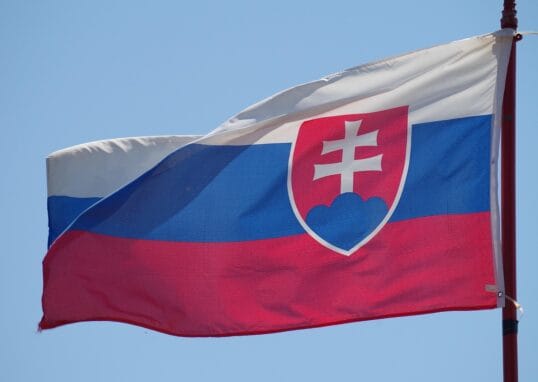
To the north, Slovakia borders long stretches of Hungarian territory, with the capital Bratislava lying but a short journey east from Budapest. Situated on the banks of the Danube River, Bratislava’s castle rises above the city in a simple, graceful manner, while its old town is filled with colorful buildings and quiet squares lined by cozy cafes. This gives it a very warm and comfortable feeling, and the peacefulness of the place has made it a favorite for day trips from Hungary.
Romania
Romania shares an eastern border with Hungary, while the region of Transylvania provides a dramatic landscape, medieval towns, and deep cultural stories. Visitors go on trips from Hungary to admire the beautiful city of Cluj-Napoca, the historical fortress city of Alba Iulia, or the rolling Carpathian Mountains. The cultural ties between Hungarians and Transylvanians are strong, and this makes travel between the two places significant and instructive.
Serbia
To the south, Serbia provides another interesting travel opportunity. Colourful buildings, a quiet riverbank, and friendly people make it pleasant. Croatia, southwest from Hungary, opens towards the Adriatic Sea. Many travellers who want to combine a Central European vacation with a coastal experience often continue from Hungary towards Croatia to enjoy beaches, blue water, and seaside villages.
Slovenia
Since Slovenia is located near western Hungary, many visitors choose to see both countries during one trip. The surroundings of Hungary add diversity, beauty, and new cultural experiences to the journey of any traveler.
Conclution
Hungary is a country that skillfully fuses history, culture, and natural beauty in both a graceful and inviting manner. While we observe closely at the cities, landscapes, and traditions of the country, it follows that Hungary can provide a peaceful and yet exciting travel experience. The towns here show their ancient stories well, while the modern spaces signify growth, creativity, and welcoming hospitality. Visitors can find comfort due to the mixture of these factors, as well as inspiration and many things to discover. The country’s tourism sites help travelers understand the long journey that is Hungary through time.
Author

sadikhan.ceo@gmail.com
Related posts
Slovakia
- 0
- 2,323 words
Slovakia : Discover the Hidden Gem of Central Europe Tucked right in the heart of Central Europe, Slovakia is one of those...
Read out all
Singapore
- 0
- 2,246 words
Singapore : A Global City and Travel Hub Singapore’s one of those places where modern life and nature seem to fit together...
Read out all
Seychelles
- 0
- 2,644 words
Seychelles : A Dream Destination in the Indian Ocean You hear about places as “dream destinations” all the time, but Seychelles totally...
Read out all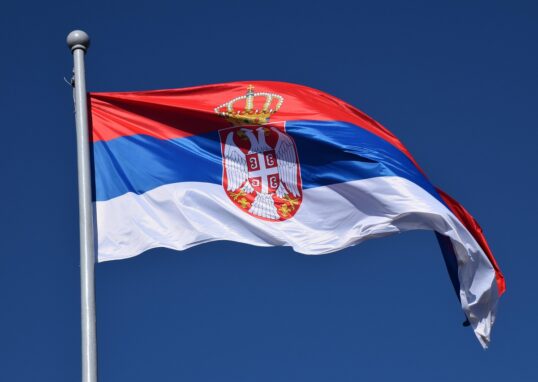
Serbia
- 0
- 2,789 words
Serbia Travel Guide: Regions of the Balkan Nation Serbia sits right at the heart of the Balkans, and honestly, it’s one of...
Read out all
Senegal
- 0
- 2,277 words
Senegal Travel Guide: Discover the Culture, History, Tourism, and Surrounding Regions of West Africa Welcome to Senegal—a place that really captures the...
Read out all
Saudi Arabia
- 0
- 2,914 words
Saudi Arabia: A Powerful Nation in the Middle East and Global Importance of the Kingdom Saudi Arabia stands out as one of...
Read out all