
🌍 Ennedi Massif, Chad — The Hidden Stone Kingdom of the Sahara
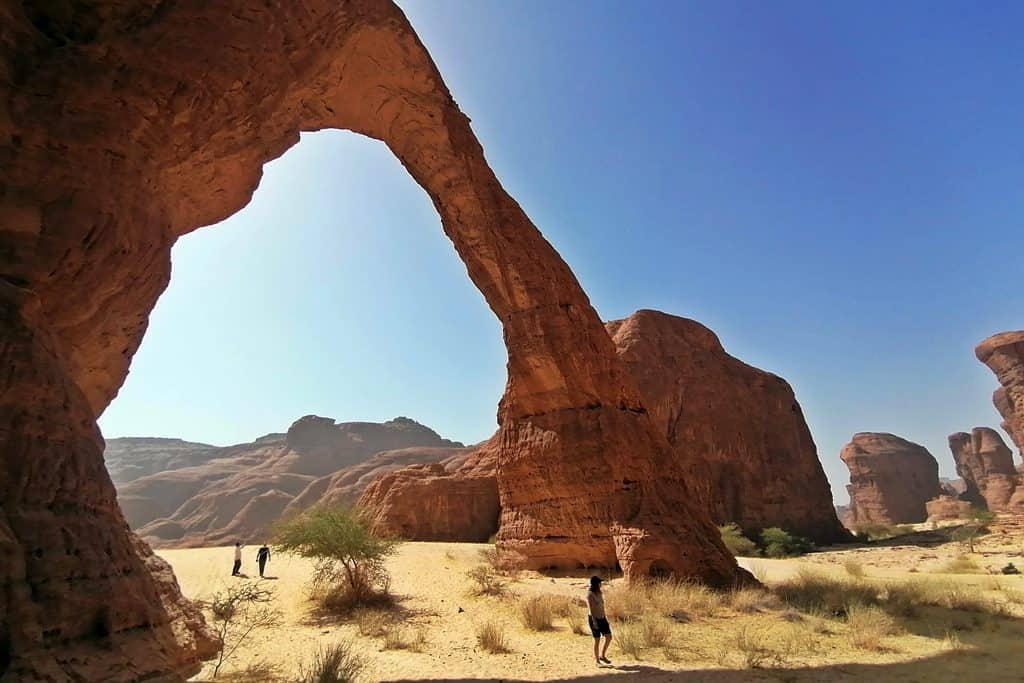
The Ennedi Massif is the most enchanting and mysterious place in Africa, poised in the northeast of Chad amidst the Sahara Desert. It consists of a vast region with huge mountains of sandstone, rock arches that are very tall, deep canyons, and painted ancient art upon cliffs. It resembles a stone kingdom left behind by time. Shaped by wind and water over thousands of years, this land is sculpted into marvelous shapes. The rocks stand today as towers and walls across the golden desert, looking like something out of this world; travelers who visit Ennedi Massif feel like they are strolling over another planet. The Ennedi Massif is also listed as a UNESCO World Heritage Site. It was inscribed in 2016 for both its natural beauty and cultural history. The site attests to how people and nature lived together for thousands of years in a highly arid land. 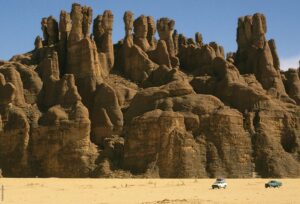
Geography and Location
The Ennedi Massif covers an enormous area of northeastern Chad; it lies between the Sahara Desert in the north and the Sahel region in the south. This massif covers more than 60,000 square kilometers, which is nearly the size of a small country. The region mostly consists of big plateaus made up of sandstone and cliffs with valleys. The average height of the plateau is from 1,000 to 1,450 meters above sea level. The highest peaks climb to even higher elevations, creating an impressive skyline over the desert. Ennedi is very far from the main cities of Chad. Its nearest large town is Fada, some 250 kilometers away. Visitors to the Ennedi travel across long desert roads and open plains to reach there. Because of its isolation, the massif remains peaceful and untouched.
Formation and Natural Landscape
Indeed, many millions of years ago, rivers, lakes, and heavy vegetation covered this region. The climate gradually became dry. Water disappeared and left thick layers of sandstone. These rocks took strange and beautiful shapes due to the action of wind and rain over time. Nowadays, Ennedi Massif resembles an enormous open-air sculpture park: rock arches, pinnacles, columns, and bridges. Some of these natural arches are among the biggest in the world. One of the most famous is Aloba Arch, which rises 120 meters high and spans 77 meters across. It is even larger than the famous arches in Utah, USA. The landscape also includes narrow canyons that hide small pools of water, known as gueltas. These gueltas are of major importance because they hold fresh water in the desert. The most famous one is Guelta d’Archei. It is surrounded by steep cliffs and full of life. The orange, red, and gold hues on the rocks paint the scene beautifully during sunrise and sunset. The beauty of the scenery can only be matched by the deep silence associated with the desert.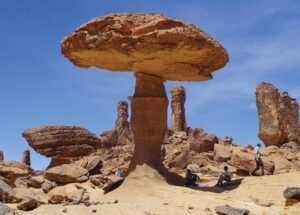
Climate
The Ennedi Massif has a severe desert climate. It is extremely hot during the day, and temperatures can go above 40°C for many days, especially during May to September. The nights are cool, and in winter, cold nights also occur. Rain is extremely rare. When it rains, water gathers in the gueltas and small seasonal rivers. These short wet periods bring brief moments of green to the dry land. Small grasses and flowers of the desert make their appearance and color the sands. Because of the dry climate, only such plants and animals that are adapted to survive for long periods without water live here.
Flora and Fauna
Although appearing empty, the Ennedi Massif supports surprising life. Plants, including acacia trees, date palms, desert shrubs, and grasses grow near gueltas and in shaded valleys. Animals are also inhabitants here. The gueltas give water to camels, goats, and sheep; wild species such as gazelles, foxes, and birds also come here. One of the most special animals is the Nile crocodile. Small populations of these crocodiles still exist in the Guelta d’Archei. They are the last survivors of a once large group which had been living across the Sahara thousands of years ago. These crocodiles today constitute an expression of life adapting under extreme conditions. The gueltas are rest points for many migratory birds, while eagles, vultures, herons, and smaller birds can be seen at or near the pools to drink water or rest.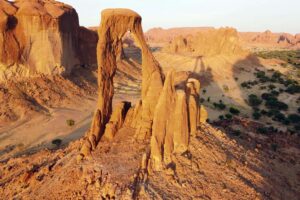
History and Ancient Civilizations
The Ennedi Massif is not just a place of nature. It is also a home of history. People have lived here for thousands of years. Archaeologists believe that human life in Ennedi began about 7,000 years ago. At that time, the Sahara was not a desert. It was green with rivers, lakes, and forests. Early humans painted their lives on rock walls. These paintings show animals like elephants, giraffes, hippos, and cattle. They also show people dancing, hunting, and living in groups. Over 100,000 rock art figures have been found across the Ennedi, including some red or brown paintings made from natural pigments, telling tales of day-to-day life and environmental change. As the climate became dry, people changed their way of life. They herded animals which could live in the desert — like camels and goats. The rock art too had changed: the later paintings show camels and warriors, not elephants and cattle. This combination of old and new art makes Ennedi one of the most important archaeological sites in Africa; it shows how humans adapted to a changing world.
Culture and Local People
Today, semi-nomadic people such as the Toubou and Zaghawa tribes inhabit the Ennedi Massif. They wander across the desert with their animals in search of water and grass. They live a simple life. They know this desert, its dunes, and every hidden trickling of water. Their folk tradition, music, and craftsmanship are inspired by the landscape. They often pitch small tents made up of animal hides and cook in the open air. In fact, local people sometimes get to meet travelers who visit the area. They are friendly people, proud of their culture. Sharing tea with them under the desert sky is one of the most memorable experiences of visiting Ennedi.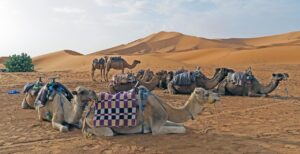
Tourism and Travel Experience
Tourism in the Ennedi Massif is still very limited. It is mainly due to the area being so far and hard to reach, and big hotels or paved roads are lacking. Visitors need four-wheel drive cars and experienced guides. But for the lovers of adventure and the outdoors, Ennedi is a dream destination. The journey itself is part of the experience. Travelers often start from N’Djamena, the capital of Chad, and drive through long desert routes for several days. Camping under the stars is another magical part of the trip. The sky is clear and filled with millions of stars. The silence of the desert brings peace and reflection.
Conservation and UNESCO Status
In 2016, the Ennedi Massif was inscribed as a UNESCO World Heritage Site both for its natural and cultural value. The site shows an outstanding record of human history and unique desert landscapes. Today, the area forms part of the Ennedi Natural and Cultural Reserve under the management of African Parks in conjunction with the government of Chad. Its conservation seeks the protection of rock art, wildlife, and the fragile desert ecosystem. Yet, the site has also got some threats: environmental degradation due to poaching, climate change, and unrestricted grazing. UNESCO cooperates with local authorities for ranger training and ecological tourism that takes care of nature and culture. By involving host local communities, the government hopes to achieve sustainable tourism that benefits both people and nature.
Surrounding Places in Detail
The Ennedi Massif in northeastern Chad is circumscribed by some of the most mysterious and breathtaking landscapes in Africa. Although remote and sparsely populated, the area offers a number of fascinating nearby attractions-from large deserts and sites of ancient rock art to natural wonders, cultural villages, and desert oases. These surrounding areas enhance the beauty of Ennedi and help travelers to understand the deep natural and cultural richness of Chad’s Sahara region. Below is a detailed look at major surrounding attractions near Ennedi Massif that make a journey into Chad’s desert one of the world’s most unforgettable adventures.
Guelta d’Archei
Here lies the heart of the Ennedi: a narrow canyon, filled for millennia with permanent water, faced by great cliffs and home to crocodiles, camels, and birds. Nomads come here with their herds to drink. The memory of hundreds of camels going down along the cliffs will not be forgotten.
Aloba Arch
Deep in the massif is one of the world’s largest arches: Aloba Arch. Like a giant stone bridge in the desert, it rises upwards. The colors in the rock change according to the sun: deep orange in the morning and soft gold at sunset.
Fada Town
Fada is the main entrance to Ennedi. It’s a small desert town, and it constitutes one starting point of most trips. Here, travelers can buy necessary supplies, hire guides, and refuel vehicles. Besides that, the town has a few guesthouses and traditional markets.
Ounianga Lakes
Northwest of Ennedi are the Lakes of Ounianga, another UNESCO World Heritage Site. They are an astonishing sight in contrast to the desert. It is a group of salt and fresh water lakes surrounded by sand dunes. The colors range from blue to green to red, creating a surreal view.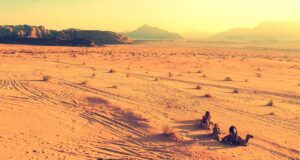
The Tibesti Mountains
Farther north of Ennedi, volcanic peaks arise with the Tibesti Mountains. This region is renowned for its high mountains, deep craters, and ancient lava flows. It is home to the highest point in the Sahara: Emi Koussi volcano. The Tibesti Mountains have a common culture with Ennedi, as both belong to the Toubou people.
Abeche
Abeche, located southwest of Ennedi, is the fourth-largest city in Chad and an important trading and cultural center. Traditional Saharan life is represented by markets, mosques, and camel caravans.
The Sahel Borderlands
South of Ennedi, the desert yields slowly to grasslands. This marks the start of the Sahel region. Greener and more populated, it is a place where many herders that move between the Sahel and Ennedi do so by following the seasons.
Wildlife and Ecology
The Ennedi’s natural ecosystem is fragile and fascinating. It offers shelter for animals that survive nowhere else in the Sahara. In addition to crocodiles, one might spot desert foxes, gazelles, hares, and birds of prey. Water sources, especially in the form of gueltas, are life-sustaining. Palm trees and reeds thrive around them, creating verdant oases. This shall be very important for wildlife as well as for the nomads.
Archaeology and Rock Art
Archaeologists are still exploring the massif. Thousands of paintings and carvings have been found, and some caves have artwork in layers from early Neolithic to recent centuries. Many of the drawings illustrate daily life, hunting scenes, rituals, and animals. The art helps scientists understand how climate and culture changed. It also connects the Ennedi with other African rock art regions like Tassili n’Ajjer in Algeria and Gilf Kebir in Egypt. Many of these paintings can be seen by visitors on canyon walls today. They remind everyone that this was a place with rivers, animals, and green valleys long ago.
Life in the Desert
Living in the Ennedi is hard. People rely on camels for transport, milk, and meat. Women make crafts out of goat skins and plant fibers. Families travel with tents made out of fabric or leather. Water is life here. Every guelta is carefully shared. From rules about how much water each group is allowed to take, cooperation is vital to survival.
Modern Importance
Today, the Ennedi Massif is a place now becoming well known to the world. Visitors include adventurers, photographers, and researchers who go to study its landscapes and art. Travel documentaries and books have showcased its beauty, attracting tourism, although slow and growing. The Chadian government is promoting Ennedi in its development of eco-tourism, hoping that responsible tourism will bring in an income and help in the protection of the environment.
Conclusion
The Ennedi Massif is a treasure of nature and a treasure of humanity, situated in Chad. It tells the story of time-from when the Sahara used to be green to today’s dry desert. Its giant arches, deep canyons, and ancient rock paintings make it one of the most unique landscapes in the world. A mixture of natural beauty, wildlife, and human history forms this place into one of peace and wonder. To visit Ennedi is to travel several thousands of years back in time. It means knowing how people and nature can survive in the harshest of lands together. Surrounded by lakes, oases, and faraway mountains, the Ennedi Massif is a monument of resilience. Cliffs to explore, people to meet, sunsets over the desert-each single experience will be perpetuated in your heart forever. It is not only a journey across sand and stone, but a journey into the heart of Africa.
Author

sadikhan.ceo@gmail.com
Related posts
Lisbon Travel Guide
- 0
- 2,266 words
Lisbon Travel Guide – A Beautiful Coastal Capital with Culture and Value Lisbon pops up on pretty much every list of Europe’s...
Read out all
Prague Travel Guide
- 0
- 2,455 words
Prague Travel Guide – A Magical European Destination Full of History and Charm If you’re dreaming of a city that looks and...
Read out all
Berlin Travel
- 0
- 2,097 words
Berlin Travel Guide – A City of History, Culture, and Modern Energy Berlin isn’t your typical European capital—it buzzes with history and...
Read out all
Amsterdam Travel Guide
- 0
- 2,602 words
Amsterdam Travel Guide – A City of Canals, Culture, and Timeless Beauty Honestly, Amsterdam is one of those cities that just grabs...
Read out all
Barcelona, Spain
- 0
- 2,340 words
Barcelona, Spain Travel Guide – A Vibrant Mediterranean City Barcelona feels alive, no matter what time of year you show up. The...
Read out all
Male, Maldives
- 0
- 2,442 words
Malé, Maldives Travel Guide – The Capital of Island Paradise Malé might be tiny compared to other capitals, but it’s at the...
Read out all