
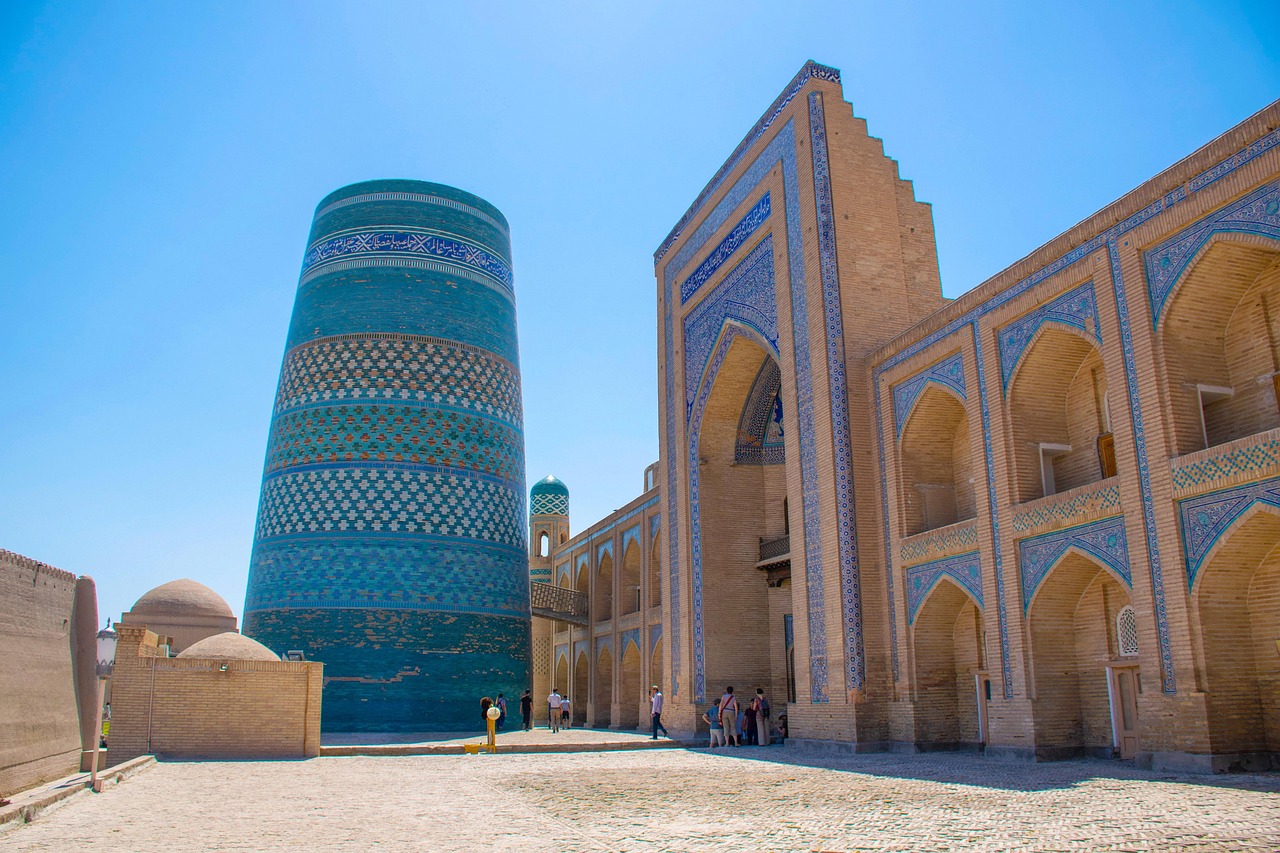
Bukhara – Most ancient cities in Central Asia
Bukhara is one of the most ancient cities in Central Asia and serves as a living museum of culture, architecture, and history. Situated in present-day Uzbekistan, this city has played a vital role in trade, religion, education, and craftsmanship for over two thousand years. Travelers who make their way through narrow lanes feel like they are being transported to the Silk Road era, where merchants, philosophers, and scholars crossed deserts and mountains to meet at this unique city.
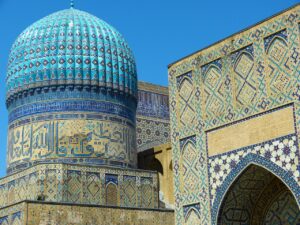
Most of the buildings in Bukhara are colored in soft sand, while madrasahs and mosques are crowned with blue domes, and minarets proudly rise upwards. The city is quiet, yet it keeps millions of stories about kings, poets, and travelers who formed its identity. Because the old center of Bukhara was preserved, UNESCO designated it a World Heritage Site. This recognition enables visitors to still feel the original atmosphere of an ancient Silk Road city. Moreover, the atmosphere in Bukhara is welcoming. People are friendly, and traditional crafts are still alive. Additionally, the serving of tea is always accompanied by a warm smile. Most important of all, though, is the way the city juxtaposes culture, spirituality, learning, and beauty in a manner comparable to very few destinations in the world.
Geography of Bukhara
Geographically, Bukhara is situated in the center of the Kyzylkum region, lying on a wide plain of the desert. This put it in an important position along the Silk Road, since caravans moving between China, Persia, the Middle East, and Europe crossed this dry but strategic land. The climate is usually continental, with hot summers and cold winters. Summer days are often very hot, but because of the dry air, it is pleasant to walk in the evening. Winters are cold, sometimes even below freezing, but the clear sky and quiet streets give a magical winterly view to the city.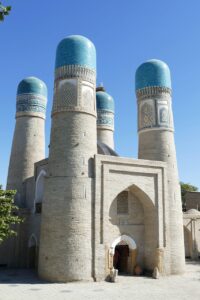
Built around the Zeravshan River, which over time has supplied water for agriculture and settlements, long canals carried water right into the city, supporting farmers and traders. Because most of the land consists of flat areas, the old town developed in an organized way: mosques, madrasas, workshops, and bazaars at the center, while residential areas spread outward. The geography of Bukhara helped to develop its identity. Being located at the center of desert routes encouraged trade, and water supported permanent settlement. Thus, Bukhara became a natural stop for all travelers and a home for many cultures.
History of Bukhara
Bukhara’s history goes back over 2,500 years. During that time, it was governed by many rulers, religions, and cultures, which stamped their trace on the architecture and customs of the city. Early settlements appeared around the Zeravshan oasis, where small communities depended on farming and trade. Over time, Bukhara grew into a walled city with strong defenses. The arrival of Persian influence brought new language, art, and administrative styles. Later, during the Islamic Golden Age, Bukhara turned into one of the world’s greatest centers of learning. During the rule of the Samanid Dynasty, the city entered its golden period. The city was destroyed, but Bukhara soon recovered and continued as a trading center. Later, the Timurid Empire supported the building of beautiful buildings with blue tiles and intricate patterns.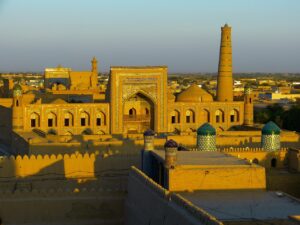
The Shaybanids turned Bukhara in the 16th century into the region’s political and cultural capital. Most of the mosques, palaces, and madrasas built at the time still survive to this day. In the 19th century, Bukhara became an emirate and held a certain independence until it joined the Russian Empire. Today it is a living memory of the civilizations that crossed its streets, keeping alive the essence of the Silk Road.
Tourism in Bukhara
Tourism in Bukhara is based on history, architecture, and culture. Guests love to see old mosques, tall minarets, historical squares, and several centuries-old markets. The city is highly convenient for walking, with every corner telling its story. The most visited area in the city is the Historic Centre of Bukhara. Walking through the old town feels almost pacific because a city maintains its original atmosphere. The bazaars are filled with shops selling embroidered fabrics, handmade ceramics, woven carpets, metalwork, and traditional musical instruments. Traditional tea houses serve green tea with sweets, giving travelers a pleasant break between viewings.
At night, Bukhara becomes even more magical. Building features like the Kalon Minaret and Lyab-i Hauz complex glow through warm lights reflected in the nearby water. Restored courtyards often host cultural performances of traditional dances and music that give visitors further insight into Uzbekistan’s heritage. In short, tourism in Bukhara is about culture, leisure, and learning altogether. Every moment here seems to be like reading a chapter from a beautiful historical book.
Major Tourism Sites of Bukhara
Bukhara is one of the most historic cities in Uzbekistan, bearing the cultural memory of more than two thousand years. Every road, every wall, and every dome seems to be a living museum as you walk through its narrow streets and ancient alleys. Major tourism sights of Bukhara are described in detail below-the city’s soul through its monuments, cultural spaces, and spiritual landmarks.
The Ark Fortress
The Ark Fortress is the heart of ancient Bukhara and the oldest structure in the city. When you approach it, the massive clay walls rise like a giant desert castle, reflecting power and protection. This fortress was once the royal residence of the emirs of Bukhara, and inside its strong walls, rulers governed, planned battles, and welcomed diplomatic guests from Persian, Chinese, and Russian empires. Inside, visitors can explore courtyards, throne rooms, administrative halls, weapon galleries, and archaeological museums that explain how life inside the fort evolved across centuries. Walking inside the Ark feels like stepping directly into a medieval kingdom because the architecture still retains its original wooden pillars, carved ceilings, and traditional Uzbek patterns.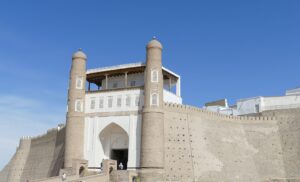
Po-i-Kalyan Complex
The Po-i-Kalyan Complex is one of the most breathtaking religious ensembles in Central Asia. The structure stands majestically on the old public square of Bukhara and includes the Kalyan Minaret, Kalyan Mosque, and the Mir-i Arab Madrasa. The mosque beside it offers an enormous open courtyard with a central tree providing shade and peace, while its long colonnades display over two hundred beautifully carved domes. Meanwhile, the Mir-i Arab Madrasa, with its turquoise domes and detailed tilework, still functions as an Islamic educational center. When standing here, visitors often feel a deep sense of serenity because everything—architecture, silence, and the soft play of light—creates a spiritual atmosphere.
Lyab-i Hauz Ensemble
Lyab-i Hauz is one of the most charming and relaxing places in Bukhara. The ensemble is built around a large rectangular traditional pond (hauz), where ancient mulberry trees lean gently over the water. This area used to be a major gathering point for travelers and merchants who stopped to rest, drink tea, and exchange stories. Today, it remains a lively social space where locals and tourists sit in outdoor teahouses, enjoy traditional Uzbek dishes, and watch musicians play folk tunes.
Chor Minor
Chor Minor is one of the most iconic structures of Bukhara, easily recognizable because of its four small towers shaped like decorated minarets. Though small in size, it embodies profound architectural beauty. Constructed as the gatehouse to a greater madrasa complex that is no longer there, its four towers represent a mix of cultural influences, from Persian to Indian, and each of the towers features unique patterns and symbolic designs. Visitors often find Chor Minor very interesting because it somehow differs from the large mosques and madrasas, and its intimate scale makes it feel almost like a hidden treasure. 
Samanid Mausoleum
The Samanid Mausoleum is one of the finest examples of early Islamic architecture in Central Asia. Built in the 10th century, it is considered a masterpiece because of its perfect cube shape and detailed brick patterns that create shadows resembling woven fabrics. This mausoleum holds the tombs of Ismail Samani and his family, founders of the Samanid dynasty. Its design is simple yet deeply artistic, and the harmonious geometry shows the craftsmanship of ancient engineers.
Bolo-Hauz Mosque
The Bolo-Hauz Mosque stands graciously near the Ark Fortress and is known for its tall wooden pillars supporting a richly decorated ceiling. These pillars, carved with floral and geometric motifs, create a visual rhythm that is almost poetic. This is still an active mosque, and visitors can observe daily prayers and gatherings of the local community. Its atmosphere is soft, and it invites one inside-this is the place where history and living tradition finally meet.
Trading Domes of Bukhara
The ancient trading domes, known as Taqi Sarrafon, Taqi Telpak Furushon, and Taqi Zargaron, were essential marketplaces during Silk Road times. These domes protected merchants from the desert heat while they sold silk, jewelry, carpets, spices, and hats. Today, the domes continue to function as traditional bazaars where artisans sell handmade crafts.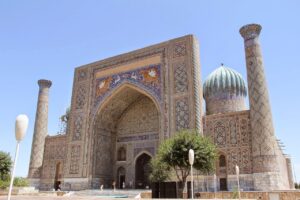
Ulugbek Madrasa
The Ulugbek Madrasa of Bukhara was built by the great scholar and astronomer Ulugbek, who valued education and scientific knowledge. Geometric patterns at the madrasa entrance symbolize mathematical harmony, which reflects the intellectual legacy of Ulugbek. Small student cells line the perimeter of the interior courtyard, giving visitors an impression of how scholars lived and studied many centuries ago. The madrasa played an important role in mathematics, astronomy, and philosophy. Today it stands not just as a historical monument but a symbol of Central Asia’s scientific golden age.
Abdulaziz Khan Madrasa
The Abdulaziz Khan Madrasah, constructed almost two centuries later, faced the Ulugbek Madrasa and was more decorative, with a lot of vibrant mosaics, floral patterns, and muqarnas. It has brightly colored interior walls adorned with gold and ceramic details inside. These two madrasahs together symbolize the development of architectural styles in Bukhara, and the sharp contrast in their design makes this visit very interesting for the lovers of artistic history.
Chashma-Ayub Mausoleum
Chashma-Ayub-which translates to “Job’s Spring”-is a holy place linked to the legend of the Prophet Job. According to legend, Job hit the ground with his staff, and a healing spring emerged. The mausoleum houses a small museum of water management, showing how people in ancient times constructed irrigation systems and handled water in a desert region. The building is prominent for its conical dome, in opposition to the rest of the Bukharan monuments with rounded ones. It contributes an uncommon architectural feature to the skyline of the city.
Fayzulla Khodjaev House Museum
This museum saves an elegant, traditional Bukharan merchant house. Its rooms display wood carvings, colorful silk fabrics, patterned ceilings, and everyday items used by householders in the 19th century. The home was that of Fayzulla Khodjaev-a significant political figure in the early Soviet history of Uzbekistan. Entering this museum is really going into a private world where the traditional lifestyle meets political history. The garden courtyard is decorated with pomegranate trees and channels of running water, adding serenity to this place.
Sitorai Mokhi-Khosa Palace
This, the summer residence of the last emirs of Bukhara, lies a short distance from the center. Sitorai Mokhi-Khosa translates as “Star-like Palace,” and this is indeed a fine example of how well Russian, Persian, and Central Asian styles go together. The rooms in this palace complex are ornately furnished with European mirrors, crystal chandeliers, carved doors, and richly decorated textiles. One of the most famous rooms, the “White Hall,” was lined with mirror mosaics that glistened in the natural light. The garden surrounding the palace was composed of quiet pathways, small pools, and shady resting areas that created an atmosphere of royalty and delicacy.
Surrounding Places of Bukhara
Gijduvan
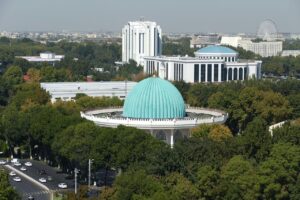
Not far from Bukhara, Gijduvan is known for its pottery. Local families produced colorful ceramics by using ancient techniques. Next to having a look at the artisans’ work, visitors can attend demonstrations and buy hand-made bowls, plates, and decorative pieces. The town carries warmth with it, more traditionally filled with flair for Uzbek crafts.
Vabkent
It is considered to be a city with a tall and elegant minaret. The building looks like the style of Bukhara’s Kalon Minaret but is slender and ornamented with delicate brick patterns. A quiet environment is assured around the minaret, away from the noisier parts of Bukhara.
Nurata Mountains
Nurata Mountain represents a mix of natural beauty and rich cultural heritage. Its village displays the traditional life of people in the region, while stone houses, agriculture, and folk music represent the ancient customs of the people. The mountains offer hiking opportunities and scenic landscapes perfect for nature lovers.
Sarmishsay Gorge
This gorge is famous for its prehistoric rock carvings. Thousands of petroglyphs carved into the black rocks show ancient animals, hunting scenes, and human figures. It is one of Central Asia’s largest archaeological sites, offering a deep connection to the past.
Kagan Palace
This gorge is famous for its prehistoric rock carvings. Thousands of petroglyphs carved into the black rocks show ancient animals, hunting scenes, and human figures. It is one of Central Asia’s largest archaeological sites, offering a deep connection to the past.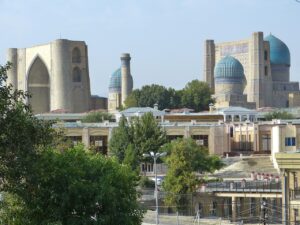
Conclusion
Bukhara is more than a city; it is a journey through time. Its streets preserve the art, knowledge, and stories of countless civilizations. The blend of Islamic architecture, Silk Road traditions, and Central Asian culture makes it one of the most potent historical destinations in the world. People come to see its beauty, but they leave with a deeper understanding of how history and culture can cross borders. Natural, artistic, and archaeological wonders of the surroundings add to the completeness of a travel experience. Whether one comes here to admire the minarets, explore ancient fortresses, enjoy the traditional craftsmanship, or just walk around the peaceful squares, Bukhara promises an unforgettable adventure.
Author

sadikhan.ceo@gmail.com
Related posts
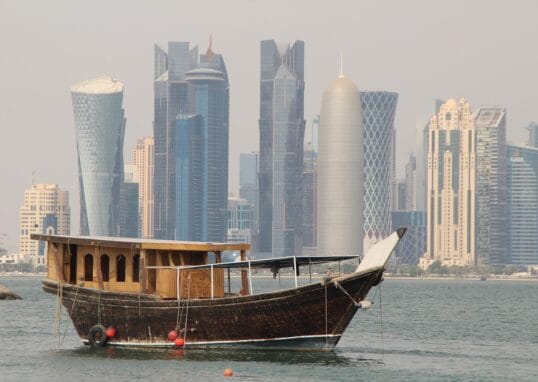
Doha Travel Guide
- 0
- 2,147 words
Doha Travel Guide – A Modern Arabian City with Culture and Luxury Doha is quickly becoming one of the hottest places to visit...
Read out all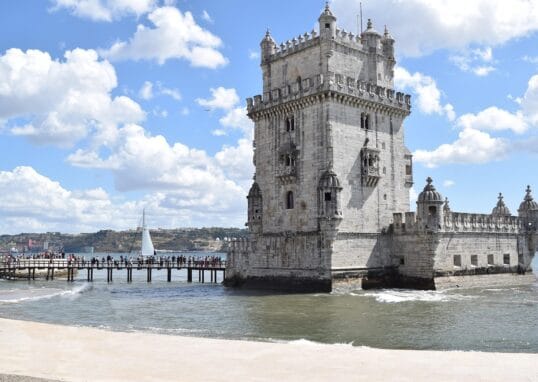
Lisbon Travel Guide
- 0
- 2,266 words
Lisbon Travel Guide – A Beautiful Coastal Capital with Culture and Value Lisbon pops up on pretty much every list of Europe’s...
Read out all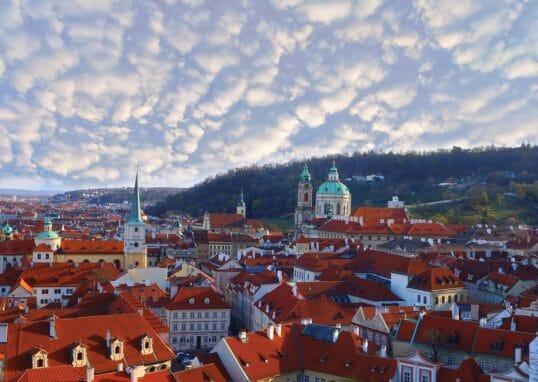
Prague Travel Guide
- 0
- 2,455 words
Prague Travel Guide – A Magical European Destination Full of History and Charm If you’re dreaming of a city that looks and...
Read out all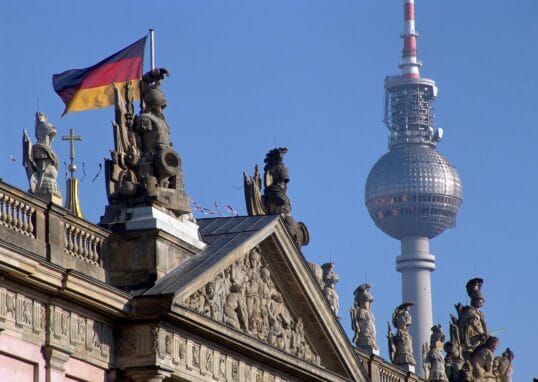
Berlin Travel
- 0
- 2,097 words
Berlin Travel Guide – A City of History, Culture, and Modern Energy Berlin isn’t your typical European capital—it buzzes with history and...
Read out all
Amsterdam Travel Guide
- 0
- 2,602 words
Amsterdam Travel Guide – A City of Canals, Culture, and Timeless Beauty Honestly, Amsterdam is one of those cities that just grabs...
Read out all
Barcelona, Spain
- 0
- 2,340 words
Barcelona, Spain Travel Guide – A Vibrant Mediterranean City Barcelona feels alive, no matter what time of year you show up. The...
Read out all