
Potala Palace – Most remarkable and spiritual Monuments
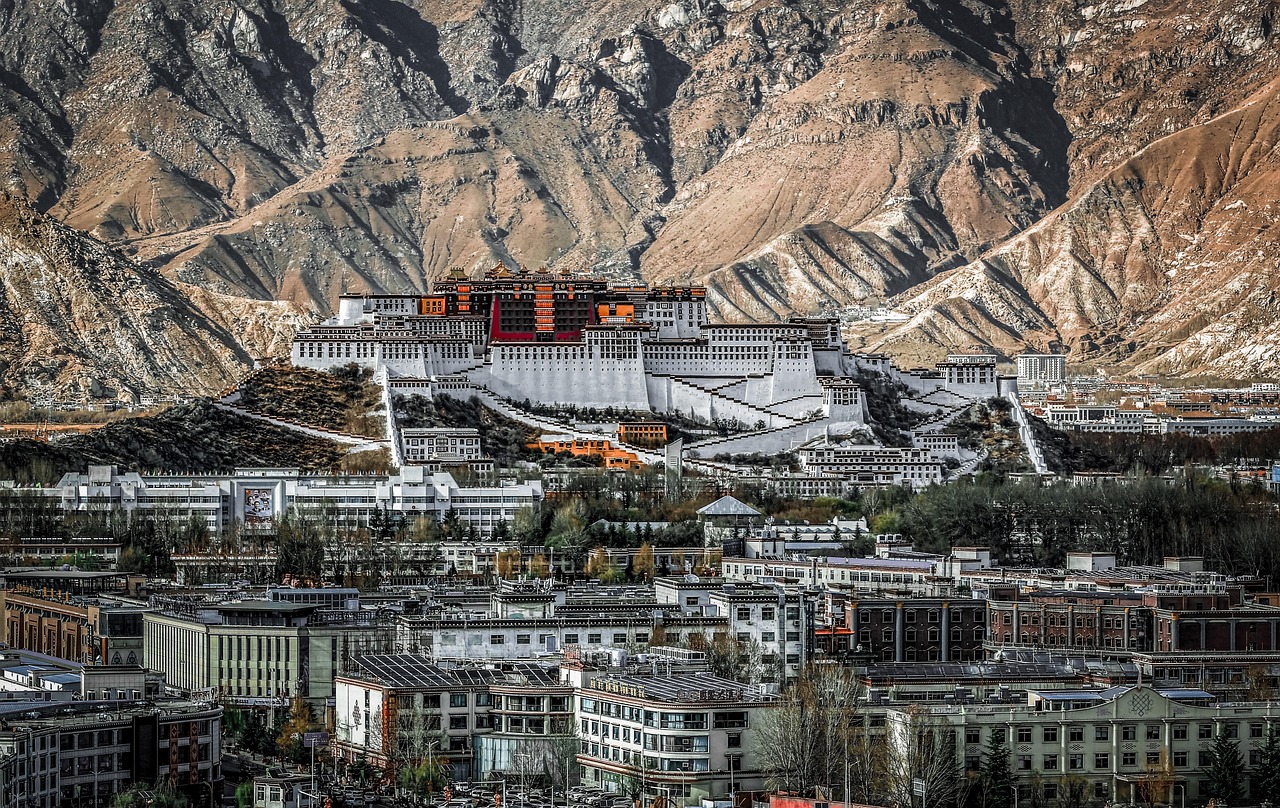
The Potala Palace is one of the most astonishing and spiritual monuments in the world. It is situated in the city of Lhasa, in the Tibet Autonomous Region of China, high on the Red Hill at an altitude of more than 3,700 meters above sea level. Because it is so high, big, and has such a deep religious meaning, Potala Palace seems almost unreal the first time one sees it. Golden roofs, white and red walls, and innumerable windows make the palace seem to touch the sky while emerging above the city. For centuries, it has been a powerful symbol of Tibetan Buddhism, Tibetan culture, and spiritual leadership. Potala Palace is among the most important heritage sites on Earth and attracts travelers around the world just to admire its beauty and feel the serenity of a holy place. 
Historical Background of Potala Palace
The history of Potala Palace dates back to the 7th century, in which King Songtsen Gampo constructed the first palace on the Red Hill as a residence and spiritual center. The one that exists today was actually built during the 17th century, under the governance of the Fifth Dalai Lama. During this era, Potala Palace built itself as the political and spiritual heart of Tibet. It remained a winter residence for the Dalai Lamas and served as the seat of Tibetan government over successive generations. Over time, new halls, chapels, and buildings added to the palace made the complex bigger and more complicated. Despite all the changes in politics and historical challenges, Potala Palace has survived over centuries, standing as testimony to Tibet’s rich past. Today, it stands, full of vitality, as a powerful remembrance of Tibetan identity, history, and faith.
Architectural Grandeur of Potala Palace
Potala Palace is an outstanding monument of traditional Tibetan architecture with the combination of Chinese and Himalayan influences. The palace complex consists of more than one thousand rooms, a great number of stairways, thick stone walls, and many levels carved directly into the mountain. The structure is divided into two main sections: the White Palace and the Red Palace. The White Palace was designed mainly for living quarters, offices, and administrative work, while the Red Palace served as the religious center, comprising chapels, stupas, and prayer halls. The walls are built very thick, sometimes several meters wide, which allows it to protect the building against earthquakes and cold weather. Furthermore, white limestone, red ochre, and gold decorations give the exterior of the palace its symbolic appearance. Potala Palace looks strong and majestic from a distance, but once inside, the feeling changes, and every visitor feels calm, respectful, and strongly connected with history.
The White Palace – Center of Daily Life
The White Palace consists of the lower and central part of Potala Palace. This was where Dalai Lamas resided, studied, and conducted day-to-day government business. As one walks down its corridors, they find rooms that served as offices, bedrooms, meeting halls, and study areas. The windows are carefully set to allow sunlight in while stopping cold winds outside. Inside, the walls are adorned with murals depicting scenes from Tibetan history, daily life, and religious teachings. These paintings give context to the visitors about how life was lived in the palace centuries ago. The White Palace also comprises viewing balconies that offer great sights of Lhasa city and mountains around it. These spaces give travelers an insight into the human side of the palace, where spiritual leaders lived austere yet disciplined lives.
The Red Palace – Spiritual Heart of Potala
Above the White Palace rises the Red Palace, representing the spiritual soul of Potala Palace. This part is reserved only for religious practice and worship. It contains a number of chapels, holy halls, and the stupas of previous Dalai Lamas. All the walls are deep red, indicating holiness and spiritual power in Tibetan Buddhism. Inside, the atmosphere turns quiet and deeply respectful instantly. Butter lamps glow softly, incense fills the air, and monks chant prayers in low voices. The stupas are highly ornamented with gold, jewels, and intricate designs; particularly, the stupa of the Fifth Dalai Lama is one of the most magnificent religious monuments in Tibet. The Red Palace allows visitors to imbibe the deep spiritual energy which has always defined Potala Palace.
Sacred Murals and Religious Art
One of the most overwhelming features that Potala Palace contains is its immense collection of murals, statues, and religious artworks. The artworks are spread across thousands of square meters and relate stories about Buddhism, Tibetan history, the life of saints, and teachers. These murals are painted with natural pigments, and their colors have remained bright even after hundreds of years.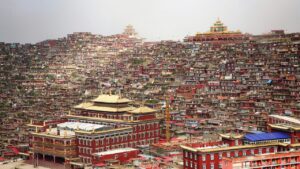
Potala Palace as a UNESCO World Heritage Site
In 1994, Potala Palace was recognized by UNESCO as a World Heritage Site due to its outstanding universal value. Later, the nearby sites of Jokhang Temple and Norbulingka joined the same heritage listing. UNESCO commended Potala Palace for outstanding achievements in architecture, culture, and spirituality. In this regard, significant measures have been taken in the protection and preservation of the palace. The restoration process involves the use of original materials, traditional building techniques, and a respect for history. Controls on visitor numbers help protect it from any structural damage. Thanks to this form of protection, Potala stands firm and magnificent in its beauty to date, in order for future generations to learn about and marvel at such a wonderful monument.
Tourism Experience at Potala Palace
Potala Palace is a potent and unforgettable experience. Long flights of stairways greet the tourist before he reaches the halls’ entrance, which adds much to the impact of surprise and respect. Inside, the paths lead you through selective halls and rooms; the result is safety and preservation. As travelers make their way up, they learn about Tibetan Buddhism, the Dalai Lamas, and the palace’s role in history. The views from upper levels are sensational, with a large, sweeping view down over Lhasa city, lines of prayer flags, and mountains in the distance. Visitors are encouraged to take their time and rest along the way due to the high altitude. This too can be deeply rewarding, as Potala Palace leaves an indelible emotional and spiritual mark.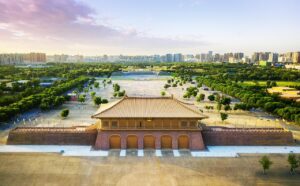
Surrounding Places Near Potala Palace
Potala Palace is not only the most famous landmark in Lhasa, Tibet, but it is also surrounded by many spiritual, historical, and natural attractions which complete the experience of visiting this sacred region. While the palace itself stands majestically on Red Hill, surrounding monasteries, streets, lakes, and mountains create a more nuanced understanding of Tibetan culture, religion, and daily life. Thus, exploration around Potala Palace provides visitors with deeper access into the spiritual heart of Tibet. Each place has its own story, atmosphere, and importance; hence, the whole area around Potala Palace is a living cultural landscape rather than a single monument.
Jokhang Temple
Located just a short distance from Potala Palace, Jokhang Temple is considered the most sacred temple in Tibetan Buddhism. As visitors approach the temple, they often see people performing full-body prostrations, showing deep faith and respect. Inside, the temple is filled with butter lamps, ancient statues, prayer halls, and the scent of incense. The atmosphere is deeply spiritual and emotional, offering a strong contrast to the grand and royal nature of Potala Palace. Together, these two sites form the spiritual center of Lhasa.
Barkhor Street
Barkhor Street, situated around Jokhang Temple and quite close to Potala Palace, offers one of the most dynamic and culturally significant places in Lhasa. Visitors going through Barkhor Street come across everyday Tibetan life, traditional clothes, and social contact. Besides, the street connects religion and culture with commerce in a natural way, making it an essential surrounding place to explore after visiting Potala Palace.
Norbulingka Palace
Situated southwest of Potala Palace, Norbulingka Palace used to serve as the summer residence of the Dalai Lamas. Unlike the towering and fortress-like Potala Palace, Norbulingka was designed as a quiet retreat filled with gardens, lakes, and pavilions. Greenery surrounds the palace complex, resulting in a feeling of serenity and coolness, particularly in the summer months. Inside, tourists can see living quarters, meeting halls, and beautifully decorated rooms that show how the Dalai Lamas lived during summer. Today, Norbulingka is also a public park where locals come to relax, have picnics, and celebrate festivals. Visiting Norbulingka helps travelers understand the softer, more personal side of Tibetan leadership and life.
Ramoche Temple
Another prominent religious point close to the Potala Palace is the Ramoche Temple, which has great historical value for Tibetan Buddhism. This temple, though less crowded than Jokhang Temple, maintains a quiet and deeply spiritual atmosphere. It was initially constructed to house the sacred statues brought from China when Buddhism was spreading all over Tibet. The temple had to be rebuilt several times due to historical events that had taken place across it; however, it is still considered an essential place of worship. A visit to Ramoche Temple offers travelers a chance to witness a less touristy and noisier religious atmosphere but remains as close as possible to the spiritual heart of Lhasa.
Chakpori Hill
Chakpori Hill is located close to Red Hill, on which the Potala Palace stands. It occupies an important place in the history of Tibetan medicine. The hill used to house a famous medical college that imparted traditional Tibetan medicine. Although most of the original complex was destroyed, the hill remains symbolic, relating to healing and knowledge. A climb up the hill reveals spectacular views of the Potala Palace and the city of Lhasa. The surroundings also offer a quiet platform for reflection; hence, a visit here would be of relevance to those interested in Tibetan science, medicine, and philosophy.
Tibet Museum
Within walking distance from the Potala Palace, the Tibet Museum offers historical and cultural context that helps frame a visit to the palace. The museum showcases archaeological items, photos, traditional attire, ritual items, and historical documents pertinent to Tibetan history. If Potala Palace represents power and spirituality through architecture, then the museum describes these concepts through story and exhibit. For these reasons, a visit to the Tibet Museum can help tourists understand the background to the palace and to Tibetan society and how the region has changed through time. The museum is modern, well-organized, educational, and, therefore, an important surrounding place to acquire deeper learning.
Dragon King Pond (Longwangtan Park)
At the foot of Potala Palace lies Dragon King Pond, also known as Longwangtan Park. It is here that this scenic lake area reflects the palace nicely on days without wind, making it one of the most photographed views in Lhasa. In history, it had to do with spiritual beliefs and natural balance. Nowadays, it is a quiet park in which public people walk, rest, and look around. The reflection of Potala Palace in the water, especially at the time of sunset or rising of the sun, offers a magic and tranquil atmosphere. Compared to visiting this park, travelers can downshift and enjoy the beauty of Potala Palace in another perspective.
Drepung Monastery
Situated a bit further from Potala Palace, nonetheless inside the surrounding area of Lhasa, Drepung Monastery is one of the largest monasteries in Tibet. It once housed thousands of monks and was an important center of learning. The monastery is located on the side of a hill, overlooking the valley, and its white-colored houses wonderfully join the natural environment. Visitors can see prayer halls, the residences of monks, and large halls where big gatherings are held.
Sera Monastery
Another major religious site near Potala Palace is Sera Monastery, famous for its monk debates. Every afternoon, monks congregate in a courtyard, discussing Buddhist philosophy with dramatic hand movements and strong expressions. Observing these debates-one quite erudite and entertaining-offers a unique insight into the techniques of learning by Tibetans. Large halls, golden roofs, and ancient murals comprise the monastery. A visit to Sera Monastery adds an interactive and dynamic experience on the journey around Potala Palace, showing how religious traditions have actively survived in the present day.
Lhasa Old Town
The Old Town of Lhasa surrounds many of the religious and cultural sites around Potala Palace, making its narrow streets filled with traditional houses, local shops, and small temples. Walking around the Old Town enables one to experience the rhythm of daily Tibetan life: people shop, pray, talk, and rest in the streets-in a word, live a cultural life. All surrounding places are connected by the Old Town into one continuous experience where history and modern life exist side by side.
Natural Mountains and Himalayan Landscape
Beyond the buildings and streets, there is also much beauty and wonder of the natural surroundings that can be found around Potala Palace. People often look upon the mountains as sacred, adding to the tranquil greatness within this whole region. Exploring the natural surroundings helps travelers understand why Potala Palace was built in such a dramatic and symbolic location. The places around Potala Palace are the completion of this iconic landmark. While the palace itself stands to represent political authority and spiritual leadership, temples, streets, monasteries, parks, and landscapes nearby reveal the everyday faith, culture, and life of the Tibetans. Together, these create a deep and meaningful travel experience that goes far beyond sightseeing. Exploring the surroundings of Potala Palace allows visitors to connect with history, spirituality, and nature at once. For this reason, Potala Palace is not just a destination but the very heart of a rich and living cultural world.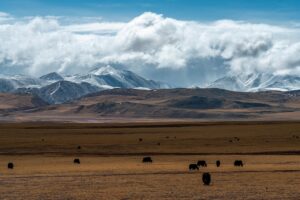
Festivals and Religious Events
Potala Palace is even more special during Tibetan festivals. During events like Losar, the Tibetan New Year, and Shoton Festival, monks, locals, and pilgrims congregate around the palace, praying with music and traditional performances. Giant religious banners are shown on hills, and monasteries echo with chanting and ceremonies. These festivals allow visitors to see Tibetan culture in its most vibrant and meaningful form. The palace becomes not just a monument but a living center of tradition and faith.
Preservation and Modern Challenges
Potala Palace is quite a responsibility because of its age, location, and fragile materials. The modern challenges include tourism pressure, climate change, and environmental concerns, for which much care has to be taken. The authorities limit the daily number of visitors and impose strict rules inside the palace. Technology is used at every stage, where humidity, temperature, and structural stability are to be monitored. But at the same time, local traditional techniques are employed in the acts of restorations by the craftsmen themselves so that the cultural authenticity is not lost. In this way, they manage to balance tourism with its preservation. Potala Palace has to stand strong and healthy for the meaning it carries.
Why Potala Palace Matters Today
Today Potala Palace reminds people in this fast-changing modern world of the importance of tradition, faith, and cultural identity. It stands as a symbol of resilience, wisdom, and spiritual depth. While modern cities are growing rapidly, Potala Palace remains unchanged in its purpose and message.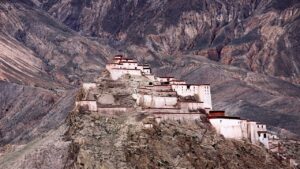
Conclusion
The Potala Palace is one of the most famous cultural and spiritual treasures in the world. History, architecture, religious importance, and landscapes together form a place that has no equal in the world. Every part of this palace-from the powerful presence atop the Red Hill down to every silent prayer hall filled with centuries of devotion-teaches something. As a symbolic soul of Tibet and a world heritage, Potala Palace continues to inspire millions. A visit or study of Potala Palace is not only about travel but also about understanding human faith and culture and man’s eternal quest for meaning.
Author

sadikhan.ceo@gmail.com
Related posts
Doha Travel Guide
- 0
- 2,147 words
Doha Travel Guide – A Modern Arabian City with Culture and Luxury Doha is quickly becoming one of the hottest places to visit...
Read out all
Lisbon Travel Guide
- 0
- 2,266 words
Lisbon Travel Guide – A Beautiful Coastal Capital with Culture and Value Lisbon pops up on pretty much every list of Europe’s...
Read out all
Prague Travel Guide
- 0
- 2,455 words
Prague Travel Guide – A Magical European Destination Full of History and Charm If you’re dreaming of a city that looks and...
Read out all
Berlin Travel
- 0
- 2,097 words
Berlin Travel Guide – A City of History, Culture, and Modern Energy Berlin isn’t your typical European capital—it buzzes with history and...
Read out all
Amsterdam Travel Guide
- 0
- 2,602 words
Amsterdam Travel Guide – A City of Canals, Culture, and Timeless Beauty Honestly, Amsterdam is one of those cities that just grabs...
Read out all
Barcelona, Spain
- 0
- 2,340 words
Barcelona, Spain Travel Guide – A Vibrant Mediterranean City Barcelona feels alive, no matter what time of year you show up. The...
Read out all