

Prague – Most charming and culturally rich Destinations
The capital city of the Czech Republic, Prague, is one of Europe’s most charming and culturally rich destinations. Nicknamed the “City of a Hundred Spires,” Prague boasts a beautiful skyline with historic towers, churches, and ancient rooftops. This city stands on the banks of the Vltava River with all its grace, offering beautiful bridges, romantic streets, and a mix of architectural styles ranging from Gothic and Baroque to Renaissance and modern. With an air of historic spirit and peaceful atmosphere, many travelers consider Prague among the most magical cities in Europe. In this detailed article, we will explore Prague’s geography, history, tourist attractions, surrounding places, culture, and travel recommendations, written in simple words and detailed sentences for easy understanding.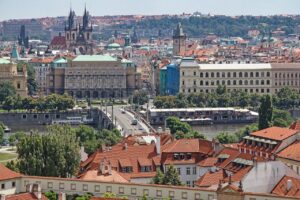
Geography of Prague
Prague is centrally located in the Czech Republic, situated right on the Vltava River, which meanders softly through the middle of the city. This is one of Prague’s most important natural landmarks, and many of the city’s famous landmarks, such as Charles Bridge, are built across it. Prague has a continental climate: warm summers, cold winters, and mild springs and autumns. During the winter months, snow often blankets Prague, giving the old streets and castle the fairy-tale setting that it is so famous for. In summer, days are warm and ideal for outdoor cafes and riverside walks.
History of Prague
Prague offers a long history full of cultural developments, dramatic events, and powerful rulers.The city is over a thousand years old. Early settlements began in the 9th century, with it turning into an important trading and political center of Central Europe by the 10th century.During the Middle Ages, the city rapidly grew under the rule of the Přemyslid dynasty, who built important structures and fortified it. The most influential period came, however, under King Charles IV in the 14th century, who transformed Prague into a cultural and political capital of the Holy Roman Empire. The 19th and early 20th centuries brought industrial development and cultural movements, especially in music, literature, and art.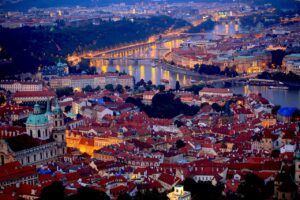
The 20th century was quite a hard time. After World War I, Prague became the capital of Czechoslovakia; later, during World War II, the city suffered under Nazi occupation. After the war, until the Velvet Revolution in 1989, following peaceful protests against the regime, it belonged to the Communist bloc. Nowadays, Prague is a modern, democratic city admired by people from all over the world.Today, Prague is a treasure of history and a modern city; it attracts millions of tourists who come for the architecture, food, music, and the overall magic in the air.
Tourism Sites in Prague
Prague is the capital of the Czech Republic and one of the most magical cities in Europe, whose tourism sights epitomize centuries of rich history, deep culture, and a beautiful architectural landscape. Upon walking through this city, many tourists feel as though they have entered into a living, breathing fairy tale, as each of the buildings, streets, and bridges tells a story of hundreds of years.Every place in Prague is unique in its own way, combined with which it forms an unforgettable travel experience.
Prague Castle
First of all, Prague Castle is the most important landmark and one of the biggest ancient castles in the world. It stands on a hill looking over the city, with white towers and red roofs shining so beautifully in sunlight. As travelers walk through its massive courtyards, they can feel the long history immediately.Inside this castle complex, beautiful halls, a royal chamber, and peaceful gardens invite visitors to explore at their own pace. Besides, the castle complex comprises churches and museums, making it seem like a whole, small city full of culture. Every corner reveals something new, whether it is some ancient painting, a historic crown jewel, or a quiet view of the city below.
Charles Bridge
Not far from the castle, travelers find Charles Bridge-one of the most famous bridges in the world. This ancient stone bridge crosses the Vltava River and connects the Old Town with the Lesser Town. The bridge is lined with 30 statues that represent saints, stories, or historical events.
Old Town Square
Continuing further, visitors enter the magical Old Town Square, right in the center of Prague’s historic area. Colourful medieval buildings, quaint restaurants, and bustling streets give it a warm and inviting feel. The prime focal point here is the Prague Astronomical Clock, an incredible creation from the 15th century. Every hour, there is a small show while little figures move around ringing bells, which amazes both children and adults. The clock further displays some astronomical details, such as the movement of sun and moon, thus qualifying as one of the most unique clocks in the world.The square echoes with various street performers, while local cafes provide just the right place to sit and enjoy the spirit of the city.
St. Vitus Cathedral
Inside the castle complex soars the magnificent St. Vitus Cathedral, considered by many to be one of the most beautiful Gothic cathedrals in Europe. The tall spires are visible from nearly every point in Prague, making the city very dramatic in its skyline.Upon entry into the cathedral, visitors are greeted by colorful stained-glass windows, pointed arches, and beautifully carved statues. The cathedral is quite significant because many kings and queens of Bohemia were crowned here, and a number of them lie buried within its walls. The sunlight filtering in through the colored stained glass lends an almost magical atmosphere, making this cathedral one of the most cherished sites in the city.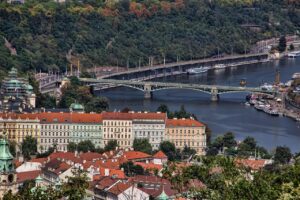
Lesser Town (Malá Strana)
This picturesque district lies beneath the castle and contains narrow streets, Baroque churches, colorful houses, and quiet courtyards. One of the focal points of this district is the Church of St. Nicholas. Small cafes and local artisan shops make this area perfect for slow walks.
Wenceslas Square
Another place that should not be missed is Wenceslas Square, the vibrant, modern part of Prague, which fuses shopping, culture, and history. Though it bears the name ‘square’, it is actually a long boulevard lined with shops, hotels, and other cultural institutions. It has been the scene of many significant social and political events, and quite often, visitors stop to admire the grand buildings that line this street. The National Museum at the top of the square is surrounded by an imposing structure with a beautiful dome. Visitors can see inside the collections of natural history, arts, and Czech heritage.
Petřín Hill and Observation Tower
For travelers in search of tranquility, Petrin Hill offers green gardens, walking paths, and lovely city views. On the top of this hill stands the Petrin Lookout Tower, which resembles a smaller version of the Eiffel Tower. The park around the hill is great for picnics, walks, and quiet moments away from the noise of the streets.
National Museum
The many museums of the city, such as the Museum of Communism, National Gallery, Muchá Museum, and Kafka Museum, let visitors really delve into Prague’s artistic, political, and literary history. Each museum views the city from a different perspective and thus helps travelers leave with a fuller understanding of the Czech culture.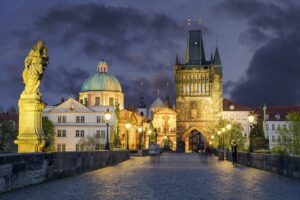
Dancing House
Another interesting place is the Dancing House, which ranks as one of the most unique modern buildings in Prague. Its irregular shape comes to resemble a pair of dancers, adding to the city’s traditional architectural masterpieces a creative and modern tint. A lot of tourists take pictures here, because viewed against the background, the building looks very outstanding and impressive.
Vltava River Cruises
Many tourists like to take boat tours down the Vltava River underneath bridges, alongside the castle complex, and through the city lights. Lately, evening cruises with dinner have become extremely popular.
Surrounding Places of Prague
When tourists come to Prague, they sometimes like to travel beyond the city and into some of the more beautiful outskirts. These surrounding towns and areas offer visitors an opportunity to see the peaceful countryside, charming towns, medieval castles, nature parks, and cultural attractions that are worlds apart from the bustling historic centre. Moving away from the crowded streets, Prague slowly gives way to rolling hills and green valleys with calm rivers flowing through them and picturesque villages holding centuries of history.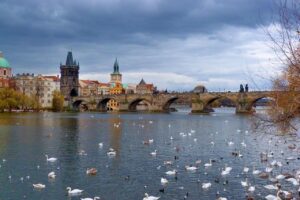
Kutná Hora
One of the most famous surrounding places includes the historic town of Kutná Hora, which is about an hour from Prague. In times past, this was one of the richest places in medieval Europe because of its silver mines, which supplied wealth to the Bohemian kings. The city also offers one of the most unusual attractions in Europe-the Sedlec Ossuary, also known as the “Bone Church.” Inside this small chapel, several thousand human bones have been arranged into artistic patterns, chandeliers, and decorative shapes. Though it feels a bit strange, the chapel gives a powerful story about life, death, and medieval beliefs, thus making it an unforgettable experience for tourists.
Karlštejn Castle
Not far from Prague, Karlštejn Castle represents another charming destination, situated high on a hill that overlooks deep forests and quiet villages. While approaching the castle, its tall towers gradually appear above the trees, creating a very dramatic and fairy-tale view. The castle was founded in the 14th century by King Charles IV to protect the crown jewels and royal treasures of the Holy Roman Empire. Nowadays, guests can take part in a tour through its royal halls, Gothic chapels, and museum rooms in order to learn something about medieval life and monarchy. The way to Karlštejn is pleasant as well because the surroundings of this castle are filled with walking trails, small cafes, and riverbanks where people can rest, eat, or enjoy beautiful countryside views.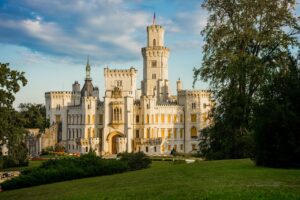
Český Krumlov
Another great neighborhood is that of Český Krumlov-a UNESCO World Heritage town that, although a bit farther away from Prague, is really worth every minute of travel. It houses curved streets, painted houses, and the majestic Český Krumlov Castle rising above the Vltava River. There are gardens, courtyards, historical rooms, and a very famous Baroque theatre that dates back centuries on the grounds of the castle. The river bends through the town, affording visitors amazing views from bridges, towers, and the riverbanks. The atmosphere in Český Krumlov is peaceful and romantic, especially in the early morning or late afternoon when the streets are quiet and the sunlight shines softly on the old buildings.
Karlovy Vary
Closer to Prague, a traveler will find the town of Karlovy Vary, one of the most elegant spa towns in the Czech Republic. Karlovy Vary also hosts the annual international film festival, beautiful old hotels, and colorfully painted buildings lining the river. Architecture feels refined and artistic, calm atmosphere makes this town perfect for a day, slow and relaxing away from the capital.
Pilsen
Further on, visitors can also get to Pilsen, the birthplace of the world-famous Pilsner beer. It is another kind of city, offering brewery tours, restaurants full of life, and an impressive St. Bartholomew’s Cathedral with the highest church tower in the country. There is a mix of history and modern life, providing visitors with educative experiences along with enjoyable ones. The countryside around Pilsen is dominated by gentle hills and farms, making the route pleasant and picturesque.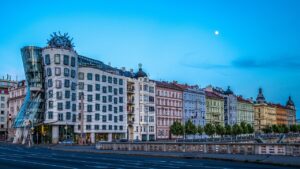
Třeboň
A quieter yet equally breathtakingly beautiful place, close to Prague, is the charming town of Třeboň; lakes, wetlands, and long cycling routes surround this place. The town is famous for its traditional fishponds, which were built several centuries ago and are used up to the present time for fish farming. As travelers walk through Třeboň, they will see calm water surfaces reflecting the sky, quiet streets lined with pastel houses, and peaceful gardens that tempt visitors to slow down. The natural reserves near Třeboň are perfect for nature lovers who want to enjoy bird-watching, gentle walks, or relaxing picnics.
Bohemian Paradise
Besides Prague, one of the most attractive places in its surroundings is the Bohemian Paradise. Nature and hiking lovers will love this protected area of giant sandstone rock formations, deep forests, and romantic ruins and castle viewpoints hanging over dramatic landscapes.
Bohemian Switzerland National Park
Further north, Bohemian Switzerland National Park offers another priceless natural space with tall rock formations, deep canyons, and the famous Pravčická Gate, the largest sandstone arch in Europe. The landscape is serene and dreamy, filled with green forests, flowing rivers, and hiking routes that draw visitors closer to nature.
Best Time to Visit Prague
Generally, the most agreeable and popular months fall between April to June and September to October. In these periods, the weather is mild, with bright skies and streets alive, yet never too crowded.
- Spring awakens fresh greenery, flowers in bloom, and a soft atmosphere that is very pleasant for walks through Old Town or along the Vltava River. The temperature is comfortable enough, often ranging from 12°C to 22°C, just right for sightseeing.
- Autumn is equally impressive, with the same beautiful condition of parks and medieval streets colored with shades of orange, red, and yellow, creating spectacular scenery. This season also brings cooler breezes and fewer tourists, thus allowing travelers to see major attractions like Prague Castle, Charles Bridge, and Old Town Square with greater convenience. During this time of the year, hotels have better prices, too.
- If you like warm weather and festivals, summer is another good time to come: from June to August, numerous cultural events, open-air concerts, and food festivals take place in the city. It is the high season indeed, with crowds and higher prices in accommodation. Temperature can get above 28°C, and popular sites can get very crowded, especially at midday. Still, the lively summer atmosphere makes Prague feel energetic, joyful, and full of color.
- Those travelers who prefer quiet streets and lower prices will find winter-December to February-an excellent choice. Even though temperatures fall below freezing, wintertime Prague is magical: often, there’s snow on the rooftops, and city lights reflect beautifully on the icy river. Christmas markets are some of the most charming in Europe, with traditional foods, handicrafts, and festive music filling both Old Town Square and Wenceslas Square. Winter requires warm clothes but pays travelers back with a peaceful romantic version of Prague.
Conclusion
Prague is a city where history, culture, and beauty combine in the most unforgettable possible way. Every step feels like a journey through time with its medieval streets, elegant bridges, and grand castles. From the well-preserved architecture to the lively cafes, rich museums, and charming neighborhoods, Prague has something for every type of traveler. Whether exploring the ancient halls of Prague Castle, watching the Astronomical Clock above the Old Town Square strike the hour, sailing along the Vltava River, or simply sitting in a quiet square and enjoying the traditional food of the Czechs, it’s a city that allows one to make lasting memories. The surrounding areas further enrich this experience. Small towns, natural parks, castles, spa cities, and historic villages round out the options travelers can explore beyond the capital to discover deeper layers of Czech heritage. Easy transportation and scenic landscapes make exploring around Prague a rewarding extension of any trip.
Author

Related posts
Best Places to Visit in Mont-Saint-Michel
- 0
- 4,964 words
Best Places to Visit in Mont-Saint-Michel , France Mont-Saint-Michel is one of the most extraordinary destinations in France and one of the...
Read out all
UNGA
- 0
- 5,649 words
UNGA (United Nations General Assembly ) The United Nations General Assembly, commonly known as the UN General Assembly or UNGA, is one...
Read out all
Best Places to Visit in Kathmandu
- 0
- 4,089 words
Best Places to Visit in Kathmandu , Nepal Kathmandu, the capital of Nepal, is one of South Asia’s most fascinating travel destinations....
Read out all
Best Places to Visit in Vilnius
- 0
- 5,246 words
Best Places to Visit in Vilnius , Lithuania Vilnius, the capital of Lithuania, is one of the most fascinating destinations in the...
Read out all
Best Places to Visit in Riga
- 0
- 6,005 words
Best Places to Visit in Riga , Latvia Riga, the capital of Latvia, is one of the most fascinating destinations in the...
Read out all
Best Places to Visit in Cartagena
- 0
- 4,522 words
Best Places to Visit in Cartagena , Colombia Cartagena de Indias is a historic Caribbean city on Colombia’s northern coast and one...
Read out all