


Naples – Oldest, richest, and most vibrant City
Napoli is one of the oldest, richest, and most vibrant cities in Europe. Located along the beautiful Bay of Naples in southern Italy, it is a city full of life, energy, history, art, and unforgettable food. It is also the place where ancient civilizations, medieval architecture, and modern lifestyles are mixed together in harmony. Naples is dynamic, full of contrasts. On one side, travelers see historic buildings, ancient ruins, and UNESCO-listed streets. On the other side, they feel the energy of the markets, loud conversations, laughter, and delicious smells coming from classic pizzerias. The city is also the birthplace of pizza, with people from around the world arriving to sample authentic Neapolitan pizzas cooked in wood-fired ovens. 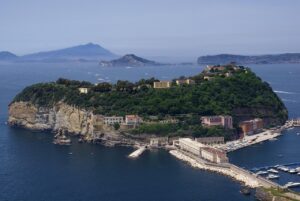
Geography of Naples
Naples is situated along the southern part of Italy, with the Tyrrhenian Sea. The city is situated within the Bay of Naples, which has a crescent shape and is considered to be one of the most striking natural landscapes in Europe. Water borders it from one direction, while mountains and hills cover it from the other side. The region’s most famous geographic landmark is Mount Vesuvius, one of the most iconic volcanoes in the world. It is the volcano responsible for the destruction of Pompeii and Herculaneum in AD 79. Today, it stands quietly above the city, creating a dramatic and unforgettable view.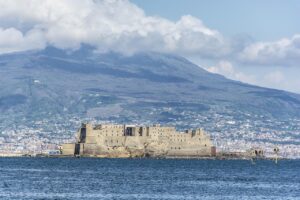
The city’s geography is full of small hills, and its narrow streets twist and bend through the old neighborhoods. That makes Naples stand in contrast to many flat European cities. Parts of Naples are modern; still, a lot of areas follow the pattern of medieval times with their ancient pathways, hidden alleyways, and stone staircases. Sea-side areas, such as Lungomare, give breathtaking views of the sea and the nearby islands. The natural environment of Naples is rich: this region has very fertile soil due to volcanic minerals. All that contributes to excellent farming; thus, the region produces outstanding tomatoes, lemons, olives, and grapes. The Mediterranean climate of Naples, characterized by warm summers and mild winters, makes most of the year suitable for outdoor activities. During summer, the breeze off the sea cools the city, while sunny winter days permit travelers to walk outdoors without heavy jackets.
History of Naples
Naples boasts one of the longest, richest histories of any European city. Its roots trace back to the ancient Greeks who established a settlement that they called Neapolis, or “new city.” As time passed, the area developed into a significant cultural and economic hub. When it fell into Roman hands, the town further developed to become notable for its arts, poetry, and philosophy. During the Middle Ages, Naples became one of the main cities in Southern Italy, serving for various kingdoms, including the Kingdom of Naples. Many architectural masterpieces from this period can still be visible today, such as Castel Nuovo, Castel dell’Ovo, and many beautiful churches.
Tourism Sites in Naples
It is a city full of history, culture, good food, and the wonders of nature. Every corner of this city tells a story, and every street seems alive with life. Tourists visiting Naples find ancient ruins, royal palaces, jam-packed markets, quiet oceanfronts, and world-class views. Below is a detailed explanation of the most important and beautiful tourism sites in Naples, written in full sentences rather than points.
Naples National Archaeological Museum
The Naples National Archaeological Museum is amongst the most critical in Europe. It is equally famous for the enormous collection of artefacts from Pompeii and Herculaneum, both ancient cities destroyed by the eruption of Mount Vesuvius in AD 79. Inside, the traveler can admire Roman statues, mosaics, frescoes, and everyday objects from almost 2,000 years ago. History is well preserved here, and one can grasp exactly how people lived during the Roman Empire. Entering each room, one feels as though he or she has entered a time capsule, connecting on a deeper level with the past.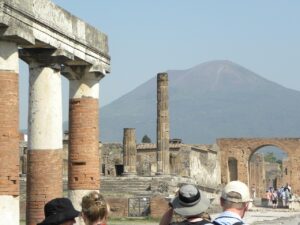
Castel dell’Ovo
The Castel dell’Ovo stands proudly on the waterfront, being one of the oldest castles in Naples. The castle is situated on a small island that juts out from the mainlands, offering a perfect spot overlooking the Bay of Naples. Visitors enjoy strolling down the old stone paths of the castle and taking in the salty sea breeze. The views from the top are breathless with the blue water beneath the structure and Mount Vesuvius arising in the distance. Because of this view, many people like to visit this castle at sunset when the sky brightens into orange and pink colors.
Castel Nuovo (Maschio Angioino)
Castel Nuovo, sometimes referred to as Maschio Angioino, represents one of the most striking landmarks within Naples. The large stone towers and grand entrance give it the appearance of a fortress from some sort of medieval tale. Situated right near the port, this castle gives its guests an impressive welcome. Inside, one is allowed to walk through its halls, museum collections, and historical rooms that once belonged to kings and nobles. The castle shows just how mighty and significant Naples was during medieval times.
Royal Palace of Naples
The Royal Palace of Naples is a witness to the city’s royal past. Its elegant facade and beautifully adorned interior rooms manifest the wealth and prestige that once befit the ex-rulers. Visitors can walk along magnificent halls decorated with chandeliers, tapestries, and classic paintings. Each room speaks to a different part of Naples’ political and cultural history. On the inside, the palace opens onto one of Italy’s largest and most impressive squares, the Piazza del Plebiscito. This square is even more magical during festivities and public celebrations.
Piazza del Plebiscito
Piazza del Plebiscito is the heart of modern Naples: a wide, open space that feels both grand and peaceful. Ranged around one side of the square is the Royal Palace, while the other is dominated by the Church of San Francesco di Paola. Locals and visitors head here to catch their breath, walk around, or take in some street performers. For the people of Naples, the square is a symbol of unity and pride-an absolute must-see for visitors.
Naples Cathedral (Duomo di Napoli)
The Naples Cathedral, or Duomo di Napoli, is an extraordinary religious structure possessing a great spiritual feel within. It is famous for hosting the relics of San Gennaro, Naples’ patron saint. Inside, the cathedral is filled with artwork, statues, and detailed decoration. Many people come to see its beauty and also to witness the traditional ceremony of the “Miracle of San Gennaro,” where locals believe that the saint’s blood liquefies twice every year. The event constitutes one of the city’s main traditions.
San Gregorio Armeno
Probably, one of the most fascinating streets in Naples is San Gregorio Armeno. It is widely famous all over the world because it is filled with artisan workshops that create handmade nativity figurines. Their skills have been transmitted by these artists for generations, and small statues, miniature houses, and colored decorations fill their workshops. Even if Christmas is far away, this street is always alive and full of creative energies. Travelers love walking along this street, observe artisans at work, and make some purchases of unique souvenirs.
Vomero Hill and Castel Sant’Elmo
Vomero Hill is modern and elegant, with some of the best panoramic views of Naples. On top of the hill is Castel Sant’Elmo, a fortress in the shape of a star. Those visitors who climb or take a funicular to the top are rewarded with spectacular views of the city, the sea, and Mount Vesuvius. The peaceful atmosphere, which characterizes the entire hill, makes it the right place for slow walks, taking photos, and enjoying fresh air away from the busy city center.
Via Toledo and Galleria Umberto I
Via Toledo is one of the major shopping streets in Naples, always full of people, shops, cafés, and vivid street music.Not far from Via Toledo, Galleria Umberto I is a spectacular building with a glass roof and elegant design. Visitors can walk inside the gallery, admire the architecture, and enjoy shops and restaurants.
Mount Vesuvius
Mount Vesuvius is one of the most famous volcanoes in the world and stands just outside Naples. It is infamous for the historic eruption that destroyed Pompeii and Herculaneum.Nowadays, tourists can hike up the volcano and look into its crater. The walk isn’t very difficult, and the view from the top is simply unforgettable.Visitors can see Naples, the coastline, and the nearby ancient ruins from the summit. Standing on an active volcano adds a thrilling feeling to any journey.
Pompeii and Herculaneum
Although technically just outside Naples, the ancient sites of Pompeii and Herculaneum form vital parts of any visit. Pompeii is an enormous archaeological city where streets, houses, temples, baths, and theatres remain preserved under volcanic ash. The city of Pompeii is like walking among the streets of a real Roman city from 2,000 years ago.Herculaneum, while much smaller but better preserved, boasted wooden furniture, mosaics, frescoes, and multi-story houses. These ruins give life to history in a way no museum can.
Surrounding Places of Naples
The city of Naples is surrounded by a region full of natural wonders, archaeological treasures, coastal landscapes, and charming towns. Each place around Naples holds its special story, atmosphere, and beauty. The following are places travelers can explore when visiting Naples, and in so doing, discover ancient history, volcanic landscapes, peaceful islands, and beautiful coastal roads.These surrounding places enrich any visit to Naples and help visitors understand the wider culture and geography of southern Italy.
Mount Vesuvius
One of the most renowned surrounding places is Mount Vesuvius, which erupted in AD 79 and thus buried beneath its ashes two ancient cities, Pompeii and Herculaneum.The mountain rises dramatically behind Naples, creating a unique backdrop to the city. Nowadays, visitors can hike up the mountain through safe walking paths to reach the crater’s edge. Vesuvius also provides an enhanced feeling of appreciation for the natural forces that shaped this region.
Pompeii
Pompeii is one of the most important archaeological sites in the world, located southeast of Naples. Pompeii was a vibrant Roman city complete with markets, theaters, houses, baths, and temples. Ash and volcanic material from Vesuvius’ eruption blanketed the entire city, embedding buildings, frescoes, and even outlines of the people who called Pompeii home. Today, visitors to Pompeii can feel as though they have stepped into ancient life.Cobblestone streets still bear grooves formed by Roman chariot wheels. Visitors tour villas with colorful paintings, bakeries that still house ovens, and massive open squares where citizens would have once gathered. Due to the nature of its preservation, Pompeii allows travelers to imagine how Romans lived, worked, and celebrated. This makes it one of the most powerful experiences near Naples.
Herculaneum
Another impressive local site is Herculaneum, a smaller but better-preserved Roman town that was also destroyed by the eruption of Vesuvius.Herculaneum was covered with volcanic mud instead of ash, hardening over time and hence protecting wooden structures, furniture, doors, and even food remains. For this reason, Herculaneum has an even greater level of detail. Visitors walk through two-story houses, marble rooms, private gardens, and magnificent seaside villas. Wooden shelves, beds, and staircases have survived for nearly 2,000 years. Herculaneum provides a quieter and more intimate setting than Pompeii, therefore making it ideal for travelers who want to study ancient history more deeply.
Sorrento
The pretty town of Sorrento, located due south of Naples on the coast, boasts a reputation for a cliff side, citrus gardens, and views out to sea. The town perches on high cliffs overlooking the Bay of Naples and offers the visitor a tremendous perspective of the coastline with Vesuvius in the distance. Narrow streets lined with shops and cafes, traditional crafts, and plenty of visitors who want to sample lemon products-most especially limoncello, a sweet lemon liqueur-are what Sorrento is about. It’s also a launching-off point for the Amalfi Coast. The peaceful surroundings, sea breeze, and welcoming atmosphere create an ideal retreat from the bustling city of Naples.
Amalfi Coast
The amazing Amalfi Coast is near Naples, considered by many to be one of the most beautiful coastlines anywhere in the world. This coastline is famous for its dramatic cliffs, blue water, pastel-colored towns, and winding coastal roads. Magical views and romantic scenery can be found in the cities of Amalfi, Positano, and Ravello. The houses in Positano seem to tumble down the side of the mountain, while the cathedral of Amalfi proudly stands in the middle of the town square. Ravello boasts peaceful gardens and viewpoints high above the sea. Experiencing the Amalfi Coast is a wonder-one turn in the road after another uncovers new landscapes. From boat tours and beaches to hiking and charming shops, visitors enjoy it all. The Amalfi Coast offers perfection-a combination of natural beauty and Italian culture, so to speak.
Capri
Capri is an island opposite Naples and is one of the most glamorous spots in Italy. Its blue waters, rocky coastline, luxury boutiques, and general air of elegance make it a popular destination with tourists. Visitors flock from all over the world to see its most famous feature, the Blue Grotto-a sea cave which magically glows bright blue. Capri’s high points include Monte Solaro and Anacapri, both affording spectacular views over the surrounding sea and cliff faces. Narrow lanes full of flowers, traditional cafes, and smart shops make for a romantic Mediterranean atmosphere. Many visitors go on boat trips around the island to take in the natural arches, hidden coves, and steep cliffs rising precipitously out of the water.
Ischia
Another island off Naples is Ischia, famous for its hot springs, volcanic mud baths, and quiet villages. Much bigger than Capri, Ischia boasts green forests, beaches along the coast, and ancient castles, one of which is the Aragonese Castle, standing on a rocky island and connected to Ischia by a stone bridge. The natural thermal waters of this island have made it a popular wellness destination. Relaxing in warm pools, taking walks in botanical gardens, and going along scenic hiking trails-all have made this island very appealing for guests. The pace of life here is slower compared to Capri, and therefore, it is more suitable for relaxation holidays.
Procida
The small island of Procida is also close to Naples and is known for its colorful houses, fishing villages, and quiet charm. Pastel-colored buildings overlooking the harbor present a picture-perfect scene. Narrow alleys, peaceful cafes, and small beaches make Procida an authentically cozy island. It is less crowded compared to Capri and Ischia, thus giving a quiet and intimate atmosphere
Caserta
North of Naples lies Caserta, which boasts the Royal Palace of Caserta, one of the most sumptuous palaces anywhere in Europe. The 18th-century palace was inspired by France’s Palace of Versailles. It includes huge halls, breathtaking frescoes, apartments of royalty, and well-planned gardens. Its grounds include long water channels, fountains, and landscaped parks that almost appear to go on forever. To wander the gardens of Caserta is to journey into the realms of a kingly world of grace and beauty. The city that surrounds it also has its traditional markets, shops, and local culture.
Baiae
Not far from Pozzuoli lies Baiae, an ancient Roman resort of luxury that was used by emperors and very rich citizens. In the course of time, volcanic activity had submerged this town beneath sea level and founded an underwater archaeological park. Currently, it is possible to make visits to the underwater ruins: snorkeling or glass-bottom boats can take tourists over the ruins. This is an extremely unusual and impressive scene: villas, mosaics, sculptures beneath the water’s surface.
Conclusion
Naples is a city of ancient history, vivid modern culture, and breathtaking natural scenery all combined. Its narrow streets, striking castles, artistic treasures, and vivid local traditions make for travel that is full of character. These, together with nearby destinations such as Pompeii, the Amalfi Coast, Capri, Sorrento, and Caserta, combine historic discoveries with breathtaking landscapes. More than just a simple city to visit, Naples is a city to be felt, explored, tasted, and remembered forever. From the fragrance of a just-baked pizza to the sound of the waves along the bay, Naples is an experience which touches the heart of every traveler.
Author

sadikhan.ceo@gmail.com
Related posts
Male, Maldives
- 0
- 2,442 words
Malé, Maldives Travel Guide – The Capital of Island Paradise Malé might be tiny compared to other capitals, but it’s at the...
Read out all
Budapest Travel Guide
- 0
- 2,962 words
Budapest Travel Guide – The Heart of Hungary Budapest doesn’t just sit pretty on the Danube—it’s a city that grabs your attention...
Read out all
Stockholm, Sweden
- 0
- 1,956 word
Stockholm, Sweden – Guide to Attractions, Hotels, Costs, and Travel Budget Stockholm isn’t just another pretty European city—it’s an experience. Built across...
Read out all
Vienna Travel Guide
- 0
- 2,824 words
Vienna, Austria Travel Guide 2026 Vienna isn’t just Austria’s capital—it’s a city that wears its history and beauty on every street. Think...
Read out all
Berlin, Travel Guide
- 0
- 2,778 words
Berlin, Germany Travel Guide 2026 Berlin doesn’t just wear its history on its sleeve—it lives and breathes it. Everywhere you go, you...
Read out all
Orlando, Florida, USA
- 0
- 3,045 words
Orlando, Florida — Best Things to Do, Hotels, Budgets & Practical Tips Orlando draws millions for a reason. Sure, everyone talks about...
Read out all