
Guatemala
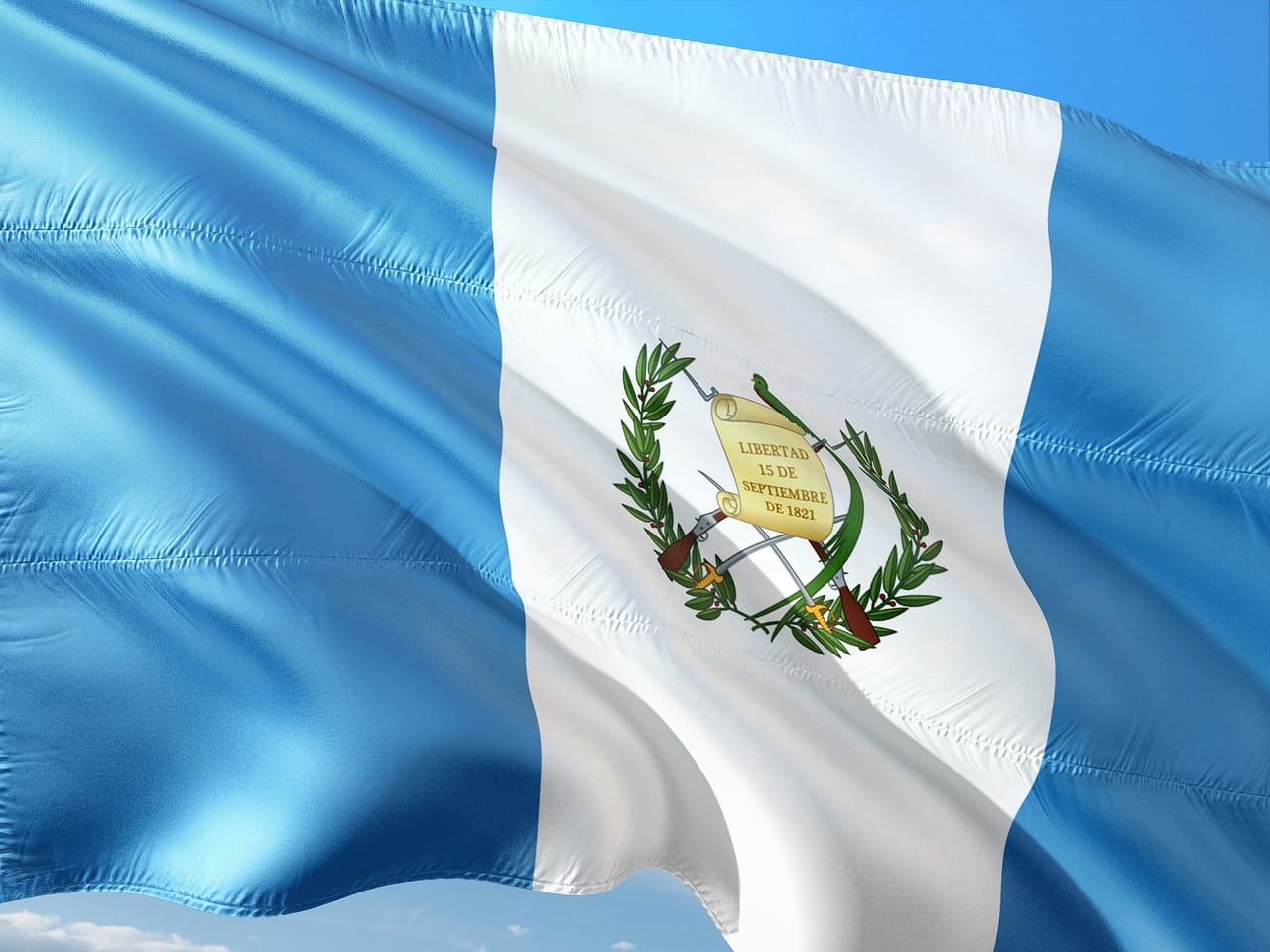
Guatemala – Land of volcanoes, mountains, Ancient Maya cities
Guatemala is one of the most beautiful countries in Central America; it is a land of volcanoes, lakes, and mountains, rainforests, and Ancient Maya towns. The country is a combination of natural beauty and historic charm. Its warm climate, colorful towns, friendly people, and rich traditions attract travelers from all over the world to experience Guatemalan culture, nature, and history. Guatemala is a very varied country in terms of its landscape. You can find thick rainforests with tropical animals in one area, deep blue lakes with volcanoes all around them in another area, and cold mountains with traditional towns, seemingly unchanged for hundreds of years, in the highlands. It is this combination that really makes Guatemala so special. Guatemala is also famous for textiles in bright colors, handmade crafts, and coffee farms. The culture is vibrant and full of color. Many travelers refer to Guatemala as a place where the past and present come together in beautiful harmony. 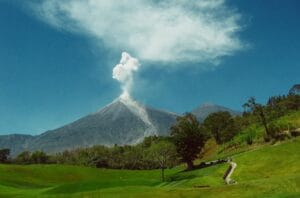
Geography of Guatemala
Guatemala is a country in Central America, bordering Mexico, Belize, Honduras, and El Salvador. It has a long coastline along the Pacific Ocean to the south. It also faces the Caribbean on the east. Because the country extends through mountains, beaches, plains, and forests, the nature of the geography can change rapidly from region to region. Here are the main geographical regions:
The Highlands
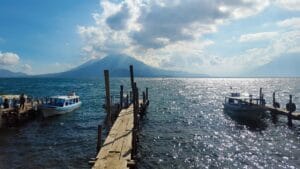
Throughout the central and western highlands, one will find towering mountain ranges with cool climates, volcanoes, and indigenous villages. The famous Lake Atitlán is located in this region, together with the powerful Chichicastenango and Quetzaltenango.
The Pacific Coast
The Pacific coastline is warm and humid, with black volcanic sand beaches and surf towns. It is also an important agricultural zone for the production of coffee, sugarcane, and bananas.
The Caribbean Coast
Though short, the Caribbean coast is rich in culture: Garifuna communities, palm trees, and calm beaches. The most famous town here is Livingston.
El Petén
The El Petén is a large area in the rainforest of northern Guatemala. Rich in wildlife, from jaguars and monkeys to toucans and many plant species, it is host to several Maya ruins like Tikal, Yaxhá, and Uaxactún.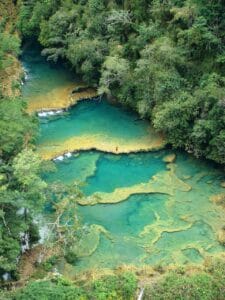
Eastern Guatemala
The eastern part of Guatemala is hot and dry. This would include places such as Zacapa and Chiquimula, which have desert-like weather conditions. This region is quite the opposite of the rainy highlands or the lush forests.
Guatemala City Region
This area covers the capital and its surroundings. It is more urbanized and developed. These varied landscapes have sometimes earned for Guatemala the sobriquet of “The Land of Eternal Spring,” since temperatures in its highlands stay mild throughout the year.
Climate of Guatemala
Guatemala has different regions with different climates, though certain general patterns can be observed.
Warm Lowlands
The tropical lowlands of the Pacific coast are both warm and humid, with temperatures staying high throughout the year.
Cool Highlands
Mountain towns are cooler, especially at night, and some highland areas get cold during winter months.
Rainy and Dry Seasons
- Guatemala has two main seasons: Dry season: November to April; Rainy season: from May to October
Traveling is best done during the dry season when the roads are better and more passable, and outdoor attractions are easier to reach.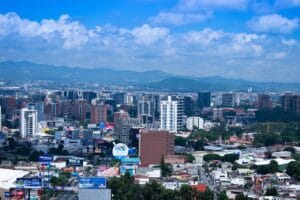
Modern Life in Guatemala
Today, Guatemala is a vibrant combination of rural life and modern development. Guatemala City is filled with businesses, universities, malls, and traffic, whereas rural villages are more slow-paced and traditional in nature. Tourism plays a large role in the economy. Among others, tourists visit:
- Natural landscapes, Colonial towns, Volcanoes, Maya ruins, Lakes and caves. People in Guatemala are very hospitable. Many tourists say they feel welcome wherever they go.
GEOGRAPHY AND LANDSCAPE OF GUATEMALA
Guatemala contains one of the most dramatic landscapes in the Americas: a land of mountains, volcanoes, lakes, rivers, and deep forests. To start with, an understanding of the varied regions making up Guatemala is important.
- Mountain Highlands : The highlands make up a wide part of Guatemala: cool and green, full of farms, villages, and valleys. They boast over 30 volcanoes, among them the very famous Volcán de Fuego, which is still active and sends small ash clouds into the sky on many occasions. Travelers love the region for its pleasant temperatures, beautiful lakes, and a strong indigenous culture.
- Lowland Rainforests : Going north, especially in the area of Petén, the landscape is low, flat, and very green. In these forests, hundreds of animals live: jaguars, monkeys, parrots, and tapirs are just a few examples. The thick woods hide some very important Maya cities, among which Tikal, Yaxhá, and El Mirador stand out. This is an ideal area for those who love both nature and archaeology.
- Pacific Coast : Guatemala has a long Pacific coastline on its southwest side. Here, beaches have black volcanic sand. The waves are strong; places such as Monterrico are known for sea turtles and a quiet beach life.
- Caribbean Coast : Guatemala has a small but ethnically significant Caribbean coastline near Livingston, which mixes Garifuna culture, African heritage, and Caribbean music. The coastline is warm, laid back, and famed for excellent seafood.

🎭 Culture And People Of Guatemala
Guatemalan culture is one of the richest in all Latin America, with a blend of indigenous Maya customs with Spanish and contemporary influences.
Indigenous Communities
Almost half of Guatemalan people belong to the Indigenous groups, predominantly Maya groups: the K’iche’, Kaqchikel, Q’eqchi’, and Mam. Languages spoken are numerous; every community has its own, sometimes more than one. Colorful hand-woven clothes called traje tradicional and festivals full of music, dance, and rituals characterize them.
Colonial Influence
Spanish colonization established towns with churches, plazas, cobblestone streets, and old buildings. Perhaps the most beautiful example is Antigua Guatemala; it’s even a UNESCO World Heritage Site. The brightly painted houses, baroque churches, and dramatic views of volcanoes create one of the most picturesque cities in the world.
Crafts and Art
Guatemala is known for textiles, pottery, carvings, and jewelry. Most cities or towns in the country feature vibrant artistic traditions like Chichicastenango. Every town has its patterns and colors representing stories, family history, and cultural identity.
Food Culture
Guatemalan food is simple, warm, and flavorful. Popular dishes include :
- Pepián – thick spicy stew, Kak’ik – traditional turkey soup, Tamales – steamed corn dough with fillings, Fiambre – Special holiday salad, Rellenitos – fried sweet plantains with beans
Food is usually served with fresh corn tortillas. Coffee is drunk everywhere, as Guatemala is among the best producers of coffee in the world.
🌋History Of Guatemala
The history of Guatemala is deep and fascinating, being one of the focal points of the ancient Maya civilization. The timeline below shows the development of the country.
Ancient Maya Civilization
Starting from about 2000 BCE up to about 1500 CE, the Maya developed advanced cities, pyramids, temples, observatories, and writing systems. Major cities like Tikal, El Mirador, and Quiriguá were centers of great power. The Maya further developed intricate mathematics, astronomy, and multiple calendars.
Spanish Conquest
In the 1500s, Spanish explorers arrived and began taking control. They built colonial towns, introduced Christianity, and initiated a new social and economic system.
Independence
Guatemala gained complete independence in 1821. Over the following many centuries, political instability plagued the country but it continued to develop its population and culture.
Modern Guatemala
Modern-day Guatemala is a democratic country with a budding economy, but most importantly, having a very well-developed tourism industry. It boasts a very rich history, attracting scholars, travelers, and photographers from around the world.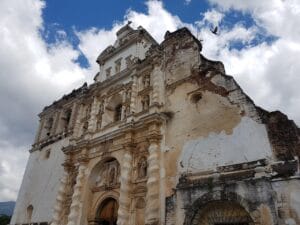
🌅 Tourism Sites Across Guatemala
Below, the most important and beautiful attractions are described in rich detail with easy language.
TIKAL NATIONAL PARK
Tikal is considered one of the greatest cities ever built by the Maya. It lies deep in a tropical forest where tall trees, bright birds, and howler monkeys surround the ancient pyramids. The site includes Temple I, Temple II, and the huge Temple IV, towering above the jungle canopy to afford a dramatic sunrise view. To walk through Tikal is to step back in time. The chirping of birds merges with the reverberation of history. The Grand Plaza, ball courts, and palaces give visitors insight into how mighty and intelligent the Maya civilization was.
ANTIGUA GUATEMALA
Antigua is a city of bright colors, elegant ruins, and magnificent volcanoes. That includes churches carved with detail, gardens full of flowers, and cobblestone streets lined with cafes and markets. Because many churches became picturesque ruins due to earthquakes, their existence adds beauty rather than takes it away. Among the things that visitors especially enjoy seeing and doing are:
Santa Catalina Arch
- Iglesia La Merced, Viewpoint of Cerro de la Cruz, Coffee farms, Artisan markets. Antigua is calm, artistic, and very photogenic.
LAKE ATITLÁN
Lake Atitlán has the nickname of the most beautiful lake in the world. Three volcanoes surround it, together with small villages. Each village has its culture, clothes, food, and traditions:
- Panajachel – main tourist hub; San Pedro La Laguna – backpacker village
- Santiago Atitlán – traditional Maya culture; San Marcos La Laguna – wellness and meditation. It offers boat rides, volcano hiking, craft shopping, and relaxation around its quiet waters.
CHICHICASTENANGO MARKET
This highland town offers the largest market in Central America. On Thursdays and Sundays, its streets fill up with colors, textiles, masks, handmade pottery, and flowers. The experience is unforgettable, with traditional dances, Maya rituals, and local foods.
PACAYA VOLCANO
Pacaya is an active volcano and lies close to Antigua. It is considered one of the most accessible volcano hikes in this area. During the climb, besides the warm stones at your feet, lava fields become visible, and the great views over three large volcanoes open up. Most hikers toast marshmallows over hot volcanic stones, adding a little fun to the adventure.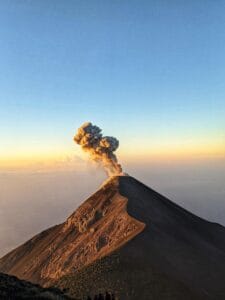
SEMUC CHAMPEY
Semuc Champey is the natural paradise standing among the mountains of Lanquín. It features several turquoise pools above a limestone bridge, while being surrounded by dense green jungles. The viewpoint here, called El Mirador, offers a panoramic view over the whole region.
RIO DULCE & LIVINGSTON
The Rio Dulce area makes for a potent combination of rainforest, rivers, and Caribbean culture. Boats cruise through emerald canyon walls and tranquil water. Livingston is a Caribbean town with the Garifuna people of African, Indigenous, and Caribbean descent, offering a mix of beaches, music, seafood, and peculiar customs.
🌐 Surrounding Places Near Guatemala
Having described the main parts of the country, now it is appropriate to consider those nearby and surrounding destinations which are popular to visit together with this country.
Belize (Northeast of Guatemala)
Belize is very close to Guatemala, so many travelers cross the border in order to combine both places. It is known for the following:
- The Belize Barrier Reef is excellent for diving and snorkelling. The Great Blue Hole is a world-renowned deep marine sinkhole.
- Maya ruins like Caracol, Xunantunich and Lamanai. The Caribbean beaches and islands of Caye Caulker and Ambergris Caye.
- It is an easy and popular journey from the Petén in Guatemala to Belize.
Mexico (Northwest)
Mexico shares a border with Guatemala, and the two countries share many Maya cultural roots. Surrounding cities and sites include:
- Chiapas: waterfalls, indigenous villages, and colonial towns, Palenque – spectacular Maya ruins in the jungle
- San Cristóbal de las Casas – colorful mountain town, Cancún & Tulum- famous Caribbean beach destinations. Travelers often move from Guatemala’s highlands to southern Mexico to continue exploring Indigenous culture.
HONDURAS (East)
Honduras provides beautiful beaches and historic Maya cities. Important surrounding attractions include:
- Copán Ruinas – a UNESCO Maya archaeological site, famous for its stone carving.
- Roatán Island is ideal for scuba diving. Tela and La Ceiba are both coastal towns that boast beaches and wildlife.
- Copán is close to Guatemala’s eastern region, so many travelers visit both on the same journey.

El Salvador (South)
El Salvador, which lies south of Guatemala, has:
- Beaches for surfing: El Tunco Izalco and Santa Ana-type volcanoes, Colorful towns on the Ruta de las, Flores Historic sites and warm hospitality. The trip from Guatemala to El Salvador is quite short and convenient
🌄 Tourism Activities in Guatemala
Guatemala offers a wide range of tourism activities that fit every type of traveler. Nature, culture, and adventure are combined in this country, full of natural, cultural, and adventurous landscapes. Visitors can easily mix history with nature and insights into local life. Below is a complete breakdown of the major tourism activities available throughout Guatemala.
Climbing Acatenango Volcano
The Acatenango Volcano hike is arguably the most famous in Central America. In return for the difficult journey, travelers are granted a powerful experience. The hike begins in farmland and gradually rises into cloudy forests, where the air becomes cool and the moss covers the trees. Continuing higher, volcanic sand and open views greet the hiker. Here, at night, Volcán de Fuego can be seen to erupt small bursts of lava and ash. The bright orange glow against a black sky creates an unforgettable memory.
Hiking Pacaya Volcano
Pacaya is easier than Acatenango and thus suitable for beginners. Visitors can walk over old lava fields, feel warm stones beneath their feet, and enjoy wide views of the surrounding mountains. Many people roast marshmallows using the natural heat of the volcanic rock, making the experience more enjoyable.
Trekking Through
Lake Atitlán Villages The area around Lake Atitlán offers gentle to moderate trekking options. Trails connect villages like San Marcos, Santa Cruz, and San Juan. Travelers walk along the side of a mountain while looking down at the deep blue water of the lake. The peaceful sounds of birds and the moving wind create a serene atmosphere.
Jungle Hiking in Petén
The north of Guatemala – especially the Petén region – has forest trails full of wildlife: monkeys, toucans, parrots, and the like. These hikes often lead to ancient temples inside Maya cities like Tikal and Yaxhá. Walking through the jungle gives the visitor the feeling of discovering something that was lost for centuries.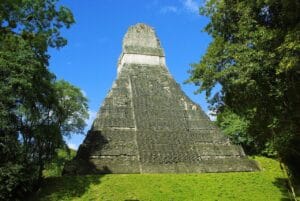
Understanding Indigenous
Markets The Chichicastenango Market, like several others, provides one of the country’s best examples of cultural activity. The stalls are loaded with textiles, masks, pottery, and handmade clothing. Vendors don their traditional outfits, as many families come from a very long distance to share their crafts. Colors cover the whole town, and local food aromas fill the air.
Learning Traditional Weaving Many
Maya villages offer classes in weaving. Women teach visitors how to work backstrap looms, choose natural dyes, and create patterns that reflect their community’s identity. This activity helps travelers appreciate the amount of work involved in a single handmade textile and is also a form of support for local artisans.
Participating in Local Festivals
Guatemala has many festivals throughout the year. Some are religious, others are for the harvest or local traditions. The Day of the Dead celebration in Santiago Sacatepéquez is famous for its giant kites, which are designed with beautiful artwork. They represent messages to ancestors. Watching them fly is a powerful cultural experience.
Visiting Coffee Plantations
Guatemala grows some of the world’s finest coffees, especially around the Antigua region. Coffee tours explain the process at every stage, from planting the seeds to roasting the beans. Visitors walk through the plantations, taste fresh coffee, and learn how the local climate creates unique flavors. Kayaking on Lake Atitlán Kayaking is among the most gentle and peaceful things to do in Guatemala. In the morning, the lake is still, and paddling on its surface gives the feeling of quiet freedom. Along the lakeside, travelers can move and see villages, cliffs, and small beaches.
Swimming at Semuc
Champey and Exploration Semuc Champey is a natural wonder that includes bright turquoise pools arranged like steps. Visitors can swim, relax, and cool off after hiking. The thick green forest surrounds the entire area, making the pools feel untouched and pure. Many people also visit the nearby K’an Ba Caves to swim inside the underground rivers.
Rio Dulce River
Cruises Rio Dulce is noted for its tranquil views of the river. Boats go through green canyon walls, tropical forests, and small communities. Along the river, travelers can see birds, iguanas, and fishermen. The journey generally ends in Livingston, a town with Caribbean culture and music.
Snorkeling and Diving (Near Belize Border)
While Guatemala itself is not famous for coral reefs, many travelers cross into Belize to dive at the Barrier Reef. The eastern exit point via Puerto Barrios makes this trip in particular very easy and convenient.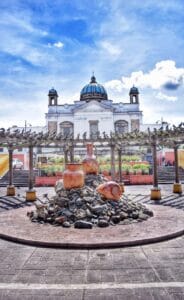
🌺Conclution
Guatemala represents a country of breathtaking beauty, great depth in its history, and friendly people. Its cities, villages, rivers, volcanoes, and ruins all tell a story going back thousands of years. Whether one is seeking culture, nature, adventure, or calming views, Guatemala offers this all in one setting. The surrounding regions of Mexico, Belize, Honduras, and El Salvador make the entire area even more exciting and give travelers endless possibilities. This is the complete and detailed article, combined and put together, with easy words, smooth transitions, rich descriptions, tourism sites, and surrounding places, as you asked for.
Author

Related posts

OPEC
- 0
- 5,679 words
OPEC OPEC stands for the Organization of the Petroleum Exporting Countries. It is an intergovernmental organization created by major oil-producing countries to...
Read out all
How Do I Find Reliable Wholesale Suppliers
- 0
- 9,103 words
How Do I Find Reliable Wholesale Suppliers ? Finding reliable wholesale suppliers is one of the most important tasks for anyone starting...
Read out all
What Is Happening in the World?
- 0
- 5,355 words
What Is Happening in the World? The world is currently experiencing a period of overlapping crises and opportunities. Political disputes, military conflicts,...
Read out all
BRICS
- 0
- 5,794 words
BRICS : History, Members, Economy, Goals, Expansion and Global Influence BRICS is an international grouping of major emerging economies and developing countries...
Read out all
United Kingdom
- 0
- 5,089 words
United Kingdom The United Kingdom, commonly known as the UK, is one of Europe’s most fascinating travel destinations. Officially called the United...
Read out all
Bhutan
- 0
- 4,154 words
Bhutan Travel Guide Bhutan is one of the most fascinating travel destinations in Asia, offering an extraordinary combination of Himalayan landscapes, Buddhist...
Read out all