

Sandwich Harbour, Namibia
Sandwich Harbour is one of a kind in the world and is located on the coast of Namibia, a place where the high golden dunes of the Namib Desert meet the deep blue water of the Atlantic Ocean. The rare meeting of sand and sea creates an unreal dramatic landscape, almost like a dream. The area is remote, wild, beautiful, and peaceful. Many people say it is one of the most magical places in Africa. In this first part, we are going to get familiarized with the geography, land formations, climate, and natural environment of Sandwich Harbour. The text will be simple, with clear sentences that transition smoothly one to another. Sandwich Harbour forms part of the Namib-Naukluft National Park, one of Africa’s largest conservation areas. The site is located about 60 km south of Walvis Bay, a major coastal town in Namibia. The area is known for towering dunes, quiet lagoons, coastal birds, and a long, untouched coastline. This place looks very dramatic. In one direction, you see huge sand dunes; in another, you see the endless ocean. There aren’t any big roads, towns, or buildings. Because of this, Sandwich Harbour feels untouched and wild. Many visitors come here for the rare view of dunes slipping right into the sea. The dunes keep moving with every blowing wind, creating new shapes. Because of this natural process, the landscape changes every time one visits.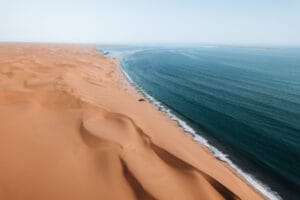
Geography of Sandwich Harbour
To understand Sandwich Harbour better, it is important to know its geography. The area lies within the Namib Desert, which is believed to be the oldest desert in the world, more than 55 million years old. This desert stretches across much of Namibia, continuing into Angola and South Africa. Sandwich Harbour itself is a shallow lagoon surrounded by high dunes and narrow strips of coastline. It was formed naturally by the interaction between ocean currents and sand movements, but has over time been gradually closed through shifting sand.
The Unique Landscape
Sandwich Harbour is known for its powerful natural beauty. Wind, the movement of the sand, and ocean waves shape the daily changes in the landscape. The dunes rise to 100–150 meters, creating one of the tallest dune systems in the world.
The Sand Dunes
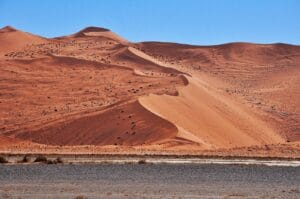
The dunes are the most striking feature: tall and soft, golden in hue. Yellow, orange, and red colors change with the sun’s reflection upon them. At sunset, the dunes appear as waves of gold. The wind shapes the dunes into long curves and sharp ridges. Some dunes slope gently while others fall steeply into the ocean. Drivers often climb these dunes in 4×4 vehicles during tours but only experienced guides can do this safely because of the soft sand.
The Ocean
The Atlantic Ocean is powerful and cold, with huge waves crashing against the dunes. There is something dramatic in the contrast of the still sand with the rough water. Because the water is cold, there is often fog along the coast. This fog is referred to as the “Namib Mist,” and it is vital for many plants and animals that survive in the desert.
The Lagoon
The lagoon area is very important for birds. It used to be larger, but moving sand has made it smaller. Even so, the lagoon still attracts thousands of birds each year. It’s a peaceful place filled with natural sounds.
The Salt Pans
Around Sandwich Harbour, there are natural salt pans: Water simply evaporates from these depressions, leaving behind the salt. It develops interesting patterns and colors on the ground-some look bright white, others light pink.
Climate of Sandwich Harbour
The climatic features include dry conditions, windiness, and coolness. It is a desert region indeed but it is not extremely hot at Sandwich Harbour due to the cold ocean nearby.
Temperature
- Cool in the morning and evening, Warm in the afternoon, Rarely very hot, Rarely very cold. Most temperatures range between 15°C to 25°C, making the area comfortable for visitors.
Fog
Fog is very common; actually, this area has fog almost 200 days in a year. This fog provides moisture for desert beetles, plants, and reptiles and makes the landscape mysterious and beautiful.
Wind
Strong winds constantly shape the dunes. They also push the sand towards the sea, making a mobile landscape.
Rain
It is practically devoid of rain. That is to say, the yearly amount does not reach 25 mm.
Why Sandwich Harbour Feels So Special
Large areas of the world are deserts, and equally large areas are coastal. Few combine both. This makes it a different and powerful combination at Sandwich Harbour.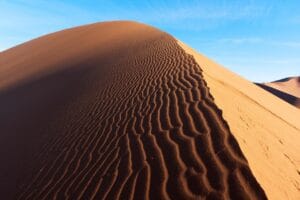
Reasons it feels special
- Silence: It is a very quiet place.
- Scale: Indeed the dunes are enormous and give that feeling of awe.
- Color: Blue sea, golden sand, white foam, pink sunsets.
- Isolation: No crowds, no buildings.
- Nature: Birds, seals, and desert animals live freely.
- Freedom: People feel small but peaceful with wide open spaces. But it is this emotional experience that allows many photographers and filmmakers to choose this location for their work.
Access and Remoteness
Access to Sandwich Harbour is complicated. There are no main roads, the route on the beach is narrow, and tides can block the passage. This makes access possible only on professional 4×4 tours.
Visitors are obliged to use licensed guides because:
- The sand is too soft for normal vehicles. The tide can trap cars. The area is protected. Drivers must know the dune routes Safety knowledge is needed. It is exactly this difficulty that makes the area even more special: it remains clean, untouched, and free from mass tourism.
The History of Sandwich Harbour
Although Sandwich Harbour today appears untouched, it has a long and interesting history. Various groups of people have visited or stayed near this region over thousands of years. As such, the area retains cultural, natural, and historical significance.
Early Inhabitants
The first people to live around the coast of the Namib Desert were the communities of Khoisan and Nama. They were hunter-gatherers who moved by seasons. They also depended on the coastline for fish, shells, seals, and birds. These groups left behind stone tools, shell middens, and rock engravings in the wider region, showing evidence of early life near the desert.
European Explorers
Later, in the 15th and 16th centuries, European explorers started visiting the Namibian coast. Among the first to map this area were Portuguese sailors. The coastline was difficult, as waters were rough with heavy fog. Sandwich Harbour appears on early European maps as a safe anchorage even though the lagoon was small. Sailors were glad to find an area of shelter along a coastline that can be dangerous.
The Whaling and Fishing Era
In the 1800s, the harbour became a temporary stop for:
- Whaling ships, Fishing boats, Seal-hunting groups. Whalers liked this quiet lagoon very much because they could anchor safely and prepare their boats. Seal oil and whale oil had great importance in those days.

But the environment was harsh, and settlements never lasted long. Very little freshwater was provided from the desert and it was often accompanied by sandstorms. Due to such tough conditions, no harbour was ever developed into a permanent town.
Decline and Natural Changes
Over the centuries, sand movement slowly closed parts of the lagoon. The harbour became less useful for ships. Eventually, nature took over again. By the mid-1900s, Sandwich Harbour reverted to being a quiet, wild, and untouched place. These days, the area falls wholly inside the Namib-Naukluft National Park, and no human settlement is allowed.
The Tall Sand Dunes
To begin, the dunes are the real attraction of Sandwich Harbour. These dunes are not simple hills of sand. They are huge mountains. Some dunes reach above 100 meters high. Some even go above 200 meters. The wind shapes them day by day. Because of this, the dunes change color and shape as the day moves. During sunrise, they look golden. During sunset, they look orange and red. Many tourists ascend these dunes to enjoy the view. The climb is hard. However, the reward is great. When you stand at the top, you see the Atlantic Ocean on one side and endless desert on the other. These dunes also create sharp shadows. The shadows make the landscape dramatic. Such an effect is liked by photographers. Actually, Sandwich Harbour is among the best spots in Namibia for photography. With the right light, the dunes look like soft waves made of sand.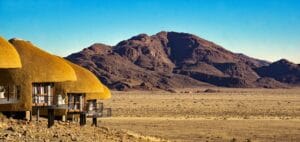
The Atlantic Ocean Meets the Desert
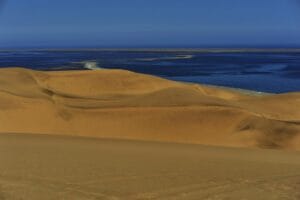
Next, one of the most distinctive features of Sandwich Harbour is where the ocean and desert meet. Very few places around the world can boast of this natural conjunction. Here, the towering dunes literally go right down to the water. You can stand on a dune and see waves crash below you. This creates strong contrast: the desert is dry and hot, while the ocean is cold and powerful-together forming a beautiful but rough coastline. The ocean here is part of the Benguela Current. This current brings cold water from the south. Because of this, the ocean off Sandwich Harbour is full of fish. It also brings fog to the desert. This fog is very important. It helps plants survive. It also keeps some animals alive. Many desert animals get their water from fog.
The Lagoon and Salt Pans
The other crucial feature is the old lagoon area further ahead. A long time ago, Sandwich Harbour had a huge natural lagoon. Today, only portions of it remain. These portions form smaller pools and salt pans with wetlands. At high tide, the water fills some places, whereas at low tide, most of the lagoon becomes dry. Still, these wetlands attract many birds. Flamingos, pelicans, cormorants, and many more species come here. Bird lovers enjoy this place because they can see birds close and in large numbers.
The Wildlife of Sandwich Harbour
Though seemingly empty, Sandwich Harbour is teeming with life. Many types of desert animals reside here. They are well adapted to heat, sand, and dry weather.
Oryx:
These strong antelopes are one of the most famous animals in Namibia; they survive for a long period without water and have white and black face markings which make them easy to spot.
Springbok:
These small antelopes are found moving in groups. They jump high, which is called “pronking,” if they feel excited.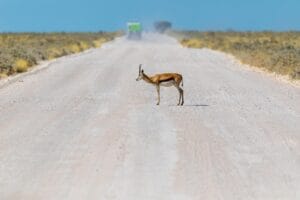
Jackals:
Black-backed jackals mostly walk along the shoreline. They look for food remains, fish, or small animals.
Brown Hyenas:
You can also spot a shy brown hyena, which is a rare species; it mainly shows up at night or early morning.
Birdlife:
As mentioned, Sandwich Harbour is also a paradise for birds. The most beautiful are the greater flamingos. They walk in groups in the shallow water, setting pink lines. Pelicans fly low above the waves. Cormorants rest on the sandbanks. Herons search for fish.
Smaller Creatures:
The desert has geckos, insects, snakes, and beetles. One of the most interesting is the fog-basking beetle. It stands on top of dunes and collects fog droplets on its body.
Extreme Weather and Strong Winds
The weather in Sandwich Harbour is peculiar. Cold winds are brought in from the Atlantic Ocean. The desert brings hot air in. When these two meet, they create sudden fog. On some mornings, you cannot see anything other than a few meters in front of you. But once the fog lifts, the sun becomes strong, and temperatures shoot up. Because of this very reason, visitors are always advised to travel with guides only. Guides understand tides, winds, and safe routes. Besides, the wind is strong here. It can reshape dunes within minutes. Sometimes it even makes driving difficult. But this same wind makes the desert look clean and fresh. No footprints remain for long.
Surrounding Places Near Sandwich Harbour
Now, let’s take a look at the rest of the surroundings in detail. Indeed, these surrounding sights make this region even more interesting.
Walvis Bay
This is the closest city to Sandwich Harbour, an important port town with tranquil streets, seafood restaurants, and wide bays. Many visitors stay here en-route to Sandwich Harbour. The Walvis Bay Lagoon is famous for flamingos. There are also kayaking tours available. You can paddle near seals and dolphins.
Swakopmund
Not far from Walvis Bay, Swakopmund is a larger town featuring buildings with German-style architecture. It has beaches, museums, cafes, and adventure sports. Many travelers to Swakopmund make use of the town as a base for desert quad biking, skydiving, and sandboarding.
Pelican Point
This is a long sandy peninsula near Walvis Bay. It hosts large seal colonies. Visitors can go on a seal-viewing boat tour or take a seal-viewing kayak tour.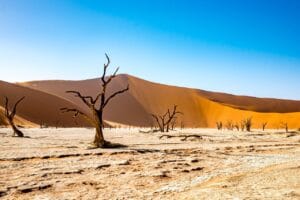
Namib-Naukluft
Park It contains Sandwich Harbour, yet in the park also Sossusvlei, Dead Vlei, and Sesriem Canyon are included. These are some of the most well-known tourist attractions in Namibia, featuring giant red dunes and the ancient dried trees.
Dune 7
Dune 7, one of the tallest dunes in Namibia, is located near Walvis Bay. Many people climb it for fun.
The Deep Silence of the Desert
Probably the most magical thing about Sandwich Harbour is the silence. When you stand on a dune, you hear almost nothing. No cars. No cities. No noise. Only the wind and the waves speak. This silence is what makes many people feel tearful. It soothes. It brings peace. Some folks say it feels spiritual.
Conclution
Sandwich Harbour is not a place; it’s an experience. The tall dunes, deep lagoons, and cold ocean create landscapes found nowhere else. The surrounding areas of Walvis Bay, Swakopmund, Pelican Point, the Namib Desert, and Skeleton Coast add variety, adventure, and cultural insight. The place has something for photographers, animal lovers, adventure enthusiasts, and those who seek peace. Each day brings a new surprise: a differently-shaped dune, a flock of flamingos, or a foggy morning over the Atlantic. Sandwich Harbour stands as a testament to Namibian natural splendor and conservation efforts: remote, wild, and magical, a veritable marvel of the desert-ocean.
Author

sadikhan.ceo@gmail.com
Related posts
Doha Travel Guide
- 0
- 2,147 words
Doha Travel Guide – A Modern Arabian City with Culture and Luxury Doha is quickly becoming one of the hottest places to visit...
Read out all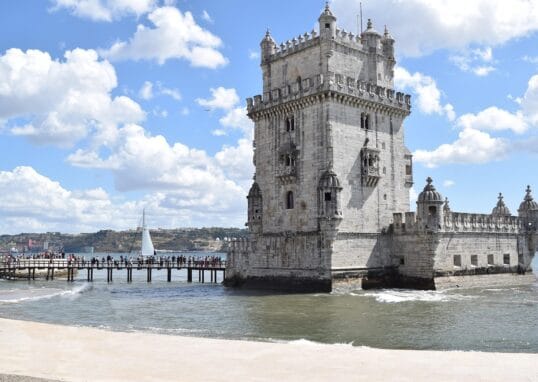
Lisbon Travel Guide
- 0
- 2,266 words
Lisbon Travel Guide – A Beautiful Coastal Capital with Culture and Value Lisbon pops up on pretty much every list of Europe’s...
Read out all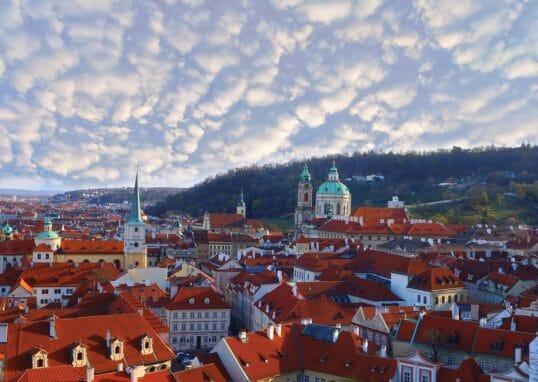
Prague Travel Guide
- 0
- 2,455 words
Prague Travel Guide – A Magical European Destination Full of History and Charm If you’re dreaming of a city that looks and...
Read out all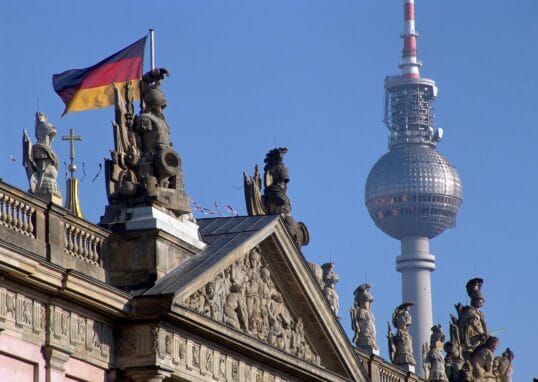
Berlin Travel
- 0
- 2,097 words
Berlin Travel Guide – A City of History, Culture, and Modern Energy Berlin isn’t your typical European capital—it buzzes with history and...
Read out all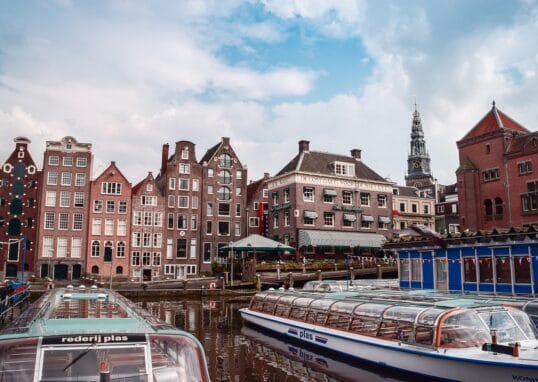
Amsterdam Travel Guide
- 0
- 2,602 words
Amsterdam Travel Guide – A City of Canals, Culture, and Timeless Beauty Honestly, Amsterdam is one of those cities that just grabs...
Read out all
Barcelona, Spain
- 0
- 2,340 words
Barcelona, Spain Travel Guide – A Vibrant Mediterranean City Barcelona feels alive, no matter what time of year you show up. The...
Read out all