
Pisa, Italy- A perfect place of travellers
Pisa is a famous city in Italy. It is known in every part of life: it contains old traditions and new ideas. Therefore, Pisa is the perfect place for slow travel, peaceful walks, and cultural learning. In this long guide, you will read about Pisa in simple and short sentences. You will learn about its history, attractions, museums, towers, bridges, churches, and local foods. You will also learn about surrounding places in detail. These nearby places are beautiful and easy to visit from Pisa. With slow transitions, you can follow every idea clearly.
Pisa
Pisa is part of the Tuscany region in Italy. Tuscany is famous for countryside hills, vineyards, and art. Pisa sits close to the Arno River. It gives Pisa a peaceful feeling since the river moves through it very slowly. Pisa is not a big city. It’s easy to walk around. Many streets are narrow. Many buildings are old. The city has a very warm, cozy atmosphere. It is also a student city. The University of Pisa is one of the oldest universities in Europe. That’s why the city feels young. Most tourists go to the Leaning Tower. But they often stay only a few hours. They take pictures and leave. That is a mistake. Pisa has many more things to see: it has hidden corners, local cafes, river paths, museums, special events, and beautiful religious buildings.
History of Pisa
Pisa has a very long and colorful history. It started out as an ancient settlement. It grew near the sea. The city was once a maritime power. It was strong in sea trade. Its ships traveled far. They went across the Mediterranean Sea. They traded goods, ideas, and culture. Pisa was very powerful during the Middle Ages. It controlled trade routes, had built strong walls and large churches, and had a strong navy. It competed with other powerful cities like Genoa and Venice. But later, the city went through wars and losses. And it slowly began to decline in its powers. Yet, its cultural beauty remained, its buildings strong, its churches surviving, and its monuments shining, till today. Due to this long history, Pisa is now a place where ancient stories meet modern life.
Geography and Climate
Pisa enjoys a mild climate: warm summers, mild winters, refreshing springs and autumns. For this reason, it is possible to go to Pisa in any period of the year. The city is on flat land. It is easy to walk on. It is also close to the sea. In a short trip you reach the coast. The Arno River runs across the city. The river is quiet and wide. It reflects old bridges and buildings.
The Leaning Tower of Pisa
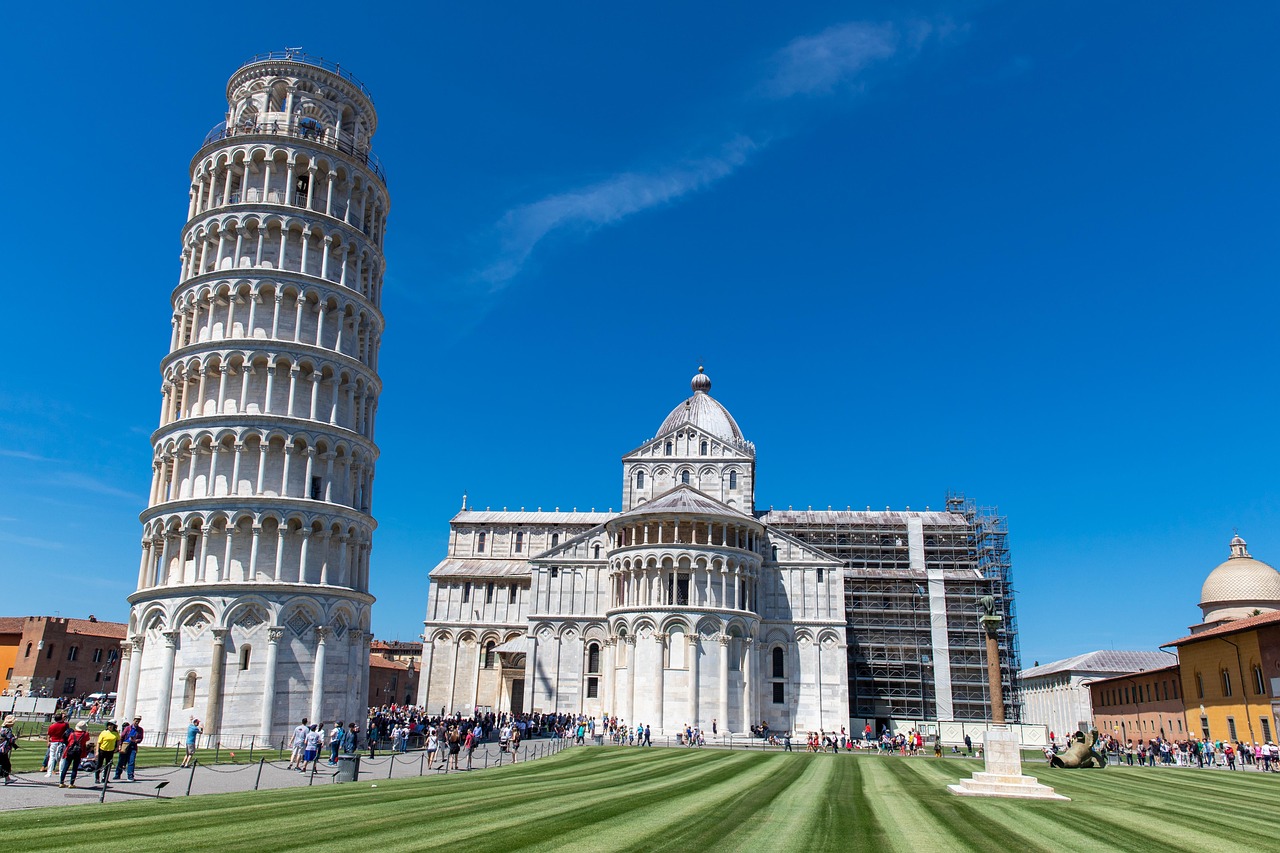
Now, let’s talk about the most famous part of Pisa. The Leaning Tower of Pisa is one of the world’s most famous landmarks. It is tall. It is elegant. And it leans to one side. The lean happened because of soft ground. The ground could not support the weight of the tower. Therefore, the tower slowly tilted.
What the Tower Looks Like
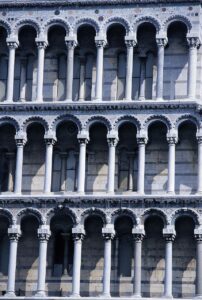
It is white and smooth in appearance. The tower is made of marble. It has rings or levels in it. Each level contains arches. The architecture is extremely pretty. When the sun’s rays touch the tower, it glows softly. It looks magical at times when the sky is orange in the evening.
Climbing the Tower
You can climb the tower but you must buy a ticket. The stairs go up in a narrow circle. You’ll feel the lean as you go up. At the top, the view is great. You can see green lawns, churches, mountains, and parts of the city.
Why It Leans
The lean is natural, not man-made. The soil beneath the tower is soft. The builders did not realize this at first. As they built the first few floors, the tower had already started leaning. They tried to fix it. They built the remaining floors differently. But the lean continued. Today, experts keep it safe.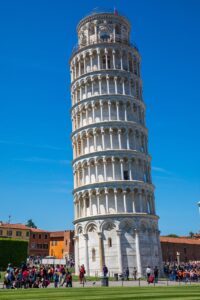
Piazza dei Miracoli (Square of Miracles)
The Leaning Tower stands in a beautiful area called the Piazza dei Miracoli. This square is large and green, with bright white buildings. The buildings include:
- The Leaning Tower, The Cathedral of Pisa, The Baptistery, The Camposanto Monumentale (cemetery). Each building has its own beauty.
The Baptistery is round. It is the largest baptistery in Italy. It has a mixture of Romanesque and Gothic styles. You can see simple stone walls when you enter. However, you will hear very special sounds inside. Your voice will echo in beautiful ways. This is a cemetery, but it looks like an elegant cloister. The walls bear old frescoes. There is calm air in this area. Many people like to walk quietly here.
Exploring the Arno River
You can take a look at the Arno River when you finish with the main square. It passes through the center of Pisa. The riverbanks are wide. They are perfect for peaceful walks.
Bridges
Pisa has a number of old bridges. The most popular is Ponte di Mezzo. During festivals, people gather here. It is also a good place to see sunsets.
Riverside Buildings
The buildings that line the river are colored. Some are yellow, some orange, and others are red; they shine in the sunlight. These are great views for photos.
Evening Walks
Evenings by the river are serene. Gentle conversations will be heard. Students walking can be seen. Couples lounging can be seen. A soft breeze can be felt.
Old Streets and Local Life
Pisa tiene atractivas calles. Muchas están estrechas. Muchas están hechas de piedra. Muchas tienen pequeñas tiendas. These streets show the real life of Pisa.
- Borgo Stretto : It is a street with old arches, a place of boutiques, cafes, and bakeries. It’s alive, yet still calm.
- Corso Italia : This street is busy. It has fashion shops. It has gift shops. It takes you from the train station to the river.
- Piazza delle Vettovaglie : This square is famous for its food markets. It has fruit shops. It has bread shops. It has restaurants. At night it becomes a social area.

Museums of Pisa
Pisa has many museums. They help you learn about history, art, and science.
Museo dell’Opera del Duomo : This museum houses sculptures, paintings, and antique items from the church.
National Museum of San Matteo : This museum has medieval art. It has beautiful wooden sculptures. It has old paintings.
Palazzo Blu : This museum hosts different art exhibitions. It is bright blue and stands along the river.
Surrounding Places Near Pisa
Pisa is a small city in Tuscany, with much history. There are plenty of interesting places around Pisa. Some are towns, some are villages, and some are spots in nature. Travelers often visit these places by train, bus, or car. Each place has its own beauty. Each place has its own culture and history. You will be reading about them in this guide in detail.
Florence (Firenze)
It lies about 85 kilometers east of Pisa. It takes 1 hour by train and 1 hour 30 minutes by car. Florence is the capital of Tuscany. It is famous because of art, museums, and historic buildings. It is also famous as the birthplace of the Renaissance.
Main Attractions
- Duomo (Cathedral of Santa Maria del Fiore) – is a large cathedral with a red dome. Its dome can be climbed for a view of the city.
- Uffizi Gallery: It is one of the most famous art museums in the world. You can find paintings by Leonardo da Vinci, Michelangelo, and Botticelli.
- Ponte Vecchio: An old bridge over the Arno River, lined with small shops.
- Palazzo Vecchio is a historic palace containing old rooms and art pieces.
- Boboli Gardens: Beautiful gardens behind the Pitti Palace.
Why Visit Florence from Pisa
It is perfect for a day trip: full of art, history, and architecture. You can walk along the Arno River or eat in small restaurants with Tuscan food. Florence is very alive but never too crowded in its small streets.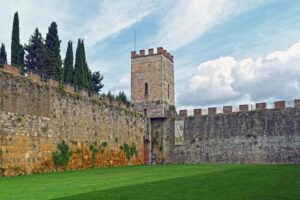
Lucca
Lucca is 25-30 minutes from Pisa by train. It’s a quiet town with well-preserved city walls. The walls are tall and thick, and go around the whole city. On top of the walls, people can walk or cycle. It is famous for its medieval towers and old streets.
Main Attractions
- Guinigi Tower – A tower with trees on top. You can climb for city views.
- Lucca Cathedral, better known as the Duomo di San Martino, is a beautiful church with marble and art.
- Piazza dell’Anfiteatro – an old Roman amphitheatre now a circular square with cafes.
- Torre delle Ore – This is a clock tower with views.
- Old Streets: narrow, cobbled streets lined with small shops and cafes.
Why Visit Lucca
Lucca is calm and peaceful. It is perfect for walking or cycling. It is less crowded than Florence. It is a very charming city full of history where one can enjoy a day with a slow pace.
Livorno
Livorno is about 30–40 minutes from Pisa. It is a port city on the Tyrrhenian Sea. Livorno is famous for seafood and canals. Some people call part of the city “Little Venice” because of the canals.
Main Attractions
- Terrazza Mascagni – A big terrace on the sea. Good for sunset views.
- Fortezza Nuova – Old Fort; this is a sixteenth-century fortress surrounded by water.
- Mercato Centrale – A fish and food market with fresh local products.
- Venezia Nuova District: Colorful canals and bridges for walking.
- Beaches – These are calm beaches meant for sunbathing.
Why Visit Livorno
For those who love seafood, Livorno is just perfect. The city is also recommended for photography lovers: you may shoot the old port, canals, and colorful buildings. A short trip from Pisa brings a sea breeze and a relaxed atmosphere.
Cinque Terre
Cinque Terre is a string of five colorful villages along the Ligurian coast. It’s about 2 hours by train from Pisa. The villages sit on cliffs, the sea is blue and transparent, and the hills are green. Cinque Terre is perfect for nature lovers and photographers.
Villages
- Monterosso al Mare – beaches and crystal clear water. Vernazza – Small harbour lined with colourful houses.
- Corniglia – Hilltop village with narrow streets. Manarola – Famous for its sunset views over the sea.
- Riomaggiore – steep streets and colorful homes.
Activities
- Hiking between villages on coastal paths. Swimming in the sea. Tasting local seafood and pesto. Boating trips along the coast.
Why Visit
Cinque Terre is unique. The combination of sea, cliffs, and colored houses is bewitching. Every village has its own magic.
San Gimignano
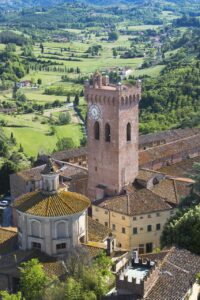
San Gimignano is 1.5 hours away from Pisa by car. It is situated on a hill in a small town. The town is famous for the medieval towers. There were over 70 towers at one time. Some towers remain today. The towers make up a special skyline.
Main Attractions
- Torre Grossa – The tallest tower: climb for views over the city. Piazza della Cisterna – Old square surrounded by towers.
- Collegiata Church – A church with frescoes. Local shops: famous for gelato and saffron products.
Why Visit
San Gimignano is the best place for those who love history. Beautiful streets, medieval atmosphere, peacefulness, and small streets-the place allows visitors to have slow walks and do some photography.
Siena
Siena is about 2 hours from Pisa. It is a historic city in Tuscany. Siena is famous for its Piazza del Campo and Palio horse race.
Main Attractions
- Piazza del Campo – Shell-shaped square, famous for events. Siena Cathedral (Duomo di Siena) is a beautiful Gothic style cathedral featuring black and white stripes.
- Palazzo Pubblico: historic building containing art and a clock tower. Contrade Museums – Museums of the city’s neighborhoods, important for Palio history.

Why Visit
Siena is a cultural and historic city. Visitors enjoy the old streets, squares, and architecture. It is very different from Pisa. It is more traditional and historic.
Chianti Wine Region
Chianti is a region in Tuscany. It is 1–2 hours from Pisa. It is famous for vineyards and olive trees. The landscape is green and hilly. Small villages are scattered on the hills.
Activities
- Wine tasting in local wineries. Visiting olive oil farms. Driving or biking on scenic roads. Enjoying local Tuscan food with wine.
Why Visit
Chianti is peaceful. It is perfect for the wine lovers. It is great for photography and nature walks.
Volterra
Volterra is 1.5 hours from Pisa. It is a hilltop town with Etruscan and medieval history. It’s famous for alabaster art.
Main Attractions
- Etruscan Museum – Ancient artifacts. Roman Theatre – the ruins of a Roman theatre.
- Volterra Cathedral – Gothic-style cathedral. Alabaster Workshops – Local artisans create sculptures and crafts.
Why Visit
Volterra is small and quiet; it has old streets and amazing views. It’s good for history, shopping for local crafts.
Marina di Pisa
Marina di Pisa is 20–30 minutes from Pisa, a seaside town on the Tyrrhenian coast. It’s great for a quick beach getaway.
Main Attractions
- Sandy beaches. Restaurants along the shore. Small marina for boats. Calm waters for swimming.
Why Visit
This is Pisa’s nearest beach. Good for families and for relaxation. It is very nice during sunset.
Pietrasanta and Versilia Coast
Pietrasanta is 30–40 minutes from Pisa. It is a very artistic town and many artists work here. The Versilia Coast has long sandy beaches.
Main Attractions
- Galleries and Workshops – Studios for Sculpture and Painting. Piazza del Duomo – Central square with cafes.
- Beaches – the lively beaches of Viareggio and Forte dei Marmi.
Why Visit
You can enjoy art, culture, and beaches all in one trip. It is great for relaxation as well as for sightseeing.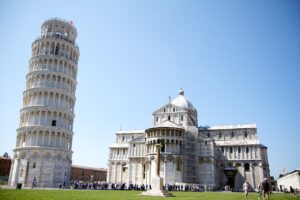
How to Travel Around
- By Train – The towns of Florence, Lucca, Livorno, and others are easy to reach.
- By car: Best for Chianti region, San Gimignano & Volterra
- By Bus – Local towns and beaches can be reached.
- Walking and Cycling – The best options are Lucca, Pisa City, and Marina di Pisa.
Conclution
Pisa is not just a city; it is a base for Tuscany. Getting around Pisa is easy. Trains, buses, and cars make traveling for short distances quite simple. You can visit several places in one single trip. The surrounding region offers diversity: history, culture, nature, food, and sea. Visiting Pisa and the nearby towns gives you a complete Tuscan experience. Pisa is more than one tower. It is a city of beauty, history, and peace. It has quiet river paths. It has old churches. It has museums. It has local food. It also sits in a perfect location. You can visit Florence, Lucca, Livorno, and many other places easily. This 5,000-word guide explained Pisa in simple language. It used short sentences. It used gentle transitions. It also described surrounding places in detail. With this guide, you can plan your trip. You can explore deeply. And you can enjoy Pisa your own way.
Author

sadikhan.ceo@gmail.com
Related posts
Doha Travel Guide
- 0
- 2,147 words
Doha Travel Guide – A Modern Arabian City with Culture and Luxury Doha is quickly becoming one of the hottest places to visit...
Read out all
Lisbon Travel Guide
- 0
- 2,266 words
Lisbon Travel Guide – A Beautiful Coastal Capital with Culture and Value Lisbon pops up on pretty much every list of Europe’s...
Read out all
Prague Travel Guide
- 0
- 2,455 words
Prague Travel Guide – A Magical European Destination Full of History and Charm If you’re dreaming of a city that looks and...
Read out all
Berlin Travel
- 0
- 2,097 words
Berlin Travel Guide – A City of History, Culture, and Modern Energy Berlin isn’t your typical European capital—it buzzes with history and...
Read out all
Amsterdam Travel Guide
- 0
- 2,602 words
Amsterdam Travel Guide – A City of Canals, Culture, and Timeless Beauty Honestly, Amsterdam is one of those cities that just grabs...
Read out all
Barcelona, Spain
- 0
- 2,340 words
Barcelona, Spain Travel Guide – A Vibrant Mediterranean City Barcelona feels alive, no matter what time of year you show up. The...
Read out all